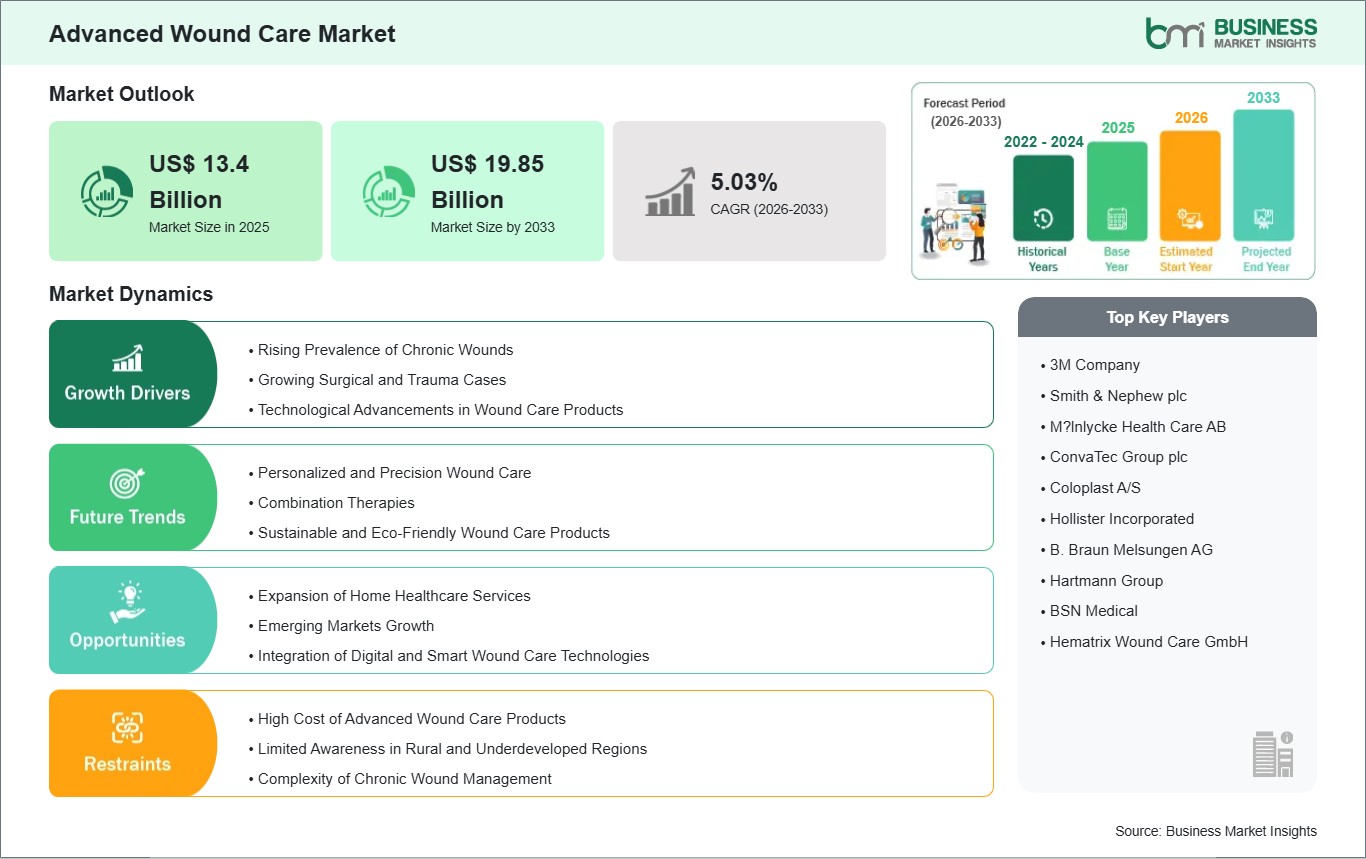
The Advanced Wound Care market size is expected to reach US$ 19.85 billion by 2033 from US$ 13.4 billion in 2025. The market is estimated to record a CAGR of 5.03% from 2026 to 2033.
The global advanced wound care market continues to grow steadily, due in part to an increase in chronic wounds and surgical procedures as well as a greater emphasis on improved patient outcomes from advanced wound care products like foam dressings, hydrocolloids, alginates, antimicrobial dressings, bioactive products and negative pressure wound therapy. Advanced wound care products are becoming very popular for their ability to promote healing, decrease the risk of infection and reduce complications compared to traditional wound care products. Also increasing the incidence of non-healing wounds, including diabetic foot ulcers, pressure ulcers and venous leg ulcers, as well as additional burdens associated with chronic disease, such as diabetes, obesity and vascular disease, is driving the demand for advanced wound care. Additionally, new forms of technology, such as smart dressings and bioengineered skin substitutes, as well as materials that promote moisture balance, are enhancing clinical outcomes and thus expanding the treatment options for chronic non-healing wounds.
Hospitals and clinics account for the majority of end users; however, an increasing number of patients receiving care for chronic conditions such as diabetes and obesity are opting for an increasing percentage of their treatments at home due to shorter hospital stays in combination with a shift toward outpatient and home care settings. North America and Europe are the leading regions in respect to the wound care market, owing to their developed healthcare systems and the continuous introduction of new technologies within the field. However, Asia Pacific is now classified as a rapidly increasing region in terms of the market due to increasing availability of healthcare services; in addition, increased patient awareness is fostering continued growth within this sector. Overall, the growth prospects for this market remain bright due to the increasing clinical needs, technological innovations, and the worldwide trend towards using more advanced, scientifically supported methods for treating wounds.

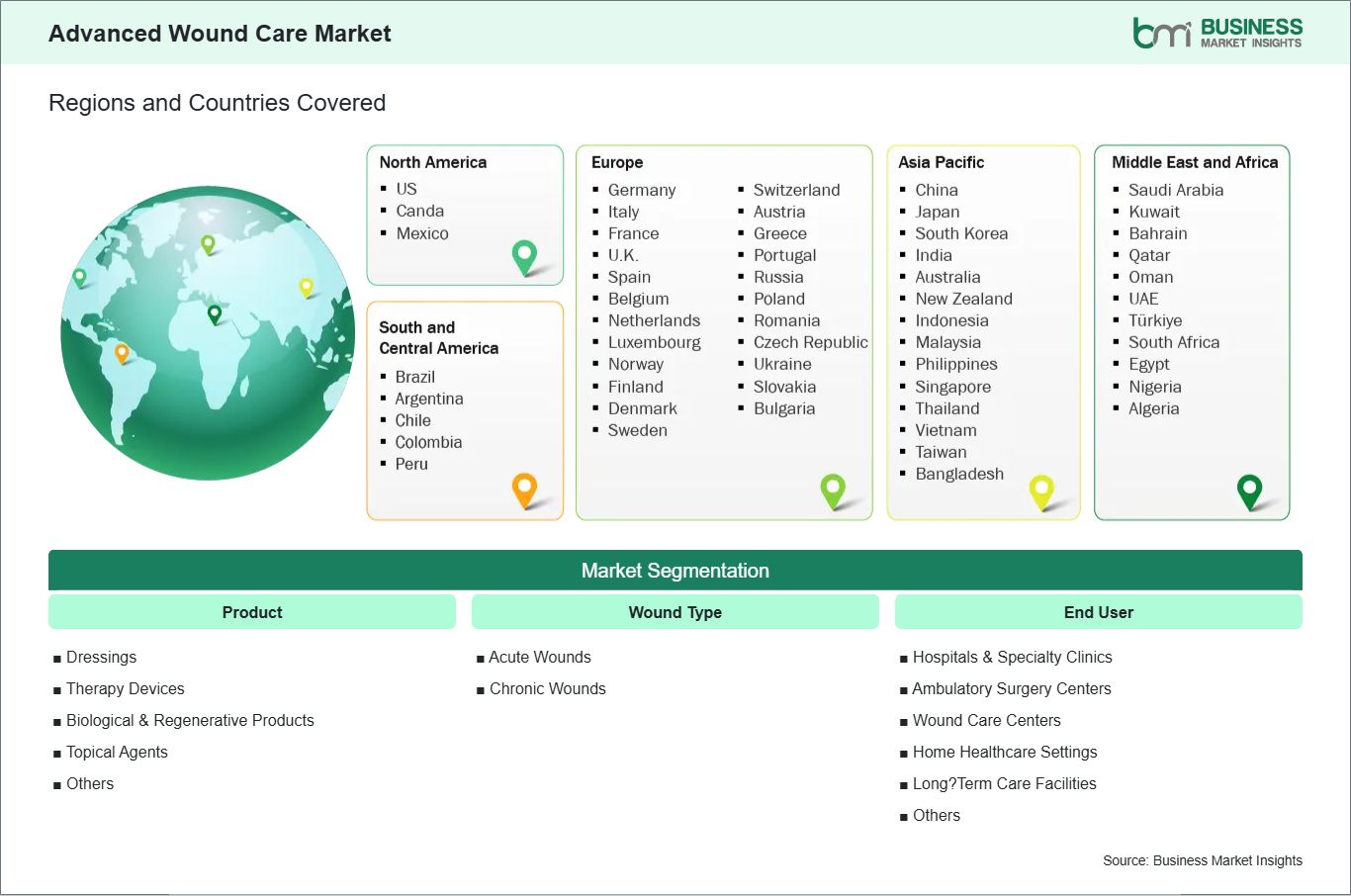
Key segments that contributed to the derivation of the Advanced Wound Care market analysis are product, wound type, and end user.
The chronic wounds, including Diabetic Foot Ulcers and pressure ulcers, are growing at a rapid pace due to the increasing incidence of diabetes, obesity, Heart Disease, the Aging Population, and the number of chronic diseases we are treating. Unlike sudden wounds that heal quickly, chronic wounds require extensive, long-term treatment and specialized wound management because they take a long time to heal and are at risk of infection and further complications. Traditional solutions for treating chronic wounds do not provide the best healing environment for chronic wounds, so healthcare providers are looking for advanced wound management solutions that provide improved moisture balance, antimicrobial protection, and enhanced tissue regeneration through the use of advanced dressings, bioengineered materials, and Negative Pressure Wound Therapy Systems (NPWT). These technologies provide better clinical outcomes with faster healing times and reduced rates of hospitalization. Additionally, as more surgeries are being performed and more trauma cases are being treated, the demand for Advanced Wound Management is increasing to protect against post-operative infections and to promote faster recovery times. In addition to providing better service for their patients, healthcare systems and providers are also trying to reduce the costs of treating chronic wound complications by decreasing the length of hospital stays and the number of complications associated with chronic wounds. Overall, the increase in chronic wounds and the need for improved treatment options are the two primary factors that continue to drive growth in the Advanced Wound Management Market on a Global Scale.
One of the most significant opportunities in advance wound care is the growth of home healthcare and the introduction of smart technology for wound care. Healthcare systems around the world are moving toward outpatient, home-based care and reducing the amount of time patients spend in hospitals and decreasing overall costs for treatment. As a result, there will be an intense demand for these new types of dressing options that are simple to use, require fewer dressing changes, and facilitate optimal healing outside the clinical environment. Smart dressing innovations, which have built-in sensors, allow for real-time monitoring of moisture levels, temperature, and infection indicators, so that timely interventions can be made to improve outcomes.
The combination of digital health technologies and remote monitoring capabilities creates even greater efficiencies in advanced wound care management, especially among the elderly and disabled. Furthermore, emerging markets are becoming increasingly attractive due to their growing investment in healthcare, growing understanding of advanced wound care techniques, and expanding home health care infrastructure. Manufacturers concentrating on the development of low-cost, advanced technology, and easily accessible solutions for advanced wound care can take advantage of these beneficial trends. Companies can also dramatically improve the number of patients they can serve and the overall quality of advanced wound care management through the provision of innovative digital technologies and addressing the unmet needs of home care patients.
By product, the advanced wound care market is segmented into dressings, therapy devices, biological and regenerative products, topical agents, and others. The dressings segment dominated the market in 2024. The increase in chronic wound incidence, such as diabetic foot ulcers and pressure ulcers, has led to greater use of advanced dressings compared to traditional gauze-based dressings because advanced dressings provide superior efficacy..
By wound type, the advanced wound care market is segmented into acute wounds, chronic wounds. The chronic wounds segment dominated the market in 2024. Increasing chronic wound incidence worldwide, diabetic ulcers, venous ulcers and pressure injuries will inevitably create a long-term need for management and treatment options for those patients.
By end user, the market is segmented into hospitals and specialty clinics, ambulatory surgery centers, wound care centers, home healthcare settings, long-term care facilities, and others. The hospitals and specialty clinics segment held the largest share of the market in 2024. hospitals and specialty clinics handle a large number of patients with complex wounds that require the use of advanced therapies, skilled medical professionals and strict protocol adherence. Therefore, hospitals and specialty clinics are the primary purchasers of advanced wound care products.
| Report Attribute | Details |
|---|---|
| Market size in 2025 | US$ 13.4 Billion |
| Market Size by 2033 | US$ 19.85 Billion |
| Global CAGR (2026 - 2033) | 5.03% |
| Historical Data | 2022 - 2024 |
| Forecast period | 2026-2033 |
| Segments Covered | By Product
|
| Regions and Countries Covered | North America
|
| Market leaders and key company profiles |
|
The "Advanced Wound Care Market Size and Forecast (2022–2033)" report provides a detailed analysis of the market covering below areas:
The geographical scope of the Advanced Wound Care market report is divided into five regions: North America, Asia Pacific, Europe, Middle East and Africa, and South and Central America. The Advanced Wound Care market in Asia Pacific is expected to grow significantly during the forecast period.
The Asia-Pacific Advanced Wound Care market is segmented into China, Japan, South Korea, India, Australia, New Zealand, Indonesia, Malaysia, the Philippines, Singapore, Thailand, Vietnam, Taiwan, Bangladesh, and the Rest of Asia. The Asia Pacific Advanced Wound Care Market is rapidly growing due to the increasing number of people suffering from chronic and acute wounds, advancements in healthcare technologies, and greater awareness surrounding modern wound management options. The growth of countries like China, India, Japan, and Korea has been significant in this region, as these nations have growing populations suffering from diabetes, obesity, and vascular disease, which has resulted in high rates of non-healing chronic wounds, including diabetic foot ulcers, pressure ulcers, and venous leg ulcers. The increase in the number of surgical procedures and the growth in the number of traumatic injuries occurring within this region are also contributing to an increased demand for advanced wound care products. More advanced wound care products are being adopted at the clinic level with increasing technological advances in tools and devices available for use in hospitals, specialty clinics, and wound care centers, such as bioengineered skin substitutes, antimicrobial dressings, foam dressings, hydrocolloid dressings, and negative pressure wound therapy devices. The channel for distributing these same products into patients' homes is continuing to expand as a result of patients having shorter hospital stays, preferring to receive treatment in an outpatient format, and the emergence of patient-centered care initiatives and telemedicine solutions. Furthermore, the continued growth of healthcare spending, government initiatives to increase access to advanced therapies, and an increase in funding made by both global and regional manufacturers of wound care products are contributing to the accelerated penetration of the market.

The Advanced Wound Care market is evaluated by gathering qualitative and quantitative data post primary and secondary research, which includes important corporate publications, association data, and databases. A few of the key developments in the advanced wound care market are:
The Advanced Wound Care Market is valued at US$ 13.4 Billion in 2025, it is projected to reach US$ 19.85 Billion by 2033.
As per our report Advanced Wound Care Market, the market size is valued at US$ 13.4 Billion in 2025, projecting it to reach US$ 19.85 Billion by 2033. This translates to a CAGR of approximately 5.03% during the forecast period.
The Advanced Wound Care Market report typically cover these key segments-
The historic period, base year, and forecast period can vary slightly depending on the specific market research report. However, for the Advanced Wound Care Market report:
The Advanced Wound Care Market is populated by several key players, each contributing to its growth and innovation. Some of the major players include:
The Advanced Wound Care Market report is valuable for diverse stakeholders, including:
Essentially, anyone involved in or considering involvement in the Advanced Wound Care Market value chain can benefit from the information contained in a comprehensive market report.
Please tell us your area of interest
(Market Segments/ Regions and Countries/ Companies)