
Chronic Kidney Disease Treatment Market Outlook: Size, Share, Trends, Growth Analysis, Competitive Landscape & Forecast, 2026-2033

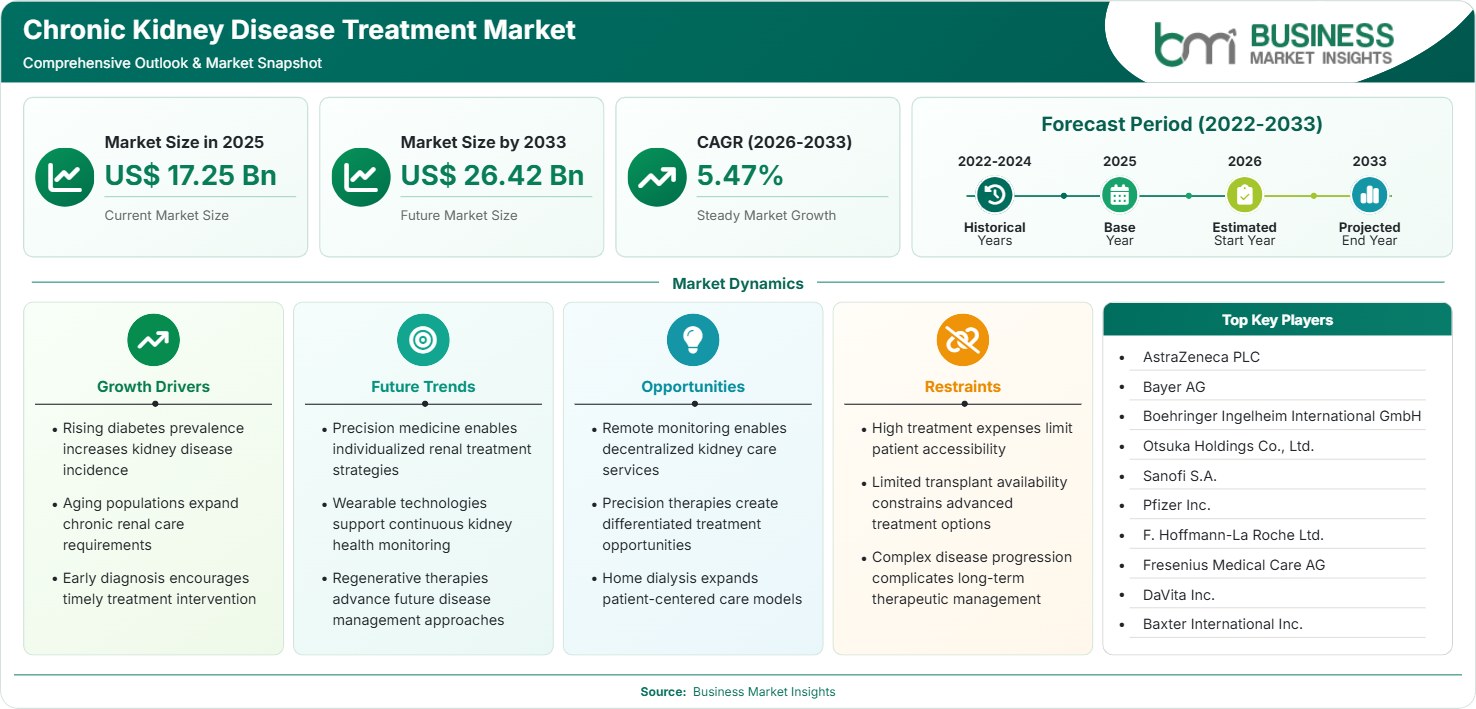
The Chronic Kidney Disease Treatment Market size was valued at US$ 17.25 Billion in 2025 and is projected to reach US$ 26.42 Billion by 2033, growing at a CAGR of 5.47% during 2026–2033. Rising CKD prevalence, growing diabetic populations, broader access to nephrology care, continued innovation in renoprotective therapies, increasing adoption of home-based treatment, and stronger transplantation support programs are creating solid growth opportunities worldwide.

Report Coverage
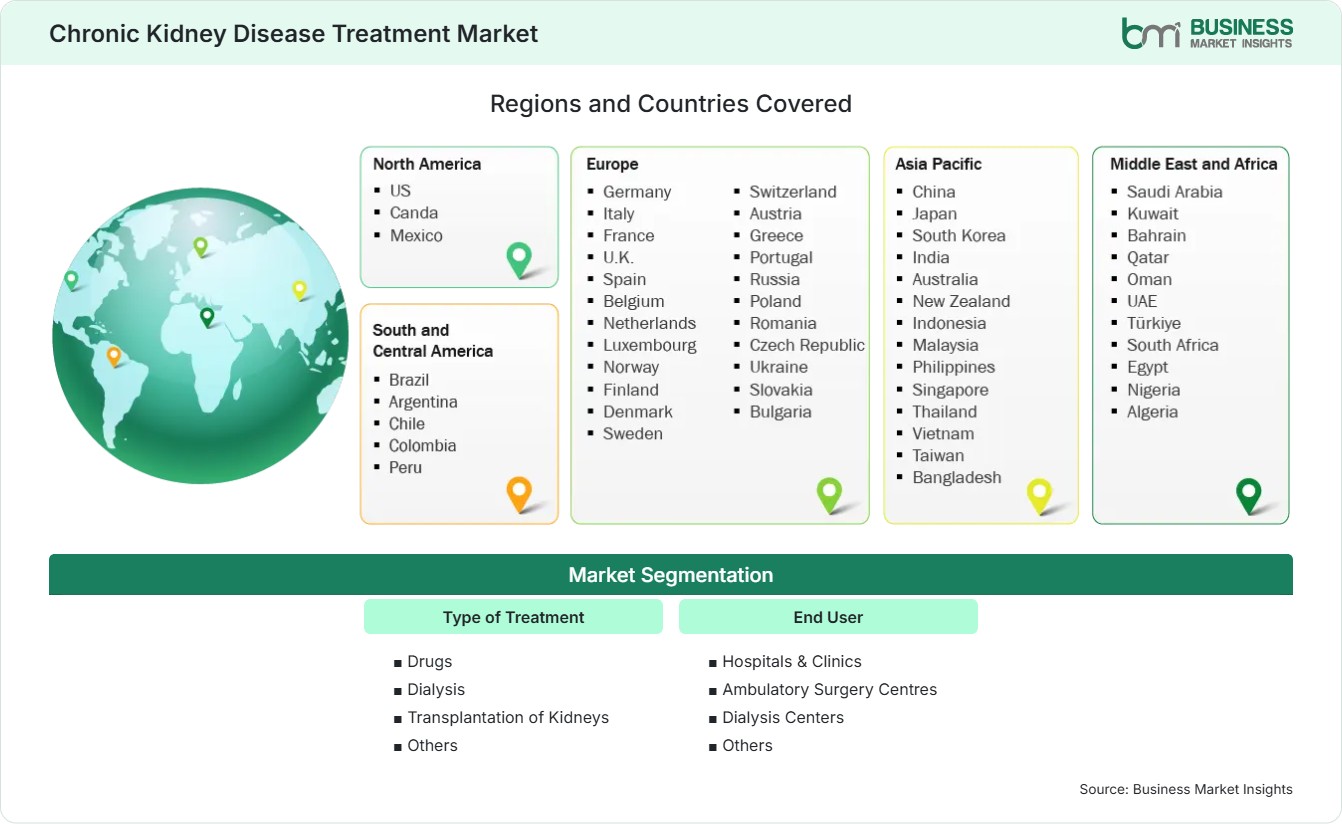
  • Type of Treatment: Drugs, Dialysis, Transplantation of Kidneys, Others
  • End User: Hospitals & Clinics, Ambulatory Surgery Centres, Dialysis Centers, Others
US$ 17.25 Bn Market size in 2025
US$ 26.42 Bn Market Size by 2033
5.47% CAGR, 2026 - 2033
2026-2033 Forecast Period

AI Overview

Chronic Kidney Disease Treatment Market Summary

  • North America Region: North America holds a market share of 38%–41% in 2025, growing with a CAGR of 4.8%–5.2% during 2026–2033, supported by strong reimbursement systems, high CKD diagnosis rates, advanced dialysis infrastructure, adoption of innovative drugs, an expanding elderly population, and wider implementation of value-based renal care programs. The U.S. remains the largest regional contributor, backed by extensive nephrology networks and a CAGR of 4.9%–5.3%.
  • Fastest Growing Region: Asia Pacific accounts for 25%–28% share in 2025 and is projected to expand at a 6.5%–7.1% CAGR during 2026–2033, driven by improving healthcare access, large diabetic populations, expanding dialysis capacity, supportive government investments, growing awareness initiatives, and faster adoption of advanced therapeutics.
  • Leading Segment: Drugs represent 44%–47% of market share in 2025 and are expected to register a 5.0%–5.5% CAGR through 2033, supported by wider use of SGLT2 inhibitors, ACE inhibitors, ARBs, better patient compliance, early intervention strategies, and stronger guideline-based treatment adoption globally.
  • High Growth Segment: Dialysis Centers account for 29%–32% share in 2025 and are forecast to grow at a 6.3%–6.9% CAGR through 2033 due to the rising number of end-stage renal disease cases, capacity expansion, increasing home dialysis adoption, technology upgrades, integrated care delivery, and improving reimbursement mechanisms.
  • Key Market Opportunity: Expansion of precision nephrology, digital patient monitoring, home dialysis platforms, and earlier-stage intervention programs is creating opportunities for providers, pharmaceutical developers, healthcare systems, and investors focused on improving renal outcomes globally.
  • Major Market Players: AstraZeneca PLC, Bayer AG, Boehringer Ingelheim International GmbH, Otsuka Holdings Co., Ltd., Sanofi S.A., Pfizer Inc., F. Hoffmann-La Roche Ltd., Fresenius Medical Care AG, DaVita Inc., Baxter International Inc.
Strategic Insights

Chronic Kidney Disease Treatment Market: Strategic Insights

Chronic Kidney Disease Treatment Market Strategic Framework
FREE PDF
Request your free sample
Request free sample
Stakeholder View

Key Takeaways

  • The treatment ecosystem is becoming more integrated, with pharmaceutical developers, dialysis operators, transplant centers, diagnostic laboratories, and digital health providers working together to improve continuity of care throughout the CKD journey, from early diagnosis to advanced disease management.
  • Early-stage intervention continues to represent the strongest value creation opportunity. Increasing use of renoprotective medicines among diabetic and hypertensive populations is broadening the addressable patient pool beyond end-stage renal disease management.
  • Innovation is increasingly moving toward disease-modifying therapies, biomarker-based patient stratification, artificial intelligence-enabled monitoring, and remote patient management solutions designed to slow renal decline and lower hospitalization rates.
  • Asia Pacific presents the most attractive regional investment opportunity, supported by rapid healthcare infrastructure development, expanding dialysis accessibility, rising diagnosis rates, and government backing for chronic disease management initiatives.
  • Strategic investments and partnerships remain active across drug development, home dialysis technologies, and specialized renal care networks, reflecting confidence in long-term demand arising from demographic and epidemiological trends.
  • Value-based reimbursement models are encouraging healthcare providers to emphasize prevention, earlier treatment initiation, and outcome-focused care pathways, generating both clinical and economic benefits across healthcare systems.
Geographic Outlook

Chronic Kidney Disease Treatment Market Regional Highlights

North America Chronic Kidney Disease Treatment Market

North America accounted for approximately 38%–41% of total Chronic Kidney Disease Treatment Market revenue in 2025 and is anticipated to register a 4.8%–5.2% CAGR during 2026–2033. There is good nephrology infrastructure, favorable reimbursement policies, high spending on healthcare, and wide availability of innovative drugs in the region. The ongoing problems with diabetes, high blood pressure, obesity, and aging demographics ensure the continuity of demand for such medical services. Innovations in pharmaceuticals and dialysis centers improve the accessibility of treatment. The region retains its leadership due to clinical research and evidence-based disease management.

  • Large ESRD patient populations continue driving significant utilization of dialysis services, specialty medications, transplant procedures, and long-term disease management programs across integrated healthcare systems.
  • Strong reimbursement frameworks facilitate broader access to advanced treatment options, encouraging providers to adopt novel therapies that help preserve renal function and lower the risk of disease progression.
  • Increasing use of remote monitoring technologies supports earlier intervention, better adherence, and stronger patient engagement while helping healthcare organizations manage resources and outcomes more effectively.
  • Pharmaceutical manufacturers continue making substantial research investments focused on slowing disease progression, reducing cardiovascular complications, and improving quality of life for patients with chronic kidney disorders.
  • The region contributes the largest Chronic Kidney Disease Treatment Market share, supported by high healthcare spending, established specialty networks, and broad access to advanced nephrology services.

US Chronic Kidney Disease Treatment Market

The United States represented approximately 78%–82% of North American Chronic Kidney Disease Treatment Market revenue in 2025 and is expected to expand at a 4.9%–5.3% CAGR through 2033. High disease awareness, established reimbursement structures, significant healthcare spending, and early adoption of innovative therapies continue to support market leadership. The country has major dialysis providers, pharmaceutical developers, transplant programs, and specialty care organizations. Continued emphasis on value-based kidney care and preventive disease management is expected to remain an important contributor to future expansion.

  • Expanding deployment of home dialysis services is improving patient convenience while reducing pressure on facility-based treatment networks across multiple states.
  • Federal initiatives focused on kidney disease prevention and early diagnosis continue encouraging broader screening and management among high-risk populations.
  • Advanced clinical research infrastructure supports faster development of innovative therapies addressing disease progression, cardiovascular risk reduction, and improved patient outcomes.
  • Digital nephrology platforms are increasingly being used for disease surveillance, treatment optimization, and multidisciplinary care coordination throughout the treatment continuum.

Europe Chronic Kidney Disease Treatment Market

Europe accounted for approximately 27%–30% of global Chronic Kidney Disease Treatment Market revenue during 2025 and is projected to grow at a 4.7%–5.1% CAGR through 2033. Effective public health systems, increasing numbers of older patients, and widespread availability of renal replacement treatments will keep on helping the regional demand. Nations such as Germany, France, and the United Kingdom play an important role in the market; meanwhile, Central and Eastern Europe represent more promising growth regions. The continued focus on chronic disease management and preventative medicine is aiding the process of adoption as well.

  • Germany remains the leading national market, supported by advanced healthcare infrastructure, extensive dialysis availability, and strong adoption of guideline-directed therapies.
  • The United Kingdom continues investing in early-stage intervention initiatives designed to reduce progression toward end-stage renal disease and associated healthcare costs.
  • Spain and Italy are benefiting from increasing utilization of home-based renal care models that improve accessibility and encourage better patient treatment adherence.
  • Poland and other Central European countries are expected to record growth above regional averages as healthcare modernization initiatives gain momentum.
  • Broader integration of digital health technologies supports more efficient monitoring, clinical decision-making, and coordinated disease management pathways.

Asia Pacific Chronic Kidney Disease Treatment Market

Asia Pacific generated approximately 25%–28% of total revenue in 2025 and is expected to achieve the fastest expansion at a 6.5%–7.1% CAGR between 2026 and 2033. The increasing incidence of diabetes, greater spending on healthcare, improved diagnosis rates, and increased availability of dialysis facilities are some of the factors that will drive market demand. China and Japan are expected to continue being the largest contributors to revenues, whereas India and other Southeast Asian nations have significant growth prospects.

  • China remains the largest regional contributor due to expanding healthcare infrastructure, growing patient populations, and improving access to advanced renal therapies.
  • India is projected to be among the fastest-growing markets because of rising diagnosis rates, healthcare investments, and the gradual expansion of dialysis capacity nationwide.
  • Japan continues to emphasize innovative therapeutic approaches and high-quality nephrology care, supported by its advanced healthcare system.
  • Southeast Asian countries are strengthening renal healthcare services through public health initiatives and improved access to treatment.
  • Robust Chronic Kidney Disease Treatment Market growth across the region is supported by favorable demographics and increasing healthcare modernization activities.

Rest of World Chronic Kidney Disease Treatment Market

Rest of World represented approximately 7%–10% of global revenue in 2025 and is expected to expand at a 5.4%–6.0% CAGR through 2033. South and Central America continue to benefit from improving healthcare access, greater disease awareness, and rising investments in renal care. Brazil leads regional demand, while Mexico offers attractive opportunities for further expansion.

In the Middle East and Africa, healthcare diversification strategies and expanding specialty care infrastructure are supporting treatment adoption. Saudi Arabia, the United Arab Emirates, and South Africa remain important markets, helping improve access to dialysis services and specialized nephrology care.

  • Brazil maintains regional leadership through expanded dialysis networks, improving reimbursement mechanisms, and stronger chronic disease management efforts.
  • Mexico demonstrates strong potential due to rising demand for specialized nephrology services and broader healthcare accessibility initiatives.
  • Saudi Arabia continues investing in advanced healthcare infrastructure and chronic disease management programs focused on improving long-term patient outcomes.
  • The United Arab Emirates is strengthening specialty healthcare capabilities through public and private sector investments in renal treatment services.
  • South Africa remains an important market supported by the gradual expansion of specialist care facilities and rising awareness of kidney disease management.
Global Market Geography
FREE PDF
Request your free sample
Request free sample
Segment Analysis

Chronic Kidney Disease Treatment Market Segmentation

Type of Treatment

Type of Treatment represents the largest segmental category, accounting for a substantial portion of industry revenue. The segment held approximately 44%–47% market share in 2025 and is projected to expand at a 5.0%–5.5% CAGR through 2033. Growing adoption of disease-modifying therapies, increasing diagnosis rates, broader access to renal medications, and strong clinical evidence supporting early pharmacological intervention are key contributors to growth. The broad therapeutic landscape also continues to expand the Chronic Kidney Disease Treatment Market scope across different stages of the disease.

  • Drugs: Drug therapies remain central to treatment strategies, supported by growing utilization of SGLT2 inhibitors, ACE inhibitors, ARBs, mineralocorticoid receptor antagonists, and combination approaches designed to slow disease progression.
  • Dialysis: Dialysis remains essential for advanced-stage patients requiring renal replacement therapy, supported by rising ESRD prevalence, improving treatment accessibility, technology advancements, and increasing adoption of home-based modalities.
  • Transplantation of Kidneys: Kidney transplantation provides superior long-term clinical outcomes for eligible patients, supported by advances in surgical procedures, immunosuppressive treatments, organ preservation technologies, and post-transplant management practices.

End User

End-user demand is influenced by treatment intensity, infrastructure availability, specialized expertise, and reimbursement support. The segment showed strong market penetration in 2025, with Dialysis Centers emerging as the fastest-expanding category. Adoption among end users is shaped by increasing patient volumes, integrated nephrology care models, greater disease awareness, and favorable clinical outcomes associated with specialized treatment settings. The segment also reflects evolving Chronic Kidney Disease Treatment Market trends toward more patient-centered care delivery.

  • Hospitals & Clinics: Hospitals and clinics remain essential providers of diagnosis, treatment initiation, transplantation support, acute disease management, and multidisciplinary nephrology services for patients across different disease stages.
  • Ambulatory Surgery Centres (ASCs): ASCs provide efficient procedural care by offering cost-effective treatment settings, shorter patient stays, operational flexibility, and broader access to specialized renal interventions.
  • Dialysis Centers: Dialysis centers continue expanding through network development, increased treatment capacity, advanced equipment deployment, and integrated care strategies designed to improve patient outcomes and operational efficiency.
Market Forces

Chronic Kidney Disease Treatment Market Dynamics

Key Market Drivers

Rising Global Burden of Diabetes and Hypertension

The growing prevalence of diabetes and hypertension remains a major catalyst for demand across the renal care ecosystem. According to leading public health organizations, diabetes and hypertension account for a substantial share of chronic kidney disease cases worldwide. Urbanization, changing dietary habits, physical inactivity, rising obesity rates, and population aging are increasing the number of patients requiring long-term disease management. As screening programs expand, more patients are being diagnosed at earlier stages, creating opportunities for pharmacological intervention before the disease progresses to end-stage renal disease. These demographic and epidemiological changes continue to support sustained treatment demand. Consequently, Chronic Kidney Disease Treatment Market growth remains closely connected with the increasing prevalence of chronic diseases across developed and emerging healthcare systems.

Expansion of Disease-Modifying Therapeutic Options

The treatment landscape has changed considerably with the introduction of innovative therapies designed to address disease progression rather than focusing only on symptom management. Positive clinical results have been observed with the use of SGLT2 inhibitors, new mineralocorticoid receptor antagonists, and combined treatments. Evidence-based medicine is becoming popular among healthcare professionals and helping to lower the rates of hospitalization and protect the kidneys. The strong backing from clinical guidelines is motivating wider prescription at various disease stages. Companies are also making significant investments in research and development programs in nephrology.

Growing Access to Dialysis Infrastructure Worldwide

The expansion of dialysis capacity across both emerging and developed economies continues to support industry demand. Governments, healthcare providers in the private sector, and specialized operators of treatment centers are all allocating resources to building new centers, upgrading technology, and training workers. Enhanced reimbursement mechanisms are ensuring that more patients have access to treatments that are life-saving, especially in nations where there is an increase in the number of people suffering from end-stage renal disease. The use of home dialysis has also increased the availability of treatments to patients who suffer from geographical and mobility limitations. Such advancements are contributing to penetration, retention, and revenues within various sectors.

Key Market Opportunities

Expansion of Precision Nephrology and Biomarker Applications

Precision nephrology is emerging as a promising investment opportunity as healthcare providers increasingly seek individualized treatment protocols. Advances in biomarker identification, genetic profiling, and predictive analytics are enabling more accurate risk stratification and earlier therapeutic intervention. Pharmaceutical developers are exploring targeted treatment approaches that can improve efficacy while limiting unnecessary healthcare expenditures. Better patient segmentation allows clinicians to identify populations most likely to benefit from specific therapies. As healthcare systems place greater emphasis on value-based outcomes, precision medicine capabilities are expected to gain wider clinical acceptance.

Growth Potential in Emerging Healthcare Markets

There is growing investment in healthcare, insurance, and chronic illness management in emerging markets. Increased focus on kidney health has led to improved diagnoses and utilization of therapies. Infrastructural projects funded by governments have been helping in developing more capabilities for dialysis and specialized nephrology care. Modernization projects in urban areas are further helping in the deployment of advanced therapies and monitoring technology. Increasingly, investors are considering these areas as important growth markets due to their untapped potential and rising middle classes. Favorable long-term Chronic Kidney Disease Treatment Market Forecasts continue encouraging healthcare providers and pharmaceutical manufacturers to strengthen regional expansion strategies.

Digital Kidney Care and Remote Monitoring Platforms

Digital health technologies are opening significant opportunities across the treatment continuum. Remote patient monitoring systems allow healthcare providers to track clinical indicators, support treatment adherence, and identify risks of disease progression earlier. Artificial intelligence tools are helping with predictive analytics, treatment optimization, and resource planning. Integrated digital platforms also improve communication among patients, nephrologists, primary care physicians, and dialysis providers. These solutions can help lower hospital admissions while enabling more efficient long-term disease management.

Market Restraints and Challenges

High Cost Burden of Advanced Renal Care

Factor: Chronic kidney disease management can involve costly long-term therapies, regular monitoring, dialysis procedures, and transplantation-related expenses. Impact: High-cost treatments make treatment unaffordable for both patients and the reimbursement system, especially in low-income areas. Financial burden might result in a delay in starting the treatment, non-adherence to treatment, or access to less sophisticated treatment methods. Budgetary issues will become more frequent since the number of cases of the disease is increasing. While reimbursement schemes help control costs in developed nations, there are still many discrepancies worldwide. Cost constraints still hinder the adoption of novel treatments.

Shortage of Specialized Nephrology Resources

Factor: Many healthcare systems have an insufficient supply of nephrologists, dialysis professionals, transplant specialists, and trained support personnel. Impact: Staff shortages have the potential to increase diagnostic times, limit access to care, and create further strains on the healthcare system infrastructure. Limited availability of specialists is especially prevalent in rural and underprivileged areas, leading to disparities in quality of care and patient outcomes. Additionally, capacity issues may impact the adoption of innovative treatment options and protocols. With increasing patient volumes, health systems must invest in training and digital resources to overcome obstacles.

Company Analysis

Competitive Landscape

The competitive environment is shaped by ongoing therapeutic innovation, expansion of large-scale dialysis networks, strategic collaborations, and rising investment in patient-centered renal care models. Current Chronic Kidney Disease Treatment Market analysis indicates that leading participants are prioritizing disease-modifying therapies, home dialysis solutions, digital monitoring platforms, and integrated care delivery systems to strengthen their market positions and improve long-term patient outcomes.

Company Name

Overview

Products and Services relevant to this market

AstraZeneca PLC

Global biopharmaceutical company with a strong nephrology portfolio and significant investments in kidney disease research and precision medicine initiatives.

SGLT2 inhibitor therapies, chronic kidney disease management solutions, cardiovascular-renal treatments, clinical research programs, and patient support services.

Bayer AG

Multinational life sciences company focusing on innovative therapies for chronic kidney disease and associated cardiovascular complications.

Mineralocorticoid receptor antagonist therapies, nephrology drug development, renal disease management solutions, and specialty pharmaceutical products.

Boehringer Ingelheim International GmbH

Research-driven pharmaceutical company active in metabolic and renal disease treatment innovation through strategic partnerships and clinical programs.

Kidney disease therapeutics, diabetes-related renal treatments, clinical development programs, and integrated patient care initiatives.

Otsuka Holdings Co., Ltd.

Diversified healthcare company engaged in developing therapies addressing renal disorders and chronic disease progression management.

Prescription medicines, renal disease therapies, specialty healthcare products, and research-driven treatment solutions.

Sanofi S.A.

Global healthcare organization with broad expertise across chronic disease management and innovative biologic development.

Specialty pharmaceuticals, chronic disease treatments, supportive care products, and patient-focused therapeutic programs.

Pfizer Inc.

Major pharmaceutical manufacturer advancing innovative therapies and research programs addressing complex chronic medical conditions.

Prescription medicines, specialty therapeutics, clinical development services, and supportive treatment solutions.

F. Hoffmann-La Roche Ltd.

Global biotechnology and pharmaceutical company emphasizing precision medicine, diagnostics, and chronic disease management innovation.

Diagnostic technologies, specialty medicines, biomarker solutions, personalized healthcare platforms, and research services.

Fresenius Medical Care AG

Leading provider of dialysis products and services, operating extensive renal care networks worldwide.

Hemodialysis systems, peritoneal dialysis products, renal clinics, patient monitoring solutions, and integrated kidney care services.

DaVita Inc.

Specialized kidney care provider operating extensive dialysis center networks and value-based care programs internationally.

Dialysis services, kidney disease management programs, home dialysis support, and coordinated patient care services.

Baxter International Inc.

Global medical technology company supplying renal care products and home-based treatment solutions.

Peritoneal dialysis systems, acute kidney care technologies, renal treatment equipment, and associated clinical support services.

Trust & Transparency

Research Methodology

The market analysis combines proprietary research with secondary data from government agencies, company disclosures, regulatory filings, industry databases and expert interviews. Market estimates are validated through data triangulation, cross-market benchmarking and analyst review.

View Full Research Methodology

Questions Answered

Frequently Asked Questions

What information does a Chronic Kidney Disease Treatment Market Report typically provide?

A comprehensive Chronic Kidney Disease Treatment Market Report generally covers market size estimates, growth outlook, segmentation analysis, regional trends, competitive positioning, technology developments, investment opportunities, and regulatory factors that influence future industry performance.

How are digital technologies transforming kidney disease management?

Remote monitoring systems, artificial intelligence-enabled analytics, and connected care platforms help clinicians detect disease progression earlier, improve treatment adherence, optimize resource utilization, and strengthen patient engagement throughout treatment journeys.

Why is Asia Pacific considered the fastest-growing regional market?

The region benefits from expanding healthcare infrastructure, greater disease awareness, large diabetic populations, rising healthcare spending, and government initiatives aimed at improving access to nephrology services and renal replacement therapies.

Which treatment category generates the highest revenue in the industry?

Drug-based therapies generate the largest revenue contribution because of their widespread use across multiple disease stages, preventive treatment approaches, and growing adoption of innovative renal-protective medicines supported by clinical guidelines.

What factors are increasing the global burden of chronic kidney disease?

The growing prevalence of diabetes, hypertension, obesity, aging populations, and sedentary lifestyles are major contributors. Expanded screening programs are also increasing diagnosis rates, resulting in a larger treated patient population that requires long-term renal care.

Access the Full Chronic Kidney Disease Treatment Market Report

Get segment-level forecasts, regional estimates, competitive benchmarking, company profiles and downloadable Excel datasets.

Access the full Chronic Kidney Disease Treatment Market Report
350 pages PDF & Excel | 2026-09-16
Similar Research

Related Market Reports