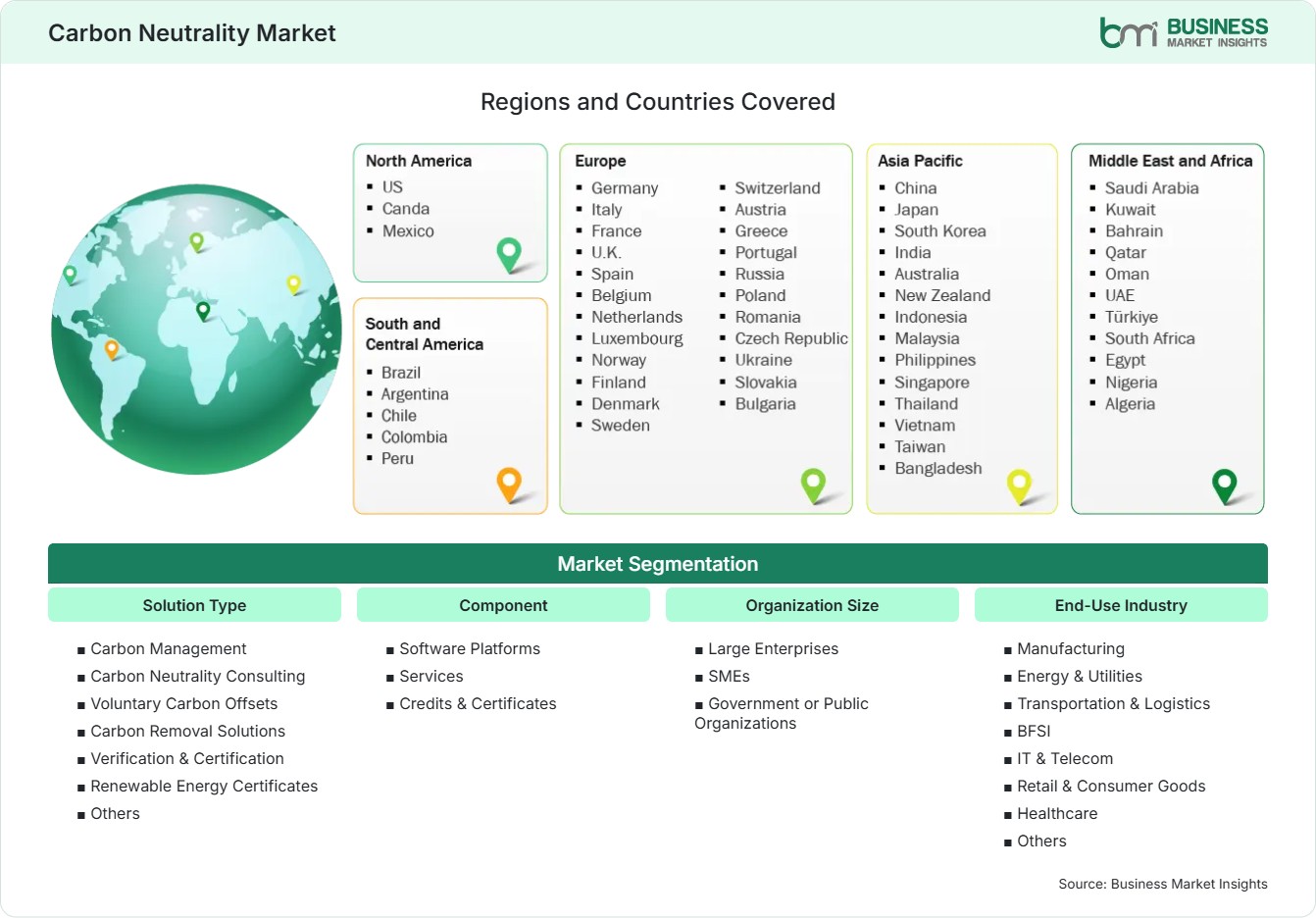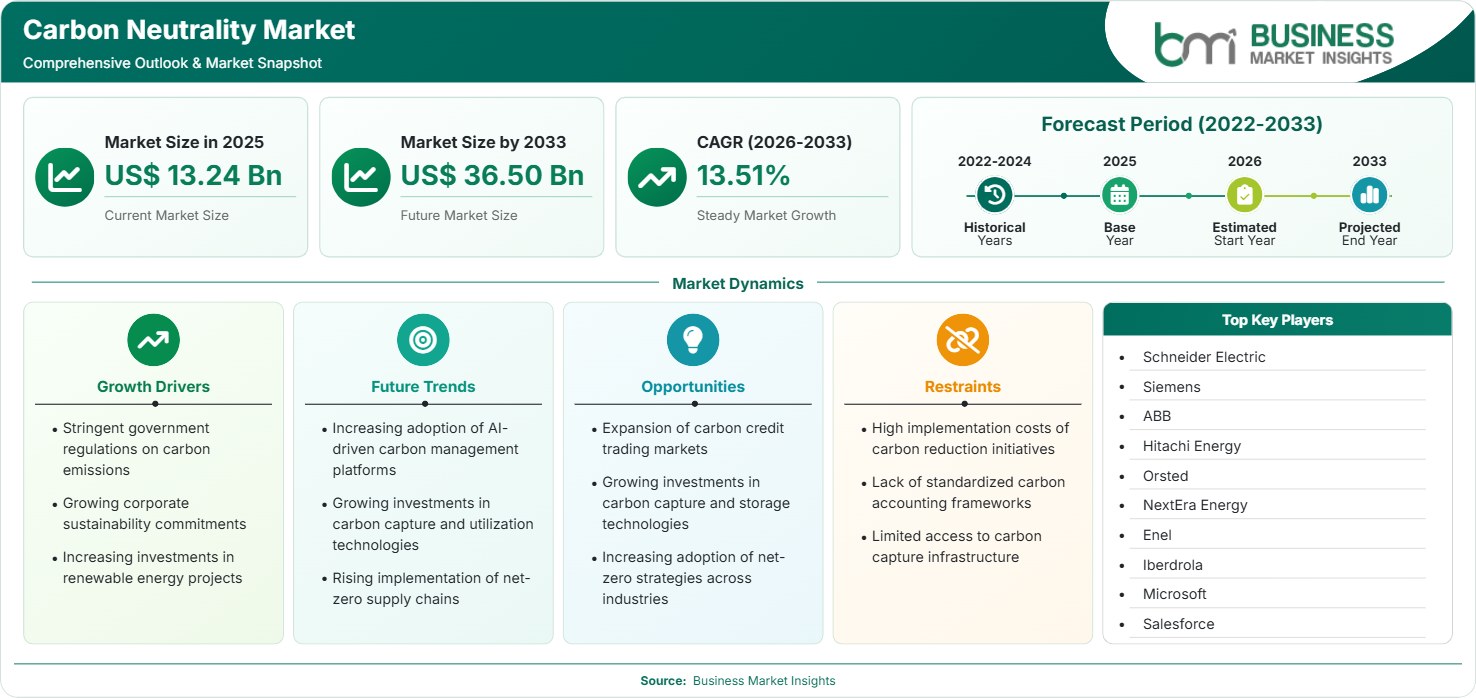
Carbon Neutrality Market Regional Highlights
North America Carbon Neutrality Market
North America accounted for a 35%–38% share in 2025 and is projected to register a CAGR of 12%–14% from 2026–2033. The region has retained its leadership due to the presence of good climate policies, green businesses, investments in renewable energy, and advanced digital carbon management system. Carbon Neutrality market share is due to extensive adoption by firms, utilities, and government bodies. The major contributor is still the United States because of its decarbonization policies.
- The United States is expanding carbon management adoption through corporate climate commitments and regulatory sustainability initiatives.
- Canada is increasing investments in clean energy projects, emissions reduction programs, and carbon capture technologies.
- Technology companies are developing advanced platforms for automated carbon measurement and sustainability reporting.
- Enterprises are adopting renewable energy certificates and carbon offset solutions to meet emission reduction goals.
US Carbon Neutrality Market
The United States represented a 30%–33% share in 2025 and is expected to achieve a CAGR of 12%–14% between 2026–2033. The country benefits from strong renewable energy investment, corporate net-zero commitments, and increasing demand for emissions management solutions. The Carbon Neutrality Market growth is supported by industrial decarbonization programs, carbon accounting adoption, and expansion of sustainability-focused technologies.
- Corporations are increasing investment in emissions tracking platforms to improve climate reporting transparency.
- Renewable energy procurement is expanding as companies seek to reduce operational carbon footprints.
- Carbon removal and capture technologies are attracting investment from technology and energy organizations.
Europe Carbon Neutrality Market
Europe accounted for a 27%–30% share in 2025 and is forecast to grow at a CAGR of 12%–14% during 2026–2033. The region benefits from strict emissions regulations, climate targets, renewable energy expansion, and established sustainability frameworks. Germany, the United Kingdom, and France represent leading markets, while Nordic countries demonstrate strong adoption through clean energy investments and carbon reduction initiatives.
- Germany is advancing industrial decarbonization through renewable energy integration and carbon management programs.
- The United Kingdom is expanding carbon accounting adoption through corporate climate policies and clean technology investments.
- France is supporting emissions reduction through renewable energy development and sustainability regulations.
- Nordic countries are investing in carbon removal solutions and innovative climate technologies.
Asia Pacific Carbon Neutrality Market
Asia Pacific represented a 28%–31% share in 2025 and is projected to grow at a CAGR of 14%–16% between 2026–2033. The region shows great potential for future growth owing to industrial growth, renewable energy production, the governments' commitments to addressing climate change issues, and increased corporate sustainability efforts. China, Japan, India, South Korea, and Australia are some of the leading contributors.
- China is expanding renewable energy capacity and carbon management initiatives through national climate programs.
- India is increasing investments in clean energy projects and corporate sustainability strategies.
- Japan and South Korea are adopting advanced carbon accounting and emission reduction technologies.
- Australia is developing carbon markets and renewable energy solutions supporting climate objectives.
Rest of World Carbon Neutrality Market
South and Central America accounted for a 5%–7% share in 2025, while the Middle East and Africa contributed a combined 4%–6% share. These regions are expected to grow at CAGRs of 11%–13% and 12%–14%, respectively, supported by renewable energy expansion, carbon offset initiatives, climate investment programs, and industrial sustainability efforts in carbon neutrality market. Brazil, Chile, UAE, and Saudi Arabia represent important markets due to increasing clean energy investments.
- Brazil is expanding carbon reduction initiatives through renewable energy development, forest conservation programs, and carbon market participation.
- Chile is advancing clean energy projects and carbon management solutions through renewable power investments.
- UAE is investing in sustainability technologies, renewable energy capacity, and carbon reduction infrastructure.
- Saudi Arabia is developing climate strategies focused on emissions reduction, clean energy, and carbon capture initiatives.