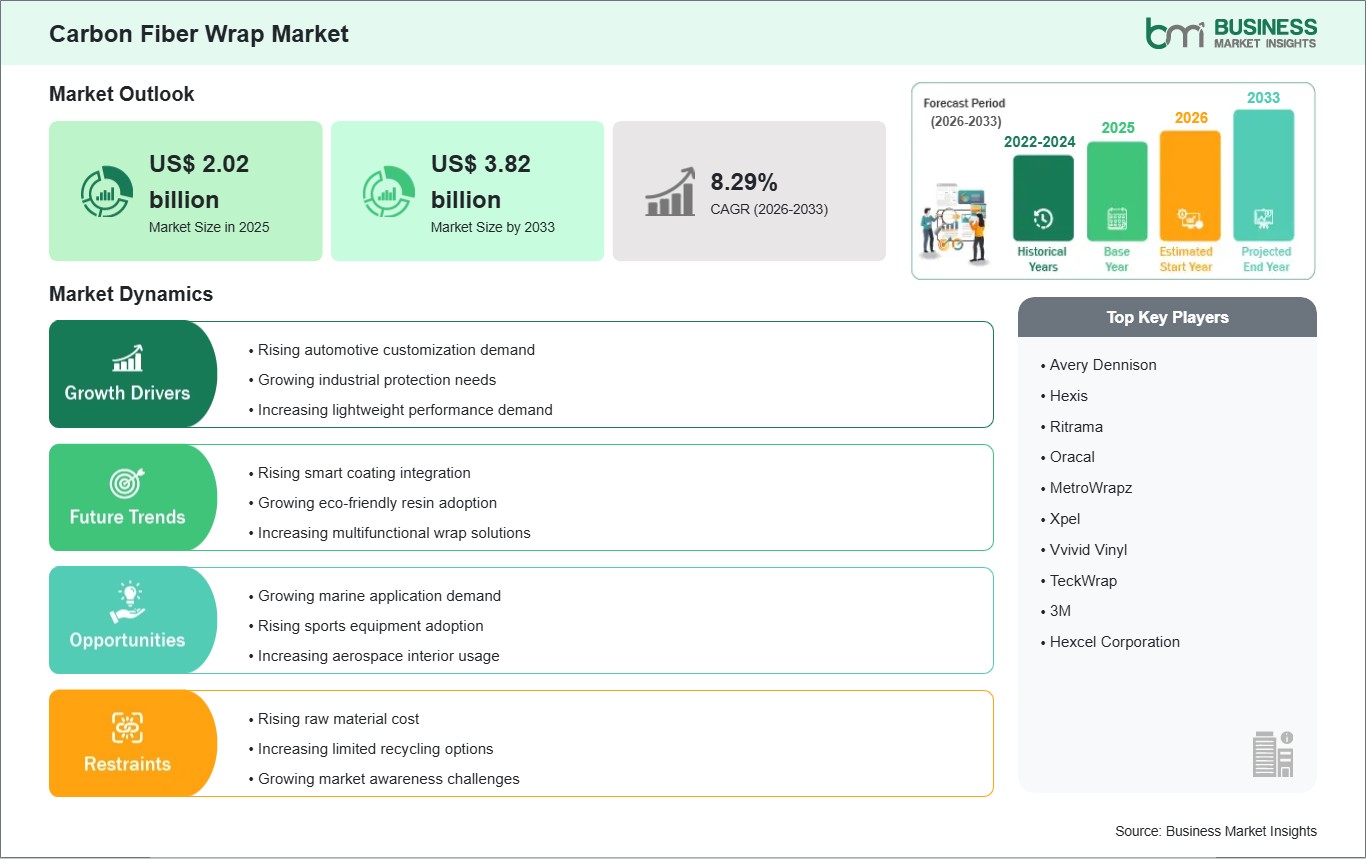
Market Summary
Executive Summary and Global Market Analysis
Carbon fiber wrap is a strong composite material made from woven carbon fibers and resin. It is used to strengthen structures and reinforce surfaces. This material helps increase load-bearing capacity, improve resistance to earthquakes, and extend the life of concrete, masonry, steel, and wooden structures. Carbon fiber wrap is often applied in repairing infrastructure, retrofitting bridges, reinforcing buildings, and working with pipelines and marine structures. Its lightweight design, strength, resistance to corrosion, and ease of installation make it a popular choice.
The market is growing due to the rising need for infrastructure repair, especially for aging bridges, highways, and commercial buildings. More urbanization and stricter safety regulations are pushing the use of these reinforcement solutions. Additionally, the cost benefits compared to traditional steel plate bonding, along with shorter installation times and less disruption to existing structures, boost demand. Increased construction activities in developing countries and greater awareness of long-term maintenance strategies are also speeding up its use in public and private infrastructure projects.
Segment Analysis
Carbon Fiber Wrap Market Segmentation
Key segments that contributed to the derivation of the carbon fiber wrap market analysis are wrap type, fiber type, and application.
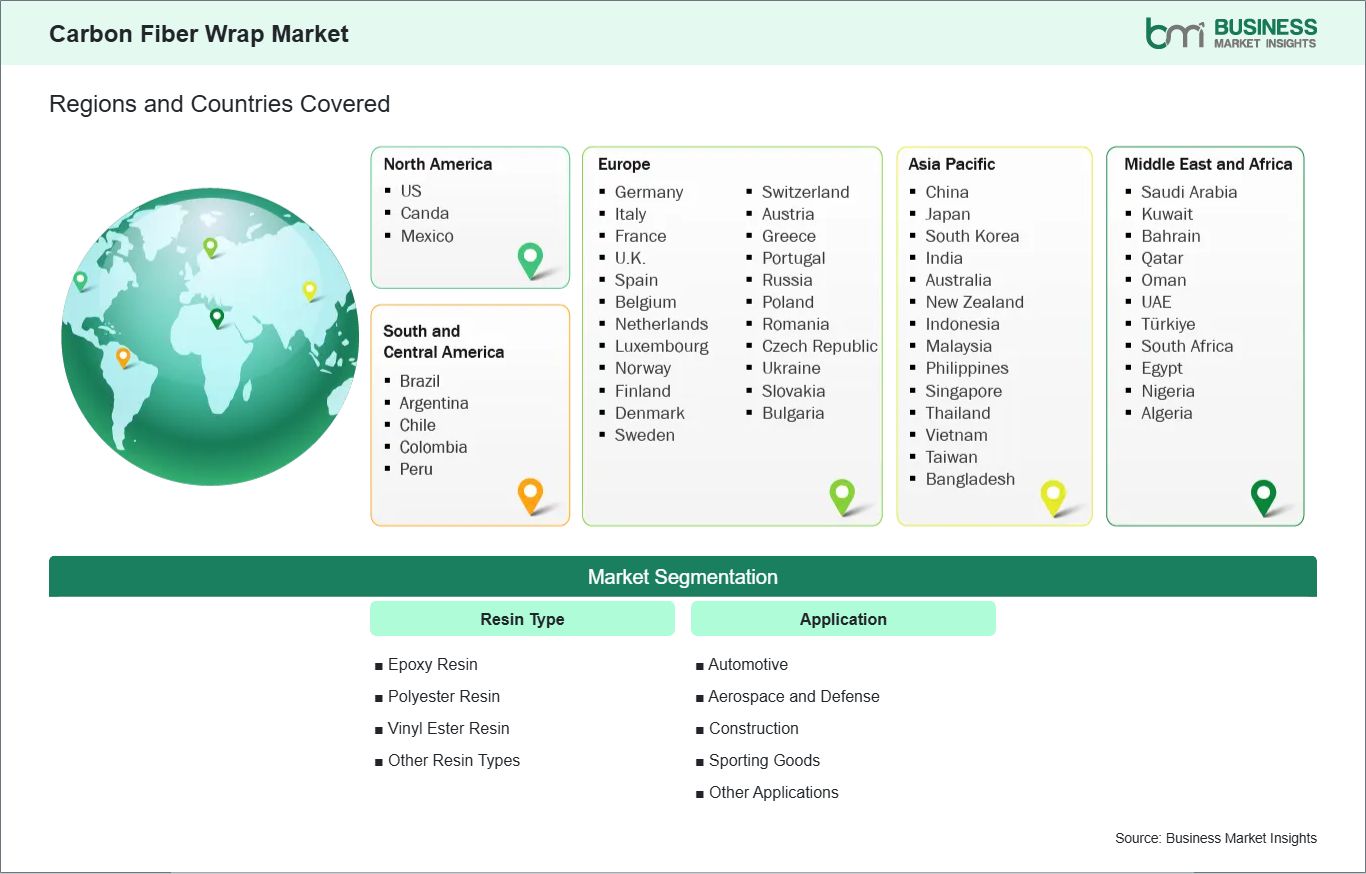
- By resin type, the carbon fiber wrap market is segmented into epoxy resin, polyester resin, vinyl ester resin, and others. The epoxy resin segment held the largest market share in 2025.
- By application, the carbon fiber wrap market is segmented into automotive, aerospace & defense, construction, sporting goods, and others. The aerospace & defense segment held the largest market share in 2025.
Market Forces
Carbon Fiber Wrap Market Drivers and Opportunities
Rising Infrastructure Rehabilitation and Seismic Retrofitting Activities
A main factor driving the carbon fiber wrap market is the increasing global interest in infrastructure repair and seismic retrofitting. Many areas, both developed and developing, deal with old infrastructure that needs strengthening to meet new safety standards and greater load demands. Carbon fiber wrap offers a strong reinforcement method without adding much weight or needing major demolition. Its high tensile strength and flexibility allow for effective support of columns, beams, and slabs, which boosts structural resilience against earthquakes and heavy traffic.
Governments and local authorities are looking for cost-effective repair options to extend the life of bridges, tunnels, and public buildings. Furthermore, rising natural disasters and tougher safety standards are pushing for early reinforcement steps. The quick installation of carbon fiber wrap systems, with little downtime, makes them especially appealing for essential infrastructure projects, maintaining steady market demand.
Expansion in Sustainable Construction and Smart Cities
A significant growth opportunity in the carbon fiber wrap market comes from its use in sustainable construction and smart city development. Urban planners and developers are increasingly prioritizing durable, low-maintenance infrastructure. This shift has led to a preference for composite reinforcement materials. Carbon fiber wrap helps sustainability by extending the lifespan of existing structures. It reduces the need for resource-heavy reconstruction and lowers overall lifecycle costs. Its lightweight nature also cuts down on the energy needed for transportation and handling compared to traditional reinforcement materials.
The rise of smart city projects, especially in rapidly urbanizing areas, brings chances to integrate structural health monitoring systems with composite reinforcement solutions. Additionally, rising investment in green building certifications and resilient infrastructure design makes long-lasting strengthening materials more attractive. Companies that offer innovative wrap systems with better fire resistance, UV stability, and eco-friendly resins are well set to take advantage of this changing construction landscape.
Size and Share Analysis
Carbon Fiber Wrap Market Size and Share Analysis
The carbon fiber wrap market demonstrates steady growth, with size and share analysis revealing evolving trends and competitive positioning among key players. The report examines subsegments categorized within wrap type, fiber type, and application, offering insights into their contribution to overall market performance. By resin type, the epoxy resin segment holds the largest market share. This dominance comes from its wide use in structural strengthening, automotive parts, and aerospace applications. Epoxy-based carbon fiber wrap systems are valued for their strong bonding, chemical resistance, and long-lasting durability in harsh environments. Epoxy resin is favored for its excellent load-bearing capacity, compatibility with different materials like concrete and metal, and adherence to established construction and aerospace standards. The growth of this segment is driven by increased infrastructure repair projects, a rising demand for lightweight automotive parts, and greater aircraft production.
Report Coverage
Carbon Fiber Wrap Market Report Coverage and Deliverables
The " Carbon Fiber Wrap Market Size and Forecast (2022 - 2033)" report provides a detailed analysis of the market covering below areas:
- Carbon fiber wrap market size and forecast at global, regional, and country levels for all the key market segments covered under the scope
- Carbon fiber wrap market trends, as well as market dynamics such as drivers, restraints, and key opportunities
- Carbon fiber wrap market analysis covering key market trends, global and regional framework, major players, regulations, and recent market developments
- Industry landscape and competition analysis covering market concentration, heat map analysis, prominent players, and recent developments for the carbon fiber wrap market
- Detailed company profiles, including SWOT analysis
Geographic Insights
Carbon Fiber Wrap Market Geographic Insights
The geographical scope of the carbon fiber wrap market report is divided into five regions: North America, Asia Pacific, Europe, the Middle East & Africa, and South & Central America. North America holds a significant share of the carbon fiber wrap market. This is due to significant investments in infrastructure repair, strict building safety rules, and strong use of construction technologies. The US and Canada have many aging bridges, highways, and public buildings that need repair and reinforcement. Government funding programs for infrastructure upgrades have greatly increased the need for cost-effective solutions like carbon fiber wrap systems.
The region also has established construction standards and a good understanding of seismic retrofitting, especially in areas prone to earthquakes. Furthermore, the presence of top manufacturers of composite materials and specialized engineering firms improves market readiness and product availability. The growing focus on sustainable building practices and minimizing lifecycle costs also supports the use of lightweight, corrosion-resistant reinforcement materials. These factors make North America a major market, with ongoing demand fueled by infrastructure renewal projects and compliance with regulations.
Industry Activity
Recent Developments
The carbon fiber wrap market is evaluated by gathering qualitative and quantitative data post-primary and secondary research, which includes important corporate publications, association data, and databases. A few of the key developments in the carbon fiber wrap market are:
- In August 2025, DIC Corporation announced an increase in its epoxy resin capacity by 59% at its Chiba Plant in Japan. The expansion received about a US$20 million government subsidy. It aimed to meet the growing demand for semiconductors and improve global competitiveness.
- In April 2024, UBE Corporation launched new composite products made with recycled carbon fiber. They used technology from Shinryo Corporation to extract high-quality recycled fibers. The products target automotive and sports applications. They help reduce weight, greenhouse gas emissions, and environmental impact.
Trust & Transparency
Research Methodology
The market analysis combines proprietary research with secondary data from government agencies, company disclosures, regulatory filings, industry databases and expert interviews. Market estimates are validated through data triangulation, cross-market benchmarking and analyst
review.
View Full Research Methodology
Key Sources Referred:
World Bank - Global Trade IndicatorsWorld Trade Organization (WTO)International Monetary Fund (IMF)International Trade Administration (ITA)Company WebsitesCompany Annual ReportsCompany Investor PresentationsAmerican Composites Manufacturers Association (ACMA)European Composites Industry Association (EuCIA)Japan Carbon Fiber Manufacturers Association (JCMA)China Composites Industry Association (CCIA)