Market Summary
Executive Summary and Global Market Analysis
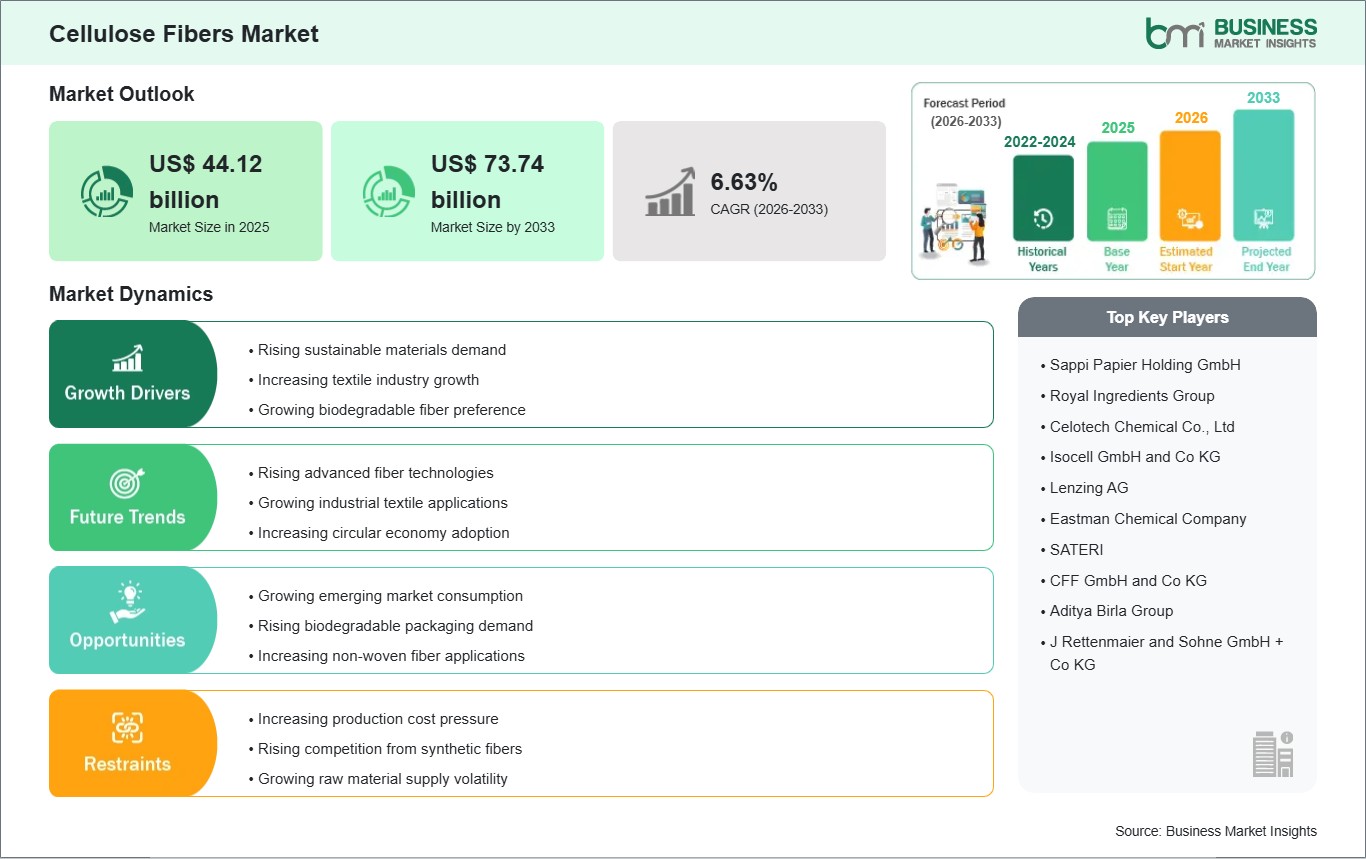
Cellulose fiber is a natural or regenerated fiber mainly made from wood pulp, cotton, or other plant sources. It includes natural fibers like cotton and regenerated fibers such as viscose, lyocell, modal, and acetate. Cellulose fibers are commonly used in textiles, clothing, home furnishings, nonwoven products, industrial uses, and hygiene products because they break down easily, allow air to flow, absorb moisture, and provide comfort. Besides textile uses, cellulose fibers are also found in filtration materials, medical supplies, and strengthening materials, where they are appreciated for their sustainability and performance.
Market growth comes from rising demand for sustainable and biodegradable materials in the textile and nonwoven industries. Growing environmental awareness, pressure to limit synthetic fibers, and an increasing consumer preference for eco-friendly clothing are speeding up adoption. The expansion of the fashion industry, the growth of hygiene and personal care products, and new technology in fiber processing are further driving market growth. Additionally, investments in sustainable forestry and closed-loop production methods are improving supply chain transparency, which supports the long-term growth of the cellulose fiber market worldwide.
Segment Analysis
Cellulose Fibers Market Segmentation
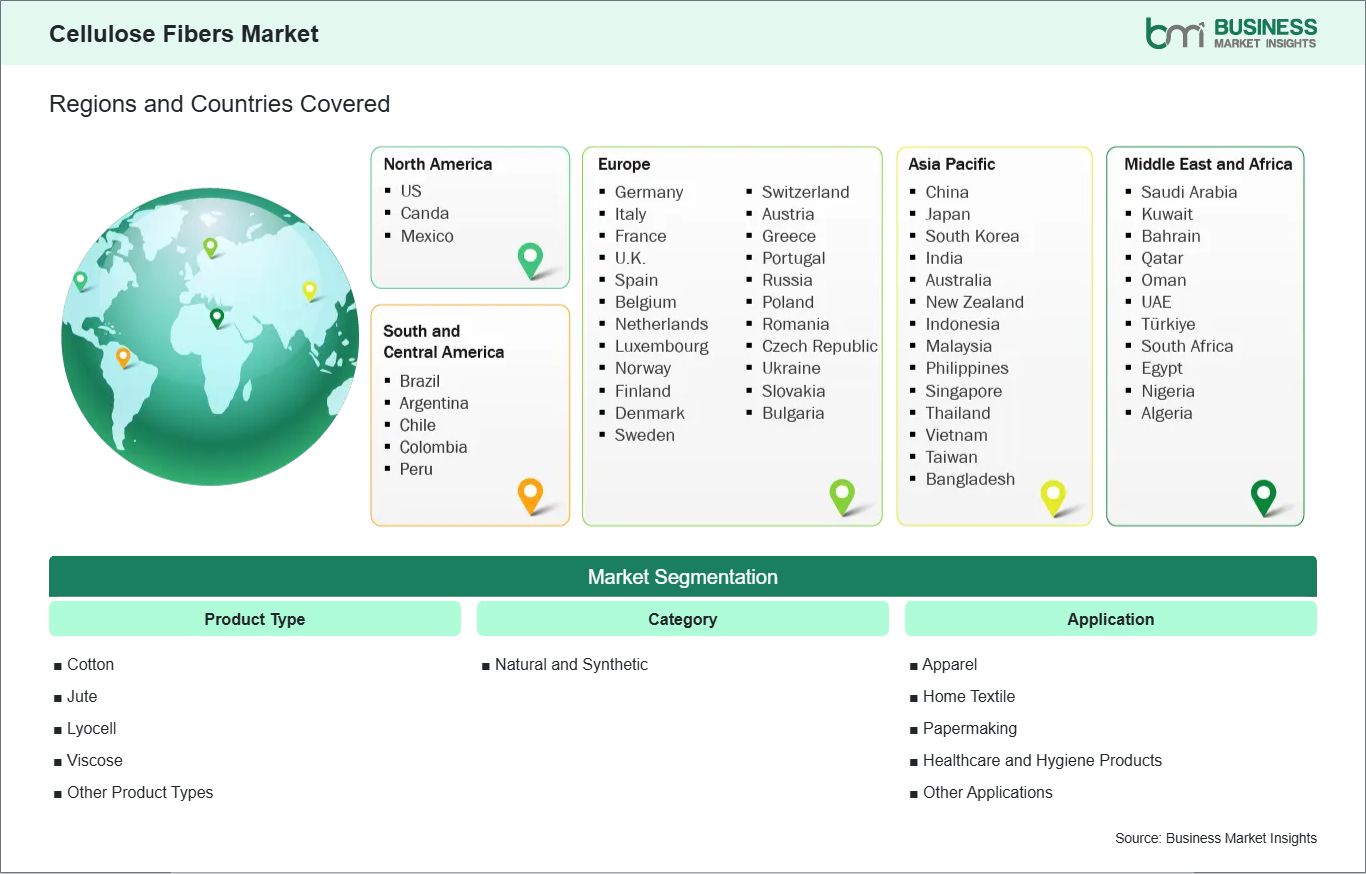
Key segments that contributed to the derivation of the cellulose fibers market analysis are product type, category, and application.
- By product type, the cellulose fibers market is segmented into cotton, jute, lyocell, viscose, and others. The cotton segment held the largest market share in 2025.
- By category, the cellulose fibers market is segmented into natural and synthetic. The natural segment held the largest market share in 2025.
- By application, the cellulose fibers market is segmented into apparel, home textile, papermaking, healthcare and hygiene products, and others. The apparel segment held the largest market share in 2025.
Market Forces
Cellulose Fibers Market Drivers and Opportunities
Rising Demand for Sustainable and Biodegradable Textiles
A main factor driving the cellulose fiber market is the rising global demand for sustainable and biodegradable textile materials. Growing concerns about microplastic pollution, carbon emissions, and textile waste have prompted consumers, brands, and regulators to look for alternatives to petroleum-based synthetic fibers like polyester and nylon. Cellulose fibers, which come from plants and are biodegradable, provide a more environmentally friendly option while still offering qualities like softness, breathability, and moisture absorption.
Major clothing brands are now using regenerated cellulose fibers such as viscose and lyocell in their collections to meet sustainability goals and respond to consumer demands for eco-friendly fashion. Also, new regulations that support circular economy practices and responsible raw material sourcing are encouraging manufacturers to use certified wood pulp and closed-loop production methods. The increasing need for transparency in supply chains also boosts the move toward renewable fibers. As sustainability becomes a key factor in buying decisions within the textile industry, cellulose fibers are increasingly seen as a preferred material choice.
Expansion in Hygiene and Nonwoven Applications
There is a major growth opportunity in the cellulose fiber market within the hygiene and nonwoven products segment. The rising global population, better healthcare infrastructure, and increased awareness of personal hygiene are boosting demand for products like baby diapers, feminine hygiene products, adult incontinence items, wipes, and medical disposables. Cellulose fibers are popular in these applications as they are highly absorbent, soft, and biodegradable. As consumers want more sustainable hygiene products, manufacturers are putting money into bio-based and compostable nonwoven materials made from cellulose fibers.
Moreover, the growing demand for medical and healthcare disposables, especially in emerging economies, is opening new pathways for fiber producers. Advances in fiber engineering are improving strength, absorption efficiency, and product performance, broadening their use. The move toward plastic-free wipes and eco-friendly hygiene solutions further enhances long-term growth potential. These factors together make hygiene and nonwoven applications a key area for ongoing market growth.
Size and Share Analysis
Cellulose Fibers Market Size and Share Analysis
The cellulose fibers market demonstrates steady growth, with size and share analysis revealing evolving trends and competitive positioning among key players. The report examines subsegments categorized within type and application, offering insights into their contribution to overall market performance. By application, the apparel segment has the largest market share. This dominance comes from the widespread use of cellulose fibers, like cotton and viscose, in clothing, activewear, and fashion textiles. These fibers are valued for their comfort, breathability, moisture absorption, and softness. They are ideal for everyday wear and high-performance garments. The segment's growth is driven by rising consumer demand for sustainable and natural fabrics, a growing preference for comfortable and functional clothing, and the expanding fast-fashion and athleisure markets worldwide. Ongoing innovations in eco-friendly dyeing, sustainable fiber blends, and performance-enhanced textiles also push the use of cellulose fibers in apparel.
Report Coverage
Cellulose Fibers Market Report Coverage and Deliverables
The " Cellulose Fibers Market Size and Forecast (2022 - 2033)" report provides a detailed analysis of the market covering below areas:
- Cellulose fibers market size and forecast at global, regional, and country levels for all the key market segments covered under the scope
- Cellulose fibers market trends, as well as market dynamics such as drivers, restraints, and key opportunities
- Cellulose fibers market analysis covering key market trends, global and regional framework, major players, regulations, and recent market developments
- Industry landscape and competition analysis covering market concentration, heat map analysis, prominent players, and recent developments for the cellulose fibers market
- Detailed company profiles, including SWOT analysis
Geographic Insights
Cellulose Fibers Market Geographic Insights
The geographical scope of the cellulose fibers market report is divided into five regions: North America, Asia Pacific, Europe, the Middle East & Africa, and South & Central America. Asia Pacific holds a significant share of the cellulose fibers market. This is due to its strong textile manufacturing sector, plenty of raw materials, and a cost-effective production environment. Countries like China, India, Indonesia, and Thailand are major centers for clothing and textiles, driving high demand for both natural and regenerated cellulose fibers. The region has established supply chains, large workforces, and significant investments in fiber processing facilities. Rising domestic consumption of apparel, home textiles, and hygiene products also boosts market growth.
Asia-Pacific is home to several top producers of viscose and other regenerated fibers, which strengthens its export position. Government support for industrial growth, export-focused manufacturing, and sustainable textile production increases regional competitiveness. Growing consumer awareness of eco-friendly products and rising disposable incomes are also driving the demand for cellulose-based materials. With ongoing investments in capacity growth and tech improvements, Asia-Pacific maintains its top spot in the global cellulose fiber market.
Industry Activity
Recent Developments
The cellulose fibers market is evaluated by gathering qualitative and quantitative data post-primary and secondary research, which includes important corporate publications, association data, and databases. A few of the key developments in the cellulose fibers market are:
- In October 2025, Birla Cellulose launched Liva Reviva M, India's first mechanically recycled cellulosic fiber made with up to 50% post-consumer textile waste. This innovation supports circular fashion by turning discarded garments into high-quality, plant-based fiber for denim, knits, and other clothing.
- In May 2025, HKRITA and Seiko Epson Corporation announced their development of a new regenerated cellulose fiber with a silk-like shine made from waste cotton fabric. This innovation combines Epson's dry fiber technology with HKRITA's dissolving process to recycle discarded textiles into high-quality fiber. It promotes sustainable production and helps increase clothing recycling rates.
Trust & Transparency
Research Methodology
The market analysis combines proprietary research with secondary data from government agencies, company disclosures, regulatory filings, industry databases and expert interviews. Market estimates are validated through data triangulation, cross-market benchmarking and analyst
review.
View Full Research Methodology
Key Sources Referred:
World Bank - Global Trade IndicatorsWorld Trade Organization (WTO)International Monetary Fund (IMF)International Trade Administration (ITA)Company WebsitesCompany Annual ReportsCompany Investor PresentationsInternational Council of Chemical Associations (ICCA)Society of Chemical Manufacturers and Affiliates (SOCMA)International Cellulose Network (ICN)American Chemistry Council (ACC)