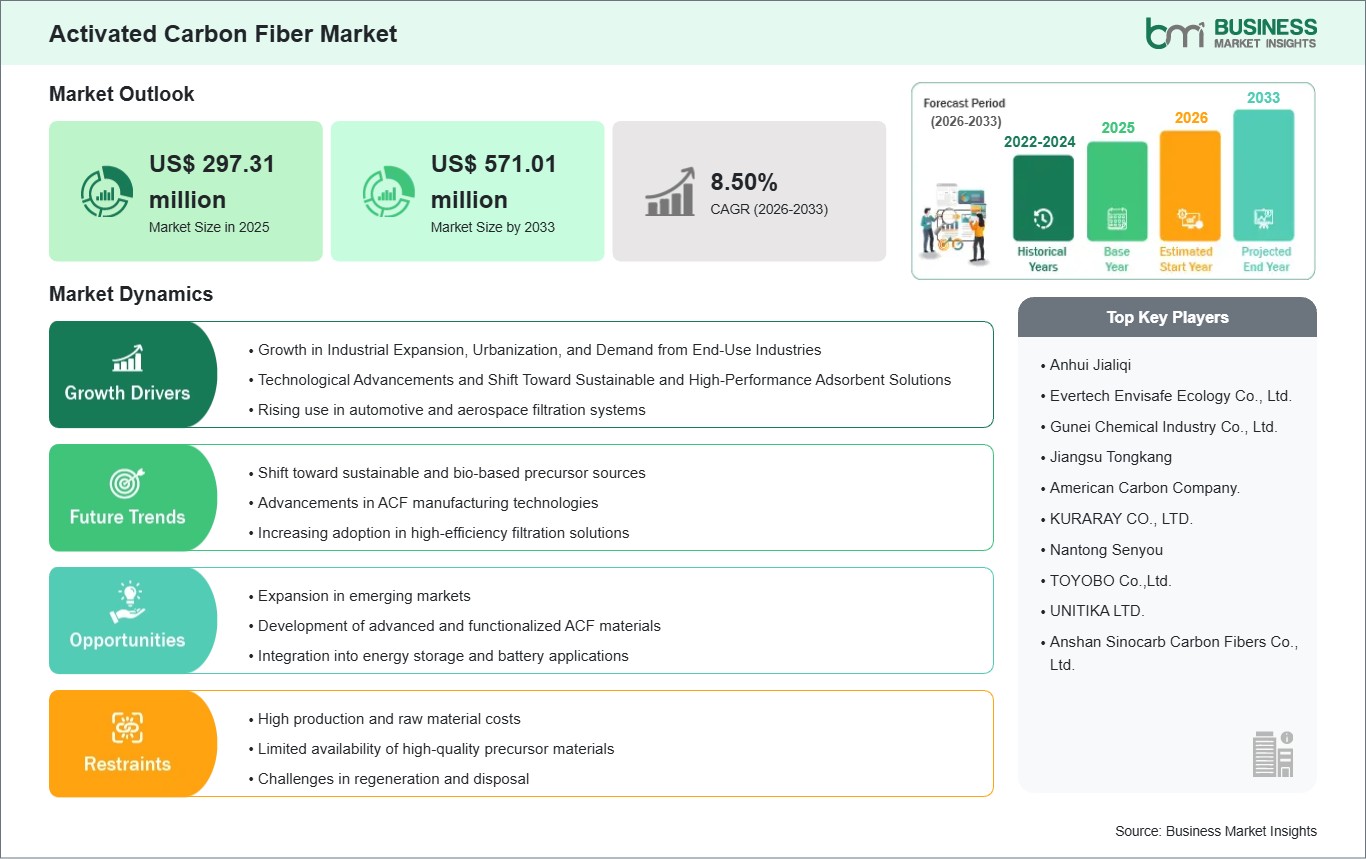
The Activated Carbon Fiber market size is expected to reach US$ 571.01 million by 2033 from US$ 297.31 million in 2025. The market is estimated to record a CAGR of 8.5% from 2026 to 2033.
Activated carbon fiber (ACF) production and its diverse application portfolio play a strategic role across multiple industrial sectors. Key end‑use industries—including water and air purification, industrial filtration, automotive, healthcare, chemical processing, electronics, food and beverage, and protective equipment manufacturing—collectively form the foundation of the global ACF market. ACF is recognized as a high‑performance adsorbent material characterized by its exceptionally large surface area, rapid adsorption–desorption capabilities, low weight, and strong chemical and thermal resistance. These attributes make it indispensable for critical processes such as filtration, separation, purification, and contamination control in both industrial and environmental applications. Globally, activated carbon fiber is deployed in water and air treatment systems, gas purification units, solvent recovery operations, personal protective equipment, medical filtration technologies, and industrial emission control solutions. Demand continues to rise across both emerging and mature economies, driven by accelerating industrialization, urban growth, stricter environmental regulations, and heightened concerns regarding air and water quality. Together, these factors reinforce ACF’s position as a critical material in sustainability‑driven and efficiency‑focused industries.
Owing to the growing environmental protection efforts, there is a need for high-performance, lightweight, and fast-acting adsorbent materials. This need has led to the increased use of activated carbon fiber in industrial emission control, water treatment, and personal safety applications. Moreover, a stronger focus on workplace safety, healthcare standards, and pollution control has increased the use of ACF in respirators, medical devices, and protective textiles. Improvements in fiber activation methods, surface modification, and high-capacity adsorption grades have opened up more potential applications. Subsequently, manufacturers are working on better adsorption efficiency, greater durability, and specialized ACF products designed for specific contaminants and end-use needs.
Additionally, the growing focus on sustainability, regulatory compliance, and energy-efficient purification processes has increased interest in renewable raw materials, recyclable ACF solutions, and low-emission manufacturing methods. However, the market also faces challenges. High production costs, complicated manufacturing processes, and reliance on specialized raw materials can affect prices and supply stability. Despite these challenges, the market outlook is positive due to ongoing research into cost-effective production methods, better regeneration technologies, and improved fiber performance. The global activated carbon fiber market is expected to grow steadily, supported by technological advancements, expanding environmental and industrial applications, and rising demand for efficient, high-performance, and sustainable adsorption materials across various sectors.

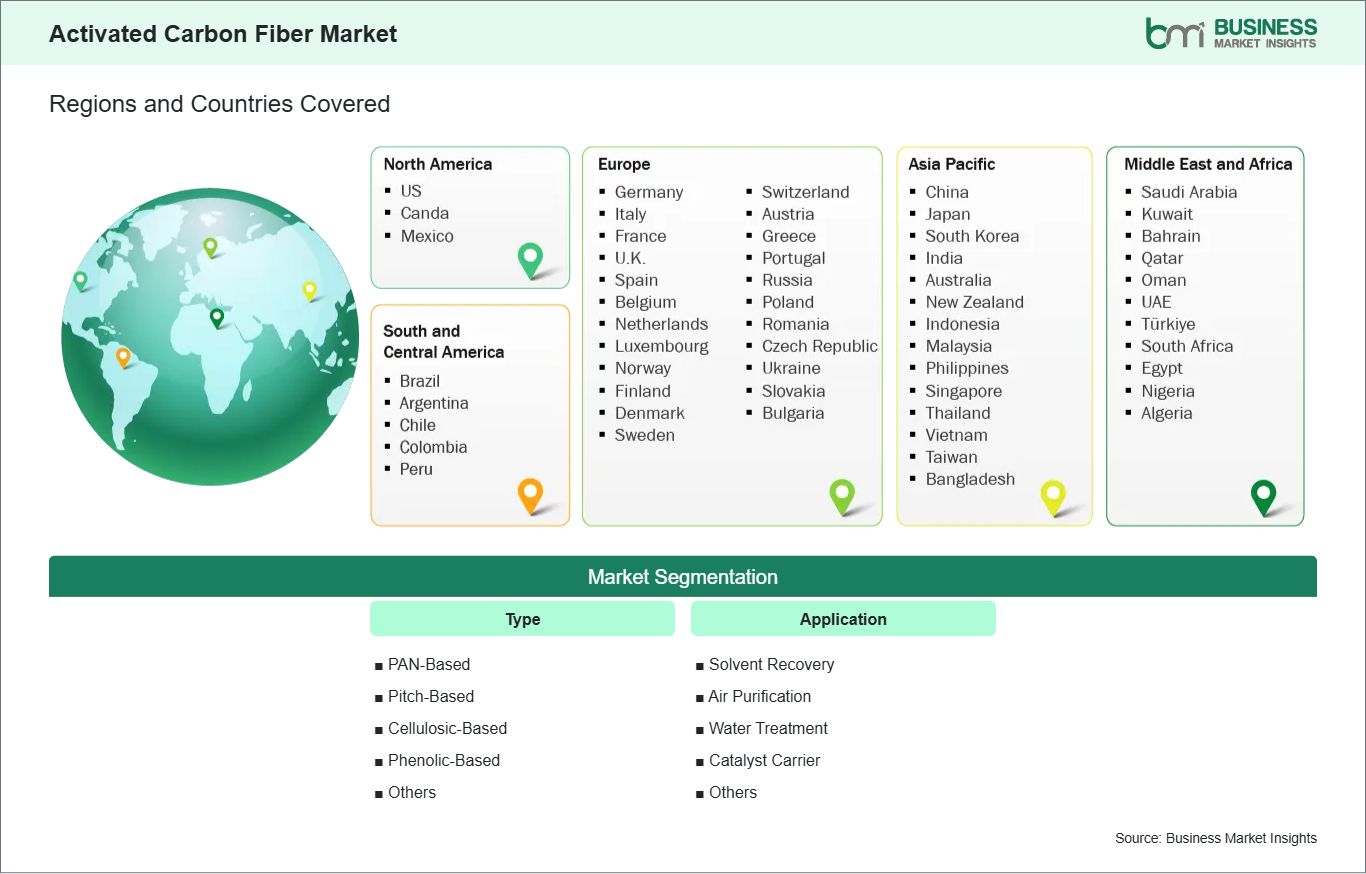
Key segments that contributed to the derivation of the Activated Carbon Fiber market analysis are type and application.
End-use industries like water and air purification, automotive, chemical processing, healthcare, electronics, and industrial filtration are steadily expanding. This growth increases ACF consumption in areas such as municipal and industrial water treatment, gas and air purification, protective equipment, solvent recovery, and emission control. The rise in industrial production and efforts for environmental protection have created a strong demand for activated carbon fiber due to its high surface area, quick adsorption rates, chemical and thermal stability, and lightweight structure. ACF improves product performance by efficiently removing contaminants, providing durability, and allowing reuse while supporting large-scale industrial and environmental purification processes.
In both industrial and consumer applications, the demand for high-performance adsorption materials, lightweight solutions, and affordable purification technologies has increased significantly. This trend, along with increasing investment in modern manufacturing facilities and environmental infrastructure projects, is speeding up the use of ACF in global markets. Rapid industrial growth in emerging economies and steady demand from developed regions further support market expansion. The increasing use of ACF in water and air treatment systems, industrial gas purification, automotive emission control, and protective textiles drives consistent growth as urbanization, environmental regulations, and industrial activity continue worldwide.
Manufacturers are adopting improved activation methods, surface modification techniques, and high-capacity fiber formulations to boost adsorption efficiency, thermal and chemical resistance, and energy-saving production. There is a rising emphasis on developing bio-based or renewable precursor fibers, low-emission production processes, and recyclable ACF materials that meet strict environmental and regulatory standards. These innovations aim to lessen ecological impact while ensuring high performance, durability, and functional versatility.
In fields like water treatment, air purification, automotive, chemical processing, and healthcare, where safety, efficiency, and compliance are essential, high-performance activated carbon fibers are gaining immense popularity. Moreover, the global shift toward sustainable purification technologies, energy-efficient filtration systems, and reusable adsorption media has increased the demand for environmentally responsible ACF solutions. As environmental regulations become stricter and industries adopt greener and more efficient manufacturing and purification practices, the need for advanced, high-quality, and sustainable activated carbon fibers is expected to grow steadily across global markets.
Based on type, the PAN-based segment had the largest share of the activated carbon fiber market. It offers better adsorption capacity, strong mechanical strength, and great thermal and chemical stability. These fibers are widely used in industrial gas purification, air filtration, and high-performance environmental applications. This makes them the preferred choice for manufacturers looking for reliable and durable ACF materials.
Regarding application, the water treatment segment also held the largest share of the activated carbon fiber market. ACF rapidly absorbs organic contaminants, heavy metals, and impurities from water. Its large surface area and ability to regenerate make it perfect for municipal, industrial, and wastewater treatment systems. This ensures effective purification and meets strict environmental standards.
| Report Attribute | Details |
|---|---|
| Market size in 2025 | US$ 297.31 million |
| Market Size by 2033 | US$ 571.01 million |
| Global CAGR (2026 - 2033) | 8.50% |
| Historical Data | 2022-2024 |
| Forecast period | 2026-2033 |
| Segments Covered | By Type
|
|
Regions and Countries Covered
| |
| North America | US, Canada, Mexico |
| Europe | Belgium, Austria, Finland, Denmark, Greece, Poland, Romania, Russia, Ukraine, Czech Republic, Slovakia, Bulgaria, Italy, Luxembourg, Germany, Switzerland, France, Netherlands, Norway, Portugal, Spain, Sweden, United Kingdom |
| Asia-Pacific | Australia, China, India, Japan, South Korea, Indonesia, Malaysia, Philippines, Singapore, Thailand, Vietnam, Bangladesh, New Zealand, Taiwan |
| South and Central America | Brazil, Argentina, Peru, Chile, Colombia |
| Middle East and Africa | Bahrain, Kuwait, Oman, Qatar, Saudi Arabia, United Arab Emirates, Turkiye, South Africa, Egypt, Algeria, Nigeria |
| Market leaders and key company profiles |
|
The "Activated Carbon Fiber Market Size and Forecast (2022–2033)" report provides a detailed analysis of the market covering below areas:
The geographical scope of the Activated Carbon Fiber market report is divided into five regions: North America, Asia Pacific, Europe, Middle East & Africa, and South & Central America. The Activated Carbon Fiber market in Asia Pacific is expected to grow significantly during the forecast period.
The Asia Pacific Activated Carbon Fiber market is segmented into China, Japan, South Korea, India, Australia, New Zealand, Indonesia, Malaysia, the Philippines, Singapore, Thailand, Vietnam, Taiwan, Bangladesh, and the Rest of Asia Pacific.
The Asia Pacific market for activated carbon fiber (ACF) is growing consistently. This growth is fueled by rapid industrialization, increased manufacturing, urbanization, and strong economic growth in the region. China, Japan, South Korea, and India are the frontrunners in this market due to significant investments in fiber production facilities, water and air treatment systems, industrial filtration, and chemical processing plants. The rising demand from sectors such as water treatment, air purification, industrial gas filtration, automotive, healthcare, and chemical processing is driving the use of activated carbon fiber throughout Asia Pacific. Furthermore, population growth, stricter environmental laws, and heightened awareness of air and water quality are increasing the demand for ACF in municipal water treatment plants, industrial effluent purification, gas filtration systems, and protective equipment in the region.
Another important trend shaping the regional market is the adoption of improved manufacturing techniques and capacity expansions. Manufacturers are concentrating on optimized fiber activation methods, better surface modification techniques, and cost-effective production processes to increase adsorption efficiency, fiber durability, and overall performance. The establishment of local ACF production facilities, stronger supply chain integration, and improved logistics networks are leading to better cost efficiency and more reliable supplies. In addition, rising investments in sustainable production methods, a greater focus on reusable and low-emission ACF, and strong export demand for high-performance fibers are positioning Asia Pacific as a key production and distribution hub in the global activated carbon fiber market. Supportive government policies, favorable environmental regulations, and continued growth in water treatment, industrial filtration, and environmental protection initiatives are strengthening the overall market outlook in the region.

The Activated Carbon Fiber market is evaluated by gathering qualitative and quantitative data post primary and secondary research, which includes important corporate publications, association data, and databases. A few of the key developments in the Activated Carbon Fiber market are:
The Activated Carbon Fiber Market is valued at US$ 297.31 million in 2025, it is projected to reach US$ 571.01 million by 2033.
As per our report Activated Carbon Fiber Market, the market size is valued at US$ 297.31 million in 2025, projecting it to reach US$ 571.01 million by 2033. This translates to a CAGR of approximately 8.50% during the forecast period.
The Activated Carbon Fiber Market report typically cover these key segments-
The historic period, base year, and forecast period can vary slightly depending on the specific market research report. However, for the Activated Carbon Fiber Market report:
The Activated Carbon Fiber Market is populated by several key players, each contributing to its growth and innovation. Some of the major players include:
The Activated Carbon Fiber Market report is valuable for diverse stakeholders, including:
Essentially, anyone involved in or considering involvement in the Activated Carbon Fiber Market value chain can benefit from the information contained in a comprehensive market report.
Please tell us your area of interest
(Market Segments/ Regions and Countries/ Companies)