
Brain Tumor Drugs Market Outlook: Size, Share, Trends, Growth Analysis, Competitive Landscape & Forecast, 2026-2033

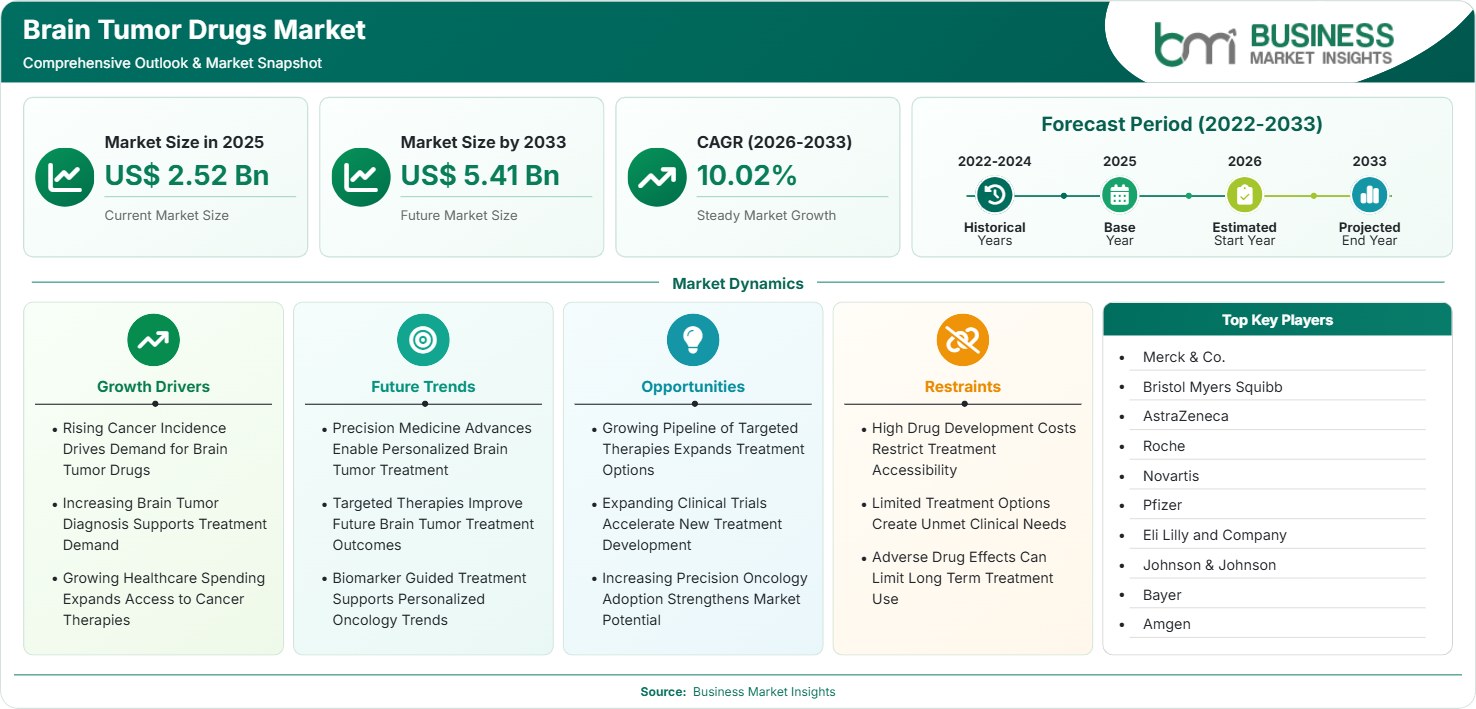
The Brain Tumor Drugs Market size was valued at US$ 2.52 billion in 2025 and is projected to reach US$ 5.41 billion by 2033, growing at a CAGR of 10.02% during 2026–2033. Rising brain cancer incidence, expanding precision oncology, increasing regulatory approvals for novel therapeutics, and growing investments in neuro-oncology research are creating substantial opportunities for innovative targeted therapies and immunotherapies.

Report Coverage
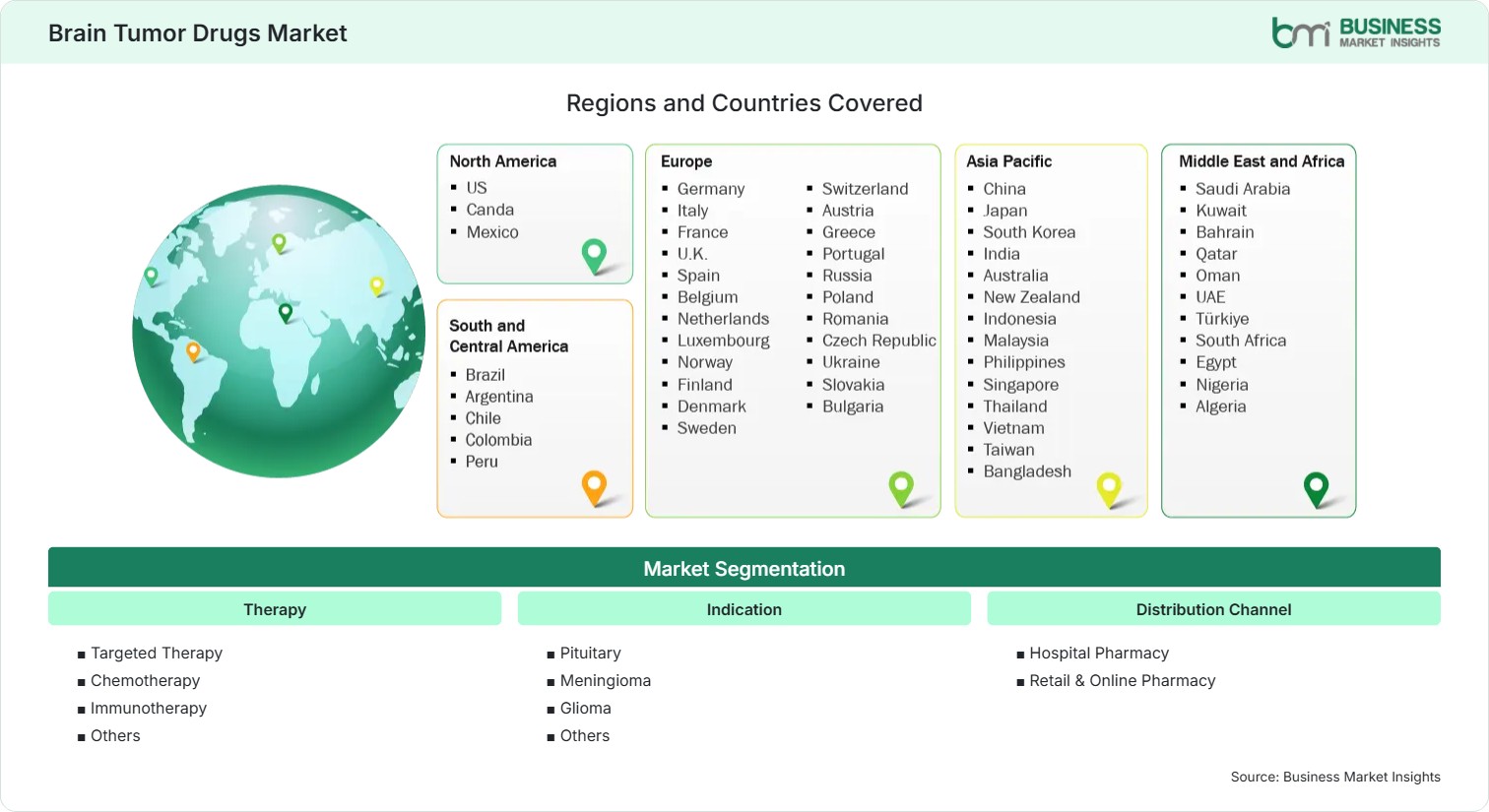
  • Therapy: Targeted Therapy, Chemotherapy, Immunotherapy, Others
  • Indication: Pituitary, Meningioma, Glioma, Others
  • Distribution Channel: Hospital Pharmacy, Retail & Online Pharmacy
US$ 2.52 Bn Market size in 2025
US$ 5.41 Bn Market Size by 2033
10.02% CAGR, 2026 - 2033
2026-2033 Forecast Period

01 AI Overview

Brain Tumor Drugs Market Summary

  • North America Region: North America holds 40%–43% market share in 2025, growing with a CAGR of 9.2%–9.8% during 2026–2033, supported by advanced oncology infrastructure, rapid adoption of innovative biologics, favorable reimbursement policies, expanding clinical research, and increasing precision medicine investments. The U.S. represents the regional growth engine with an estimated CAGR of 9.4%–10.0%, supported by robust oncology R&D, strong pharmaceutical innovation, and favorable reimbursement.
  • Fastest Growing Region: Asia Pacific accounts for 24%–27% market share in 2025 and is projected to register a CAGR of 11.4%–12.1% during 2026–2033, driven by expanding healthcare infrastructure, improving cancer diagnosis, rising pharmaceutical investments, increasing clinical trial activity, and wider access to targeted oncology therapies.
  • Leading Segment: Targeted Therapy represents 42%–45% market share in 2025 and is expected to grow at a CAGR of 10.5%–11.2% through 2033, supported by molecular diagnostics, biomarker-guided treatment selection, improved survival outcomes, growing product approvals, and continuous innovation in personalized cancer treatment.
  • High Growth Segment: Immunotherapy accounts for 19%–22% market share in 2025 while expanding at a CAGR of 12.3%–13.1% during 2026–2033, supported by immune checkpoint inhibitor development, combination treatment strategies, ongoing clinical research, expanding indications, and improving understanding of tumor immunology.
  • Key Market Opportunity: Expanding precision oncology, biomarker-driven drug development, artificial intelligence-assisted therapeutic discovery, and increasing collaborative research initiatives are accelerating commercialization opportunities for innovative brain tumor treatment solutions across developed and emerging healthcare markets.
  • Major Market Players: Merck & Co., Bristol Myers Squibb, AstraZeneca PLC, F. Hoffmann-La Roche Ltd, Novartis AG, Pfizer Inc., Eli Lilly and Company, Johnson & Johnson, Bayer AG, and Amgen Inc.
02 Strategic Insights

Brain Tumor Drugs Market: Strategic Insights

brain-tumor-drugs-market-market-strategic-framework
FREE PDF
Request your free sample
Request free sample
03 Stakeholder View

Key Takeaways

  • The Brain Tumor Drugs Market ecosystem is increasingly supported by integrated collaborations among pharmaceutical manufacturers, biotechnology firms, academic research institutions, diagnostic developers, and specialty oncology centers that accelerate innovation and commercialization.
  • Targeted therapy remains the strongest commercial opportunity as molecular profiling becomes standard practice, enabling personalized treatment selection and improving long-term clinical outcomes for patients with complex brain tumors.
  • Innovation is shifting toward biomarker-guided therapeutics, blood-brain barrier penetrating molecules, AI-assisted drug discovery, and combination treatment strategies integrating immunotherapy with targeted agents.
  • Asia Pacific presents one of the strongest long-term investment opportunities due to expanding oncology infrastructure, increasing healthcare expenditure, larger patient populations, and improving regulatory support for innovative medicines.
  • Strategic licensing agreements, co-development partnerships, acquisitions of oncology biotechnology companies, and increased venture capital funding continue to strengthen competitive positioning across the global pharmaceutical landscape.
  • Increasing integration of companion diagnostics, real-world evidence, and digital health platforms is enabling more precise treatment selection, improving clinical decision-making, accelerating regulatory acceptance, and supporting value-based oncology care across developed and emerging healthcare markets.
04 Geographic Outlook

Brain Tumor Drugs Market Regional Highlights

North America Brain Tumor Drugs Market

North America accounted for 40%–43% of global revenue in 2025 and is projected to expand at a CAGR of 9.2%–9.8% during 2026–2033. Strong reimbursement systems, extensive oncology research, advanced hospital infrastructure, and rapid commercialization of innovative therapeutics continue supporting regional leadership. The Brain Tumor Drugs Market share remains highest in this region because of significant pharmaceutical R&D investments, early adoption of personalized medicine, and continuous expansion of precision oncology programs.

  • Strong FDA regulatory pathways accelerate commercialization of innovative neuro-oncology therapeutics while encouraging pharmaceutical companies to invest in advanced clinical development programs.
  • Comprehensive reimbursement coverage supports greater patient access to premium biologics, targeted therapies, and immunotherapy treatments across specialized cancer centers.
  • Growing academic-industry collaboration continues improving translational research, biomarker validation, and development of precision oncology therapies.
  • Continuous investments in genomic medicine and AI-assisted drug discovery strengthen innovation across the neuro-oncology treatment landscape.

US Brain Tumor Drugs Market

The United States represents the largest national market within North America, accounting for 82%–85% of regional revenue and expanding at a CAGR of 9.4%–10.0% through 2033. High healthcare expenditure, leading pharmaceutical innovators, extensive oncology clinical research, and strong regulatory support continue driving commercialization of advanced therapies for malignant brain tumors.

  • Major pharmaceutical companies continue investing heavily in targeted therapy research supported by collaborations with leading cancer institutes and biotechnology innovators.
  • Precision medicine adoption continues increasing through expanded genomic testing, improving patient stratification and personalized therapeutic selection.
  • Growing utilization of immunotherapy combination regimens strengthens clinical research pipelines and supports future product approvals.

Europe Brain Tumor Drugs Market

Europe represented 26%–29% of global revenue during 2025 and is forecast to grow at a CAGR of 9.5%–10.1% through 2033. Strong regulatory harmonization, expanding oncology research funding, and increasing precision medicine initiatives support sustained market expansion. Germany leads regional revenue generation, while Spain demonstrates one of the fastest growth trajectories through expanding oncology infrastructure.

  • Government-funded cancer programs improve patient access to innovative therapies and support broader adoption of personalized oncology.
  • Strong academic research capabilities continue strengthening development of novel immunotherapy and targeted treatment approaches.
  • Pharmaceutical partnerships accelerate commercialization through collaborative clinical development across multiple European countries.
  • Increasing investment in molecular diagnostics supports earlier treatment selection and improved clinical outcomes.

Asia Pacific Brain Tumor Drugs Market

Asia Pacific accounted for 24%–27% of global revenue in 2025 while registering the fastest regional expansion at a CAGR of 11.4%–12.1%. Rising healthcare expenditure, increasing cancer diagnosis, improving reimbursement frameworks, and growing domestic pharmaceutical innovation continue accelerating regional demand. China leads regional revenue generation, while India records the strongest expansion supported by healthcare modernization.

  • Growing pharmaceutical manufacturing capabilities improve regional availability of innovative oncology medicines.
  • Government healthcare reforms continue strengthening cancer diagnosis and specialist treatment accessibility.
  • Expanding clinical trial participation accelerates development and approval of advanced neuro-oncology therapies.
  • Rising awareness regarding early diagnosis contributes to improved treatment adoption across developing economies.

Rest of World Brain Tumor Drugs Market

The Rest of World region accounted for 8%–10% of global revenue during 2025 and is expected to expand at a CAGR of 9.8%–10.5% through 2033. Brazil remains the leading South and Central American market, while Saudi Arabia demonstrates strong healthcare investment across the Middle East. Increasing oncology infrastructure, improving specialist access, and expanding pharmaceutical partnerships continue supporting regional development.

  • Growing public healthcare investments improve availability of advanced oncology medicines across emerging economies.
  • International pharmaceutical collaborations strengthen technology transfer and local commercialization capabilities.
  • Expansion of specialty cancer hospitals increases treatment accessibility for complex neurological malignancies.
  • Improving regulatory frameworks encourage multinational clinical research and innovative therapy adoption.
global-market-geography
FREE PDF
Request your free sample
Request free sample
05 Segment Analysis

Brain Tumor Drugs Market Segmentation

Therapy

Targeted therapies remain the largest therapeutic category with 42%–45% market share in 2025 and are expected to expand at a CAGR of 10.5%–11.2% through 2033. The Brain Tumor Drugs Market scope continues expanding as precision medicine, biomarker-guided treatment, and combination therapeutic approaches improve treatment outcomes while supporting personalized oncology adoption.

  • Targeted Therapy: Dominates clinical adoption through biomarker-specific treatments offering improved efficacy, reduced systemic toxicity, and expanding regulatory approvals across multiple brain tumor indications.
  • Chemotherapy: Continues serving as an essential treatment option, particularly in combination regimens where established clinical evidence and broad physician familiarity support consistent utilization.
  • Immunotherapy: Experiences rapid adoption through checkpoint inhibitors, combination therapies, and expanding clinical research investigating durable immune-mediated responses against aggressive tumors.
  • Others: Includes hormone-based and supportive therapeutic approaches addressing specific clinical requirements while complementing comprehensive multidisciplinary treatment strategies.

Indication

Glioma remains the dominant indication with an estimated 48%–51% revenue contribution in 2025 and is projected to grow at a CAGR of 10.6%–11.3% through 2033 owing to higher disease prevalence, extensive research activity, and significant unmet medical needs.

  • Pituitary: Increasing diagnosis rates and improved endocrine management continue supporting stable therapeutic demand across specialized healthcare facilities.
  • Meningioma: Greater imaging accessibility and earlier diagnosis contribute to improved treatment planning alongside growing pharmaceutical research.
  • Glioma: Represents the largest therapeutic focus because of high disease burden, substantial clinical research investments, and continuous development of innovative targeted medicines.
  • Others: Includes rare primary brain tumors requiring individualized treatment strategies supported by multidisciplinary oncology care.

Distribution Channel

Hospital pharmacies accounted for 68%–71% of revenue in 2025 and are anticipated to register a CAGR of 9.8%–10.4% through 2033 due to administration of specialty oncology medicines within comprehensive cancer centers and tertiary hospitals.

  • Hospital Pharmacy: Remains the primary distribution channel because most advanced oncology drugs require specialist supervision, infusion services, and multidisciplinary patient management.
  • Retail & Online Pharmacy: Continues expanding through increasing availability of oral targeted therapies, digital prescription services, and improved pharmaceutical distribution networks supporting outpatient cancer care.
06 Market Forces

Brain Tumor Drugs Market Dynamics

Key Market Drivers

Rising Cancer Incidence Drives Demand for Brain Tumor Drugs

The rise in cancer burden on a global scale has resulted in a surge in the demand for neuro-oncology products. As stated by the World Health Organization, cancer continues to be among the main reasons for deaths around the globe, hence increasing the need for novel treatment modalities. An increase in the incidence of gliomas and other malignant brain tumors has led drug manufacturers to develop new treatment products for such conditions. Market development has been driven by advancements in molecular characterization, disease classification, and personalized treatments. The Brain Tumor Drugs Market trends suggest that treatment strategies now favor personalized therapy based on specific genetic alterations, rather than relying solely on traditional treatment techniques.

Increasing Brain Tumor Diagnosis Supports Treatment Demand

Better diagnostic facilities are making the diagnosis of brain tumors possible at an earlier stage, hence creating the need for treatment options that work. Better MRI technology, molecular diagnostics, and biomarkers are helping doctors categorize different types of tumors and choose appropriate treatment plans. Increased knowledge of patients and healthcare professionals is also leading to early consultations. The availability of oncology clinics and multidisciplinary treatment centers is contributing to the trend toward treatment adoption. All these factors are motivating pharmaceutical companies to develop treatments for a wide range of brain tumors.

Growing Healthcare Spending Expands Access to Cancer Therapies

Increasing healthcare spending in both developed and emerging countries is contributing to access to advanced oncology therapies. There are greater government investments in cancer healthcare facilities, improved reimbursement, and more specialty hospitals, which have helped increase access to novel drugs. Various countries in the Asia-Pacific and Latin America regions are strengthening their healthcare systems to address the rise in NCDs. Pharmaceutical firms are making greater efforts to expand market access and to offer more patient support programs. All of these contribute to increased commercial opportunities for advanced brain tumor therapies.

Key Market Opportunities

Growing Pipeline of Targeted Therapies Expands Treatment Options

The growing pipeline of targeted therapies is an important growth opportunity for drug manufacturers, with an emphasis on developing molecularly based medicines for brain tumors. Progress in genomics and biomarker discovery is driving the development of medicines that target specific tumor mutations or biological processes. Drug manufacturers have been increasingly looking into developing medicines to target mutations such as EGFR, BRAF, and IDH, as well as other mechanisms. The growing trend in precision oncology offers great potential to develop differentiated drugs with greater therapeutic benefit. Brain Tumor Drugs Market forecasts are underpinned by research investments aimed at enhancing efficacy, reducing toxicity, and overcoming resistance.

Expanding Clinical Trials Accelerate New Treatment Development

The growing number of clinical trials conducted at various cancer research institutions is helping drive innovation in brain tumor treatments. Various drug companies and research institutions are working together to conduct clinical trials of new forms of immunotherapy, targeted therapies, and treatment combinations. The growth of international clinical trial networks is facilitating better patient enrollment, thereby enabling the rapid evaluation of new treatments. Regulatory authorities are also supporting faster approval processes for treatments targeting conditions with few or no treatment options.

Increasing Precision Oncology Adoption Strengthens Market Potential

With the increase in precision oncology, treatment methods are changing to incorporate genomic information, molecular diagnostics, and personalized treatments. There is an increasing tendency to use biomarker testing in healthcare facilities to improve patient selection and treatment. This trend opens new opportunities for pharma companies specializing in companion diagnostics and targeted drugs. With AI integration into drug discovery and decision support, there are more opportunities to personalize therapy. In terms of global expansion of precision medicine, there will be new opportunities for manufacturers of neuro-oncology care.

Market Restraints and Challenges

High Drug Development Costs Restrict Treatment Accessibility

Factor: High research, clinical trial, and regulatory approval costs increase the financial burden associated with developing brain tumor therapies. Impact: Higher development costs can delay commercialization timelines and increase treatment prices, making them less accessible to patients. The development of neuro-oncology drugs is associated with substantial costs related to clinical research, high-technology manufacturing, and post-marketing safety surveillance. It could be difficult for small biotechnology companies to secure funding for moving drug candidates into late-stage clinical testing. Innovation does progress, but affordability still matters.

Limited Treatment Options Create Unmet Clinical Needs

Factor: Complex tumor biology, blood-brain barrier limitations, and treatment resistance restrict the effectiveness of available therapies. Impact: Patients suffering from aggressive brain cancers still have few treatment options available, even with the advent of targeted drugs and immunotherapies. Glioblastomas, in particular, are among the difficult indications, characterized by rapid growth and heterogeneity. Scientists are developing new combination treatments, innovative delivery mechanisms, and immunotherapeutic strategies to address this problem. But generating positive clinical outcomes remains one of the most difficult tasks.

07 Company Analysis

Competitive Landscape

The competitive environment is shaped by pharmaceutical leaders investing in targeted therapies, immunotherapies, chemotherapy solutions, and oncology research partnerships. The Brain Tumor Drugs Market analysis highlights increasing competition around precision medicine capabilities, clinical pipeline strength, regulatory expertise, and commercialization networks.

Company Name

Overview

Products and Services relevant to this market

Merck & Co.

Global pharmaceutical company with strong oncology research capabilities and immunotherapy expertise.

Oncology medicines including checkpoint inhibitors and research programs focused on advanced cancer treatment approaches.

Bristol Myers Squibb

Major biopharmaceutical company specializing in innovative oncology and immunology therapies.

Immunotherapy products, oncology combinations, and clinical research programs targeting complex cancers.

AstraZeneca PLC

Global pharmaceutical leader with strong precision oncology and targeted therapy development capabilities.

Targeted cancer therapies, oncology biologics, and personalized medicine solutions for tumor treatment.

F. Hoffmann-La Roche Ltd

Healthcare company recognized for oncology innovation and diagnostic integration.

Cancer medicines, biomarker testing solutions, and personalized oncology treatment platforms.

Novartis AG

Pharmaceutical company with extensive oncology and molecular medicine expertise.

Targeted therapies, oncology research programs, and precision medicine solutions.

Pfizer Inc.

Global biopharmaceutical company with broad oncology development capabilities.

Cancer medicines, targeted therapies, and innovative oncology pipeline products.

Eli Lilly and Company

Pharmaceutical company focused on oncology innovation and advanced therapeutics.

Oncology drugs, targeted treatments, and clinical research supporting cancer care advancement.

Johnson & Johnson

Healthcare company with pharmaceutical operations focused on innovative cancer treatments.

Oncology medicines, combination therapies, and research-driven cancer treatment solutions.

Bayer AG

Global life science company active in oncology and precision medicine.

Targeted cancer therapies and innovative pharmaceutical solutions for tumor management.

Amgen Inc.

Biotechnology company specializing in biologics and oncology therapeutics.

Oncology biologics, targeted treatments, and research-based cancer care solutions.

10 Trust & Transparency

Research Methodology

The market analysis combines proprietary research with secondary data from government agencies, company disclosures, regulatory filings, industry databases and expert interviews. Market estimates are validated through data triangulation, cross-market benchmarking and analyst review.

View Full Research Methodology

11 Questions Answered

Frequently Asked Questions

What is covered in the Brain Tumor Drugs Market Report?

The market report evaluates market size, growth factors, segmentation, competitive landscape, regional trends, key opportunities, and industry developments influencing future growth.

How are pharmaceutical companies addressing treatment challenges?

Companies are investing in combination therapies, advanced drug delivery technologies, biomarker research, and clinical collaborations to overcome treatment resistance.

Why is precision oncology important for brain tumor treatment?

Precision oncology enables physicians to select treatments based on molecular characteristics, improving patient stratification and supporting more effective therapeutic approaches.

Which therapy segment has the strongest growth potential?

Targeted therapy and immunotherapy segments demonstrate strong potential due to biomarker-driven development, improved treatment personalization, and increasing research investment.

What factors are driving the Brain Tumor Drugs Market?

Increasing cancer incidence, improved diagnosis, precision oncology adoption, expanding clinical trials, and growing investment in targeted therapies are major factors supporting market expansion.

Access the Full Brain Tumor Drugs Market Report

Get segment-level forecasts, regional estimates, competitive benchmarking, company profiles and downloadable Excel datasets.

Access the full Brain Tumor Drugs Market Report
350 pages PDF & Excel | 2026-08-05