
Biomaterial Wound Dressing Market Outlook: Size, Share, Trends, Growth Analysis, Competitive Landscape & Forecast, 2026-2033

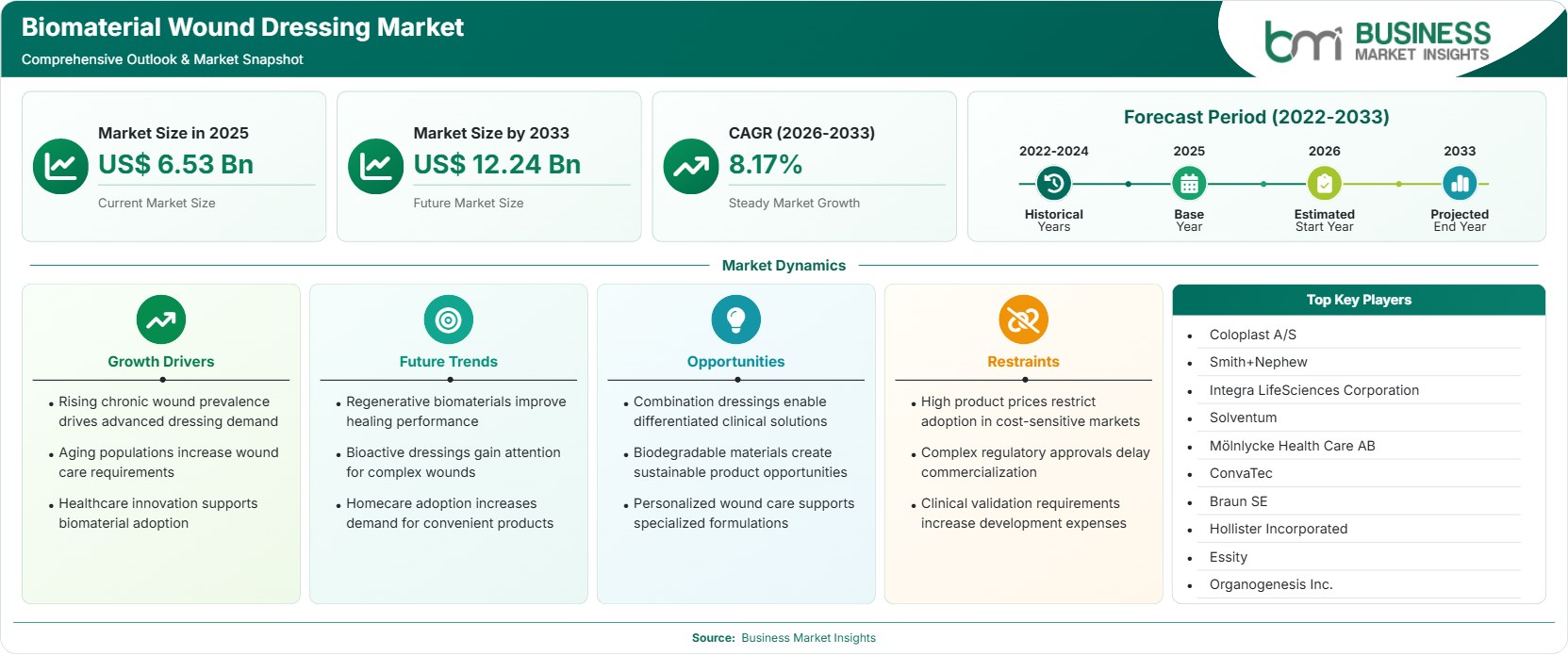
The Biomaterial Wound Dressing Market size was valued at USD 6.53 Billion in 2025 and is projected to reach USD 12.24 Billion by 2033, growing at a CAGR of 8.17% during 2026–2033. Rising chronic wound incidence, increasing geriatric populations, growing demand for advanced wound management products, and ongoing biomaterial innovations are creating significant opportunities across healthcare settings worldwide.

Report Coverage
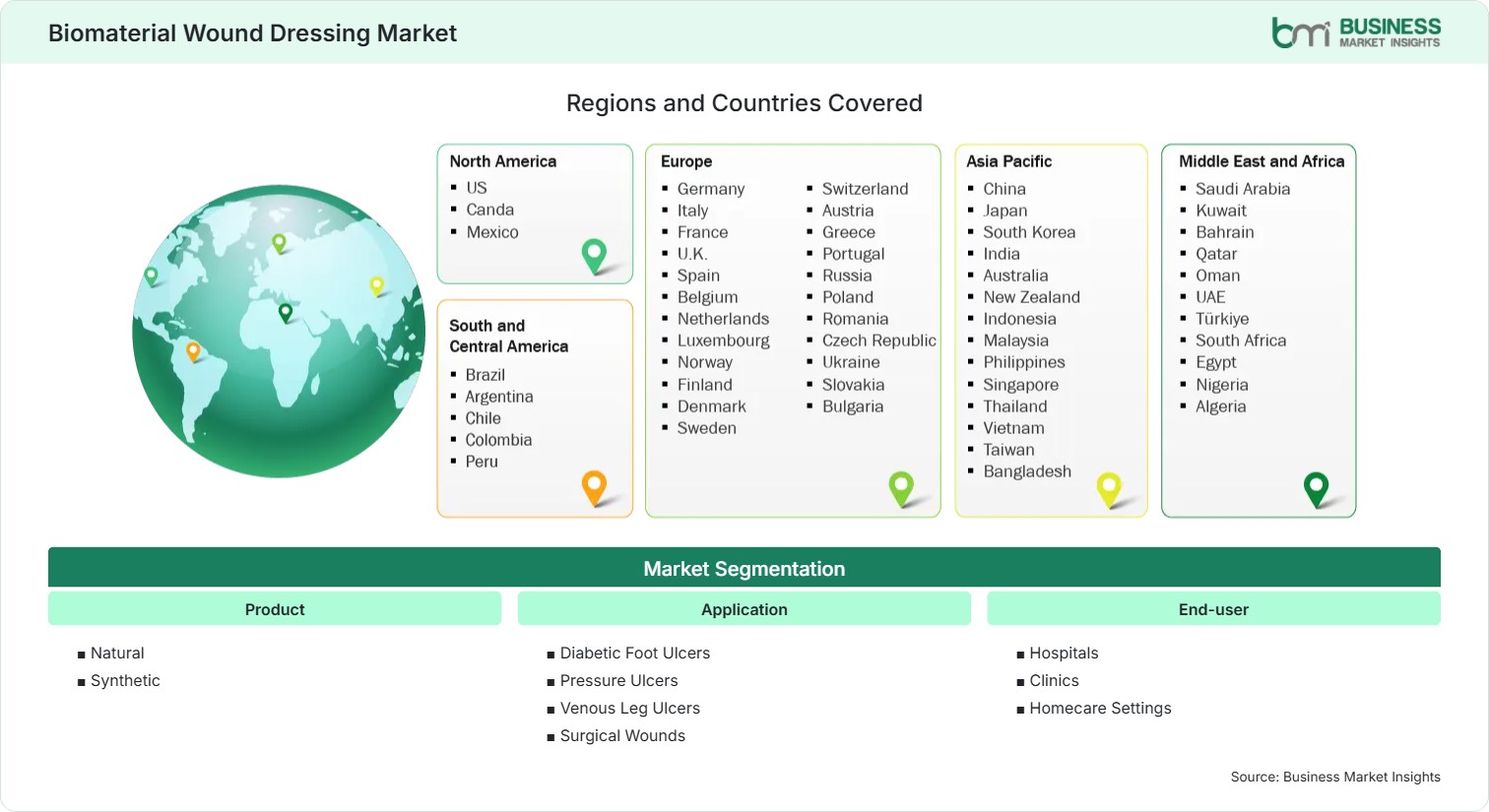
  • Product: Natural, Synthetic
  • Application: Diabetic Foot Ulcers, Pressure Ulcers, Venous Leg Ulcers, Surgical Wounds
  • End-user: Hospitals, Clinics, Homecare Settings
US$ 6.53 Bn Market size in 2025
US$ 12.24 Bn Market Size by 2033
8.17% CAGR, 2026 - 2033
2026-2033 Forecast Period

01 AI Overview

Biomaterial Wound Dressing Market Summary

  • North America Region: North America holds 37%–40% share in 2025 and is projected to grow at a 7.5%–8.1% CAGR during 2026–2033. High chronic wound prevalence, advanced healthcare infrastructure, strong reimbursement frameworks, and continuous product innovation support sustained adoption across hospitals and specialty care facilities. U.S. market benefits from advanced wound-care adoption and growing diabetic populations, expanding at 7.7%–8.3% CAGR.
  • Fastest Growing Region: Asia Pacific accounts for 22%–25% share in 2025 and is forecast to expand at a 9.5%–10.2% CAGR during 2026–2033. Expanding healthcare access, increasing chronic disease burden, rising surgical procedures, and growing investment in advanced wound-care technologies continue driving regional demand.
  • Leading Segment: Natural biomaterial dressings represent 56%–60% share in 2025 and are expected to grow at a 8.2%–8.8% CAGR. Superior biocompatibility, enhanced healing properties, and broad clinical acceptance support continued segment leadership.
  • High Growth Segment: Diabetic Foot Ulcers account for 29%–33% share in 2025 and are projected to expand at a 9.1%–9.8% CAGR. Rising diabetes prevalence, greater focus on limb preservation, and increasing adoption of advanced wound-care protocols accelerate demand.
  • Key Market Opportunity: Development of next-generation biomaterial dressings incorporating regenerative technologies, antimicrobial functionality, and personalized treatment approaches creates opportunities for improved outcomes and premium product positioning.
  • Major Market Players: Coloplast A/S, Smith & Nephew plc, Integra LifeSciences Holdings Corporation, Solventum Corporation, Mölnlycke Health Care AB, Convatec Group plc, B. Braun SE, Hollister Incorporated, Essity AB, Organogenesis Holdings Inc.
02 Strategic Insights

Biomaterial Wound Dressing Market: Strategic Insights

Biomaterial Wound Dressing Market Strategic Framework
FREE PDF
Request your free sample
Request free sample
03 Stakeholder View

Key Takeaways

  • The industry value chain increasingly integrates biomaterial developers, wound-care manufacturers, healthcare providers, distributors, and research institutions to improve innovation and clinical adoption.
  • Diabetic foot ulcer management offers one of the strongest commercial opportunities due to increasing diabetes prevalence and growing emphasis on preventive wound-care strategies.
  • Research and development efforts are increasingly focused on bioactive dressings, regenerative materials, antimicrobial protection, and enhanced moisture-control capabilities.
  • Asia Pacific presents the most attractive regional growth opportunity due to expanding healthcare expenditures, rising surgical volumes, and increasing access to advanced wound-care technologies.
  • Strategic partnerships, acquisitions, and product portfolio expansion initiatives remain important competitive approaches among major wound-care companies.
  • Personalized wound-care solutions supported by advanced biomaterials are expected to become increasingly important in improving treatment outcomes and reducing healthcare costs.
04 Geographic Outlook

Biomaterial Wound Dressing Market Regional Highlights

North America Biomaterial Wound Dressing Market

North America represented 37%–40% Biomaterial Wound Dressing Market share in 2025 and is expected to expand at a 7.5%–8.1% CAGR through 2033. Strong healthcare spending, broad adoption of advanced wound-care protocols, and increasing chronic disease prevalence support market leadership. Hospitals, specialty wound-care centers, and homecare providers continue expanding utilization of advanced biomaterial dressings to improve healing outcomes and reduce treatment complexity. Innovation in tissue-regenerative materials and favorable reimbursement structures further strengthen market development across the region.

  • Growing diabetic and elderly populations continue increasing demand for advanced wound-care products capable of accelerating healing and reducing complication risks.
  • Hospitals and wound-care clinics increasingly adopt biomaterial-based technologies to improve treatment effectiveness for complex chronic wounds.
  • Product innovation remains focused on antimicrobial properties, moisture balance, and tissue-regeneration support capabilities.
  • Reimbursement support and clinical guideline adoption encourage broader penetration of advanced wound-care solutions.
  • Expansion of outpatient and homecare treatment models continues increasing accessibility of specialized wound dressings.

US Biomaterial Wound Dressing Market

The United States accounts for approximately 81%–85% Biomaterial Wound Dressing Market share within North America and is anticipated to grow at a 7.7%–8.3% CAGR during 2026–2033. High prevalence of chronic wounds, significant healthcare expenditures, and advanced wound-management infrastructure contribute to market leadership. Healthcare providers increasingly prioritize early intervention strategies and evidence-based wound-care protocols, creating favorable conditions for biomaterial dressing adoption across acute, chronic, and post-surgical wound applications.

  • Advanced wound-care centers continue driving adoption of premium biomaterial dressing technologies for complex patient populations.
  • Increasing focus on diabetic wound prevention strengthens demand for specialized healing products.
  • Healthcare providers seek solutions that reduce hospitalization duration and improve patient recovery outcomes.
  • Strong innovation activity supports continued introduction of advanced regenerative wound-care technologies.

Europe Biomaterial Wound Dressing Market

Europe accounted for 28%–31% share in 2025 and is projected to expand at a 7.9%–8.5% CAGR through 2033. Growing elderly populations, increasing prevalence of chronic wounds, and strong adoption of advanced wound-care protocols support regional demand. Germany remains the leading market due to extensive healthcare infrastructure and advanced clinical practices, while Spain and Italy demonstrate robust growth driven by expanding wound-management programs and rising chronic disease incidence. Healthcare systems continue emphasizing cost-effective healing solutions and reduced hospitalization durations.

  • Germany leads regional demand through strong clinical adoption of advanced biomaterial wound-care technologies and established reimbursement mechanisms.
  • Spain and Italy are experiencing increasing utilization of regenerative wound dressings across chronic wound management programs.
  • Hospitals continue investing in advanced care pathways focused on reducing wound-healing time and treatment complexity.
  • Greater awareness regarding pressure injury prevention supports increased product adoption in long-term care settings.
  • Product innovation centered on bioactive materials and infection control continues strengthening market competitiveness.

Asia Pacific Biomaterial Wound Dressing Market

Asia Pacific represented 22%–25% share in 2025 and is anticipated to register the fastest expansion at 9.5%–10.2% CAGR through 2033. Expanding healthcare access, increasing diabetes prevalence, and rising surgical procedures are supporting strong market development. China remains the largest revenue contributor due to healthcare modernization efforts, while India demonstrates accelerated growth through increasing chronic disease management initiatives. Demand for advanced wound-care products is rising as healthcare providers seek improved clinical outcomes and reduced treatment complications.

  • China benefits from growing investment in hospital infrastructure and advanced wound-care treatment capabilities.
  • India records strong growth driven by increasing diabetes prevalence and rising awareness of chronic wound management.
  • Expanding private healthcare networks are supporting wider accessibility of advanced wound-care products.
  • Medical tourism growth contributes to greater adoption of high-performance wound-management solutions.
  • Government healthcare modernization initiatives continue supporting technology adoption across clinical settings.

Rest of World Biomaterial Wound Dressing Market

Rest of World accounted for 7%–10% share in 2025 and is projected to grow at a 8.3%–8.9% CAGR through 2033. South and Central America are benefiting from expanding healthcare access and increasing chronic disease treatment programs. The Middle East and Africa region demonstrates growing demand due to healthcare investments, rising surgical volumes, and improving wound-care awareness. Brazil leads regional revenues, while Gulf Cooperation Council countries display strong growth potential through healthcare infrastructure expansion and specialty care development.

  • Healthcare infrastructure investments are increasing availability of advanced wound-care products across emerging markets.
  • Growing prevalence of diabetes and obesity continues supporting demand for specialized chronic wound treatment solutions.
  • Hospitals increasingly adopt advanced dressings to improve patient outcomes and reduce long-term care costs.
  • Expansion of private healthcare facilities improves access to innovative wound-management technologies.
  • Medical education initiatives continue strengthening clinician awareness regarding advanced wound-care protocols.
Global Market Geography
FREE PDF
Request your free sample
Request free sample
05 Segment Analysis

Biomaterial Wound Dressing Market Segmentation

Product

Natural biomaterial dressings account for approximately 56%–60% share in 2025 and are expected to expand at a 8.2%–8.8% CAGR through 2034. The Biomaterial Wound Dressing Market scope continues expanding as healthcare providers increasingly prioritize materials with strong biocompatibility, effective moisture management, and enhanced tissue regeneration characteristics. Growing clinical acceptance and favorable healing outcomes continue supporting segment leadership.

  • Natural: Derived from biological materials such as collagen and alginate, these products support tissue repair, moisture balance, and enhanced healing responses in complex wounds.
  • Synthetic: Increasingly utilized due to controlled performance characteristics, manufacturing consistency, and compatibility with advanced wound-management technologies.

Application

Diabetic Foot Ulcers represent the leading application segment, accounting for approximately 29%–33% share in 2025 and advancing at 9.1%–9.8% CAGR through 2034. Rising diabetes prevalence, increasing wound-related complications, and growing healthcare emphasis on limb preservation continue driving strong demand for advanced wound-care solutions in this application area.

  • Diabetic Foot Ulcers: High treatment complexity and recurrence risks support continued adoption of advanced biomaterial dressing technologies.
  • Pressure Ulcers: Increasing elderly populations and long-term care utilization contribute to growing demand for effective wound healing products.
  • Venous Leg Ulcers: Chronic wound prevalence and recurrence concerns support sustained need for advanced treatment strategies.
  • Surgical Wounds: Expanding surgical procedure volumes increase demand for dressings that support rapid healing and infection prevention.

End-user

Hospitals remain the largest end-user segment with approximately 61%–65% share in 2025 and projected growth of 7.8%–8.4% CAGR through 2034. The Biomaterial Wound Dressing Market trends indicate increasing integration of advanced wound-care protocols within acute-care settings as providers seek to improve healing outcomes, reduce complications, and optimize clinical efficiency.

  • Hospitals: Represent the primary point of care for acute and chronic wound management requiring advanced treatment interventions.
  • Clinics: Growing utilization reflects increasing availability of specialized wound-care services and outpatient treatment models.
  • Homecare Settings: Demand is rising as healthcare systems promote decentralized care and patient-centered treatment approaches.
06 Market Forces

Biomaterial Wound Dressing Market Dynamics

Key Market Drivers

Rising chronic wound prevalence drives advanced dressing demand

The growing burden of chronic wounds, including diabetic foot ulcers, pressure ulcers, and venous leg ulcers, continues to increase demand for advanced wound-care solutions. Rising diabetes prevalence, longer life expectancy, and increasing rates of obesity contribute to higher incidences of difficult-to-heal wounds. The Biomaterial Wound Dressing Market growth trajectory is strengthened by clinical demand for products that accelerate healing, maintain optimal moisture balance, and reduce infection risks. Healthcare providers increasingly prioritize advanced biomaterial dressings because they support improved outcomes, shorter healing durations, and reduced hospitalization requirements. These clinical and economic advantages continue supporting broader adoption across healthcare settings.

Aging populations increase wound care requirements

The worldwide increase in elderly populations is creating sustained demand for wound-care therapies. People of older age groups are at risk of developing chronic wounds owing to decreased mobility, vascular problems, reduced healing time, and presence of several other diseases. Healthcare facilities are now making more investments in wound management programs which focus on preventive measures and latest wound care technology. The biomaterial dressings are now used in healthcare because of their effectiveness in tissue regeneration and wound healing. The growing number of people is one of the major factors driving the use of effective wound-care products.

Healthcare innovation supports biomaterial adoption

Continuous innovation in biomaterials, regenerative medicine, and advanced wound-care technologies is driving market development. Manufacturers are launching products with antimicrobial properties, growth factors, and improved moisture-management features. Such developments enhance the effectiveness of wound healing while minimizing issues related to both chronic and acute wounds. Research efforts centered on bioactive products and tissue engineering broaden the range of treatment options available. Rising confidence among practitioners regarding sophisticated biomaterials technology has led to greater adoption in the application of surgical, chronic, and specialty wound care.

Key Market Opportunities

Combination dressings enable differentiated clinical solutions

Combination dressings that integrate multiple therapeutic functions offer notable growth opportunities. Products combining antimicrobial activity, moisture regulation, absorption control, and regenerative support provide comprehensive wound-management capabilities. Biomaterial Wound Dressing Market Forecasts increasingly reflect demand for multifunctional solutions that simplify treatment protocols while improving outcomes. Healthcare providers favor products capable of reducing dressing changes and enhancing patient comfort. Manufacturers investing in differentiated combination technologies can strengthen competitive positioning, support premium pricing strategies, and address evolving clinical requirements across diverse wound categories.

Biodegradable materials create sustainable product opportunities

Sustainability considerations are gradually influencing healthcare procurement decisions and medical product development. Biodegradable biomaterials provide opportunities to reduce environmental impacts while maintaining clinical effectiveness. Research into naturally derived wound-care materials is accelerating because these products often demonstrate strong compatibility with biological healing processes. Companies capable of combining sustainability benefits with improved clinical performance may gain competitive advantages. Growing interest in environmentally responsible healthcare solutions supports long-term innovation and investment opportunities within the industry.

Personalized wound care supports specialized formulations

The movement toward personalized medicine is creating opportunities for customized wound-care solutions. Advanced biomaterial dressings can be tailored to specific patient conditions, wound characteristics, and healing requirements. Integration of regenerative technologies, bioactive materials, and precision treatment approaches enables targeted interventions with improved effectiveness. As healthcare providers increasingly emphasize individualized care pathways, demand for specialized wound-management products is expected to increase. This trend creates opportunities for premium products and next-generation therapeutic innovations.

Market Restraints and Challenges

High product prices restrict adoption in cost-sensitive markets

Factor: Advanced biomaterial wound dressings frequently carry higher acquisition costs compared with traditional wound-care products. Impact: Budget constraints may limit adoption among healthcare providers operating in cost-sensitive markets or resource-constrained healthcare systems. Procurement decisions often prioritize immediate cost considerations despite long-term clinical benefits. This can delay adoption of advanced technologies and reduce penetration in developing healthcare markets. Manufacturers continue addressing this challenge through product portfolio diversification, economic value demonstrations, and expanded reimbursement support initiatives aimed at improving accessibility.

Complex regulatory approvals delay commercialization

Factor: Biomaterial-based wound-care products are subject to rigorous clinical, safety, and regulatory evaluation processes. Impact: Extended approval timelines can increase development costs and delay product launches. Manufacturers must allocate significant resources to validation studies, compliance documentation, and clinical testing before commercialization. Regulatory complexity can be particularly challenging for innovative technologies incorporating regenerative or bioactive components. Although stringent oversight enhances patient safety and product quality, it can also slow market entry and increase operational burdens for industry participants.

07 Company Analysis

Competitive Landscape

The Biomaterial Wound Dressing Market analysis indicates competition is driven by clinical efficacy, product innovation, regenerative technologies, global distribution capabilities, and advanced wound-care expertise.

Company Name

Overview

Products and Services relevant to this market

Coloplast A/S

Global medical device company specializing in wound and skin-care solutions for acute and chronic wound management.

Biomaterial dressings, wound-care solutions, skin protection products, and advanced healing technologies.

Smith & Nephew plc

Leading wound-management company with extensive expertise in advanced wound-care technologies.

Foam dressings, bioactive wound products, negative pressure therapy, and wound-healing solutions.

Integra LifeSciences Holdings Corporation

Medical technology company focused on regenerative tissue solutions and surgical wound management.

Regenerative matrices, dermal substitutes, collagen-based products, and surgical wound-care technologies.

Solventum Corporation

Healthcare company providing innovative medical technologies and wound-management solutions.

Advanced wound dressings, infection prevention products, and clinical healing solutions.

Mölnlycke Health Care AB

Global provider of advanced wound-care and surgical products serving healthcare facilities worldwide.

Biomaterial dressings, foam technologies, antimicrobial products, and wound-management systems.

Convatec Group plc

International wound-care company specializing in chronic wound treatment solutions.

Hydrofiber dressings, advanced wound-care products, and regenerative healing technologies.

B. Braun SE

Healthcare technology company supplying wound-management and clinical treatment solutions.

Advanced dressings, infection-control products, and wound-healing support technologies.

Hollister Incorporated

Medical products company focused on wound and skin health management.

Wound-care accessories, skin protection systems, and clinical care products.

Essity AB

Global health and hygiene company with a strong presence in medical and wound-care solutions.

Advanced wound dressings, compression therapy products, and wound-management solutions.

Organogenesis Holdings Inc.

Regenerative medicine company specializing in advanced wound-healing technologies.

Cellular therapies, bioactive wound dressings, regenerative products, and tissue-repair solutions.


10 Trust & Transparency

Research Methodology

The market analysis combines proprietary research with secondary data from government agencies, company disclosures, regulatory filings, industry databases and expert interviews. Market estimates are validated through data triangulation, cross-market benchmarking and analyst review.

View Full Research Methodology

11 Questions Answered

Frequently Asked Questions

What information does a Biomaterial Wound Dressing Market Report provide?

A Market Report provides insights into market size, product innovation, regional developments, competitive dynamics, clinical applications, and future growth opportunities.

Which region offers the strongest growth potential?

Asia Pacific offers the strongest growth potential due to expanding healthcare infrastructure, increasing chronic disease prevalence, growing surgical volumes, and rising access to advanced wound-care therapies.

Why are natural biomaterial dressings widely used?

Natural biomaterials offer strong biocompatibility, support tissue repair, encourage cellular activity, and are well accepted across numerous wound-care applications.

Which application segment leads the market?

Diabetic foot ulcers represent the leading application segment due to increasing diabetes prevalence, high treatment complexity, and growing emphasis on preventing severe wound complications.

What are biomaterial wound dressings?

Biomaterial wound dressings are advanced wound-care products developed from natural or synthetic biomaterials designed to promote healing, maintain moisture balance, and support tissue regeneration.

Access the Full Biomaterial Wound Dressing Market Report

Get segment-level forecasts, regional estimates, competitive benchmarking, company profiles and downloadable Excel datasets.

Access the full Biomaterial Wound Dressing Market Report
350 pages PDF & Excel | 2026-08-20