Baby Food Packaging Market Regional Highlights
North America Baby Food Packaging Market
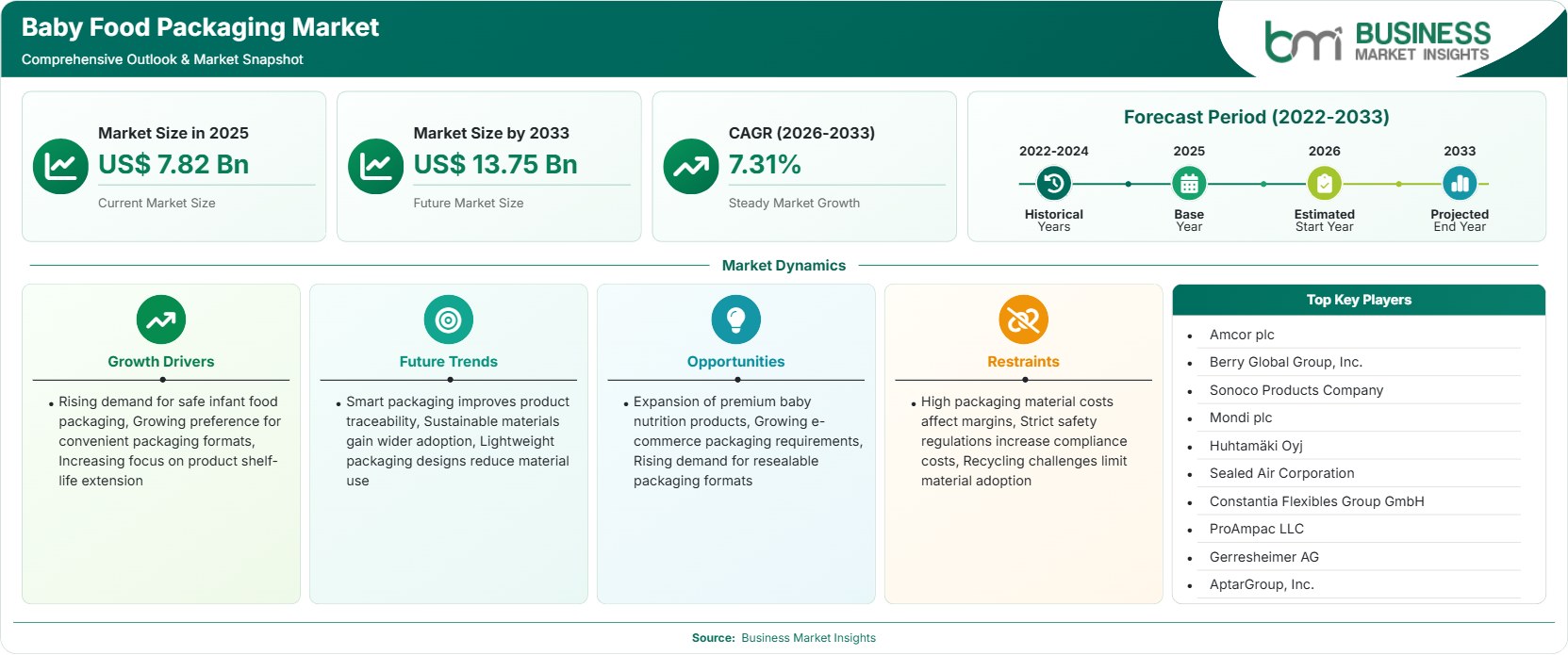
North America accounts for 31%–34% Baby Food Packaging Market share in 2025 and is expected to grow at a CAGR of 6.9%–7.4% during 2026–2033. The region benefits from well-established food safety regulations, widespread consumption of packaged infant nutrition, and continuous innovation in sustainable packaging materials. Leading manufacturers are introducing recyclable, lightweight, and high-barrier packaging designed to extend product freshness while improving convenience for parents.
- Premium baby food brands continue adopting advanced packaging technologies that improve shelf stability while maintaining nutritional quality and product safety.
- Investments in recyclable flexible packaging and mono-material structures support sustainability targets established by food manufacturers and retailers.
- E-commerce growth encourages development of durable, leak-resistant, and tamper-evident packaging capable of protecting products throughout distribution.
- Consumer preference for convenient feeding solutions continues supporting innovation in resealable pouches, portion-controlled containers, and lightweight packaging designs.
US Baby Food Packaging Market
The United States contributes 80%–83% of North American revenue and is projected to expand at a CAGR of 7.0%–7.5% through 2026–2033. Strong purchasing power, premium infant nutrition products, and strict packaging quality standards continue driving investments in innovative and sustainable packaging technologies.
- Manufacturers continue expanding recyclable packaging portfolios to align with changing environmental regulations.
- Premium infant nutrition brands increasingly utilize convenient pouch and container formats for busy households.
- Investments in smart manufacturing improve packaging quality, consistency, and operational efficiency.
- Growing online retail sales encourage stronger protective packaging solutions for home delivery.
Europe Baby Food Packaging Market
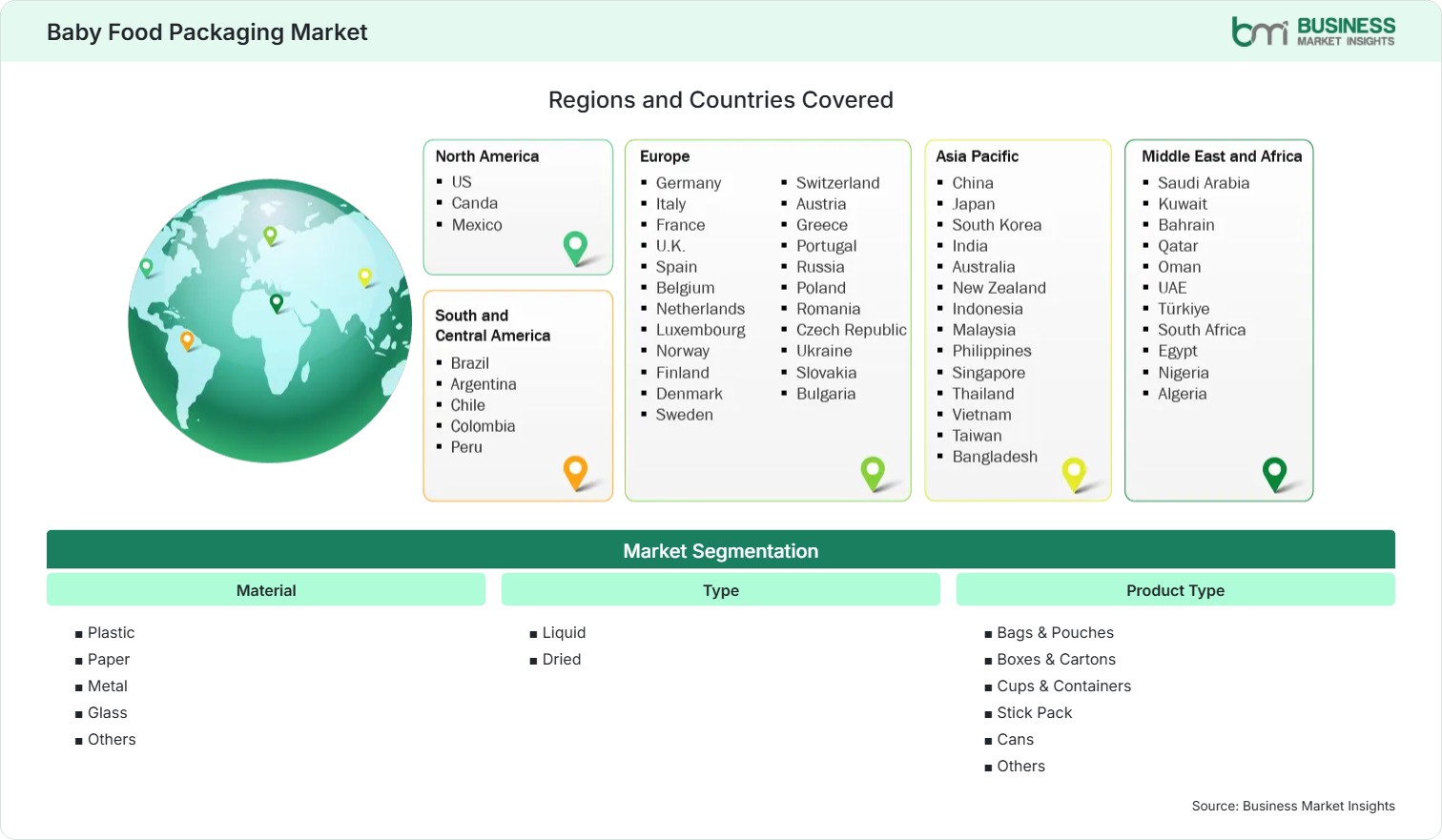
Europe represents 26%–29% market share in 2025 and is anticipated to register a CAGR of 6.8%–7.3% during the forecast period. Strict environmental regulations, advanced food packaging standards, and growing consumer awareness regarding sustainable materials continue shaping regional demand. Germany leads the market, while Poland records the fastest growth through expanding food processing and packaging industries.
- Circular economy initiatives accelerate the adoption of recyclable and renewable packaging materials.
- Infant nutrition manufacturers prioritize packaging solutions that combine product safety with environmental responsibility.
- Investments in flexible packaging technologies improve convenience while reducing overall material consumption.
- Sustainable product innovation remains a major competitive focus across the regional packaging industry.
Asia Pacific Baby Food Packaging Market
Asia Pacific holds 37%–40% market share in 2025 and is projected to record the fastest 8.0%–8.6% CAGR through 2026–2033. Rising birth rates in several developing countries, growing urban populations, increasing disposable incomes, and rapid expansion of organized retail continue driving demand for packaged baby nutrition and advanced packaging formats.
- Growing middle-class populations increase demand for premium packaged infant nutrition products.
- Food manufacturers continue investing in modern flexible packaging technologies and high-speed production facilities.
- Expansion of e-commerce creates demand for durable, lightweight, and protective packaging solutions.
- Government initiatives supporting food safety standards encourage adoption of higher-quality packaging materials.
Rest of World Baby Food Packaging Market
The Rest of World region accounts for 5%–8% market share in 2025 and is expected to expand at a CAGR of 7.0%–7.6% during 2026–2033. Rising packaged food consumption, improving retail infrastructure, and growing awareness of infant nutrition continue supporting demand across Latin America, the Middle East, and Africa.
- Brazil leads regional demand through expanding packaged food production and organized retail development.
- Gulf countries continue investing in premium food packaging and imported infant nutrition products.
- Manufacturers focus on affordable yet high-quality packaging for emerging consumer markets.
- Expansion of regional distribution networks supports wider availability of packaged baby food products.