
Shrink Packaging Market Outlook: Size, Share, Trends, Growth Analysis, Competitive Landscape & Forecast, 2026-2033

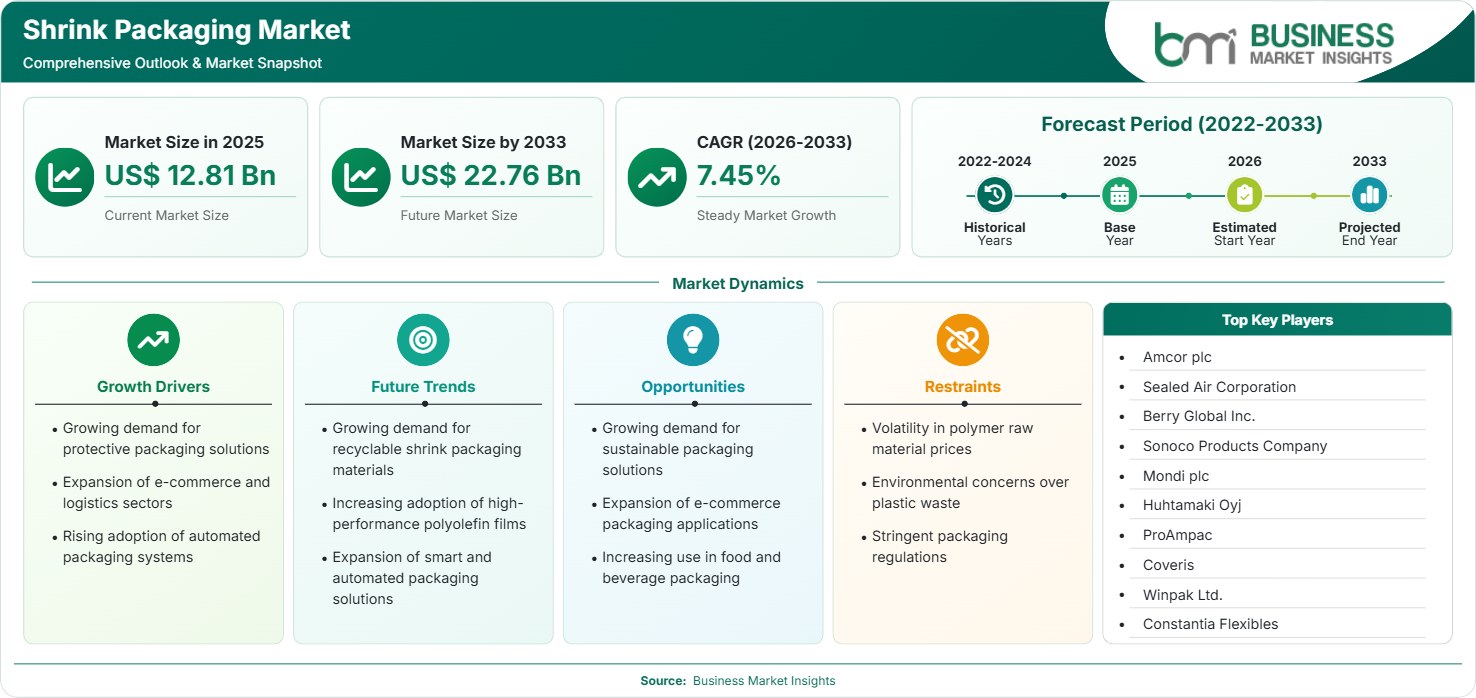
The Shrink Packaging Market size was valued at US$ 12.81 Billion in 2025 and is projected to reach US$ 22.76 Billion by 2033, growing at a CAGR of 7.45% from 2026 to 2033. Rising demand for protective packaging, expanding e-commerce logistics, automation adoption, and sustainable material innovation are creating opportunities for packaging manufacturers and end-use industries.

Report Coverage
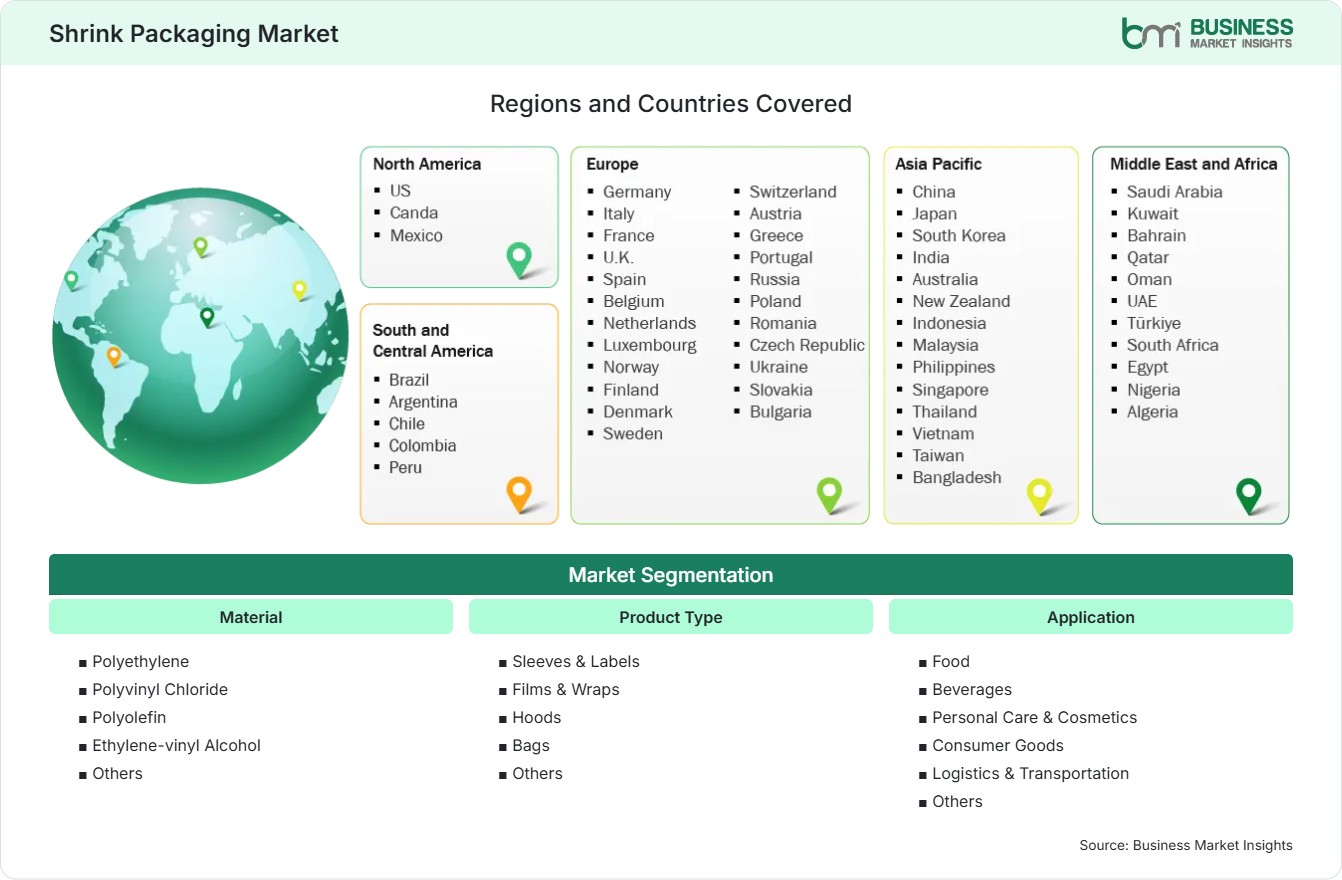
  • Material: Polyethylene, Polyvinyl Chloride, Polyolefin, Ethylene-vinyl Alcohol, Others
  • Product Type: Sleeves & Labels, Films & Wraps, Hoods, Bags, Others
  • Application: Food, Beverages, Personal Care & Cosmetics, Consumer Goods, Logistics & Transportation, Others
US$ 12.81 Bn Market size in 2025
US$ 22.76 Bn Market Size by 2033
7.45% CAGR, 2026 - 2033
2026-2033 Forecast Period

AI Overview

Shrink Packaging Market Summary

  • North America Region: North America accounted for approximately 30%–34% market share in 2025 and is projected to grow at a 7.0%–7.5% CAGR during 2026–2033. Growth is supported by advanced packaging infrastructure, strong retail networks, e-commerce expansion, and increasing demand for efficient protective packaging solutions. The U.S. remains the leading regional contributor due to high consumption across food, beverages, and logistics applications, with an estimated 7.1%–7.6% CAGR during 2026–2033.
  • Fastest Growing Region: Asia Pacific held approximately 33%–37% market share in 2025 and is expected to grow at a 8.0%–8.6% CAGR during 2026–2033. Growth is driven by manufacturing expansion, rising packaged food consumption, increasing online retail activity, and growing adoption of automated packaging systems.
  • Leading Segment: Polyethylene (PE) accounted for approximately 38%–42% market share in 2025 and is projected to grow at a 7.3%–7.8% CAGR during 2026–2033. Segment growth is supported by versatility, durability, cost efficiency, and extensive usage across industrial and consumer packaging applications.
  • High Growth Segment: Polyolefin (POF) is expected to register a 8.0%–8.5% CAGR during 2026–2033 due to increasing demand for high-clarity packaging films, food-grade applications, and premium product presentation requirements.
  • Key Market Opportunity: Sustainable shrink films, recyclable packaging formats, and expanding applications across e-commerce, food, and beverage sectors are creating new growth opportunities for manufacturers.
  • Major Market Players: Amcor plc, Sealed Air Corporation, Berry Global Inc., Sonoco Products Company, Mondi plc, Huhtamaki Oyj, ProAmpac, Coveris, Winpak Ltd., and Constantia Flexibles.
Strategic Insights

Shrink Packaging Market: Strategic Insights

Shrink Packaging Market Strategic Framework
FREE PDF
Request your free sample
Request free sample
Stakeholder View

Key Takeaways

  • The packaging value chain is shifting toward integrated solutions involving film manufacturers, automation providers, converters, and end-use industries focused on efficiency and sustainability.
  • Food, beverage, and e-commerce applications represent major growth opportunities as businesses require protective packaging formats that improve product handling and transportation efficiency.
  • Material innovation is becoming a competitive priority, with companies developing thinner films, recyclable structures, and improved barrier properties for diverse applications.
  • Asia Pacific offers strong investment potential due to expanding manufacturing bases, rising consumer goods demand, and increasing adoption of modern packaging systems.
  • Strategic partnerships and acquisitions are increasing as packaging companies strengthen capabilities in sustainable materials, recycling technologies, and specialized packaging solutions.
  • Automation integration is becoming an important differentiator as manufacturers seek faster packaging operations, reduced labor dependency, and improved production consistency.
Geographic Outlook

Shrink Packaging Market Regional Highlights

North America Shrink Packaging Market

North America accounted for approximately 30%–34% of the Shrink Packaging Market share in 2025 and is projected to grow at a 7.0%–7.5% CAGR during 2026–2033. The region benefits from established packaging infrastructure, strong retail distribution, and high adoption across food, beverage, and logistics sectors. The U.S. represents the largest contributor due to advanced manufacturing capabilities, e-commerce growth, and demand for efficient packaging formats. Sustainable packaging initiatives are further supporting market development.

  • The U.S. market is supported by strong demand from food manufacturers, retailers, and logistics companies seeking durable packaging solutions.
  • Canada is experiencing growth through expanding retail operations, sustainability initiatives, and increasing adoption of flexible packaging technologies.
  • Packaging manufacturers are investing in recyclable shrink films and material innovations to address environmental concerns.
  • Automated packaging systems are gaining adoption among industries seeking improved productivity and reduced operational costs.

US Shrink Packaging Market

The United States represented approximately 80%–84% of North America's Shrink Packaging Market share in 2025 and is expected to grow at a 7.1%–7.6% CAGR during 2026–2033. Growth is supported by strong demand from food and beverage producers, consumer goods manufacturers, and logistics operators. The expansion of online retail and increasing focus on efficient packaging operations are driving adoption. Companies are increasingly implementing automated shrink packaging systems to improve throughput and reduce material waste.

  • Food and beverage companies are increasing shrink packaging adoption for product protection, branding, and transportation efficiency.
  • E-commerce growth is creating demand for secure packaging formats that support product handling during delivery operations.
  • Manufacturers are developing thinner films with improved strength to optimize material usage and reduce packaging costs.
  • Retailers are adopting efficient packaging solutions to improve supply chain performance and product presentation.

Europe Shrink Packaging Market

Europe accounted for approximately 24%–28% market share in 2025 and is projected to grow at a 6.8%–7.4% CAGR during 2026–2033. The region is supported by advanced packaging technologies, strong sustainability regulations, and demand for recyclable materials. Germany, France, the United Kingdom, and Italy are leading markets due to established food processing industries and manufacturing capabilities. Increasing focus on circular economy practices is encouraging innovation in sustainable shrink packaging market scope solutions.

  • Germany demonstrates strong adoption due to advanced manufacturing industries and increasing demand for efficient packaging technologies.
  • France is expanding sustainable packaging adoption through environmental initiatives and increasing preference for recyclable materials.
  • The United Kingdom is witnessing demand growth from e-commerce, food processing, and consumer goods industries.
  • Italy is supporting market expansion through food packaging applications and growing manufacturing activities.
  • European companies are investing in eco-friendly films and improved recycling-compatible packaging formats.

Asia Pacific Shrink Packaging Market

Asia Pacific represented approximately 33%–37% of the Shrink Packaging Market in 2025 and is expected to achieve the fastest growth at a 8.0%–8.6% CAGR during 2026–2033. Growth is driven by industrial expansion, rising packaged food consumption, increasing e-commerce activities, and manufacturing growth. China, India, Japan, and Southeast Asian countries are major contributors due to growing consumer markets and increasing demand for efficient packaging solutions across industries.

  • China is experiencing higher demand due to large-scale manufacturing, food processing expansion, and growing online retail activities.
  • India is adopting shrink packaging solutions as organized retail and packaged goods consumption continue expanding.
  • Japan is focusing on advanced packaging technologies with emphasis on efficiency, quality, and material optimization.
  • Southeast Asian countries are attracting investment due to manufacturing growth and increasing consumer product demand.
  • Regional producers are expanding capacity to support rising demand from domestic and export markets.

Rest of World Shrink Packaging Market

The Rest of World region accounted for approximately 7%–11% of global revenue in 2025 and is projected to grow at a 7.6%–8.2% CAGR during 2026–2033. South America, the Middle East, and Africa are witnessing increased adoption due to expanding retail sectors, food processing activities, and logistics development. Brazil, Mexico, Saudi Arabia, and South Africa represent emerging markets where packaging modernization is supporting demand for shrink solutions in Shrink Packaging Market.

  • Brazil is expanding shrink packaging adoption through food processing growth and increasing consumer goods production.
  • Mexico is witnessing demand growth due to manufacturing expansion and cross-border logistics activities.
  • Saudi Arabia is creating opportunities through retail development and packaged food sector growth.
  • South Africa is adopting modern packaging solutions as consumer goods and distribution networks expand.
  • Regional packaging suppliers are strengthening production capabilities to support increasing domestic and export requirements.
Global Market Geography
FREE PDF
Request your free sample
Request free sample
Segment Analysis

Shrink Packaging Market Segmentation

Material

Material segmentation is driven by performance requirements, cost efficiency, sustainability goals, and application-specific packaging needs. Polyethylene (PE) accounted for approximately 38%–42% market share in 2025 and is projected to grow at a 7.3%–7.8% CAGR during 2026–2033. The segment benefits from flexibility, durability, moisture resistance, and broad adoption across food, beverage, logistics, and consumer goods packaging applications in Shrink Packaging Market.

  • Polyethylene (PE): Polyethylene remains widely used due to its flexibility, strength, cost efficiency, and suitability for protective packaging across multiple end-use industries.
  • Polyvinyl Chloride (PVC): PVC shrink materials are adopted for their clarity, tight shrink performance, and applications requiring attractive product presentation and packaging visibility.
  • Polyolefin (POF): Polyolefin films are gaining demand due to superior appearance, food-grade compatibility, durability, and increasing usage in premium consumer packaging applications.
  • Ethylene-vinyl Alcohol (EVOH): EVOH materials support specialized applications requiring enhanced barrier properties, oxygen resistance, and protection for sensitive packaged products.

Product Type

Product type segmentation is influenced by packaging functionality, product protection requirements, and industry-specific needs. Films & Wraps accounted for approximately 46%–50% market share in 2025 and are expected to grow at a 7.5%–8.0% CAGR during 2026–2033. Growth is supported by increasing usage in food, beverages, logistics, and consumer goods sectors in Shrink Packaging Market. Manufacturers are focusing on thinner, stronger, and more sustainable film structures to improve efficiency.

  • Sleeves & Labels: Sleeves and labels are increasingly adopted for branding, product identification, and attractive packaging designs across consumer goods and beverage applications.
  • Films & Wraps: Films and wraps dominate due to versatility, efficient product protection, easy handling, and widespread use across industrial and consumer packaging applications.
  • Hoods: Hoods provide secure protection for palletized goods and industrial products during transportation, storage, and distribution processes.
  • Bags: Shrink bags are used for bundled products, food packaging, and protective applications requiring strong sealing and product integrity.

Application

Application segmentation is shaped by growing packaged product consumption, logistics requirements, and demand for improved product protection. Food applications accounted for approximately 32%–36% market share in 2025 and are projected to grow at a 7.4%–7.9% CAGR during 2026–2033. Rising packaged food demand, hygiene requirements, and extended shelf-life needs are supporting adoption. Manufacturers are developing application-specific shrink solutions for diverse industries in Shrink Packaging Market.

  • Food: Food packaging applications are expanding due to hygiene requirements, transportation protection needs, and demand for efficient packaging formats.
  • Beverages: Beverage companies use shrink packaging for multipacks, promotional packaging, and secure transportation of bottled and canned products.
  • Personal Care & Cosmetics: Personal care brands are adopting shrink solutions for product protection, premium presentation, and tamper-evident packaging requirements.
  • Consumer Goods: Consumer goods manufacturers use shrink packaging for bundling, product visibility, and improved supply chain handling efficiency.
  • Logistics & Transportation: Logistics operators are adopting shrink packaging to improve load stability, reduce handling damage, and enhance shipment protection.
Market Forces

Shrink Packaging Market Dynamics

Key Market Drivers

Growing demand for protective packaging solutions

The increasing need for product protection during storage, handling, and transportation is driving adoption of shrink packaging across multiple industries. Manufacturers are using shrink films and wraps to improve package integrity, prevent contamination, and reduce product damage throughout supply chains. The market growth is supported by rising demand from food, beverage, consumer goods, and logistics sectors requiring reliable packaging formats. The Shrink Packaging Market trends indicate higher adoption of lightweight materials, improved sealing technologies, and customized packaging solutions. Companies are investing in advanced films with better strength, clarity, and barrier properties to meet evolving customer requirements. Growing emphasis on operational efficiency and product safety continues encouraging businesses to integrate shrink packaging into their packaging strategies.

Expansion of e-commerce and logistics sectors

Due to rapid development of e-commerce and logistics channels, there is an increased need for efficient packaging materials that provide sufficient protection of goods while they are being shipped. E-commerce companies need packaging solutions that will help them deliver undamaged goods in the most cost-effective manner. Benefits of shrink packaging can be seen in such aspects as efficient bundling of products, increased load stability, and reduced material consumption as compared to conventional packaging materials. Development of international trade and direct shipping solutions is leading to an increased need for flexible packaging solutions. Companies are now developing shrink films appropriate for use with different kinds of products like consumer goods, electronics, food products, and personal care products.

Rising adoption of automated packaging systems

Growing trends in automation of packaging processes have increased the need for shrink packaging which can be used in high-speed production. Companies across various sectors have been automating their processes to increase packaging speed, reduce reliance on manpower, and maintain consistent production quality. Automated shrink-wrapping machines help increase process speed, improve film application, and enhance operational control. Food processing companies, beverages companies, and consumer goods companies are automating their processes in order to handle higher production volumes. Film and packaging companies have been designing films that suit automation and process speeds. Automation and high production volumes have driven companies to automate their packaging processes.

Key Market Opportunities

Growing demand for sustainable packaging solutions

Increasing environmental awareness and regulatory pressure are creating opportunities for sustainable shrink packaging solutions. Manufacturers are developing recyclable films, reduced-thickness materials, and improved polymer structures to lower environmental impact while maintaining packaging performance. Companies are investing in research and development to create alternatives that align with circular economy goals and customer sustainability targets. The Shrink Packaging Market Forecasts indicate growing opportunities for suppliers offering resource-efficient materials and recycling-compatible packaging formats. Food, beverage, and consumer goods companies are increasingly seeking packaging partners capable of supporting environmental commitments. Innovations in material science, including improved recyclability and reduced material consumption, are expected to create new opportunities for companies focused on sustainable packaging development.

Expansion of e-commerce packaging applications

Online retail growth presents opportunities for the shrink-wrapping packaging industry by generating demand for efficient, safe packaging that helps protect products during transport. E-commerce companies need packaging that allows them to package their products in ways that ensure safety, efficiency in warehouses, and effective transport. There has been an increase in the use of shrink wrap for packaging bundles of products, multi-packs, and items that need extra protection during transport. There have been developments of specialized solutions to cater to the varied needs of e-commerce platforms. Growth in digital commerce in developing economies creates more opportunities for packaging manufacturers. Collaboration between packaging manufacturers and logistics firms creates opportunities for optimal packaging solutions.

Increasing use in food and beverage packaging

The food and beverage sectors constitute an important market opportunity because of the increasing demands for hygienic, robust, and attractive packaging solutions. The use of shrink packaging enables product safety, ease of transportation, and better shelf displays of the packed products. There have been innovations of films with better sealing abilities, clearness, and ability to work on automated packaging lines. Increasing demands of packaged foods, beverages, and convenience products are prompting manufacturers to utilize effective packaging techniques. There are growing demands for advanced packaging solutions in emerging markets where the retail network is expanding. The companies emphasizing on food-grade packaging are likely to benefit from changes in consumer trends.

Market Restraints and Challenges

Volatility in polymer raw material prices

Factor: Fluctuations in polymer raw material prices, influenced by crude oil markets, supply chain disruptions, and production costs, can affect shrink packaging manufacturing expenses. Packaging producers depend on materials such as polyethylene and polyolefin, making cost stability important for maintaining profitability. Impact: Price volatility can increase production costs, pressure profit margins, and create challenges in maintaining competitive pricing for end users. Manufacturers may need to optimize sourcing strategies, improve material efficiency, and develop alternative formulations to manage cost fluctuations. Long-term supplier agreements and recycling initiatives are becoming important strategies for reducing exposure to raw material price changes while maintaining consistent product quality.

Environmental concerns over plastic waste

Factor: Growing concerns regarding plastic waste, recycling limitations, and environmental pollution are creating challenges for traditional shrink packaging materials. Governments and consumers are increasingly demanding sustainable packaging alternatives with reduced environmental impact. Impact: These concerns can influence regulatory requirements, increase compliance costs, and pressure manufacturers to redesign products using recyclable or lower-impact materials. Companies are investing in sustainable polymers, recycling technologies, and improved material structures to address environmental challenges. Meeting sustainability expectations while maintaining packaging performance and cost efficiency remains a critical challenge for industry participants. Businesses that successfully develop environmentally responsible solutions may gain stronger market acceptance and competitive advantages.

Company Analysis

Competitive Landscape

The competitive landscape of the Shrink Packaging Market analysis includes global packaging manufacturers, material suppliers, and solution providers focusing on sustainable films, automation-compatible packaging formats, and application-specific solutions. Companies are strengthening their positions through product innovation, recycling initiatives, manufacturing expansion, and partnerships across food, beverage, logistics, and consumer goods industries.

Company Name

Overview

Products and Services relevant to this market

Amcor plc

Global packaging company offering flexible and sustainable packaging solutions across industries.

Shrink films, flexible packaging, recyclable materials, and customized packaging solutions.

Sealed Air Corporation

Packaging solutions provider focused on protection, automation, and sustainability.

Shrink packaging films, Cryovac solutions, and automated packaging systems.

Berry Global Inc.

Manufacturer of plastic packaging products serving consumer and industrial markets.

Shrink films, specialty films, and sustainable packaging materials.

Sonoco Products Company

Diversified packaging company providing consumer and industrial packaging solutions.

Shrink packaging products, protective packaging, and material solutions.

Mondi plc

International packaging producer focused on sustainable packaging innovation.

Flexible shrink films, recyclable packaging formats, and industrial packaging solutions.

Huhtamaki Oyj

Food packaging company developing sustainable packaging solutions globally.

Flexible packaging, shrink solutions, and food-grade packaging materials.

ProAmpac

Flexible packaging manufacturer serving food, healthcare, and consumer markets.

Shrink films, flexible packaging systems, and customized packaging products.

Coveris

Sustainable packaging producer supplying multiple end-use industries.

Shrink films, recyclable packaging solutions, and protective packaging products.

Winpak Ltd.

Packaging company specializing in food and healthcare packaging solutions.

Shrink packaging materials, flexible films, and high-performance packaging solutions.

Constantia Flexibles

Flexible packaging manufacturer focused on innovation and sustainability.

Shrink films, recyclable structures, and customized flexible packaging solutions.

Trust & Transparency

Research Methodology

The market analysis combines proprietary research with secondary data from government agencies, company disclosures, regulatory filings, industry databases and expert interviews. Market estimates are validated through data triangulation, cross-market benchmarking and analyst review.

View Full Research Methodology

Questions Answered

Frequently Asked Questions

How does the Shrink Packaging Market Report benefit businesses?

The report provides insights into market trends, regional developments, competitive strategies, material innovations, and growth opportunities. It supports manufacturers, investors, and stakeholders in evaluating market expansion plans and understanding changing packaging industry requirements.

Which industries are major users of shrink packaging?

Food, beverages, personal care, consumer goods, and logistics industries are major users of shrink packaging due to requirements for protection, branding, and efficient product movement. These sectors utilize shrink solutions for bundling, transportation security, and improved shelf presentation.

Why is e-commerce increasing demand for shrink packaging market forecasts?

E-commerce growth is creating demand for packaging formats that provide secure product handling, efficient storage, and reliable transportation protection. Shrink packaging helps online retailers improve shipment stability, reduce product damage, and optimize packaging processes across distribution networks.

How are sustainable materials influencing shrink packaging development?

Sustainable materials are shaping product innovation through recyclable films, reduced-thickness structures, and improved polymer technologies. Packaging manufacturers are investing in environmentally responsible solutions to meet regulatory requirements and changing customer expectations while maintaining durability and performance standards.

What factors are driving the adoption of shrink packaging solutions?

Increasing demand for product protection, efficient transportation, and improved packaging presentation is encouraging businesses to adopt shrink packaging. Food, beverage, logistics, and consumer goods companies are using these solutions to improve handling efficiency, reduce damage, and support automated packaging operations.

Access the Full Shrink Packaging Market Report

Get segment-level forecasts, regional estimates, competitive benchmarking, company profiles and downloadable Excel datasets.

Access the full Shrink Packaging Market Report
350 pages PDF & Excel | 2026-08-07
Similar Research

Related Market Reports