
Premium Packaging Market Outlook: Size, Share, Trends, Growth Analysis, Competitive Landscape & Forecast, 2026-2033

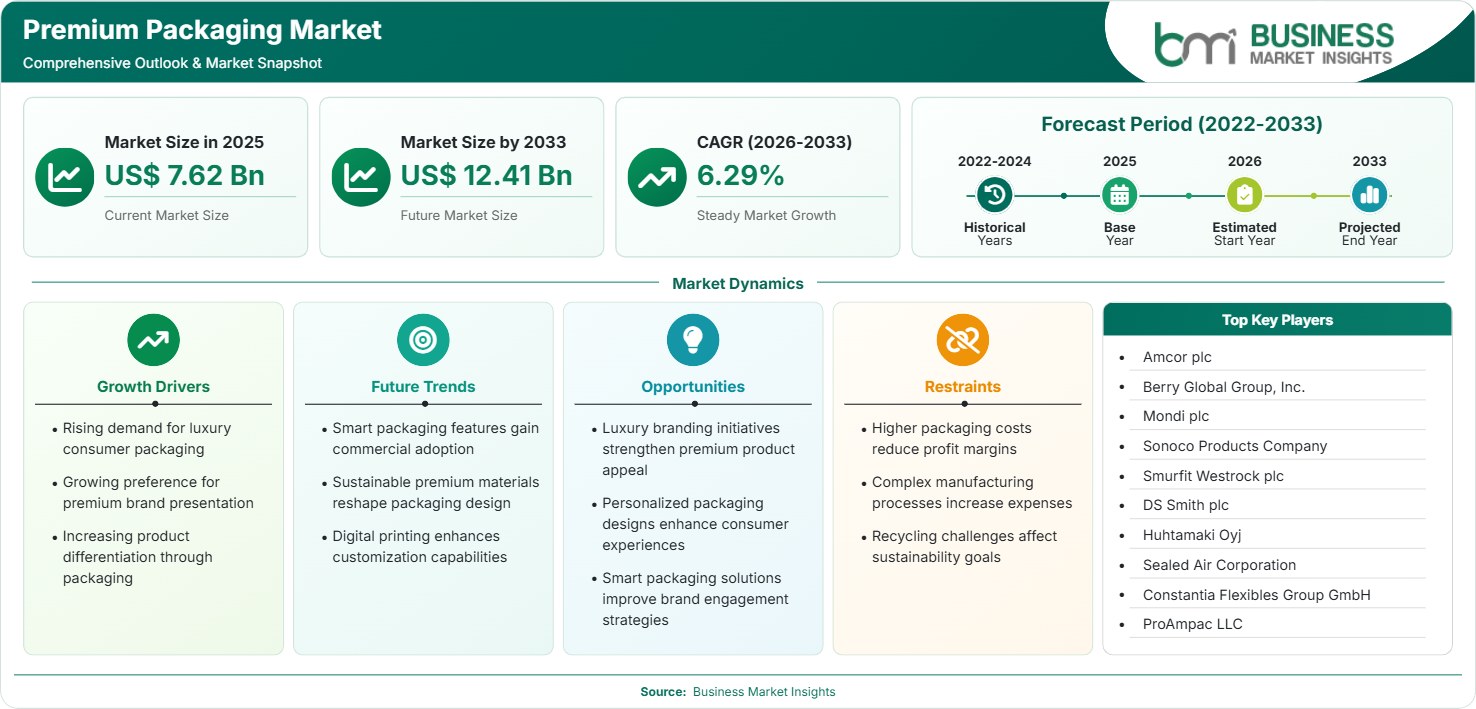
The Premium Packaging Market size was valued at US$ 7.62 billion in 2025 and is projected to reach US$ 12.41 billion by 2033, growing at a CAGR of 6.29% during 2026–2033. Rising demand for luxury consumer packaging, growing preference for premium brand presentation, and increasing product differentiation through innovative packaging solutions continue to support steady market expansion.

Report Coverage
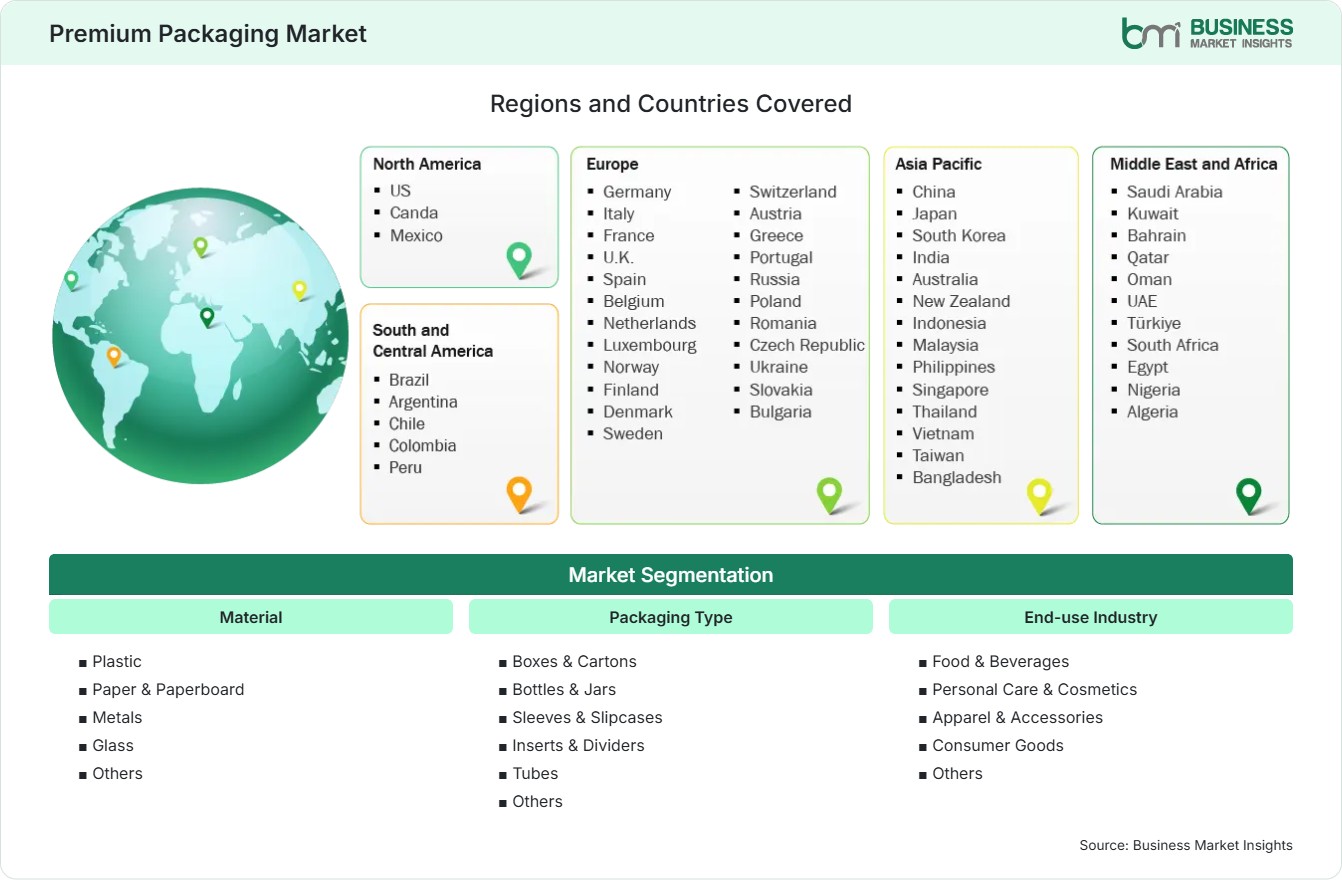
  • Material: Plastic, Paper & Paperboard, Metals, Glass, Others
  • Packaging Type: Boxes & Cartons, Bottles & Jars, Sleeves & Slipcases, Inserts & Dividers, Tubes, Others
  • End-use Industry: Food & Beverages, Personal Care & Cosmetics, Apparel & Accessories, Consumer Goods, Others
US$ 7.62 Bn Market size in 2025
US$ 12.41 Bn Market Size by 2033
6.29% CAGR, 2026 - 2033
2026-2033 Forecast Period

01 AI Overview

Premium Packaging Market Summary

  • North America Region: North America accounted for 32%–35% market share in 2025 and is projected to expand at a CAGR of 5.9%–6.4% during 2026–2033. Premium consumer spending, established luxury brands, and continuous investment in sustainable packaging technologies are strengthening regional demand. The U.S. remains the largest contributor, advancing at a CAGR of 6.0%–6.5% through increasing demand for premium food, beverages, cosmetics, and personal care packaging.
  • Fastest Growing Region: Asia Pacific held 34%–37% market share in 2025 and is forecast to register a CAGR of 7.0%–7.6% during the forecast period. Expanding middle-class populations, luxury retail growth, rising disposable income, and premium product consumption continue driving regional demand.
  • Leading Segment: Paper & Paperboard represented 34%–37% market share in 2025 and is expected to grow at a CAGR of 6.4%–6.9%, supported by increasing demand for recyclable luxury packaging and premium brand presentation.
  • High Growth Segment: Boxes & Cartons captured 31%–34% market share in 2025 and are anticipated to expand at a CAGR of 6.7%–7.2%, driven by luxury retail, cosmetics, premium food products, and high-end consumer electronics packaging.
  • Key Market Opportunity: Sustainable luxury packaging, digital printing technologies, smart packaging integration, and personalized branding solutions continue creating attractive opportunities for packaging manufacturers serving premium consumer brands.
  • Major Market Players: Amcor plc, Berry Global Group, Inc., Mondi plc, Sonoco Products Company, Smurfit Westrock plc, DS Smith plc, Huhtamäki Oyj, Sealed Air Corporation, Constantia Flexibles Group GmbH, and ProAmpac LLC.
02 Strategic Insights

Premium Packaging Market: Strategic Insights

Premium Packaging Market Strategic Framework
FREE PDF
Request your free sample
Request free sample
03 Stakeholder View

Key Takeaways

  • Packaging has evolved into a strategic brand asset, encouraging manufacturers to combine premium aesthetics, functionality, and sustainability to improve product positioning across competitive consumer markets.
  • Luxury cosmetics, premium beverages, gourmet food products, and fashion accessories continue generating the highest demand for customized premium packaging solutions.
  • Investment in recyclable materials, lightweight structures, and digital printing technologies is reshaping product development strategies throughout the premium packaging value chain.
  • Asia Pacific continues offering significant long-term investment opportunities as premium consumer spending, organized retail, and luxury product consumption expand rapidly across major economies.
  • Strategic acquisitions, design partnerships, and investments in sustainable packaging technologies remain important competitive strategies among leading packaging manufacturers.
  • Digital personalization and smart packaging features are creating additional value by improving customer engagement, product authentication, and premium brand differentiation.
04 Geographic Outlook

Premium Packaging Market Regional Highlights

North America Premium Packaging Market

North America accounted for 32%–35% Premium Packaging Market share in 2025 and is projected to register a CAGR of 5.9%–6.4% during 2026–2033. Strong consumer purchasing power, premium brand presence, and growing sustainability initiatives continue supporting demand across food, beverages, cosmetics, and luxury consumer goods. Packaging manufacturers are expanding recyclable product portfolios while investing in premium decorative finishes and innovative structural packaging designs.

  • Premium food and beverage brands continue investing in differentiated packaging that enhances shelf appeal and strengthens customer loyalty.
  • Sustainable paperboard packaging and recyclable materials remain key investment priorities for leading packaging manufacturers.
  • Luxury cosmetics companies increasingly adopt premium finishes including embossing, metallic decoration, and specialty coatings.
  • Smart packaging technologies supporting authentication and consumer interaction continue gaining commercial acceptance across premium product categories.

US Premium Packaging Market

The United States represents 81%–84% of North American revenue and is expected to expand at a CAGR of 6.0%–6.5% during 2026–2033. Premium consumer spending, strong retail networks, and continuous product innovation continue supporting investment in advanced packaging solutions across multiple industries.

  • Luxury brands continue adopting customized packaging to strengthen premium product positioning.
  • Growing demand for recyclable materials supports sustainable packaging innovation.
  • Digital printing technologies enable shorter production runs and personalized packaging solutions.
  • Premium e-commerce packaging continues expanding alongside online luxury retail sales.

Europe Premium Packaging Market

Europe held 28%–31% market share in 2025 and is anticipated to grow at a CAGR of 5.8%–6.3% throughout the forecast period. Stringent environmental regulations, luxury brand concentration, and strong consumer demand for sustainable packaging continue driving market development. Germany remains the leading regional market, while Italy records the fastest growth through expanding luxury goods manufacturing.

  • Luxury fashion and cosmetics brands continue investing in premium recyclable packaging materials.
  • Circular economy initiatives encourage wider adoption of fiber-based premium packaging solutions.
  • Premium wine, spirits, and gourmet food products maintain consistent demand for decorative packaging.
  • Manufacturers continue expanding production of environmentally responsible luxury packaging products.

Asia Pacific Premium Packaging Market

Asia Pacific accounted for 34%–37% market share in 2025 and is projected to register the fastest 7.0%–7.6% CAGR through 2026–2033. Expanding luxury retail, increasing disposable income, and rising demand for premium consumer products continue strengthening regional market development. China remains the largest regional market, while India records the fastest growth supported by premiumization across multiple consumer sectors.

  • Premium cosmetics and skincare brands continue expanding packaging investments across regional markets.
  • Luxury food and beverage manufacturers increasingly adopt customized premium packaging formats.
  • Rising online luxury retail encourages durable yet visually appealing packaging innovations.
  • Investments in sustainable packaging production support long-term regional competitiveness.

Rest of World Premium Packaging Market

The Rest of World region represented 4%–7% market share in 2025 and is forecast to expand at a CAGR of 6.1%–6.7% during 2026–2033. Increasing luxury product consumption, tourism growth, and expanding organized retail continue supporting premium packaging demand across Latin America, the Middle East, and Africa.

  • Brazil leads regional demand through premium food, beverage, and cosmetics packaging.
  • GCC countries continue investing in luxury retail and premium consumer product packaging.
  • International premium brands expand regional distribution through enhanced packaging strategies.
  • Growing sustainability awareness encourages adoption of recyclable premium packaging materials.
Global Market Geography
FREE PDF
Request your free sample
Request free sample
05 Segment Analysis

Premium Packaging Market Segmentation

Material

Material selection remains a critical factor influencing product aesthetics, functionality, and environmental performance across premium packaging applications. The segment accounted for 34%–37% market share in 2025 and is projected to register a CAGR of 6.4%–6.9% during 2026–2033. Growing demand for recyclable, lightweight, and visually appealing materials continues to expand the Premium Packaging Market scope, encouraging manufacturers to develop innovative packaging solutions that combine luxury presentation with sustainability.

  • Plastic: Widely utilized for premium personal care, cosmetics, beverages, and consumer products due to its design flexibility, durability, lightweight structure, and excellent decorative capabilities.
  • Paper & Paperboard: Represents the leading material category, supported by strong demand for recyclable luxury cartons, rigid boxes, premium sleeves, and sustainable retail packaging solutions.
  • Metals: Preferred for premium beverages, confectionery, fragrances, and specialty gift packaging because of superior strength, long shelf life, premium appearance, and excellent barrier performance.
  • Glass: Extensively adopted for luxury perfumes, premium beverages, skincare products, and gourmet food packaging where transparency, product protection, and premium brand perception remain essential.
  • Others: Includes wood, fabric, bio-based composites, molded fiber, and specialty decorative materials used to create distinctive premium packaging for high-value consumer products.

Packaging Type

Packaging formats continue evolving as premium brands focus on improving customer experience, product protection, and visual appeal. This segment represented 31%–34% market share in 2025 and is expected to grow at a CAGR of 6.7%–7.2% through 2026–2033. Advancements in structural design, digital printing, and decorative finishing technologies continue supporting wider adoption across multiple premium product categories.

  • Boxes & Cartons: Lead the segment owing to excellent branding potential, structural strength, premium appearance, and suitability for luxury cosmetics, electronics, gourmet foods, and apparel products.
  • Bottles & Jars: Commonly used for premium beverages, fragrances, skincare, and specialty food products requiring attractive presentation, durability, and superior product protection.
  • Sleeves & Slipcases: Enhance product presentation through decorative outer packaging that strengthens premium branding while providing additional product protection during retail display.
  • Inserts & Dividers: Improve product organization, presentation, and protection inside premium packaging while enhancing the overall consumer unboxing experience.
  • Tubes: Increasingly adopted for luxury cosmetics, personal care products, pharmaceuticals, and specialty creams requiring convenient dispensing and attractive shelf presentation.
  • Others: Includes gift boxes, rigid containers, magnetic closure packaging, luxury bags, and customized presentation formats designed for exclusive premium product launches.

End-use Industry

Demand continues expanding across industries where packaging plays a significant role in communicating product quality and strengthening brand identity. This segment accounted for 36%–39% market share in 2025 and is forecast to grow at a CAGR of 6.3%–6.8% during 2026–2033. Current Premium Packaging Market trends indicate rising investments in customized packaging that combines premium aesthetics, sustainability, and functional performance across diverse consumer industries.

  • Food & Beverages: The largest end-use industry, utilizing premium packaging to enhance shelf appeal, preserve product quality, and strengthen consumer perception across gourmet foods, confectionery, wines, and premium beverages.
  • Personal Care & Cosmetics: Continues generating strong demand for luxury packaging featuring decorative finishes, customized designs, and sustainable materials that reinforce premium brand positioning.
  • Apparel & Accessories: Premium brands increasingly adopt high-quality boxes, shopping bags, tissue wraps, and presentation packaging that enhance customer experience and strengthen brand value.
  • Consumer Goods: Electronics, home décor, gifts, and lifestyle products increasingly utilize premium packaging to improve product differentiation, customer engagement, and perceived product quality.
  • Others: Includes pharmaceuticals, jewelry, premium stationery, luxury household products, and specialty retail applications requiring customized, visually distinctive, and protective packaging solutions.
06 Market Forces

Premium Packaging Market Dynamics

Key Market Drivers

Rising demand for luxury consumer packaging

Premium and luxury brands consider packaging as not only something that protects but also adds value to their products. Premium packaging includes high quality finishes, rigid structures, special coating, and sustainable materials, which will help strengthen branding and perception of the brand by the customer. As mentioned by industry organizations, including the European Paper Packaging Alliance, there is ongoing growth in investment in packaging by premium brands. This shift supports Premium Packaging Market growth as manufacturers develop packaging solutions that combine aesthetics, functionality, and environmental responsibility across food, cosmetics, beverages, and luxury consumer goods.

Growing preference for premium brand presentation

Premium packaging has become associated with premium products due to the belief by consumers of quality, legitimacy and exclusivity of such packaging. Consequently, it has compelled businesses to develop packaging that not only distinguishes itself structurally but also through decorations. The processes of embossing, foil stamping, texture and even advanced printing have been utilized in order to create memorable unboxing experience for consumers. Premium packaging has gained popularity in cosmetics, fragrances, gourmet foods, beverages and fashion accessories industries because of the significant impact it creates in consumers' buying process.

Increasing product differentiation through packaging

The development of innovative packaging has now become one of the key methods that brands can use to differentiate their products within the ever-growing competition in the retail market environment. This is achieved by utilizing custom-designed shapes, high-end graphics, surface finishes, as well as eco-friendly materials, while at the same time retaining product functionality. These developments continue shaping Premium Packaging Market trends, enabling companies to improve customer engagement while strengthening brand recognition across both physical retail and e-commerce channels.

Key Market Opportunities

Luxury branding initiatives strengthen premium product appeal

The global luxury brands still continue making more investments into packaging which would reflect their exclusivity and brand identity. The packaging design of luxury products is aimed at showing their exclusivity, quality of materials used and craftsmanship. The food and beverages, cosmetic, fragrance and fashion companies have started using structural, material and decorative design of luxury packaging. Premium Packaging Market Forecasts indicate that continued expansion of luxury consumer markets will create long-term opportunities for manufacturers offering customized and sustainable premium packaging solutions.

Personalized packaging designs enhance consumer experiences

Advances in digital printing and variable data technologies are making personalized packaging more accessible across multiple industries. Limited Editions, Custom Graphics, Local Designs, and Consumer-Specific Packaging are becoming more common among brands to increase engagement and promote repurchases. Moreover, the personalized packaging helps with the seasonal marketing campaign, gifting needs, and launch of premium products. As the need for unique purchasing experience keeps increasing among consumers, there is an anticipated growth in this trend.

Smart packaging solutions improve brand engagement strategies

Smart packaging technologies such as QR codes, NFC tags, augmented reality features, and digital authentication systems are transforming customer interaction with premium products. Such technologies provide information about the products, authenticate the goods, and improve communications regarding their brands. The packaging providers are adding intelligence capabilities without compromising on aesthetics or environmental sustainability objectives. Increasing digital interactions in the retail space are likely to boost the adoption of smart packaging by premium consumer goods companies.

Market Restraints and Challenges

Higher packaging costs reduce profit margins

Premium packaging typically requires high-quality raw materials, specialized decorative finishes, advanced printing technologies, and precision manufacturing processes. Factor: Rising prices for paperboard, specialty plastics, aluminum, glass, and energy increase production costs throughout the packaging value chain. Impact: Higher manufacturing expenses reduce profit margins for packaging suppliers and consumer brands, particularly in competitive industries where significant price increases may reduce product demand or affect overall market competitiveness.

Complex manufacturing processes increase expenses

Premium packaging often involves multiple production stages including embossing, foil stamping, lamination, specialty coatings, precision die-cutting, and customized assembly. Factor: These advanced manufacturing requirements increase production complexity, equipment investment, and quality control requirements compared with conventional packaging. Impact: Longer production cycles, higher operational costs, and stricter quality assurance procedures can delay product launches while limiting manufacturing flexibility for companies operating in fast-moving premium consumer markets.

07 Company Analysis

Competitive Landscape

Competition within the premium packaging industry is driven by innovation in sustainable materials, premium structural design, and advanced printing technologies. Premium Packaging Market analysis indicates that leading companies are expanding recyclable packaging portfolios, strengthening customization capabilities, and investing in smart packaging solutions to meet evolving brand requirements across luxury consumer goods, cosmetics, food, and beverage industries.

Company Name

Overview

Products and Services Relevant to this Market

Amcor plc

Global packaging company serving food, beverage, healthcare, and personal care industries through flexible and rigid packaging innovations.

Premium flexible packaging, recyclable films, rigid containers, luxury packaging solutions, barrier materials, and customized packaging technologies.

Berry Global Group, Inc.

International manufacturer specializing in plastic packaging and engineered materials for consumer and industrial markets.

Premium plastic packaging, bottles, closures, specialty containers, sustainable packaging, and decorative packaging solutions.

Mondi plc

Global producer of paper-based and flexible packaging with strong capabilities in sustainable premium packaging.

Premium paper packaging, luxury cartons, flexible packaging, recyclable materials, and customized brand packaging solutions.

Sonoco Products Company

Provides diversified consumer and industrial packaging solutions supported by advanced manufacturing capabilities worldwide.

Rigid paper containers, premium cartons, composite packaging, protective packaging, and specialty consumer packaging products.

Smurfit Westrock plc

Leading provider of fiber-based packaging solutions formed through the combination of Smurfit Kappa and WestRock.

Premium corrugated packaging, paperboard cartons, retail packaging, display packaging, and sustainable packaging solutions.

DS Smith plc

International supplier of fiber-based packaging solutions focused on circular economy principles and sustainable product development.

Premium paperboard packaging, luxury retail packaging, customized transit packaging, and recyclable packaging products.

Huhtamäki Oyj

Global packaging manufacturer serving foodservice, consumer goods, and retail industries with sustainable packaging technologies.

Premium food packaging, molded fiber products, paper containers, flexible packaging, and customized packaging solutions.

Sealed Air Corporation

Develops protective and food packaging technologies that improve product safety, presentation, and distribution efficiency.

Barrier packaging, protective packaging systems, specialty films, premium food packaging, and automated packaging equipment.

Constantia Flexibles Group GmbH

International producer of flexible packaging serving food, pharmaceutical, and consumer product manufacturers globally.

High-barrier laminates, premium flexible packaging, decorative packaging, recyclable materials, and printed packaging solutions.

ProAmpac LLC

Flexible packaging manufacturer emphasizing sustainability, innovation, and customized packaging for consumer brands.

Premium pouches, recyclable flexible packaging, specialty films, custom printed packaging, and high-performance barrier packaging.

10 Trust & Transparency

Research Methodology

The market analysis combines proprietary research with secondary data from government agencies, company disclosures, regulatory filings, industry databases and expert interviews. Market estimates are validated through data triangulation, cross-market benchmarking and analyst review.

View Full Research Methodology

11 Questions Answered

Frequently Asked Questions

What insights are included in the Premium Packaging Market Report?

The Market Report provides comprehensive analysis of market size, segmentation, competitive landscape, regional developments, technology trends, sustainability initiatives, investment opportunities, and future growth prospects across key end-use industries.

Which region offers the strongest future opportunities?

Asia Pacific presents the greatest long-term opportunity owing to rising disposable income, expanding luxury retail, rapid urbanization, increasing premium product consumption, and growing investments in modern packaging manufacturing capabilities.

Why are boxes and cartons widely used for premium packaging?

Boxes and cartons provide excellent product protection, premium visual appeal, structural durability, and extensive branding opportunities while supporting customized decorative finishes and environmentally responsible material choices.

Which material segment dominates the market?

Paper & Paperboard remains the leading material category because it combines premium appearance, excellent printability, structural strength, recyclability, and strong acceptance among luxury consumer brands pursuing sustainable packaging strategies.

What factors are supporting the growth of the Premium Packaging Market?

Growing demand for luxury products, increasing consumer preference for premium brand presentation, expanding sustainable packaging initiatives, and continuous innovation in decorative packaging technologies are the primary drivers supporting market expansion.

Access the Full Premium Packaging Market Report

Get segment-level forecasts, regional estimates, competitive benchmarking, company profiles and downloadable Excel datasets.

Access the full Premium Packaging Market Report
350 pages PDF & Excel | 2026-08-12