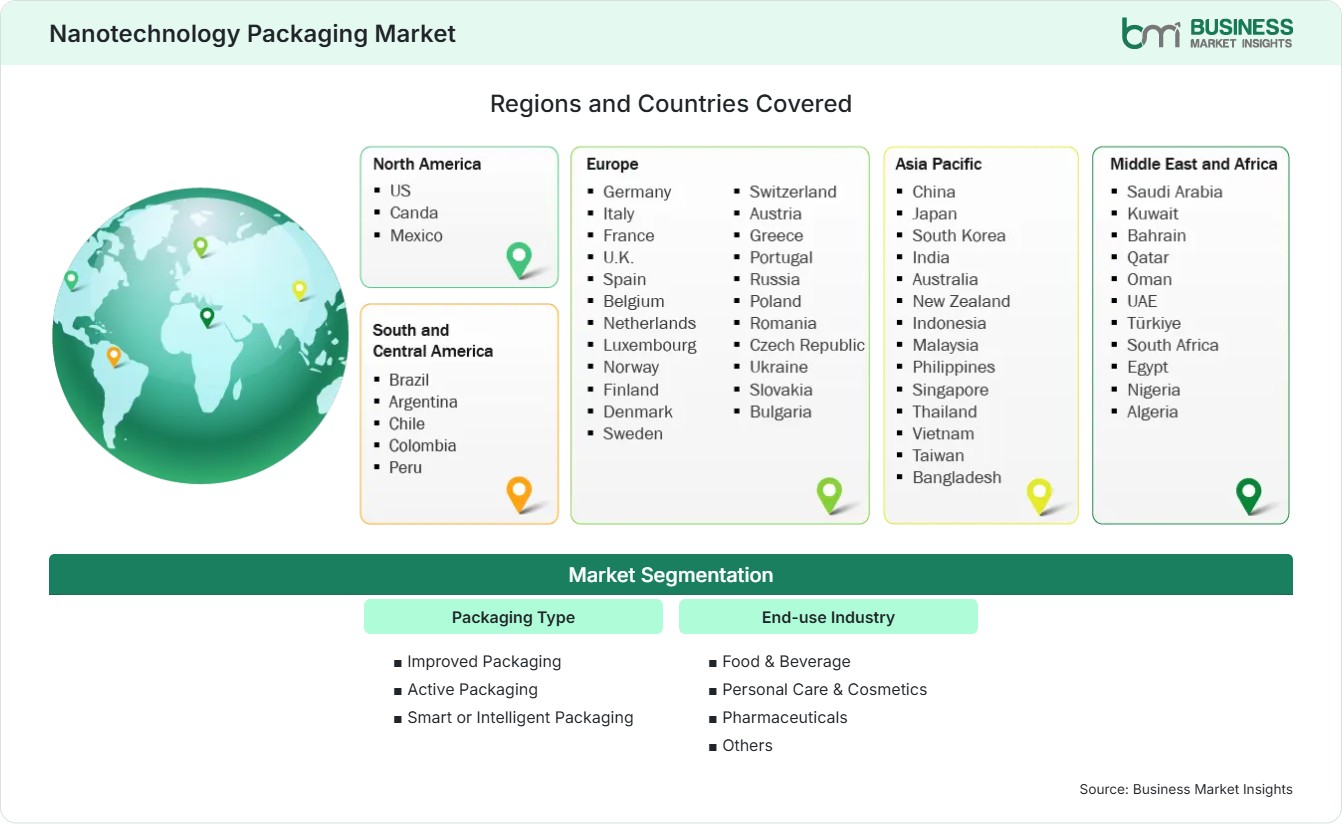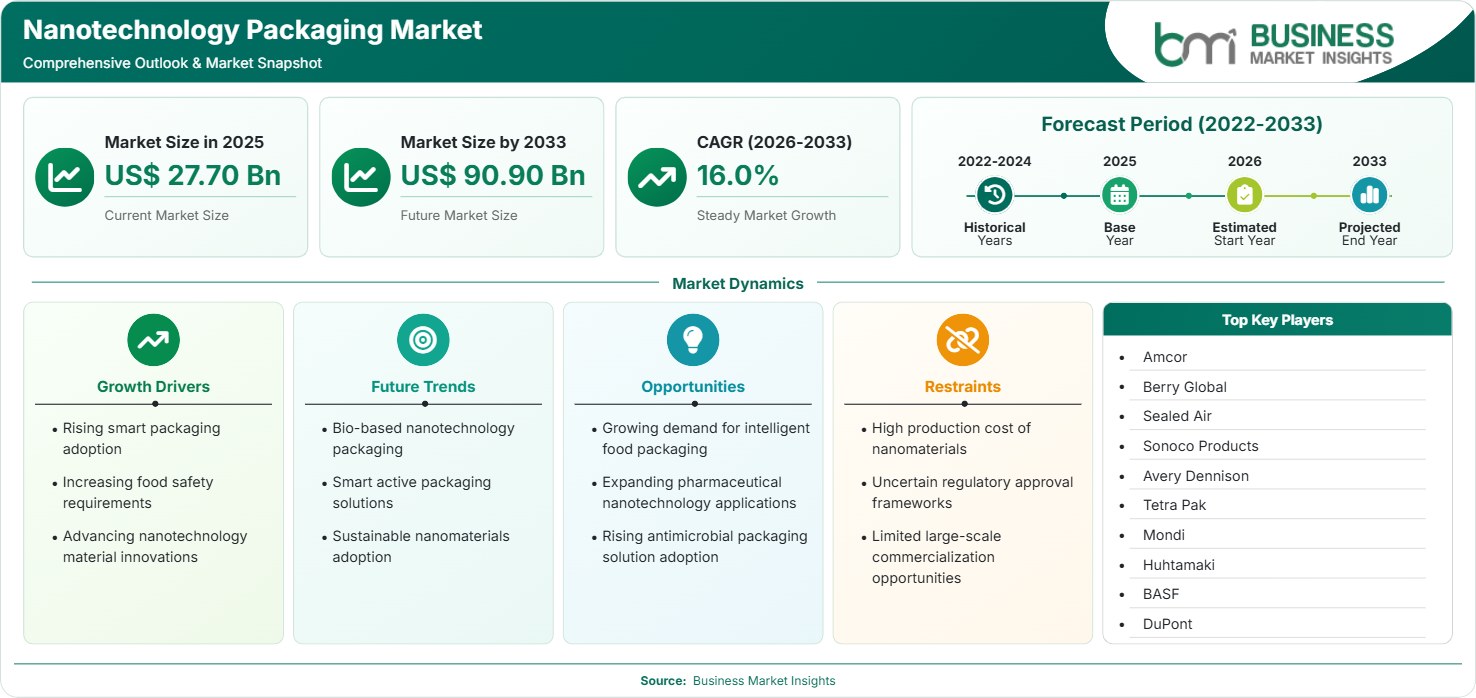
Nanotechnology Packaging Market Regional Highlights
North America Nanotechnology Packaging Market
North America accounted for a share range of 34%–37% in 2025 and is projected to grow at a CAGR of 14%–16% during 2026–2033. The region maintains a leading position due to advanced packaging infrastructure, strong research capabilities, established food safety frameworks, and pharmaceutical innovation. The Nanotechnology Packaging Market share in North America is supported by increasing demand for intelligent packaging, sustainable materials, and advanced product protection technologies.
- The United States remains the dominant contributor due to strong investments in packaging innovation, biotechnology, and advanced material research. Companies are commercializing nanotechnology-based solutions for food safety, healthcare, and consumer applications.
- Canada is expanding adoption through sustainable packaging initiatives, food processing modernization, and increasing interest in advanced barrier materials. Manufacturers are exploring nanotechnology solutions to improve packaging efficiency and environmental performance.
- Pharmaceutical companies in North America are increasing demand for advanced packaging systems capable of protecting sensitive products. Nanotechnology materials are being evaluated for improved stability, contamination control, and supply chain reliability.
- Food manufacturers are adopting intelligent packaging technologies to improve product monitoring, reduce waste, and meet evolving consumer expectations regarding freshness and transparency.
US Nanotechnology Packaging Market
The US represented a share range of 29%–32% in 2025 and is expected to expand at a CAGR of 14%–16% between 2026 and 2033. The country remains a major market due to its advanced packaging ecosystem, strong research infrastructure, and high adoption of innovative materials. Growth is supported by food safety requirements, pharmaceutical manufacturing, and increasing demand for connected packaging systems.
- Food and beverage companies are adopting advanced packaging technologies to improve shelf life, reduce contamination risks, and enhance consumer confidence. Nanotechnology solutions are supporting improved barrier performance.
- Pharmaceutical manufacturers are exploring nanotechnology-based packaging for specialized medicines requiring enhanced protection against environmental factors, degradation, and transportation challenges.
- Packaging companies are increasing investments in research collaborations to develop commercially viable nanomaterials with improved performance and scalability.
- Smart packaging adoption is increasing as companies seek better tracking, authentication, and supply chain visibility capabilities.
Europe Nanotechnology Packaging Market
Europe held a share range of 27%–30% in 2025, growing at a CAGR of 15%–17% during 2026–2033. The region benefits from strict product safety regulations, sustainability initiatives, advanced manufacturing capabilities, and strong demand for innovative packaging solutions. Germany, France, the United Kingdom, and the Netherlands are major contributors. Regulatory emphasis on waste reduction and product protection is influencing packaging innovation.
- Germany supports market expansion through advanced manufacturing capabilities, material science expertise, and strong industrial research activities.
- The United Kingdom is increasing adoption of intelligent packaging solutions across food, healthcare, and consumer sectors.
- France is investing in sustainable packaging innovation, including advanced materials designed to improve product protection and environmental performance.
- European regulations related to food safety and sustainability are encouraging companies to develop high-performance packaging alternatives.
Asia Pacific Nanotechnology Packaging Market
Asia Pacific accounted for a share range of 30%–33% in 2025 and is expanding at a CAGR of 18%–20% during 2026–2033. The region represents the fastest-growing nanotechnology packaging market due to rapid industrialization, expanding food processing capabilities, pharmaceutical manufacturing growth, and rising consumer demand for packaged products. China, India, Japan, and South Korea are major contributors, supported by investments in material science, advanced manufacturing, and smart packaging adoption. Increasing focus on food quality, healthcare accessibility, and export-oriented manufacturing is strengthening regional opportunities.
- China is accelerating nanotechnology packaging adoption through strong manufacturing capabilities, research investments, and growing demand for advanced food and pharmaceutical packaging solutions.
- India is experiencing increased adoption due to pharmaceutical production growth, expanding packaged food consumption, and government initiatives supporting manufacturing modernization.
- Japan and South Korea are supporting innovation through advanced material research, electronics integration, and development of intelligent packaging technologies.
- Southeast Asian countries are adopting improved packaging solutions as food processing industries expand and companies seek better product preservation methods.
Rest of World Nanotechnology Packaging Market
The rest of the world represented a share range of 6%–9% in 2025 and is projected to grow at a CAGR of 15%–17% during 2026–2033. Latin America, the Middle East, and Africa are gradually adopting nanotechnology packaging due to improving industrial infrastructure, increasing food safety requirements, and expanding pharmaceutical markets. Brazil, Mexico, Saudi Arabia, and South Africa are emerging markets where packaging modernization is creating opportunities for advanced materials.
- Brazil is adopting advanced packaging technologies through growth in food processing, agricultural exports, and consumer product manufacturing.
- Mexico benefits from manufacturing expansion and international supply chains requiring improved packaging performance and product protection.
- Middle Eastern countries are increasing investment in food security initiatives and pharmaceutical infrastructure, creating demand for advanced packaging solutions.
- African markets are developing packaging capabilities through industrial modernization, healthcare expansion, and improving supply chain systems.