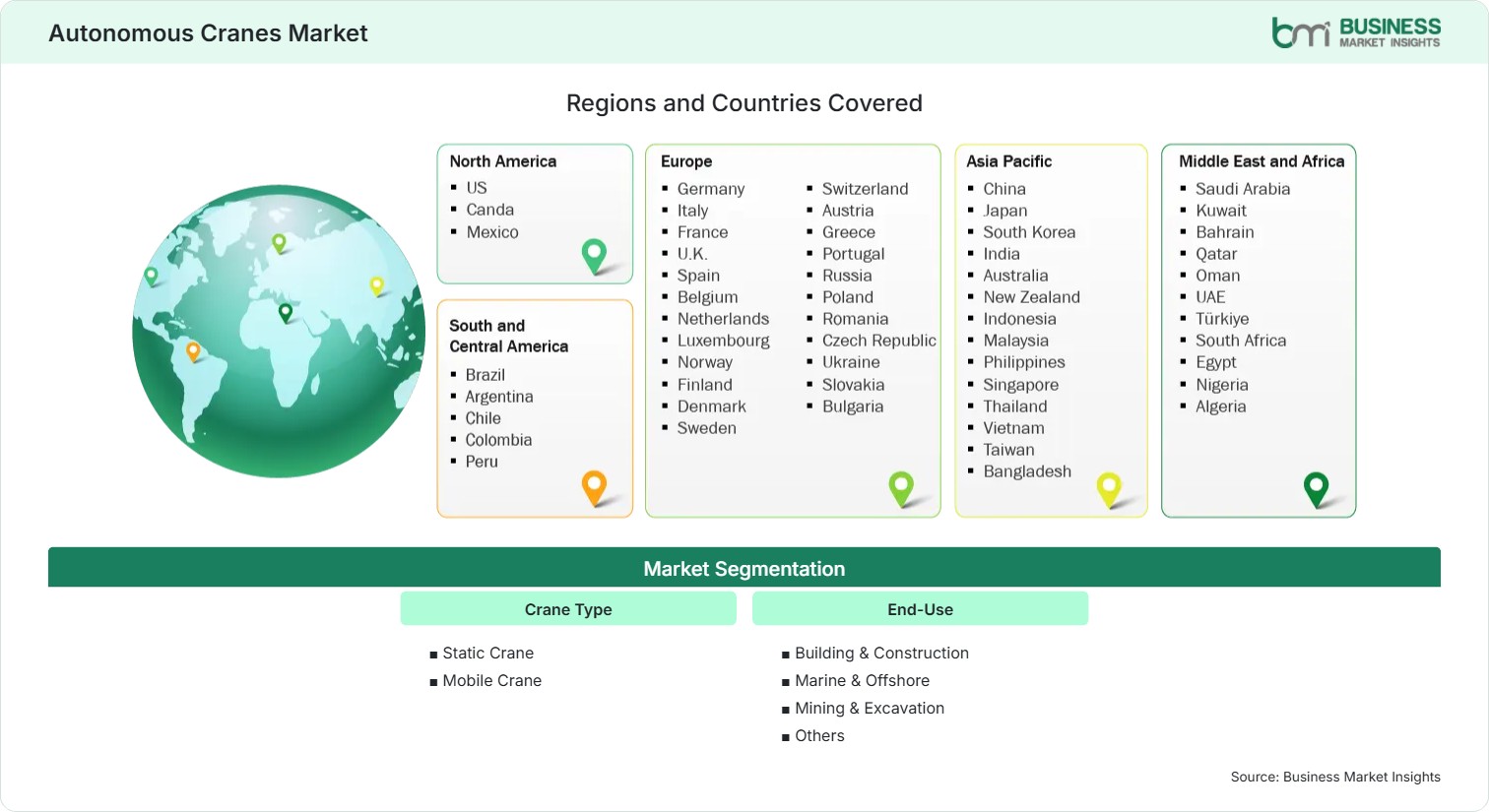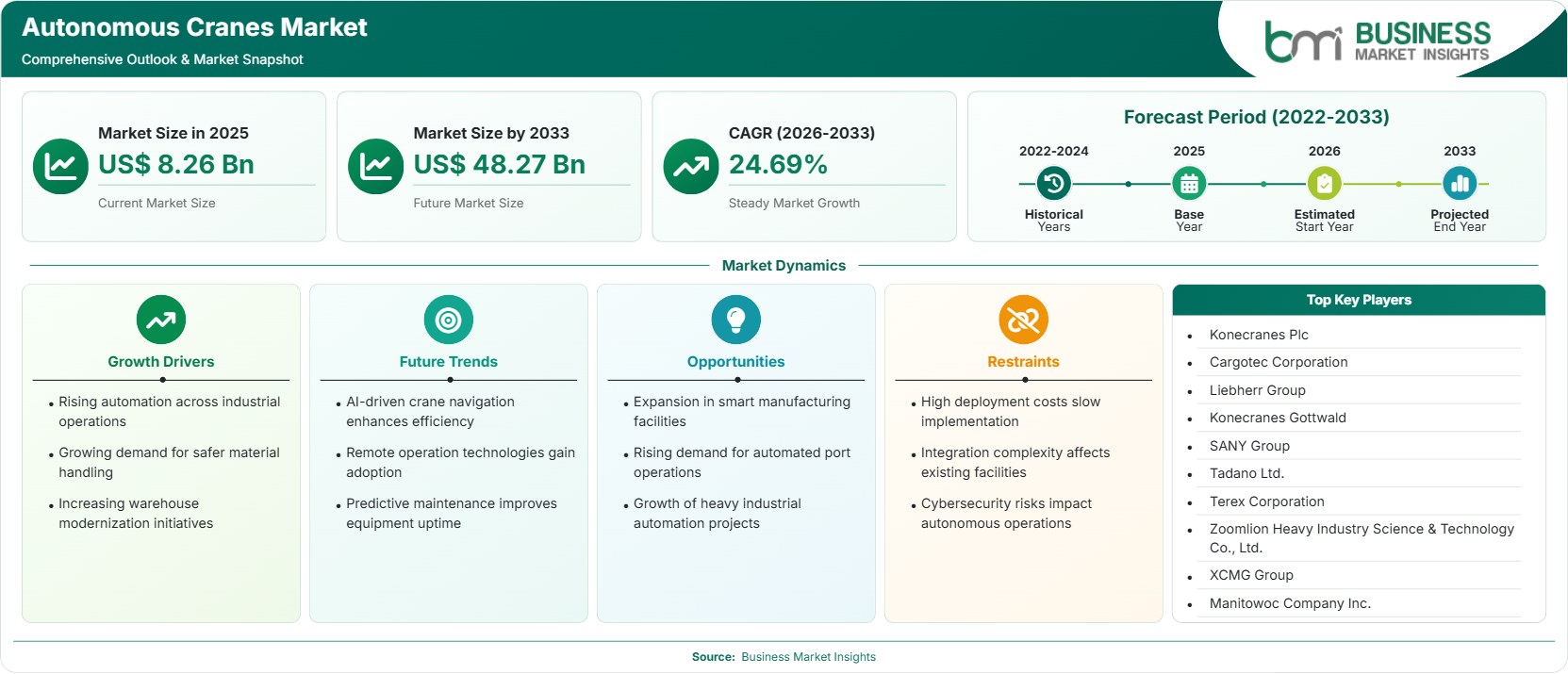
Autonomous Cranes Market Regional Highlights
North America Autonomous Cranes Market
North America accounted for 34%–37% of the Autonomous Cranes Market Share in 2025 and is projected to expand at a CAGR of 23.8%–24.4% during 2026–2033. Adoption of robust industrial automation solutions, rising digitization of warehouses, increased investment in infrastructure, and the implementation of advanced intelligent material handling solutions contribute to the region’s continued dominance. A well-established manufacturing base, investment in Industry 4.0 technologies, and the deployment of autonomous logistics systems add to this positive market perspective.
- Manufacturing companies continue investing in autonomous lifting technologies to improve operational efficiency, reduce labor dependency, enhance workplace safety, and optimize production workflows across automotive, heavy equipment, and industrial manufacturing facilities.
- Warehouse operators are integrating artificial intelligence, real-time monitoring systems, and autonomous cranes to accelerate inventory movement, minimize operational downtime, and improve logistics productivity throughout modern distribution centers.
- Port operators increasingly deploy automated container handling systems integrated with autonomous cranes to improve cargo throughput, reduce vessel turnaround times, and strengthen international trade competitiveness.
- Continuous investments in digital infrastructure and industrial automation platforms support large-scale deployment of intelligent crane systems across construction, energy, logistics, and manufacturing sectors.
- Growing adoption of predictive maintenance and remote fleet management technologies enables operators to improve equipment reliability while reducing maintenance costs and unplanned operational interruptions.
US Autonomous Cranes Market
The United States represented 29%–32% of global revenue in 2025 and is forecast to register a CAGR of 24.0%–24.6% during 2026–2033. Increasing adoption of industrial automation, expanding warehouse modernization projects, strong investments in smart manufacturing, and growing implementation of autonomous logistics systems continue to maintain the country's leadership in intelligent crane deployment.
- Large-scale manufacturing facilities continue implementing autonomous lifting systems integrated with robotics, machine vision, and industrial software platforms to improve productivity and operational flexibility.
- Infrastructure modernization initiatives encourage broader deployment of intelligent construction equipment supporting efficient material movement across transportation, commercial, and industrial development projects.
- Rapid growth of e-commerce distribution centers strengthens demand for autonomous crane technologies capable of supporting continuous warehouse operations and automated inventory handling.
- Advanced industrial research and strong collaboration between equipment manufacturers and automation technology companies continue accelerating commercialization of next-generation autonomous crane solutions.
Europe Autonomous Cranes Market
Europe held 25%–28% market share during 2025 and is anticipated to grow at a CAGR of 23.2%–23.8% through 2026–2033. Strong industrial engineering capabilities, increasing smart factory adoption, expanding automated port operations, and continuous investment in sustainable industrial technologies continue supporting regional expansion. Germany leads regional demand with a CAGR of 23.4%–24.0%, while the Netherlands records the fastest growth at 24.5%–25.1% due to rapid port automation investments.
- Germany continues strengthening industrial automation through advanced manufacturing technologies, intelligent lifting equipment, and strong engineering expertise supporting autonomous crane deployment.
- The Netherlands accelerates investments in smart port infrastructure, automated cargo handling systems, and digital logistics platforms that increase demand for autonomous crane technologies.
- European manufacturers increasingly integrate artificial intelligence, cloud-based monitoring, and predictive maintenance into crane systems to improve operational performance and sustainability.
- Government initiatives supporting industrial digitalization and advanced manufacturing continue encouraging adoption of intelligent lifting equipment across logistics and industrial sectors.
- Increasing emphasis on workplace safety regulations drives greater investment in autonomous cranes that reduce operator exposure to hazardous working environments.
Asia Pacific Autonomous Cranes Market
Asia Pacific accounted for 28%–31% of industry revenue in 2025 and is projected to record the highest CAGR of 26.2%–26.8% during 2026–2033. Rapid industrialization, expanding manufacturing capacity, increasing smart port development, and strong government support for digital transformation continue driving regional growth. China leads regional demand with a CAGR of 26.0%–26.6%, while India records the fastest expansion at 27.1%–27.7% during the forecast period.
- China continues to expand its intelligent manufacturing capabilities through significant investments in industrial automation, robotics, and autonomous material-handling technologies across multiple heavy industries.
- India benefits from rapid infrastructure development, expanding industrial corridors, and increasing investment in smart manufacturing facilities that require advanced lifting automation systems.
- Japan and South Korea continue to advance industrial robotics, the integration of artificial intelligence, and autonomous logistics technologies that strengthen regional competitiveness.
- Expanding automated port modernization programs continue increasing deployment of autonomous cranes supporting efficient cargo handling and maritime logistics operations.
- Rising investments in mining automation, heavy engineering, and industrial digitalization create substantial opportunities for intelligent crane manufacturers across emerging Asian economies.
Rest of World Autonomous Cranes Market
The Rest of World holds an 8%-10% market share in 2025 and is projected to achieve a CAGR of 24.1%-24.7% for the period 2026-2033. South and Central America continue to expand their automation investments across industries while upgrading their logistics and construction facilities.
The Middle East & Africa are witnessing increasing adoption of autonomous lifting technologies through smart city developments, energy infrastructure projects, mining expansion, and automated port modernization. Brazil leads South & Central America with a CAGR of 24.2%–24.8%, while Saudi Arabia records the highest regional growth at 25.0%–25.6%.
- Brazil continues strengthening industrial automation through modernization of logistics facilities, expanding mining activities, and increasing infrastructure development projects requiring intelligent lifting solutions.
- Saudi Arabia accelerates adoption of autonomous cranes through smart city developments, industrial diversification initiatives, and large-scale infrastructure modernization programs.
- Expanding investments in automated ports and logistics hubs continue improving cargo handling efficiency while increasing demand for intelligent crane technologies.
- Mining companies increasingly deploy autonomous lifting systems to improve operational safety, optimize material movement, and reduce workforce exposure in hazardous operating environments.
- Government-led industrial diversification initiatives continue supporting broader implementation of advanced automation technologies across construction, logistics, and manufacturing industries.