
Automotive Windshield Market Outlook: Size, Share, Trends, Growth Analysis, Competitive Landscape & Forecast, 2026-2033

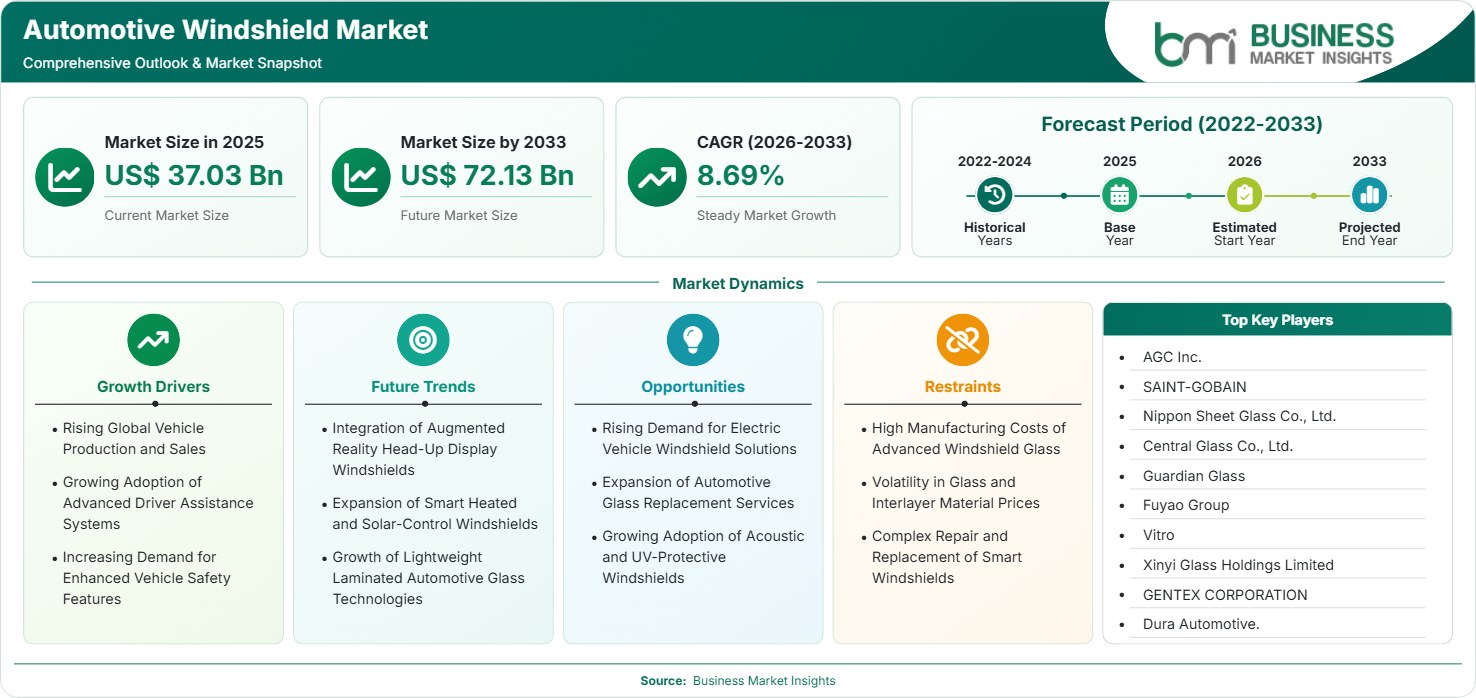
The Automotive Windshield Market size was valued at US$ 37.03 Billion in 2025 and is projected to reach US$ 72.13 Billion by 2033, growing at a CAGR of 8.69% during 2026–2033. Rising vehicle production, increasing adoption of advanced driver assistance systems (ADAS), growing demand for enhanced passenger safety, and expanding integration of smart glass technologies are supporting market growth globally.

Report Coverage
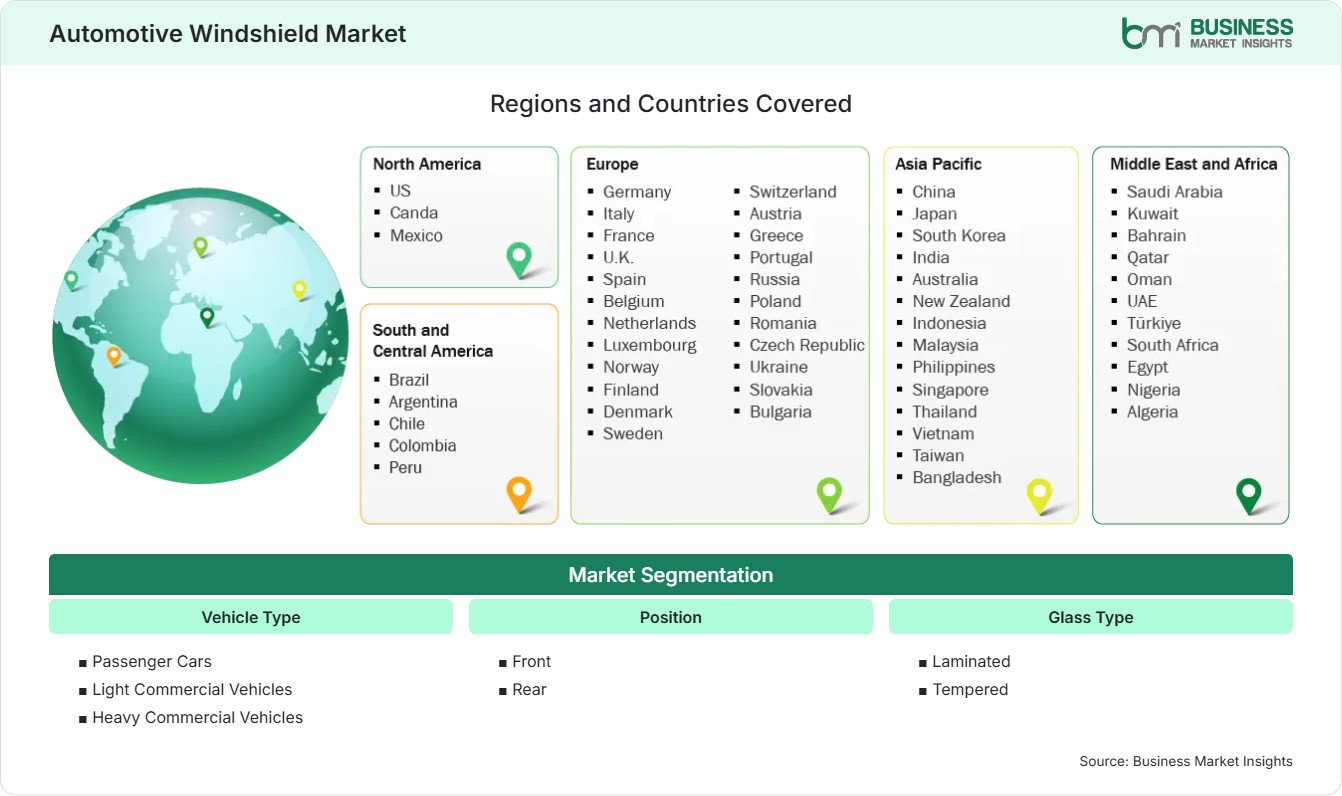
  • Vehicle Type: Passenger Cars, Light Commercial Vehicles, Heavy Commercial Vehicles
  • Position: Front, Rear
  • Glass Type: Laminated, Tempered
US$ 37.03 Bn Market size in 2025
US$ 72.13 Bn Market Size by 2033
8.69% CAGR, 2026 - 2033
2026-2033 Forecast Period

AI Overview

Automotive Windshield Market Summary

  • North America Region: North America holds a market share of 34%–37% in 2025, growing with a CAGR of 8.1%–8.8% during 2026–2033. Strong automotive production capabilities, increasing vehicle safety standards, and rising adoption of advanced windshield technologies continue supporting regional leadership. The U.S. automotive windshield market is expected to register a CAGR of 8.3%–9.0%.
  • Fastest Growing Region: Asia Pacific accounts for 30%–33% share in 2025 and is projected to grow at a CAGR of 9.3%–10.0% through 2033. Rising automotive production, increasing vehicle ownership, expanding electric vehicle manufacturing, and growing investments in automotive safety technologies continue driving regional growth.
  • Leading Segment: Passenger Cars represent 61%–64% share in 2025 and are expected to grow at a CAGR of 8.7%–9.4% through 2033. Growing passenger vehicle production and increasing consumer demand for safety-enhancing vehicle components continue supporting segment dominance.
  • High Growth Segment: Laminated Glass accounts for 66%–69% share in 2025 and is forecast to grow at a CAGR of 9.0%–9.7% during 2026–2033. Superior safety performance, impact resistance, and compatibility with advanced automotive technologies continue accelerating segment growth.
  • Key Market Opportunity: Expansion of smart windshields, head-up display integration, autonomous driving technologies, and electric vehicle production is creating significant growth opportunities.
  • Major Market Players: AGC Inc., SAINT-GOBAIN, Nippon Sheet Glass Co., Ltd., Central Glass Co., Ltd., Guardian Glass, Fuyao Group, Vitro, Xinyi Glass Holdings Limited, GENTEX CORPORATION, and Dura Automotive.
Strategic Insights

Automotive Windshield Market: Strategic Insights

Automotive Windshield Market Strategic Framework
FREE PDF
Request your free sample
Request free sample
Stakeholder View

Key Takeaways

  • Automotive windshields continue evolving into multifunctional systems that support safety, visibility, connectivity, and driver assistance technologies.
  • Passenger cars remain the dominant vehicle segment due to high global production volumes and strong consumer demand.
  • Laminated glass continues leading the market because of its superior safety characteristics and widespread regulatory acceptance.
  • Vehicle safety regulations are encouraging manufacturers to adopt advanced windshield technologies across vehicle categories.
  • Integration of sensors, cameras, and head-up displays is increasing the strategic importance of windshield systems.
  • North America remains the leading regional automotive windshield market supported by strong automotive manufacturing and safety technology adoption.
  • Asia Pacific is projected to witness the fastest growth due to expanding vehicle production and increasing automotive investments.
  • Smart glass technologies and autonomous driving systems are expected to create substantial future growth opportunities.
Geographic Outlook

Automotive Windshield Market Regional Highlights

North America Automotive Windshield Market

North America accounts for 34%–37% Automotive Windshield Market share in 2025 and is projected to grow at a CAGR of 8.1%–8.8% through 2033. Strong automotive manufacturing capabilities, increasing demand for vehicle safety technologies, and rising adoption of connected vehicle systems continue supporting regional leadership. The region also benefits from high replacement demand and continued innovation in automotive glass technologies.

  • Automotive manufacturers are increasingly incorporating advanced windshield systems that support ADAS functions, improve driver visibility, and enhance overall vehicle safety performance.
  • Growing adoption of electric and premium vehicles is creating demand for high-performance glass solutions capable of supporting smart vehicle features and advanced electronic integrations.
  • Vehicle safety regulations continue encouraging automakers to invest in laminated glass technologies and enhanced windshield performance standards across multiple vehicle categories.
  • The aftermarket segment remains strong as vehicle owners increasingly replace damaged windshields with technologically advanced products featuring improved durability and functionality.
  • Rising investments in autonomous driving technologies are creating opportunities for windshield systems integrated with sensors, cameras, and driver monitoring capabilities.
  • Manufacturers continue focusing on lightweight windshield materials to improve vehicle efficiency while maintaining structural strength and passenger protection.

US Automotive Windshield Market

The United States contributes approximately 85%–89% of North American revenue and is expected to register a CAGR of 8.3%–9.0% through 2033. High vehicle ownership levels, advanced automotive manufacturing infrastructure, and growing demand for safety-oriented technologies continue supporting automotive windshield market leadership.

  • Automotive companies are increasingly deploying windshield-integrated camera systems to support lane-keeping assistance, adaptive cruise control, and collision avoidance technologies.
  • Consumer demand for vehicles equipped with advanced safety features continues encouraging investments in premium windshield technologies and enhanced visibility systems.
  • Growing electric vehicle manufacturing activity is creating additional demand for lightweight and technologically advanced automotive glass products.
  • Windshield replacement services remain highly active due to substantial vehicle populations and increasing adoption of premium replacement components.
  • Technological innovation across connected mobility and autonomous driving remains a key factor supporting long-term market expansion.

Europe Automotive Windshield Market

Europe represents 24%–27% of global revenue in 2025 and is anticipated to expand at a CAGR of 8.4%–9.1% through 2033. Strong automotive engineering capabilities, increasing vehicle safety requirements, and growing demand for premium vehicles continue supporting regional growth. Germany remains the leading automotive windshield market while Poland demonstrates stronger growth momentum.

  • Germany continues leading regional demand through its extensive automotive manufacturing ecosystem and strong focus on vehicle innovation.
  • Poland is among the fastest-growing markets and is estimated to register a CAGR of 9.2%–9.9% during the forecast period due to expanding automotive production activities.
  • Automotive manufacturers are increasingly adopting advanced laminated glass solutions to comply with stringent safety and performance requirements.
  • Growing electric vehicle adoption is encouraging development of windshield technologies that support connected and intelligent transportation systems.
  • Premium vehicle manufacturers continue integrating head-up displays and sensor-based technologies directly into windshield systems.
  • Sustainability initiatives are driving investments in energy-efficient manufacturing processes and recyclable automotive glass materials.

Asia Pacific Automotive Windshield Market

Asia Pacific accounts for 30%–33% of global revenue in 2025 and is expected to achieve the fastest CAGR of 9.3%–10.0% through 2033. Rising vehicle production, increasing consumer purchasing power, expanding electric vehicle manufacturing, and growing adoption of automotive safety features continue supporting strong regional growth.

  • China remains the largest regional automotive windshield market due to its substantial vehicle production capacity and continuous investments in automotive technology advancement.
  • India is projected to achieve approximately 10.0%–10.7% CAGR, supported by increasing vehicle ownership, expanding manufacturing capacity, and growing safety awareness.
  • Automotive manufacturers are increasingly utilizing high-quality laminated glass solutions to improve vehicle safety and regulatory compliance.
  • Growth in electric vehicle production is driving demand for innovative windshield systems compatible with next-generation transportation technologies.
  • Rising urbanization and expanding middle-class populations continue supporting long-term passenger vehicle demand across the region.
  • Government initiatives promoting vehicle safety and manufacturing development are creating favorable conditions for sustained market growth.

Rest of World Automotive Windshield Market

Rest of World accounts for 8%–11% of global revenue in 2025 and is projected to expand at a CAGR of 8.2%–8.9% through 2033. Increasing vehicle ownership, expanding automotive manufacturing activities, and growing investments in transportation infrastructure continue supporting market growth across developing regions.

  • Brazil continues generating demand through rising automotive production and increasing adoption of vehicle safety technologies in passenger and commercial vehicles.
  • The UAE is witnessing growing demand for premium vehicles, creating opportunities for advanced windshield products with enhanced safety and comfort features.
  • Saudi Arabia is expected to achieve approximately 8.9%–9.6% CAGR through 2033, supported by transportation sector growth and industrial diversification initiatives.
  • Demand for windshield replacement products continues increasing as vehicle fleets expand across developing economies.
  • Automotive distributors are strengthening aftermarket networks to improve access to high-quality windshield products and repair services.
  • Infrastructure development and rising mobility requirements continue supporting long-term growth opportunities throughout regional automotive markets.
Global Market Geography
FREE PDF
Request your free sample
Request free sample
Segment Analysis

Automotive Windshield Market Segmentation

Vehicle Type

The vehicle type segment represents the primary demand source for automotive windshields, with adoption patterns influenced by vehicle production volumes, safety requirements, consumer preferences, and technological integration trends. The segment accounts for approximately 61%–64% share in 2025 and is projected to grow at a CAGR of 8.7%–9.4% through 2033. The expanding Automotive Windshield Market scope is supported by rising global vehicle production, increasing demand for advanced safety technologies, growing electric vehicle adoption, and continuous innovation in automotive glass systems.

  • Passenger Cars: Passenger cars remain the dominant segment due to their high production volumes and widespread adoption across developed and emerging economies. Increasing demand for safety features, premium interiors, and smart vehicle technologies continues driving windshield innovation in this segment.
  • Light Commercial Vehicles (LCVs): LCVs continue witnessing growing demand as e-commerce, urban logistics, and last-mile delivery services expand globally. Windshield manufacturers are increasingly developing durable and technologically advanced products for commercial transportation applications.
  • Heavy Commercial Vehicles (HCVs): Heavy commercial vehicles utilize specialized windshield systems designed to withstand demanding operating conditions while improving driver visibility and safety. Growth in freight transportation and logistics activities continues supporting segment demand.

Position

Position-based windshield applications play a crucial role in vehicle safety, structural integrity, visibility, and passenger protection. This segment accounts for approximately 72%–75% share in 2025 and is expected to register a CAGR of 8.5%–9.2% through 2033. Current Automotive Windshield Market trends indicate increasing technological integration within vehicle glass systems.

  • Front: Front windshields dominate the segment due to their critical role in vehicle safety, visibility, crash protection, and support of ADAS technologies. Sensors, cameras, rain detectors, and head-up displays are increasingly integrated into front windshield systems.
  • Rear: Rear windshield demand continues growing due to rising adoption of defogging systems, integrated antennas, rear-view technologies, and enhanced vehicle aesthetics. Technological advancements continue expanding functionality beyond basic visibility requirements.

Glass Type

Glass type remains one of the most important determinants of windshield performance, durability, and safety compliance. This segment accounts for approximately 66%–69% share in 2025 and is projected to grow at a CAGR of 9.0%–9.7% through 2033.

  • Laminated: Laminated glass remains the leading segment due to its superior impact resistance, passenger protection capabilities, noise reduction benefits, and compatibility with advanced automotive electronics. Growing implementation of safety regulations continues supporting widespread adoption.
  • Tempered: Tempered glass continues to be utilized across specific vehicle applications due to its strength, durability, and cost-effectiveness. Its ability to break into smaller fragments enhances safety compared to conventional glass.
Market Forces

Automotive Windshield Market Dynamics

Key Market Drivers

Rising Global Vehicle Production and Sales

Growing vehicle production continues to serve as a primary growth driver for the automotive windshield market. Rising disposable incomes, increasing urbanization, expanding transportation needs, and growing vehicle ownership levels across emerging economies are supporting strong demand for passenger and commercial vehicles. Every new vehicle requires advanced windshield systems that meet performance, visibility, and safety standards. Automakers are also increasing investments in vehicle innovation, creating demand for technologically enhanced glass solutions. As production volumes continue expanding across both internal combustion and electric vehicle categories, demand for windshields is expected to increase significantly. Furthermore, replacement demand generated by existing vehicle fleets continues contributing to market expansion. The combination of OEM demand and aftermarket replacement activity remains a strong foundation for long-term market growth.

Growing Adoption of Advanced Driver Assistance Systems

Advanced Driver Assistance Systems have gained increased importance in contemporary automobiles. Several functionalities of ADAS depend on the use of sensors, cameras, and other types of monitoring systems mounted on windshields to assist in functions such as lane departure warnings, adaptive cruise control, collision warnings, and detection of traffic signs. With continued adoption of this technology in a larger portfolio of vehicles by automobile manufacturers, windshields are becoming technology platforms. This trend is driving manufacturers to come up with highly specialized products that can help integrate sensors without impacting visibility or safety in any way. At the same time, there is increasing encouragement from regulatory bodies globally to adopt driver assistance systems.

Increasing Demand for Enhanced Vehicle Safety Features

Safety features of vehicles remain a significant concern for buyers. Present-day windshields play an important role in protecting passengers in the event of accidents since they help in maintaining the structure of the vehicle and keep occupants inside the vehicle during crashes. Modern laminated glass technology offers improved impact resistance and enhanced safety features over other types of glasses. Car manufacturers are constantly making improvements in the windshield system in order to satisfy changing government standards and demands of customers. The rising concerns about road safety and stringent requirements for crash tests have resulted in wider use of advanced windshield technologies.

Key Market Opportunities

Rising Demand for Electric Vehicle Windshield Solutions

The growing trend of electric vehicle manufacturing is opening up immense possibilities for glass manufacturers of windshields. The use of lightweight components along with technological innovations helps electric vehicles achieve maximum efficiency and maximum range. In most cases, the windshields manufactured for electric vehicles include acoustic insulation, UV protection, heating functions, and even displays. New-age windshield glass products have been introduced by glass manufacturers to ensure that the efficiency of these vehicles is maximized while meeting other functionalities.

Expansion of Automotive Glass Replacement Services

The growing global vehicle fleet is generating increasing demand for windshield repair and replacement services. Road debris, accidents, weather conditions, and everyday wear contribute to windshield damage that requires professional replacement. Insurance-supported replacement programs and growing consumer awareness regarding safety have strengthened aftermarket demand. Service providers continue expanding capabilities to accommodate technologically advanced windshields equipped with sensors and calibration requirements. The aftermarket segment therefore represents an important opportunity for windshield manufacturers and distributors seeking stable long-term revenue streams.

Growing Adoption of Acoustic and UV-Protective Windshields

Consumers increasingly prioritize driving comfort, cabin refinement, and passenger protection from environmental exposure. Acoustic windshields help reduce external noise levels, improving overall vehicle comfort and driving experience. Similarly, UV-protective windshield technologies help reduce solar heat gain and protect vehicle occupants from harmful ultraviolet radiation. Automotive manufacturers continue incorporating these premium features across a wider range of vehicle categories. Long-term Automotive Windshield Market Forecasts remain favorable as demand for comfort-enhancing and value-added windshield technologies continues expanding.

Market Restraints and Challenges

High Manufacturing Costs of Advanced Windshield Glass

Factor: Advanced windshield systems incorporating laminated construction, acoustic technologies, sensor integration, heating functions, and smart glass capabilities require specialized manufacturing processes and sophisticated materials. The complexity associated with producing these products increases development, production, and quality control costs. Manufacturers must also invest heavily in innovation and production technology to remain competitive.

Impact: Higher manufacturing costs can increase vehicle production expenses and aftermarket replacement costs. Cost-sensitive consumers and automakers may delay adoption of premium windshield technologies in certain market segments, potentially affecting penetration rates despite strong long-term demand potential.

Volatility in Glass and Interlayer Material Prices

Factor: Automotive windshield production depends on various raw materials, including specialty glass, polyvinyl butyral (PVB) interlayers, coatings, chemicals, and energy-intensive manufacturing processes. Fluctuations in raw material prices, energy costs, and supply chain availability can significantly affect production economics. Geopolitical uncertainties and transportation disruptions may further increase cost volatility.

Impact: Price fluctuations can influence profit margins, procurement strategies, and operational planning across the automotive glass value chain. Manufacturers often face challenges in balancing production costs with competitive pricing expectations, potentially affecting investment decisions and market competitiveness.

Company Analysis

Competitive Landscape

The Automotive Windshield Market analysis is characterized by strong competition among global automotive glass manufacturers, specialty glass companies, and vehicle component suppliers. Market participants are focusing on laminated safety glass technologies, smart windshield systems, acoustic glazing solutions, UV-protective coatings, and advanced driver assistance system (ADAS) integration capabilities to strengthen their market positions. Growing demand for vehicle safety, increasing electric vehicle production, and rising adoption of connected and autonomous driving technologies continue driving innovation across the market. Companies are investing in lightweight glass technologies, advanced coatings, sensor integration capabilities, and energy-efficient manufacturing processes to address evolving automotive industry requirements.

Company Name

Overview

Products and Services relevant to this market

AGC Inc.

Global glass manufacturer serving automotive, construction, and industrial markets.

Automotive windshields, laminated glass solutions, smart glass technologies, vehicle glazing systems, and specialty automotive glass products.

SAINT-GOBAIN

Materials company specializing in advanced glass and mobility solutions.

Automotive glazing products, laminated windshields, acoustic glass solutions, solar-control glass, and advanced vehicle glass technologies.

Nippon Sheet Glass Co., Ltd.

Glass manufacturer serving global automotive and architectural markets.

Automotive windshields, laminated safety glass, tempered glass solutions, vehicle glazing products, and advanced automotive glass technologies.

Central Glass Co., Ltd.

Japanese glass manufacturer focused on automotive and specialty glass applications.

Automotive windshields, laminated glass systems, specialty coatings, safety glass products, and vehicle glazing solutions.

Guardian Glass

Glass manufacturing company serving automotive and commercial industries.

Automotive windshield systems, coated glass products, laminated safety glass, and advanced vehicle glazing technologies.

Fuyao Group

Automotive glass manufacturer supplying OEM and aftermarket customers globally.

Automotive windshields, laminated safety glass, replacement glass products, acoustic glazing solutions, and automotive glass assemblies.

Vitro

Glass producer serving automotive, construction, and industrial markets.

Automotive windshields, tempered glass, laminated glazing products, and OEM automotive glass solutions.

Xinyi Glass Holdings Limited

Integrated glass manufacturer focusing on automotive and architectural products.

Automotive glass systems, windshields, safety glass products, laminated glazing, and replacement automotive glass solutions.

GENTEX CORPORATION

Automotive technology company specializing in vision and connected vehicle systems.

Smart windshield technologies, integrated electronic systems, ADAS-compatible glass solutions, and automotive visibility products.

Dura Automotive

Automotive component supplier serving global vehicle manufacturers.

Automotive glazing components, windshield-related systems, vehicle structural solutions, and automotive component technologies.

Trust & Transparency

Research Methodology

The market analysis combines proprietary research with secondary data from government agencies, company disclosures, regulatory filings, industry databases and expert interviews. Market estimates are validated through data triangulation, cross-market benchmarking and analyst review.

View Full Research Methodology

Questions Answered

Frequently Asked Questions

How are advanced vehicle technologies influencing windshield demand?

Advanced vehicle technologies such as ADAS, head-up displays, rain sensors, driver monitoring systems, and autonomous driving features increasingly rely on windshield integration, making windshields a critical component of modern vehicle architecture.

What does this Automotive Windshield Market Report cover?

This report covers vehicle type analysis, position segmentation, glass type assessment, regional trends, competitive landscape evaluation, market drivers, opportunities, restraints, challenges, and future growth prospects through 2033.

Why does Laminated Glass account for the largest market share?

Laminated glass dominates the market because it provides superior safety, impact resistance, noise reduction, and passenger protection while supporting integration of ADAS sensors and advanced vehicle technologies.

Which vehicle type segment dominates the market?

Passenger Cars represent the leading segment due to high global production volumes, increasing consumer vehicle ownership, and growing adoption of advanced safety and comfort technologies.

What is driving growth in the market?

Rising global vehicle production and sales, growing adoption of advanced driver assistance systems, increasing demand for enhanced vehicle safety features, and expanding integration of smart vehicle technologies are major factors driving market growth.

Access the Full Automotive Windshield Market Report

Get segment-level forecasts, regional estimates, competitive benchmarking, company profiles and downloadable Excel datasets.

Access the full Automotive Windshield Market Report
350 pages PDF & Excel | 2026-08-31
Similar Research

Related Market Reports