
Automotive Seats Market Outlook: Size, Share, Trends, Growth Analysis, Competitive Landscape & Forecast, 2026-2033

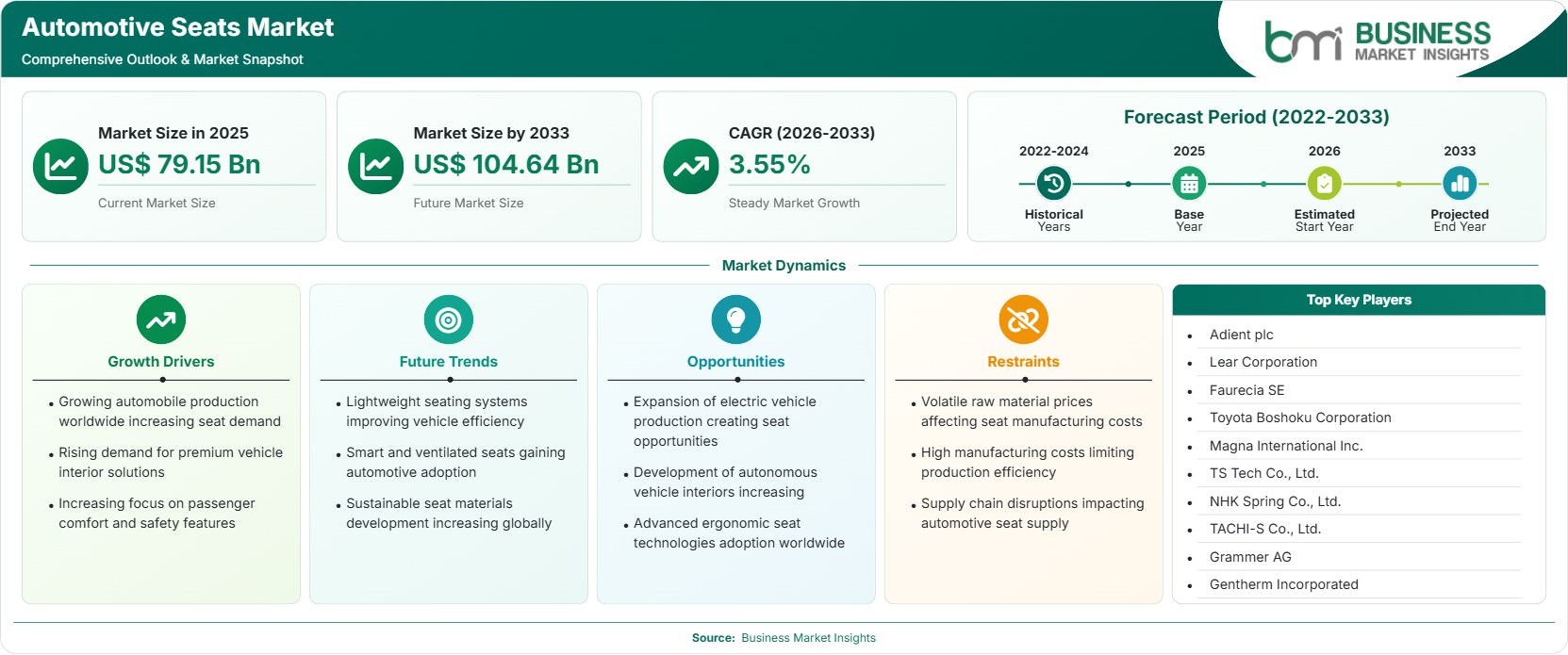
The Automotive Seats Market size was valued at US$ 79.15 billion in 2025 and is projected to reach US$ 104.64 billion by 2033, growing at a CAGR of 3.55% during 2026–2033. The market is driven by growing automobile production, rising demand for premium vehicle interiors, and increasing focus on passenger comfort and safety features. Electric vehicle expansion, autonomous interiors, and advanced ergonomic seat technologies continue creating growth opportunities.

Report Coverage
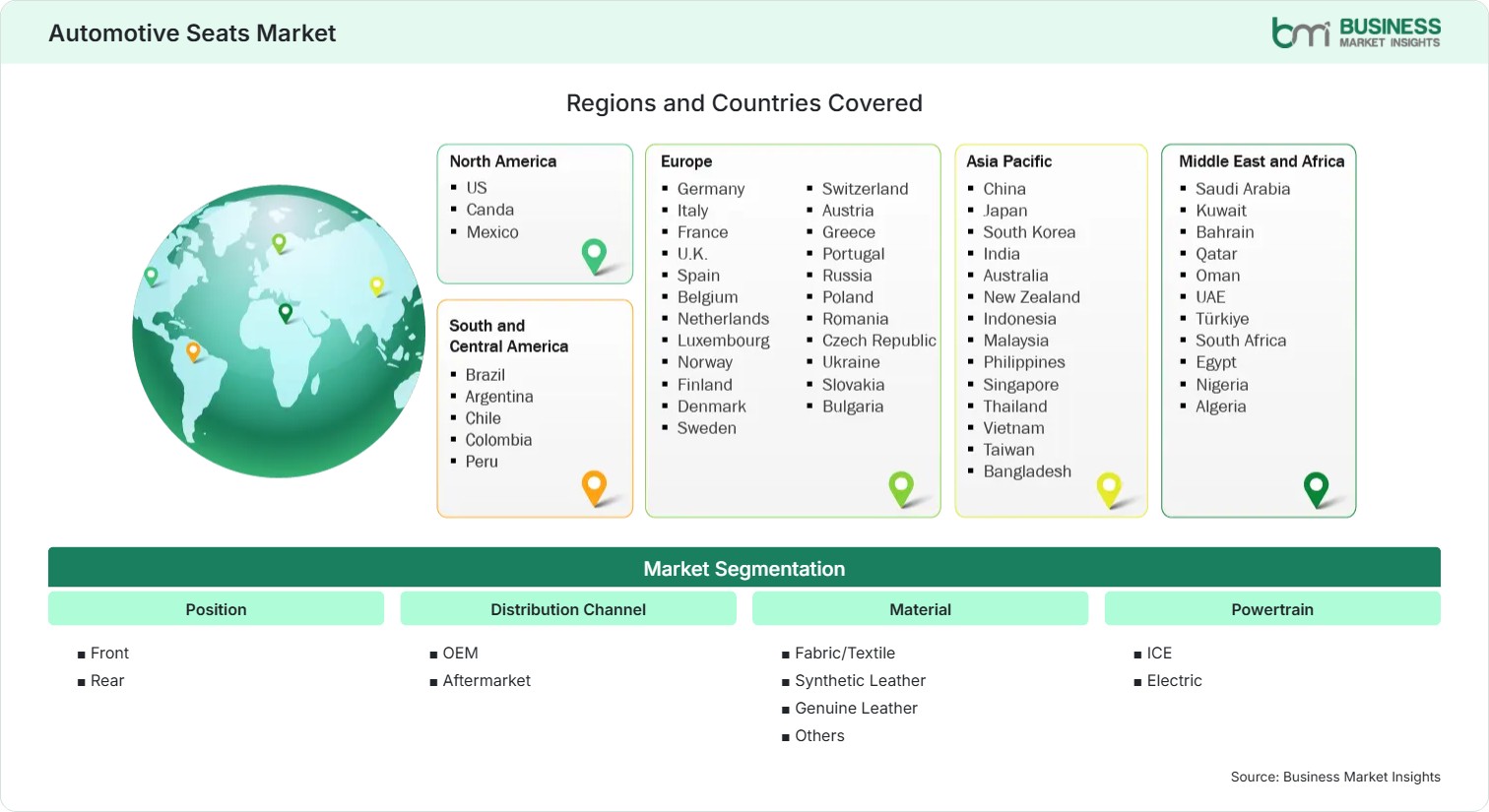
  • Position: Front, Rear
  • Distribution Channel: OEM, Aftermarket
  • Material: Fabric/Textile, Synthetic Leather, Genuine Leather, Others
  • Powertrain: ICE, Electric
  • Type: Bucket, Bench, Folding, Suspension, Others
US$ 79.15 Bn Market size in 2025
US$ 104.64 Bn Market Size by 2033
3.55% CAGR, 2026 - 2033
2026-2033 Forecast Period

AI Overview

Automotive Seats Market Summary

  • North America Region: North America holds 23%–26% market share in 2025 and is projected to grow at a CAGR of 3.2%–3.6% during 2026–2033. Increasing premium vehicle demand, rising electric vehicle adoption, advanced seating technology integration, and strong automotive manufacturing capabilities continue supporting regional growth. The U.S. leads regional demand through high passenger vehicle production, premium vehicle adoption, and advanced seat technology integration, registering a CAGR of approximately 3.3%–3.7% during the forecast period.
  • Fastest Growing Region: Asia Pacific accounts for 42%–45% market share in 2025 and is expected to register the fastest CAGR of 4.0%–4.4% through 2033. Expanding automobile production, increasing electric vehicle manufacturing, rising disposable incomes, and growing adoption of advanced interiors continue accelerating regional demand.
  • Leading Segment: Passenger Cars account for 62%–65% market share in 2025 and are projected to grow at a CAGR of 3.6%–3.9% during the forecast period. Rising vehicle ownership, premiumization trends, comfort requirements, and advanced seating features continue supporting segment leadership.
  • High Growth Segment: Electric powertrain seats account for 12%–15% market share in 2025 and are projected to register a CAGR of 8.5%–9.2% through 2033. Electric vehicle expansion, lightweight seating requirements, smart interiors, and integrated comfort technologies continue driving rapid growth.
  • Key Market Opportunity: Growing electric vehicle production, autonomous vehicle interiors, ergonomic seating innovations, and smart comfort technologies are creating new opportunities for automotive seat manufacturers worldwide.
  • Major Market Players: Adient plc, Lear Corporation, Faurecia SE, Toyota Boshoku Corporation, Magna International Inc., TS Tech Co., Ltd., NHK Spring Co., Ltd., TACHI-S Co., Ltd., Grammer AG, Gentherm Incorporated
Strategic Insights

Automotive Seats Market: Strategic Insights

Automotive Seats Market Strategic Framework
FREE PDF
Request your free sample
Request free sample
Stakeholder View

Key Takeaways

  • Automotive seat manufacturers are strengthening value chains through partnerships with automakers, material suppliers, electronics providers, and technology companies to improve product innovation and manufacturing efficiency.
  • Electric vehicle seating solutions, premium interiors, and intelligent comfort systems represent high-potential areas as vehicle designs increasingly prioritize passenger experience.
  • Innovation is shifting toward lightweight materials, connected seating systems, climate-controlled seats, massage functions, and advanced safety-integrated seating technologies.
  • Asia Pacific remains the most attractive investment region due to expanding vehicle production, electric vehicle manufacturing growth, and increasing automotive component localization.
  • Strategic collaborations, technology partnerships, and capacity expansions are increasing as companies compete to supply advanced seating systems for next-generation vehicles.
  • Sustainability is becoming a key focus, with manufacturers developing recyclable materials, efficient production processes, and environmentally responsible seating components.
Geographic Outlook

Automotive Seats Market Regional Highlights

North America Automotive Seats Market

North America accounts for 23%–26% of the Automotive Seats Market share in 2025 and is projected to grow at a CAGR of 3.2%–3.6% during 2026–2033. Regional demand is supported by premium vehicle production, increasing electric vehicle adoption, advanced interior technologies, and strong automotive manufacturing capabilities. Automakers are focusing on intelligent seating solutions, lightweight materials, and enhanced passenger comfort features.

  • The United States dominates regional demand through strong vehicle production, premium segment growth, and advanced seating technology adoption.
  • Increasing electric vehicle production is encouraging development of lightweight and electronically integrated seating systems.
  • Automotive manufacturers are investing in connected interiors, comfort modules, and advanced safety seating technologies.
  • Growing consumer preference for premium cabin experiences continues supporting demand for innovative seating solutions.

US Automotive Seats Market

The U.S. represents 85%–88% of the North American market in 2025 and is projected to register a CAGR of 3.3%–3.7% through 2033. Strong passenger vehicle demand, premium vehicle adoption, electric vehicle expansion, and technological advancements in vehicle interiors continue supporting market growth. Increasing collaboration between automakers and seating suppliers is accelerating innovation.

  • Premium passenger vehicles continue driving demand for advanced comfort and electronic seating features.
  • Electric vehicle manufacturers are integrating lightweight and smart seating solutions into new models.
  • Rising focus on passenger safety is increasing adoption of advanced seat structures and components.
  • Manufacturers continue expanding local production capabilities to support automotive supply chains.

Europe Automotive Seats Market

Europe holds 24%–27% market share in 2025 and is expected to expand at a CAGR of 3.0%–3.4% during the forecast period. Rising electric vehicle production, stringent safety standards, and demand for sustainable interior materials support regional growth. Germany leads the market due to strong automotive manufacturing, while France and the United Kingdom continue witnessing technology-driven seating adoption.

  • Germany remains the leading market supported by premium vehicle production and advanced automotive engineering capabilities.
  • Electric vehicle growth is increasing demand for lightweight and energy-efficient seating systems.
  • Sustainable materials and recyclable seating components are gaining importance among European automakers.
  • Advanced comfort technologies continue expanding across luxury and passenger vehicle segments.

Asia Pacific Automotive Seats Market

Asia Pacific captures 42%–45% market share in 2025 and is projected to register the fastest CAGR of 4.0%–4.4% during 2026–2033. Expanding automobile production, increasing electric vehicle manufacturing, rising consumer purchasing power, and growing automotive component localization continue driving regional growth. China leads regional demand, while India records strong expansion due to increasing vehicle production.

  • China dominates regional demand through large-scale automobile production and electric vehicle manufacturing.
  • India continues expanding with rising passenger vehicle production and growing automotive component investments.
  • Japan and South Korea maintain strong demand through advanced automotive technologies and premium vehicles.
  • Manufacturers are increasing regional production capacity to support growing vehicle manufacturing requirements.

Rest of World Automotive Seats Market

Rest of World accounts for 7%–9% market share in 2025 and is expected to grow at a CAGR of 3.3%–3.7% through 2033. South & Central America and the Middle East & Africa are witnessing increasing vehicle production, infrastructure development, and demand for improved vehicle interiors. Brazil leads Latin American demand, while Gulf countries show rising adoption of premium vehicles.

  • Brazil remains the leading regional market supported by expanding automotive production and vehicle ownership.
  • Middle Eastern countries continue increasing premium vehicle adoption and advanced interior technology demand.
  • Growing automotive assembly activities are improving opportunities for seating component suppliers.
  • Manufacturers are strengthening regional partnerships to expand distribution and production capabilities.
Global Market Geography
FREE PDF
Request your free sample
Request free sample
Segment Analysis

Automotive Seats Market Segmentation

Position

The Position segment accounted for 55%–58% market share in 2025 and is projected to grow at a CAGR of 3.5%–3.8% through 2033. The segment continues expanding as automakers focus on passenger comfort, ergonomic design, and optimized cabin layouts. Increasing demand for advanced adjustment systems, premium interiors, and enhanced safety features is supporting seating innovation across vehicle categories.

  • Front: Represents the dominant position category due to integration of advanced comfort features, driver assistance systems, and ergonomic technologies for improved driving experience.
  • Rear: Demand is increasing with premium vehicle adoption, enhanced passenger comfort requirements, and development of spacious cabin designs.

By Distribution Channel

The By Distribution Channel segment accounted for 78%–81% market share in 2025 and is expected to register a CAGR of 3.4%–3.7% during the forecast period. The segment is influenced by rising vehicle production, increasing OEM collaborations, and growing demand for customized seating systems. Expanding aftermarket demand also supports replacement and upgrade opportunities.

  • OEM: Leads the segment due to increasing vehicle production, direct supply agreements, and integration of advanced seating systems during manufacturing.
  • Aftermarket: Continues growing through replacement demand, customization trends, premium seat upgrades, and increasing vehicle ownership worldwide.

By Material

The By Material segment accounted for 35%–38% market share in 2025 and is projected to grow at a CAGR of 3.6%–3.9% through 2033. Material selection is increasingly influenced by sustainability goals, premiumization trends, durability requirements, and consumer preferences for enhanced cabin aesthetics during automotive seats market forecasts. Manufacturers are developing lightweight and environmentally friendly seating materials.

  • Fabric/Textile: Widely adopted due to affordability, durability, comfort, and suitability across mass-market passenger vehicles.
  • Synthetic Leather: Increasing adoption due to premium appearance, cost advantages, easy maintenance, and growing demand for sustainable alternatives.
  • Genuine Leather: Maintains demand in luxury vehicles due to premium feel, durability, and enhanced interior aesthetics.

By Powertrain

The By Powertrain segment accounted for 84%–87% market share in 2025 and is projected to grow at a CAGR of 3.0%–3.4% during the forecast period. While ICE vehicles continue dominating global production, electric vehicles are increasing demand for lightweight, flexible, and technology-enabled seating systems.

  • ICE: Continues leading due to extensive global vehicle production, established supply chains, and widespread consumer adoption.
  • Electric: The fastest-growing category supported by EV expansion, lightweight component requirements, and smart cabin technology integration.

By Type

The By Type segment accounted for 38%–41% automotive seats market share in 2025 and is expected to grow at a CAGR of 3.3%–3.7% through 2033. Increasing vehicle personalization, premium interior demand, and improved passenger ergonomics are influencing seating type adoption across global automotive markets.

  • Bucket: Widely used in passenger vehicles due to enhanced support, comfort, and sporty interior designs.
  • Bench: Continues adoption in specific vehicle categories requiring increased passenger capacity and practical seating arrangements.
  • Folding: Demand is supported by flexible cabin layouts, commercial vehicles, and space optimization requirements.
  • Suspension: Increasing adoption in commercial vehicles due to improved ride comfort and vibration reduction capabilities.

By Technology

The By Technology segment accounted for 42%–45% market share in 2025 and is projected to grow at a CAGR of 3.8%–4.1% through 2033. Integration of electronics, automation, and passenger-focused technologies is transforming automotive seating systems. Rising demand for intelligent interiors is accelerating adoption of advanced seat technologies aligning with automotive seats market trends.

  • Manual: Maintains demand in entry-level vehicles due to affordability, reliability, and lower production costs.
  • Power: Increasing adoption in premium vehicles through electrically adjustable seats and enhanced user convenience.
  • Comfort: Growing rapidly due to heating, ventilation, massage functions, memory settings, and personalized seating experiences.

By Component

The By Component segment accounted for 32%–35% market share in 2025 and is projected to grow at a CAGR of 3.7%–4.0% during the forecast period. Increasing integration of electronics, safety systems, and comfort technologies is driving component innovation. Manufacturers are focusing on lightweight structures and advanced materials.

  • Structures & Mechanisms: Supports seating durability, adjustment functionality, and vehicle safety performance through advanced engineering solutions.
  • Foam & Trims: Demand continues increasing through focus on passenger comfort, premium interiors, and improved seating ergonomics.
  • Electronics & Comfort Modules: Growth is supported by smart seating systems, automated adjustments, and connected cabin technologies.
  • Safety Components: Adoption is increasing due to enhanced crash protection requirements and integration of advanced restraint systems.

By Vehicle Type

The By Vehicle Type segment accounted for 60%–63% market share in 2025 and is expected to grow at a CAGR of 3.5%–3.8% through 2033. Passenger vehicle production remains the primary growth contributor, while commercial vehicles continue generating demand for durable and comfort-focused seating solutions.

  • Passenger Cars: Lead the segment due to high production volumes, premiumization trends, and increasing demand for advanced interiors.
  • Light Commercial Vehicles: Growth is supported by logistics expansion, urban delivery services, and increasing fleet modernization.
  • Heavy Commercial Vehicles: Demand continues through transportation industry growth and requirements for durable ergonomic seating systems.
Market Forces

Automotive Seats Market Dynamics

Key Market Drivers

Growing automobile production worldwide increasing seat demand

Global vehicle production expansion continues driving demand for automotive seating systems as manufacturers require advanced, durable, and comfortable seat solutions across passenger and commercial vehicles. Increasing automotive manufacturing in Asia Pacific, rising vehicle ownership, and growing production of electric vehicles are supporting supplier opportunities. The Automotive Seats Market growth is further strengthened by increasing OEM partnerships, advanced manufacturing capabilities, and continuous development of lightweight seating components to improve vehicle efficiency and passenger experience.

Rising demand for premium vehicle interior solutions

Consumer preference for enhanced cabin experiences is increasing demand for premium seating solutions featuring advanced materials, power adjustment systems, heating, ventilation, and massage functions. Luxury and mid-range vehicle manufacturers are integrating sophisticated interior technologies to improve differentiation and customer satisfaction. Rising disposable incomes, premium vehicle adoption, and increasing focus on personalized driving experiences continue encouraging seating suppliers to develop innovative comfort-oriented solutions.

Increasing focus on passenger comfort and safety features

Automotive manufacturers are prioritizing seating designs that improve passenger protection, ergonomics, and overall driving experience. Integration of advanced safety components, improved seat structures, and intelligent adjustment technologies is becoming increasingly important across vehicle segments. Regulatory requirements and consumer expectations for safer vehicles are encouraging manufacturers to invest in advanced seating systems with enhanced crash protection and comfort capabilities.

Key Market Opportunities

Expansion of electric vehicle production creating seat opportunities

Increasing electric vehicle production is creating new opportunities for seating manufacturers as EV platforms require lightweight components, flexible cabin designs, and integrated electronic comfort systems. Growing investments in electric mobility and battery-powered vehicles are encouraging suppliers to develop innovative seating solutions optimized for next-generation vehicle architectures.

Development of autonomous vehicle interiors increasing

The advancement of autonomous driving technologies is transforming vehicle interiors by creating demand for flexible, adaptable, and intelligent seating configurations. Future autonomous vehicles are expected to feature rotating seats, improved cabin space utilization, and advanced passenger comfort systems, providing significant opportunities for automotive seat manufacturers.

Advanced ergonomic seat technologies adoption worldwide

Growing focus on driver wellness, long-distance travel comfort, and personalized seating experiences is accelerating adoption of ergonomic technologies. Manufacturers are developing seats with adaptive support systems, smart sensors, climate control features, and automated adjustments to improve passenger comfort and enhance vehicle value.

Market Restraints and Challenges

Volatile raw material prices affecting seat manufacturing costs

Factor: Automotive seat production relies on materials including steel, foam, leather, synthetic fabrics, plastics, and electronic components, whose prices fluctuate due to supply chain conditions. Impact: Raw material volatility increases manufacturing expenses, creates pricing pressure, and affects profit margins for seating suppliers across global automotive markets.

High manufacturing costs limiting production efficiency

Factor: Advanced automotive seats require sophisticated engineering, automation equipment, electronic integration, and high-quality materials to meet performance requirements. Impact: High production investments increase operational expenses, limit cost efficiency, and create challenges for manufacturers seeking to expand advanced seating solutions across price-sensitive vehicle segments.

Company Analysis

Competitive Landscape

The market is highly competitive, with global seating manufacturers focusing on advanced comfort technologies, lightweight materials, smart seating systems, and strategic partnerships with automotive OEMs. As per automotive seats market analysis, companies are investing in electric vehicle seating solutions, sustainable materials, autonomous vehicle interiors, and integrated electronic modules to strengthen their market position. The market is witnessing increasing collaboration between automakers and seating suppliers to develop next-generation interior solutions focused on comfort, safety, and efficiency.

Company Name

Overview

Products and Services Relevant to this Market

Adient plc

A leading global automotive seating supplier providing complete seating systems and components for passenger and commercial vehicles.

Complete seat systems, structures, mechanisms, foam solutions, trim products, and advanced seating technologies.

Lear Corporation

A global automotive technology company specializing in seating and electrical systems for vehicle manufacturers worldwide.

Automotive seating systems, seat components, comfort solutions, electronic seat modules, and smart interior technologies.

Faurecia SE

A major automotive supplier focused on sustainable mobility and innovative vehicle interior solutions.

Complete seating systems, seat structures, foam technologies, comfort solutions, and sustainable interior materials.

Toyota Boshoku Corporation

Automotive interior supplier specializing in seating, interior components, and filtration systems for global vehicle manufacturers.

Automotive seats, seat covers, seat frames, interior systems, and advanced comfort technologies.

Magna International Inc.

Global automotive supplier providing seating systems and vehicle technologies across multiple automotive segments.

Complete seating systems, seat structures, mechanisms, lightweight components, and vehicle interior solutions.

TS Tech Co., Ltd.

Automotive seating manufacturer supplying advanced seat systems primarily for passenger vehicles.

Seat assemblies, trim covers, seat frames, foam components, and comfort-focused seating solutions.

NHK Spring Co., Ltd.

Automotive component manufacturer specializing in seating structures, springs, and precision components.

Seat frames, seat mechanisms, suspension components, springs, and automotive seating parts.

TACHI-S Co., Ltd.

Global automotive seat manufacturer focused on comfortable and high-quality seating systems.

Complete automotive seats, seat components, trim products, and interior comfort solutions.

Grammer AG

Manufacturer specializing in seating systems for automotive, commercial, and industrial applications.

Driver seats, passenger seats, ergonomic seating solutions, and commercial vehicle seating systems.

Gentherm Incorporated

Technology company focused on thermal management and advanced comfort solutions for automotive interiors.

Heated and cooled seats, climate-controlled seating systems, comfort electronics, and thermal technologies.

Trust & Transparency

Research Methodology

The market analysis combines proprietary research with secondary data from government agencies, company disclosures, regulatory filings, industry databases and expert interviews. Market estimates are validated through data triangulation, cross-market benchmarking and analyst review.

View Full Research Methodology

Questions Answered

Frequently Asked Questions

What does the Automotive Seats Market Report include?

The report provides detailed analysis of market size, trends, segmentation, regional insights, competitive landscape, company profiles, market drivers, opportunities, restraints, and forecasts through 2033.

What are the major opportunities in the market?

Key opportunities include electric vehicle production expansion, autonomous vehicle interior development, advanced ergonomic seating technology adoption, and integration of smart comfort systems.

Which region holds the largest share?

Asia Pacific dominates the market due to high automobile production, expanding electric vehicle manufacturing, increasing automotive investments, and strong supplier presence.

Which segment dominates the market?

Passenger Cars represent the leading vehicle type segment due to high global production volumes, increasing vehicle ownership, and growing adoption of advanced interior features.

What is driving the Automotive Seats Market growth?

The market is driven by growing automobile production worldwide, rising demand for premium vehicle interiors, increasing focus on passenger comfort and safety features, and expansion of electric vehicles.

Access the Full Automotive Seats Market Report

Get segment-level forecasts, regional estimates, competitive benchmarking, company profiles and downloadable Excel datasets.

Access the full Automotive Seats Market Report
350 pages PDF & Excel | 2026-08-10
Similar Research

Related Market Reports