
Automotive Brake Pads Market Outlook: Size, Share, Trends, Growth Analysis, Competitive Landscape & Forecast, 2026-2033

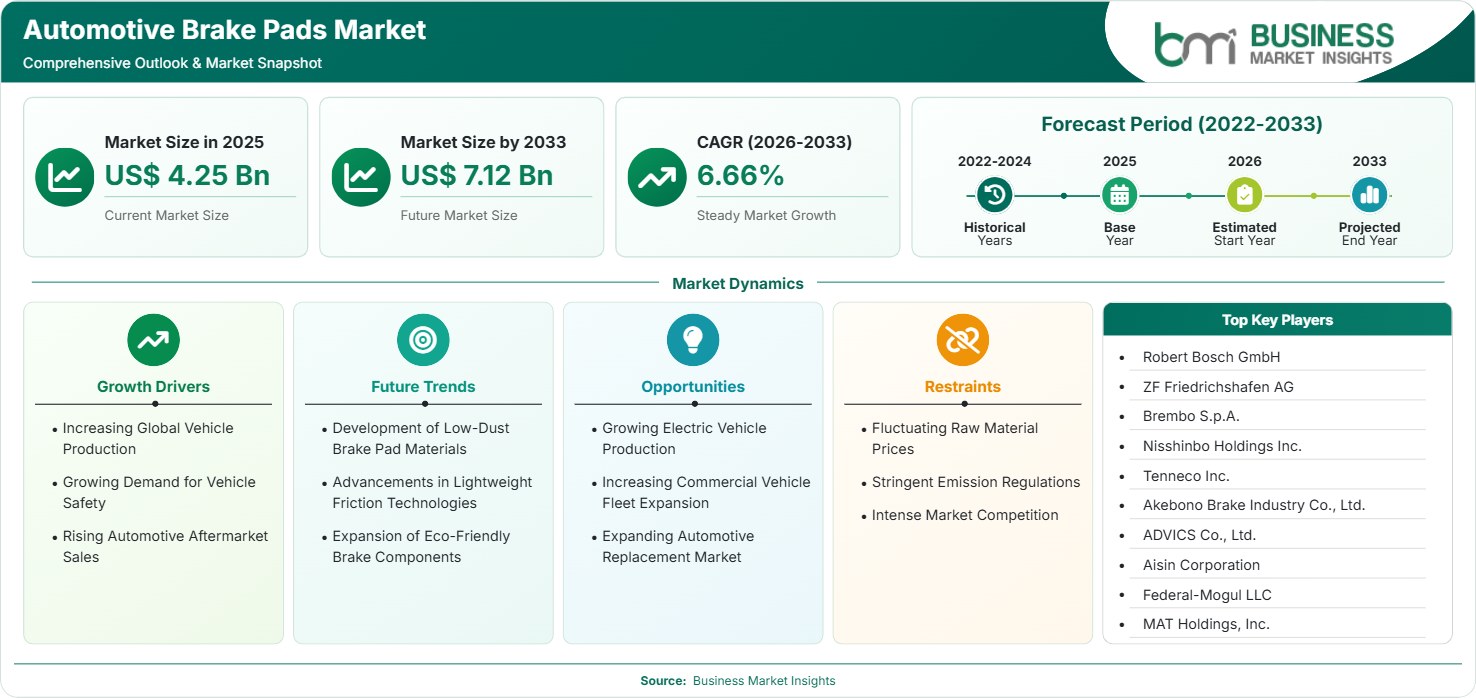
The Automotive Brake Pads Market size was valued at US$ 4.25 Billion in 2025 and is projected to reach US$ 7.12 Billion by 2033, growing at a CAGR of 6.66% during 2026–2033, driven by rising vehicle production, increasing safety regulations, electric vehicle adoption, aftermarket demand, and material innovation opportunities.

Report Coverage
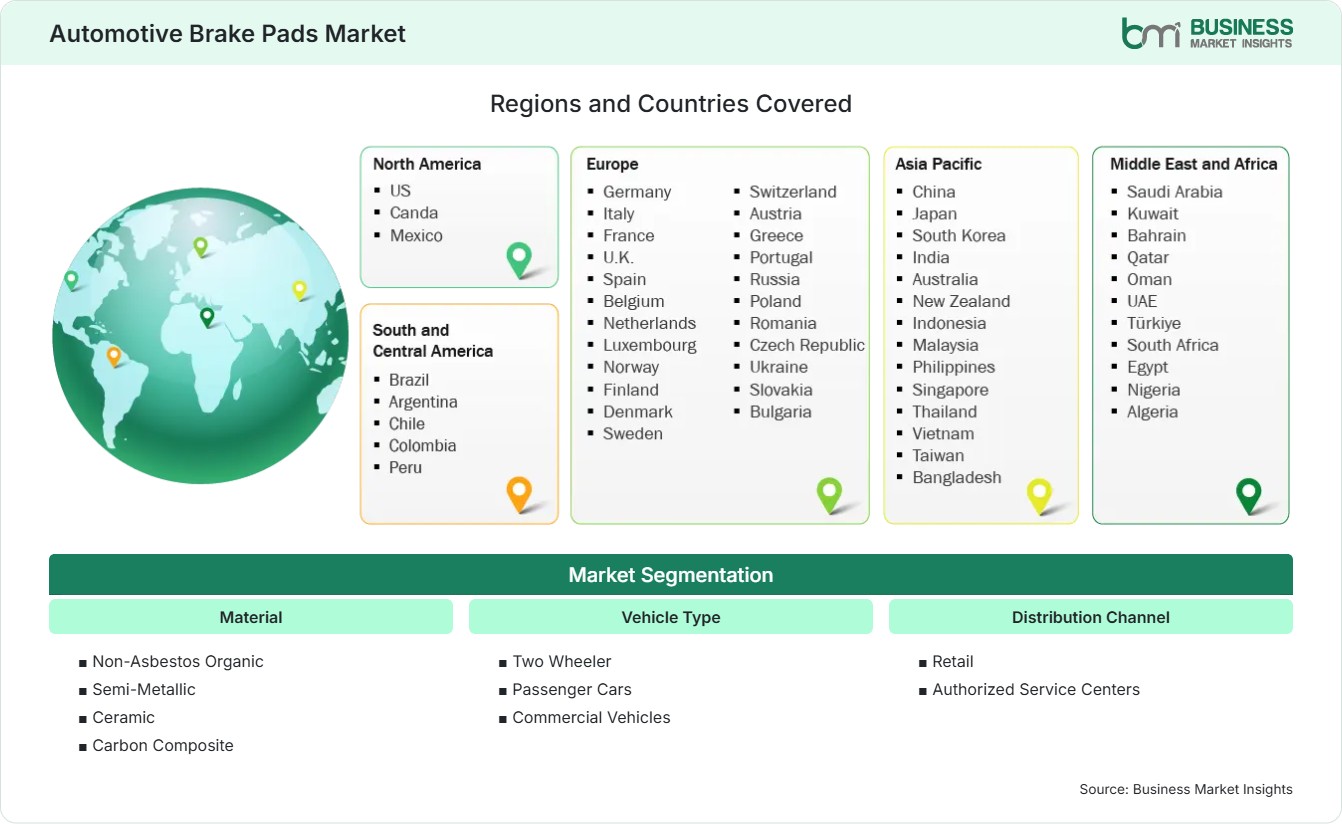
  • Material: Non-Asbestos Organic , Semi-Metallic, Ceramic, Carbon Composite
  • Vehicle Type: Two Wheeler, Passenger Cars, Commercial Vehicles
  • Distribution Channel: Retail, Authorized Service Centers
US$ 4.25 Bn Market size in 2025
US$ 7.12 Bn Market Size by 2033
6.66% CAGR, 2026 - 2033
2026-2033 Forecast Period

AI Overview

Automotive Brake Pads Market Summary

  • North America Region: North America holds a market share of 28%–32% in 2025, growing with a CAGR of 5.80%–6.60% influenced by advanced automotive manufacturing, replacement demand, safety standards, and premium vehicle penetration. The U.S. market shows steady expansion with a CAGR of 5.90%–6.50% supported by large vehicle fleets and aftermarket servicing networks.
  • Fastest Growing Region: Asia Pacific maintains a market share of 34%–38% in 2025, expanding with a CAGR of 7.10%–8.00% due to vehicle production growth, urban mobility expansion, manufacturing investments, and increasing automotive ownership across emerging economies.
  • Leading Segment: Passenger Cars represent the leading vehicle category with a market share of 48%–52% in 2025, growing at a CAGR of 6.20%–6.80% driven by global passenger vehicle fleets, replacement cycles, and demand for improved braking performance.
  • High Growth Segment: Ceramic brake pads demonstrate strong momentum with a market share of 18%–22% in 2025, advancing at a CAGR of 7.50%–8.20% due to low dust generation, noise reduction, durability, and adoption in premium vehicles.
  • Key Market Opportunity: Growth opportunities are emerging through electric vehicles, advanced friction materials, commercial fleet expansion, and aftermarket replacement demand, enabling manufacturers to develop efficient, durable, and environmentally compliant braking solutions.
  • Major Market Players: Robert Bosch GmbH, ZF Friedrichshafen AG, Brembo S.p.A., Nisshinbo Holdings Inc., Tenneco Inc., Akebono Brake Industry Co., Ltd., ADVICS Co., Ltd., Aisin Corporation, Federal-Mogul LLC, and MAT Holdings, Inc.
Strategic Insights

Automotive Brake Pads Market: Strategic Insights

Automotive Brake Pads Market Strategic Framework
FREE PDF
Request your free sample
Request free sample
Stakeholder View

Key Takeaways

  • The supply chain structure is evolving through stronger integration between raw material suppliers, friction component manufacturers, automotive OEMs, and aftermarket distributors, creating opportunities for vertically coordinated production strategies.
  • Passenger vehicles remain a major demand contributor, while commercial fleets and electric vehicles provide additional growth avenues through specialized braking requirements and advanced material adoption.
  • Material innovation is becoming a strategic priority as manufacturers focus on ceramic composites, copper-free formulations, and environmentally sustainable alternatives to improve performance and regulatory compliance.
  • Asia Pacific presents an attractive investment landscape due to expanding automotive production hubs, increasing replacement demand, and government-supported vehicle manufacturing initiatives across developing economies.
  • Industry consolidation is progressing through partnerships, technology collaborations, and capacity expansions as established suppliers strengthen their positions in global automotive component markets.
  • Aftermarket distribution networks are gaining importance as vehicle ownership increases and consumers seek reliable replacement components with improved durability and performance characteristics.
Geographic Outlook

Automotive Brake Pads Market Regional Highlights

North America Automotive Brake Pads Market

North America accounted for a 28%–32% share of the Automotive Brake Pads Market in 2025 and is projected to expand at a CAGR of 5.80%–6.60% from 2026–2033. The region benefits from established automotive infrastructure, high vehicle ownership, and strong aftermarket replacement demand. The U.S. and Canada remain important markets due to safety regulations and demand for premium braking technologies. Manufacturers are focusing on durable friction materials and advanced formulations.

  • Rising replacement demand from aging vehicle fleets supports continuous brake pad consumption across North American automotive service channels.
  • Adoption of ceramic and low-noise braking materials is increasing as consumers prioritize comfort, performance, and reduced maintenance requirements.
  • Commercial vehicle operators are investing in durable brake components to improve fleet efficiency and reduce operational downtime.
  • Environmental regulations are encouraging manufacturers to introduce copper-free and sustainable friction material technologies.

US Automotive Brake Pads Market

The U.S. represented a significant portion of North America with a 22%–26% share in 2025 and is expected to grow at a CAGR of 5.90%–6.50% during 2026–2033. Strong vehicle ownership levels, extensive repair networks, and rising demand for replacement parts support market expansion. The presence of major automotive suppliers and advanced manufacturing capabilities strengthens domestic production. Premium and electric vehicles are influencing material development strategies.

  • Large passenger vehicle fleets create consistent replacement demand through independent repair shops and authorized service centers.
  • Electric vehicle adoption is increasing requirements for specialized brake materials with enhanced durability and reduced wear.
  • Growing consumer awareness regarding vehicle safety is supporting demand for high-performance braking components.
  • Domestic automotive manufacturing investments continue to strengthen component supply chain resilience.

Europe Automotive Brake Pads Market

Europe Automotive Brake Pads Market held a 24%–28% share of the in 2025 and is estimated to register a CAGR of 5.50%–6.40% through 2033. Germany, France, and the United Kingdom represent major automotive manufacturing centers with strong demand for advanced braking systems. The region emphasizes sustainable materials, vehicle safety compliance, and electric mobility development. Regulatory pressure on emissions and material composition is influencing product innovation among suppliers.

  • Germany remains a leading market due to premium vehicle manufacturing and strong automotive component engineering capabilities.
  • Increasing electric vehicle production is accelerating demand for specialized brake pads designed for regenerative braking systems.
  • European sustainability regulations are encouraging adoption of environmentally friendly friction materials.
  • Automotive aftermarket expansion supports replacement demand across mature vehicle fleets.

Asia Pacific Automotive Brake Pads Market

Asia Pacific dominated regional demand with a 34%–38% share in 2025 and is forecast to grow at a CAGR of 7.10%–8.00% between 2026–2033. China, India, Japan, and South Korea are key contributors due to expanding automotive production, rising vehicle ownership, and increasing investments in component manufacturing. The region benefits from cost-efficient production capabilities and growing replacement markets. Rapid electrification is also reshaping brake component requirements.

  • China leads regional production capacity through extensive automotive manufacturing networks and supplier ecosystems.
  • India is experiencing increasing demand due to vehicle ownership growth and expanding automotive aftermarket services.
  • Japan and South Korea continue developing advanced braking technologies for premium and electric vehicles.
  • Regional manufacturers are investing in lightweight and high-performance friction materials.
  • Growing commercial vehicle usage is creating additional demand for durable brake components.

Rest of World Automotive Brake Pads Market

Rest of World represented approximately 8%–12% Automotive Brake Pads Market share in 2025 and is projected to expand at a CAGR of 6.30%–7.20% during 2026–2033. South and Central America are supported by vehicle fleet expansion, while Middle East and Africa markets benefit from infrastructure development and increasing automotive usage. Brazil, Mexico, Saudi Arabia, and South Africa are important contributors due to rising transportation requirements and aftermarket growth.

  • Brazil and Mexico are strengthening automotive component demand through local vehicle production and expanding replacement part networks.
  • Middle Eastern countries are witnessing higher demand for durable braking solutions due to commercial transportation and premium vehicle usage.
  • South Africa remains a regional automotive hub supported by manufacturing activities and aftermarket service expansion.
  • Infrastructure investments across emerging economies are increasing commercial vehicle utilization and brake component requirements.
  • Suppliers are developing cost-effective solutions to address diverse road conditions and vehicle operating environments.
Global Market Geography
FREE PDF
Request your free sample
Request free sample
Segment Analysis

Automotive Brake Pads Market Segmentation

Material

Material selection significantly influences braking performance, durability, noise characteristics, and environmental compliance. The material segment accounted for a 100% share in 2025, with overall adoption progressing at a CAGR of 6.40%–7.00% during 2026–2033. Manufacturers are optimizing formulations based on vehicle requirements, regulatory standards, and consumer preferences. The Automotive Brake Pads Market scope is expanding as suppliers develop advanced friction compounds for electric and conventional vehicles.

  • Non-Asbestos Organic (NAO): NAO brake pads provide low noise operation, reduced rotor wear, and environmentally preferred characteristics, making them suitable for passenger vehicles requiring balanced performance.
  • Semi-Metallic: Semi-metallic brake pads offer strong thermal resistance and durability, supporting widespread use in commercial vehicles and applications requiring higher braking loads.
  • Ceramic: Ceramic brake pads deliver low dust generation, quieter operation, and improved driving comfort, increasing adoption among premium passenger vehicles and electric vehicle platforms.
  • Carbon Composite: Carbon composite materials provide exceptional heat resistance and performance characteristics, supporting specialized automotive applications requiring advanced braking efficiency.

Vehicle Type

Vehicle type segmentation reflects differences in braking requirements, operating conditions, and maintenance cycles. Passenger cars represented the largest category with a 48%–52% share in 2025 and are expected to expand at a CAGR of 6.20%–6.80% through 2033. The Automotive Brake Pads Market trends indicate increasing demand across electric, hybrid, and conventional vehicles due to expanding global transportation needs.

  • Two Wheeler: Two-wheelers require compact and efficient braking systems, with demand supported by urban mobility growth, motorcycle ownership expansion, and increasing safety awareness.
  • Passenger Cars: Passenger cars generate substantial demand due to large global fleets, frequent replacement cycles, and rising consumer preference for advanced braking performance.
  • Commercial Vehicles: Commercial vehicles require durable brake components due to heavy loads, long operating hours, and increased logistics and transportation activities.

Distribution Channel

Distribution channels determine product availability, customer reach, and replacement purchasing behavior. Retail and authorized service centers together accounted for full market distribution in 2025, with adoption expanding at a CAGR of 6.30%–6.90% during 2026–2033. The Automotive Brake Pads Market continues evolving through digital sales platforms and organized aftermarket networks.

  • Retail: Retail channels provide accessibility for independent repair providers and consumers seeking replacement brake components through automotive parts networks.
  • Authorized Service Centers: Authorized service centers maintain strong demand through OEM-supported maintenance programs, professional installation services, and quality assurance advantages.
Market Forces

Automotive Brake Pads Market Dynamics

Key Market Drivers

Increasing Global Vehicle Production

Global vehicle production growth remains a primary demand catalyst as rising passenger and commercial vehicle volumes increase brake component requirements. According to the international automotive industry, vehicle production continues to recover due to increased production capacities and stabilized supply chains. In addition, the Automotive Brake Pads Market growth is driven by replacement needs that come from increasing vehicle fleets. Growing vehicle penetration in emerging markets and increased production in Asia Pacific will create greater supplier prospects. The market trends include increased focus on material durability, thermal performance, and vehicle platform compatibility.

Growing Demand for Vehicle Safety

Vehicle safety requirements are encouraging automobile manufacturers and suppliers to develop better braking technology performance standards. Driver-assist technology and higher consumer expectations for safe transportation options are affecting brake component specifications. Improved performing brake pads that are noise-free and stable with regard to friction are preferred in the market. Safety requirements by regulatory bodies are getting tougher around the world and are motivating manufacturers to invest in developing testing facilities and materials. The demand for dependable braking solutions supports continuous product development across passenger and commercial vehicle segments.

Rising Automotive Aftermarket Sales

The growth of automotive aftermarket services has led to an increase in demand for brake pads owing to the fact that the number of vehicles and their age have been rising. Independent repair shops, online automotive websites, and service providers are enhancing access to replacement components. Owners of vehicles are becoming conscious of maintaining the vehicle in advance to minimize any accident and also save on costs incurred in repairs. The growth in used vehicle sales is also encouraging aftermarket business owing to the increased need for replacements in aged vehicles.

Key Market Opportunities

Growing Electric Vehicle Production

Electric vehicle expansion creates new opportunities for brake pad manufacturers through specialized friction material development. While regenerative braking decreases the need for mechanical brakes, the weight attributes of electric cars and their performance necessitate a solution which is reliable. Manufacturers are focusing on noiseless, dustless, and efficient material suitable for electric vehicles. Automotive Brake Pads Market Forecast predicts that electric mobility will drive developments in ceramic and advanced composite materials. Collaboration between car manufacturers and material suppliers could help develop solutions to be used in future electric vehicles.

Increasing Commercial Vehicle Fleet Expansion

Commercial transportation development offers manufacturers of durable brake components an opportunity to gain market share. The increase in logistics operations and freight transportation is making it necessary for reliable braking systems to be developed. Fleet owners need components that will reduce downtime and enhance the efficiency of operations. Components made from materials that can withstand heavy loads and frequent braking are important now. Suppliers with strong engineering capabilities can benefit from partnerships with commercial vehicle manufacturers and fleet service providers.

Expanding Automotive Replacement Market

The expanding replacement market provides manufacturers with opportunities through aftermarket innovation, digital distribution, and broader product portfolios. The increased lifespan and awareness about maintenance have encouraged consumers to upgrade old brake parts into better ones. Manufacturers are now coming up with solutions that suit various applications and vehicles. The rise of online automobile sales has enhanced the availability of replacement parts. Regional distribution networks could enable suppliers to take advantage of new automobile markets.

Market Restraints and Challenges

Fluctuating Raw Material Prices

Factor: Volatility in steel, copper, resin, and composite material prices increases manufacturing cost pressure for brake pad producers. Impact: Higher input expenses can reduce profit margins and influence product pricing strategies across competitive markets. Manufacturers are addressing this challenge through supplier diversification, material optimization, and recycling initiatives. Raw material availability also affects production planning and inventory management. Companies investing in alternative formulations and efficient manufacturing processes can reduce exposure to commodity price fluctuations while maintaining product quality and regulatory compliance.

Stringent Emission Regulations

Factor: Increasing environmental regulations targeting particulate emissions from braking systems create compliance challenges for manufacturers. Impact: Companies must invest in research and development to create low-emission friction materials without compromising performance. Regulatory requirements regarding copper content and brake dust emissions are influencing formulation strategies worldwide. Suppliers are developing advanced ceramic and organic materials to meet evolving standards. Compliance investments may increase development costs, but they also encourage innovation and differentiation among manufacturers competing in global automotive markets.

Company Analysis

Competitive Landscape

The Automotive Brake Pads Market analysis highlights competitive positioning based on product innovation, manufacturing capabilities, geographic presence, and technological advancement. Leading companies are focusing on advanced friction materials, electric vehicle compatibility, aftermarket expansion, and strategic partnerships to strengthen their market presence. The competitive environment includes global automotive suppliers offering diverse braking solutions for passenger cars, commercial vehicles, and emerging mobility platforms.

Company Name

Overview

Products and Services relevant to this market

Robert Bosch GmbH

Global automotive technology company providing mobility solutions with extensive braking system expertise and international manufacturing capabilities.

Offers brake pads, braking components, friction materials, aftermarket solutions, and integrated vehicle safety technologies.

ZF Friedrichshafen AG

Automotive technology leader specializing in mobility systems, chassis solutions, and advanced braking technologies for global vehicle manufacturers.

Provides brake components, braking systems, aftermarket parts, and solutions for passenger and commercial vehicles.

Brembo S.p.A.

Italian braking technology specialist known for high-performance braking solutions and advanced engineering capabilities across automotive segments.

Manufactures premium brake pads, friction materials, performance braking systems, and replacement components.

Nisshinbo Holdings Inc.

Japanese manufacturer focused on friction materials and automotive components with global production and research facilities.

Supplies automotive brake pads, friction materials, noise reduction technologies, and customized braking solutions.

Tenneco Inc.

Automotive supplier providing emission control and ride performance products through global aftermarket and original equipment channels.

Offers brake pads, braking components, Monroe solutions, and automotive replacement products.

Akebono Brake Industry Co., Ltd.

Japanese braking manufacturer recognized for advanced friction technology and OEM partnerships worldwide.

Produces ceramic brake pads, friction materials, and braking solutions for passenger and commercial vehicles.

ADVICS Co., Ltd.

Automotive braking technology company specializing in integrated braking systems and components for vehicle manufacturers.

Provides brake pads, hydraulic brake systems, electronic braking solutions, and related components.

Aisin Corporation

Japanese automotive supplier developing drivetrain, chassis, and braking technologies for global vehicle platforms.

Supplies brake components, friction products, braking systems, and automotive aftermarket solutions.

Federal-Mogul LLC

Automotive component supplier with expertise in friction products and replacement solutions for global markets.

Provides brake pads, braking materials, aftermarket components, and vehicle maintenance products.

MAT Holdings, Inc.

Diversified manufacturer supplying automotive components and aftermarket products across international markets.

Produces brake pads, brake assemblies, friction products, and automotive replacement solutions.

Trust & Transparency

Research Methodology

The market analysis combines proprietary research with secondary data from government agencies, company disclosures, regulatory filings, industry databases and expert interviews. Market estimates are validated through data triangulation, cross-market benchmarking and analyst review.

View Full Research Methodology

Questions Answered

Frequently Asked Questions

What role do regulations play in brake pad innovation?

Regulations influence material development by encouraging manufacturers to reduce brake dust emissions, limit harmful substances, and improve environmental performance while maintaining braking efficiency and safety standards.

How does the Automotive Brake Pads Market Report evaluate market opportunities?

The report evaluates demand patterns, technology shifts, competitive strategies, segmentation dynamics, regional developments, and emerging opportunities influencing future industry growth.

Why is aftermarket demand important for brake pad manufacturers?

Aftermarket demand provides continuous replacement opportunities as vehicle fleets expand and aging vehicles require maintenance. Independent repair networks, digital platforms, and organized service centers contribute to sustained replacement sales.

How are electric vehicles changing brake pad requirements?

Electric vehicles require brake pads optimized for regenerative braking systems, reduced mechanical brake usage, lower noise, and improved durability. Suppliers are developing specialized formulations to address EV weight and performance characteristics.

What factors influence the selection of automotive brake pad materials?

Material selection depends on vehicle application, braking performance requirements, operating temperature, noise levels, durability expectations, and regulatory compliance. Manufacturers evaluate ceramic, semi-metallic, organic, and composite materials based on specific vehicle needs.

Access the Full Automotive Brake Pads Market Report

Get segment-level forecasts, regional estimates, competitive benchmarking, company profiles and downloadable Excel datasets.

Access the full Automotive Brake Pads Market Report
350 pages PDF & Excel | 2026-08-25
Similar Research

Related Market Reports