
Atopic Dermatitis Treatment Market Outlook: Size, Share, Trends, Growth Analysis, Competitive Landscape & Forecast, 2026-2033

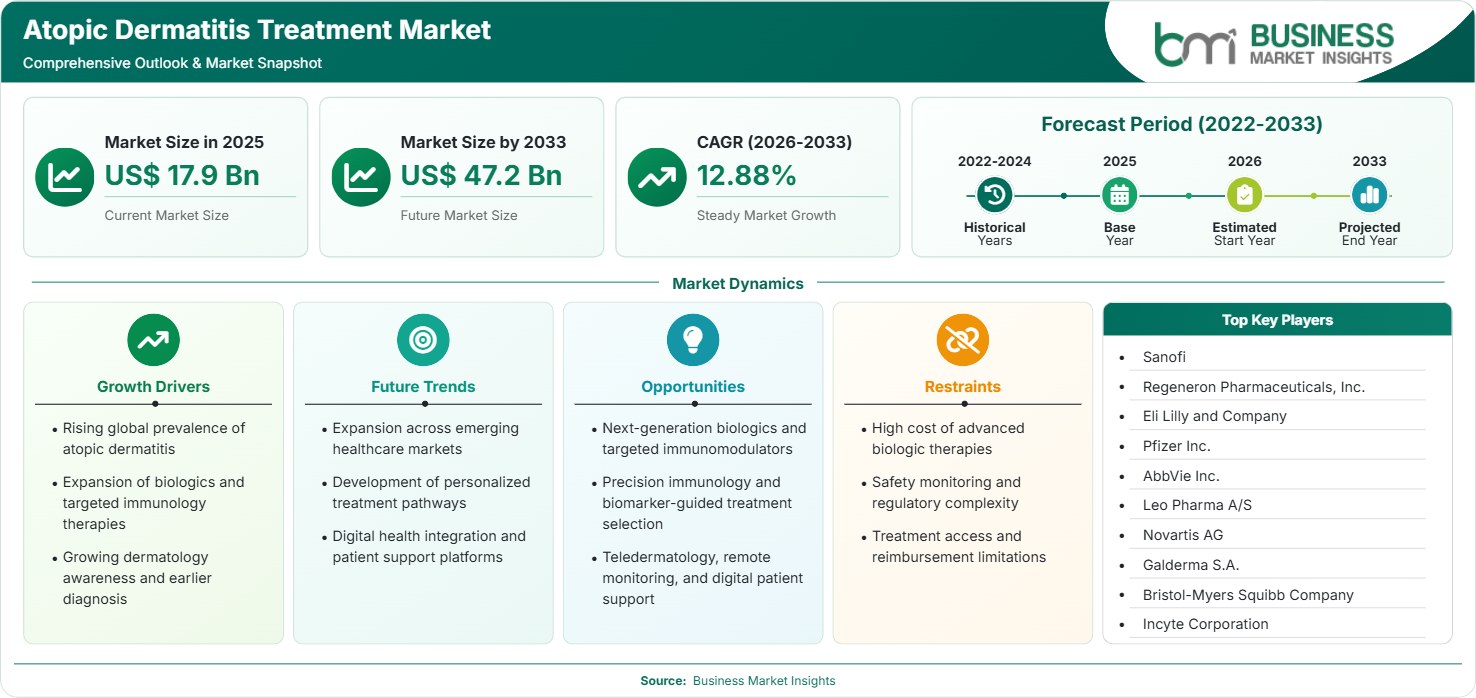
The Atopic Dermatitis Treatment Market size was valued at US$ 17.9 Billion in 2025 and is projected to reach US$ 47.2 Billion by 2033, growing at a CAGR of 12.88% during 2026–2033. Key growth drivers include rising disease prevalence, biologic adoption, targeted immunology innovation, improved diagnosis rates, and expanding reimbursement support. Opportunities are emerging through advanced biologics, JAK inhibitors, digital dermatology platforms, and broader penetration across developing healthcare markets.

Report Coverage
  • Drug Class: Corticosteroids, Antihistamines, Calcineurin Inhibitors, Interleukin Inhibitors, Topical Phosphodiesterase-4, Antibiotics
  • Route of Administration: Oral, Topical, Injectable
  • Distribution Channel: Hospital Pharmacies, Retail Pharmacies, Online Pharmacies
US$ 17.9 Bn Market size in 2025
US$ 47.2 Bn Market Size by 2033
12.88% CAGR, 2026 - 2033
2026-2033 Forecast Period

AI Overview

Atopic Dermatitis Treatment Market Summary

  • North America Region: Holds 38%–41% share in 2025 and is expected to grow at 11.5%–12.5% CAGR during 2026–2033. Growth is supported by biologic adoption, robust reimbursement, specialist access, advanced diagnosis pathways, strong clinical research activity, patient awareness programs, innovation funding, expanding prescription volumes, and regulatory support. US market remains dominant with strong biologics uptake and an estimated CAGR of 11.8%–12.4%.
  • Fastest Growing Region: Asia Pacific accounts for 24%–27% share in 2025 and is projected to expand at 14.0%–15.5% CAGR. Increasing healthcare expenditure, expanding dermatology infrastructure, rising disease awareness, growing access to biologics, larger patient pools, and improving insurance coverage continue to accelerate regional adoption rates.
  • Leading Segment: Corticosteroids represent a 33%–36% share in 2025 and are anticipated to grow at 9.5%–10.5% CAGR. Established prescribing patterns, affordability, broad physician familiarity, first-line treatment positioning, extensive availability, favorable guideline inclusion, strong retail distribution, and recurring utilization sustain leadership.
  • High Growth Segment: Interleukin inhibitors hold 18%–21% share in 2025 and are forecast to grow at 16.5%–18.5% CAGR. Rising biologic preference, superior efficacy, long-term disease management benefits, expanding approvals, growing physician confidence, favorable outcomes, premium pricing, and pipeline innovation support expansion.
  • Key Market Opportunity: Expansion of next-generation biologics and targeted immunomodulators offers significant commercial potential through personalized treatment strategies, enhanced efficacy profiles, reduced relapse rates, broader coverage, and emerging-market penetration opportunities.
  • Major Market Players: Sanofi, Regeneron Pharmaceuticals, Inc., Eli Lilly and Company, Pfizer Inc., AbbVie Inc., Leo Pharma A/S, Novartis AG, Galderma S.A., Bristol-Myers Squibb Company, Incyte Corporation.
Strategic Insights

Atopic Dermatitis Treatment Market: Strategic Insights

Atopic Dermatitis Treatment Market Strategic Framework
FREE PDF
Request your free sample
Request free sample
Stakeholder View

Key Takeaways

  • The value chain is increasingly centered on biologics developers, specialty manufacturers, contract development organizations, dermatology clinics, and specialty pharmacies.
  • Interleukin inhibitors and injectable therapies present the strongest long-term revenue opportunities due to clinical effectiveness in moderate-to-severe patient populations.
  • Research focus is shifting toward precision immunology, biomarker-guided treatment selection, and longer-duration disease control strategies.
  • Asia Pacific offers compelling investment conditions driven by a large patient population, healthcare expansion, and increasing biologic access.
  • Strategic acquisitions, licensing deals, and co-development partnerships are accelerating as companies seek immunology-focused portfolio expansion.
  • Digital patient monitoring and teledermatology platforms are supporting adherence improvements and enhanced treatment continuity.
Geographic Outlook

Atopic Dermatitis Treatment Market Regional Highlights

North America Atopic Dermatitis Treatment Market

North America accounts for approximately 38%–41% of global revenue in 2025 and is expected to expand at 11.5%–12.5% CAGR through 2033. Strong reimbursement frameworks, early biologic adoption, substantial dermatology specialist networks, and high treatment awareness contribute to leadership. The region maintains significant commercial activity in advanced immunology therapeutics. The Atopic Dermatitis Treatment Market share remains highest in this region due to strong healthcare spending and rapid uptake of innovative therapies.

  • Biologic therapies are increasingly replacing conventional long-term treatment approaches for moderate-to-severe disease management.
  • Reimbursement coverage expansion strengthens patient access to premium therapeutic options.
  • Strong clinical trial activity supports early adoption of innovative dermatology products.
  • Specialty pharmacy networks improve treatment availability and patient adherence.

US Atopic Dermatitis Treatment Market

The United States represents approximately 82%–85% of regional revenue and is expected to register 11.8%–12.4% CAGR through 2033. Favorable reimbursement, strong biologics demand, and advanced dermatology infrastructure support continued expansion. The country remains a leading destination for clinical development activities and specialty treatment adoption.

  • Significant biologic prescribing volumes support premium market growth.
  • Large diagnosed patient base continues driving prescription demand.
  • Clinical innovation and regulatory pathways encourage new product launches.
  • Specialty-care accessibility improves treatment outcomes.

Europe Atopic Dermatitis Treatment Market

Europe holds roughly a 27%–30% share in 2025 and is projected to expand at 11.8%–12.8% CAGR. Germany leads regional revenue generation, while Spain and selected Eastern European markets demonstrate faster growth potential. Expanding biologic reimbursement and stronger awareness programs contribute to improved treatment penetration across major healthcare systems.

  • Germany remains the leading country due to established reimbursement structures.
  • Spain demonstrates accelerating adoption of advanced immunology therapies.
  • Healthcare modernization improves access to specialty dermatology services.
  • Growing physician preference for targeted therapies enhances market development.

Asia Pacific Atopic Dermatitis Treatment Market

Asia Pacific represents 24%–27% of global revenue and is forecast to achieve 14.0%–15.5% CAGR, making it the fastest-growing regional market. Rising healthcare expenditure, increasing diagnosis rates, and improving biologics accessibility support growth. China leads revenue generation, while India records particularly strong expansion dynamics.

  • China benefits from expanding specialty-care infrastructure and increasing biologic availability.
  • India experiences rapid growth due to greater diagnosis and healthcare access.
  • Government healthcare investment enhances treatment accessibility.
  • International pharmaceutical expansion strengthens competitive intensity.
  • Rising awareness campaigns improve patient engagement.

Rest of World Atopic Dermatitis Treatment Market

Rest of World accounts for 8%–10% share in 2025 and is anticipated to grow at 12.5%–13.8% CAGR. Brazil leads South and Central America, while Saudi Arabia and the UAE support expansion throughout the Middle East and Africa. Improving healthcare infrastructure and increasing dermatology awareness foster long-term development opportunities.

  • Brazil benefits from expanding specialty care and pharmaceutical distribution.
  • Gulf countries invest significantly in advanced healthcare services.
  • Healthcare access improvements support diagnosis and treatment uptake.
  • International partnerships enhance product availability.
  • Rising chronic disease management focus strengthens demand prospects.
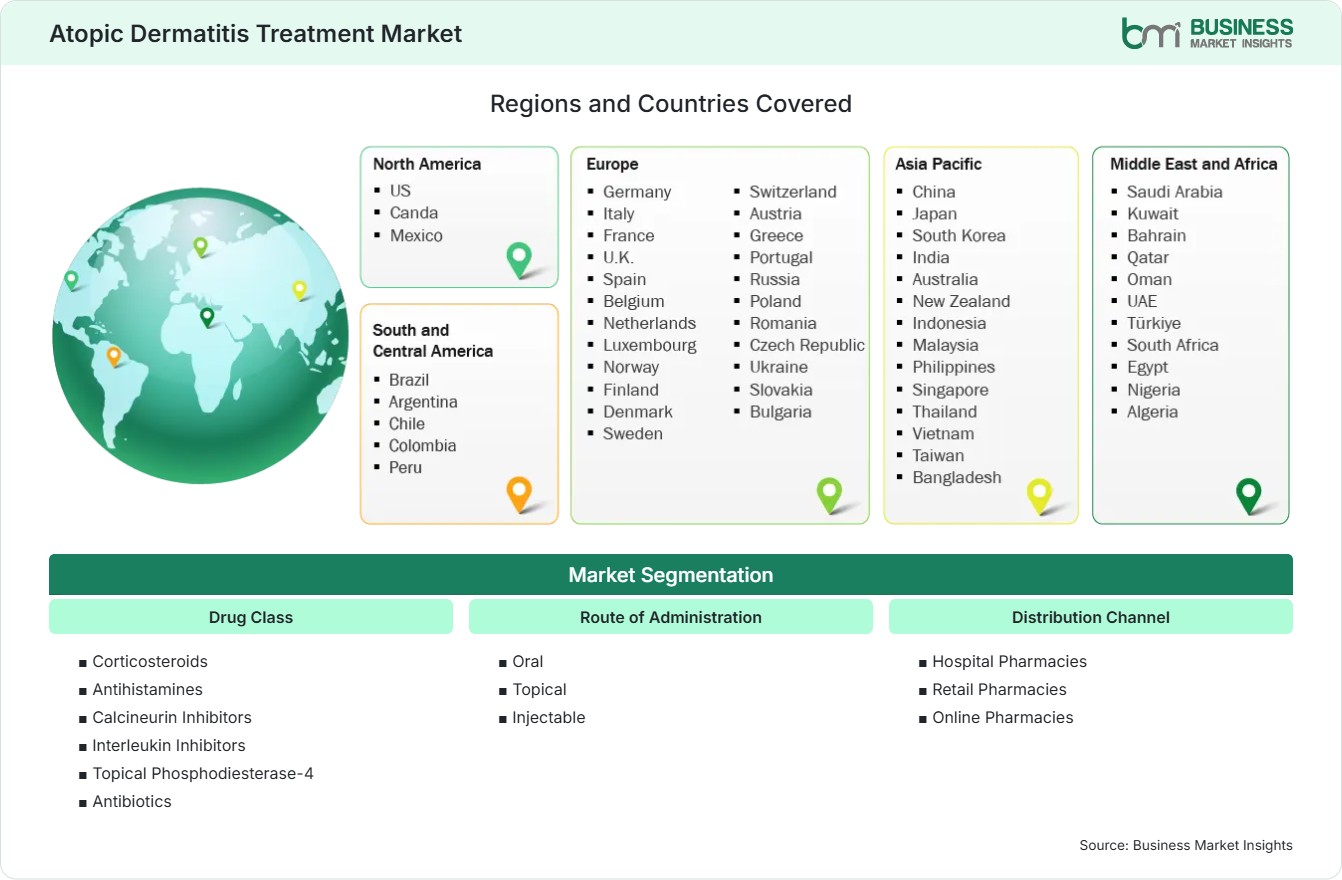
Global Market Geography
FREE PDF
Request your free sample
Request free sample
Segment Analysis

Atopic Dermatitis Treatment Market Segmentation

Drug Class

This segment constitutes the largest revenue pocket, supported by diversified treatments across all disease severity segments. The corticosteroid drug segment holds a 33%–36% market share and is projected to grow at a 9.5%–10.5% CAGR in 2025, while biologics continue to advance. The Atopic Dermatitis Treatment Market Scope continues to grow due to innovations in immunotherapy.

  • Corticosteroids: Widely used first-line therapies supported by affordability, accessibility, physician familiarity, and strong clinical effectiveness in controlling inflammatory symptoms.
  • Antihistamines: Frequently prescribed for itch management and symptomatic relief, particularly among patients experiencing sleep disturbances and quality-of-life impairment.
  • Calcineurin inhibitors: Important steroid-sparing alternatives supporting long-term disease management and treatment of sensitive skin areas.
  • Interleukin inhibitors: Rapidly expanding biologics category demonstrating strong efficacy and increasing use among moderate-to-severe patient populations.
  • Topical phosphodiesterase-4: Growing adoption owing to improved safety profiles and targeted anti-inflammatory mechanisms.
  • Antibiotics: Utilized where secondary bacterial infections complicate treatment pathways and clinical outcomes.

Route of Administration

The selection of routes is increasingly dependent on disease severity, treatment duration, and patient compliance. The topical therapy segment continues to dominate, with a 46%-49% share in 2025, while the injectable therapy segment records the highest CAGR of 15.0%-17.0% due to biologic adoption.

  • Oral: Preferred in specific systemic treatment strategies and severe disease management scenarios.
  • Topical: Dominant administration route supported by convenience, familiarity, and widespread patient acceptance.
  • Injectable: Benefiting from biologics expansion and strong clinical efficacy across severe disease categories.

Distribution Channel

The distribution channels continue changing with the increasing prominence of specialty products. Hospital pharmacies retain their dominant position, with a market share of 40%–43%, while online pharmacies demonstrate vigorous growth driven by convenience and digital healthcare adoption.

  • Hospital Pharmacies: Essential for specialty biologics distribution, monitoring requirements, and physician-directed treatment pathways.
  • Retail Pharmacies: Important channel supporting broad access to established therapies across community settings.
  • Online Pharmacies: Benefiting from digital adoption, recurring prescription services, and enhanced patient convenience.
Market Forces

Atopic Dermatitis Treatment Market Dynamics

Key Market Drivers

Rising Global Prevalence of Atopic Dermatitis

The number of individuals suffering from atopic dermatitis has been increasing around the world among both children and adults, thereby providing an impetus towards the development of more efficacious treatment methods. The increasing rate of urbanization, environmental pollution, genetic predisposition, lifestyle changes, and immune system disorders have been responsible for the increasing incidence of atopic dermatitis. Awareness levels and diagnostics have improved, enabling earlier diagnosis and treatment. In addition, there has been a greater focus on managing the disease within the healthcare community.

Expansion of Biologics and Targeted Immunology Therapies

Innovative biologics and immunotherapy treatments are changing the standards of care within dermatology and other immune-mediated diseases. Interleukin inhibitor drugs provide an enhanced level of efficacy for those with moderate to severe disease states, improving symptom management while minimizing the need for chronic steroid use and its adverse reactions. Drug manufacturers are spending billions of dollars on R&D to build future drug pipelines. Increasing proof of greater safety, efficacy, and success is giving doctors more confidence to use these advanced medicines in major healthcare markets worldwide.

Growing Dermatology Awareness and Earlier Diagnosis

Increasing knowledge of dermatological disorders, together with better access to healthcare services and greater use of teledermatology, has enabled earlier diagnosis and treatment of atopic dermatitis. Public health campaigns and education have helped patients identify the signs earlier and seek professional medical advice. Better patient education improves treatment compliance and on-time consultations with dermatologists. All these factors are playing an important role in shaping Atopic Dermatitis Treatment Market trends by increasing the diagnosis rate and the treated patient population, and by driving the need for advanced treatments, particularly in developing countries.

Key Market Opportunities

Expansion Across Emerging Healthcare Markets

The rapid growth of healthcare infrastructure in Asia, Latin America, and parts of the Middle East presents numerous business opportunities for the market. Higher disposable income, greater health insurance penetration, and increased access to medical services enable patients to obtain advanced, innovative treatments. Governments and private healthcare facilities are investing in the provision of dermatological treatments. According to long-term Atopic Dermatitis Treatment Market forecasts, emerging markets are expected to generate a significant share of worldwide revenue over the forecast period.

Development of Personalized Treatment Pathways

Biomarkers and precision medicines are revolutionizing the development of personalized therapeutic approaches and improving the healthcare solutions available to individuals. By personalized identification of patients who will respond to specific medicines, one can increase treatment effectiveness, minimize side effects, and improve patient outcomes. The use of personalized medicines also enables more effective use of healthcare resources by eliminating treatment inefficiencies. In pharmaceuticals, one can achieve product differentiation through improved clinical efficacy and value creation, enabling premium pricing and participation in personalized treatment algorithms.

Digital Health Integration and Patient Support Platforms

The importance of using technology to improve healthcare quality is growing, as it helps monitor adherence and symptoms and even enables remote consultations. Using such technology allows providers to receive real-time information about the course of treatment and their patients' conditions. Integrating patient support programs with therapies makes the treatment process more coherent and helps build good relationships with patients. The digital health ecosystem provides significant commercial value by enabling better treatment outcomes and personalized care throughout the patient journey.

Market Restraints and Challenges

High Cost of Advanced Biologic Therapies

Factor: Premium pricing associated with biologics and advanced immunology treatments. Impact: The high cost of advanced biologic therapies remains a major challenge for healthcare systems worldwide. Their premium pricing can restrict patient access, particularly in cost-sensitive markets and developing regions with limited healthcare budgets. Payers and insurance providers often delay or limit reimbursement approvals due to financial constraints, reducing treatment availability. Despite demonstrating strong clinical efficacy and improved patient outcomes, cost considerations continue to hinder widespread adoption and market penetration among healthcare providers and patient populations

Safety Monitoring and Regulatory Complexity

Factor: Long-term safety monitoring requirements and complex regulatory pathways.

Impact: Increased development costs and extended commercialization timelines.

Manufacturers of advanced treatment platforms must comply with stringent regulatory requirements and conduct continuous long-term safety monitoring to demonstrate product effectiveness and patient safety. This involves generating extensive clinical evidence, maintaining robust post-marketing surveillance programs, and regularly reporting outcomes to regulatory authorities. The complexity of regulatory approval processes can lead to delays in product launches and market entry. These challenges increase operational costs, create competitive pressures, and may reduce investment returns, particularly for emerging companies developing innovative therapies and treatment technologies.

Company Analysis

Competitive Landscape

The Atopic Dermatitis Treatment Market analysis reflects competition between diversified pharmaceutical leaders and dermatology-focused specialists emphasizing biologics, immunology innovation, and specialty-care commercialization.

Company Name

Overview

Products and Services relevant to this market

Sanofi

Global pharmaceutical leader with extensive immunology and specialty-care presence.

Dupixent commercialization, immunology therapies, dermatology solutions.

Regeneron Pharmaceuticals, Inc.

Biotechnology innovator focused on antibody-based therapeutics.

Biologic platforms and inflammatory disease treatments.

Eli Lilly and Company

Major multinational pharmaceutical organization with immunology expertise.

Ebglyss and targeted dermatology biologics.

Pfizer Inc.

Global healthcare company with broad inflammation portfolio.

Oral and specialty immunology treatment options.

AbbVie Inc.

Research-driven biopharmaceutical company focused on immune disorders.

Advanced immunology therapies and pipeline assets.

Leo Pharma A/S

Dermatology-focused pharmaceutical specialist.

Topical and specialty dermatology treatment portfolio.

Novartis AG

Global healthcare company with biologics capabilities.

Immunology therapies and specialty medicines.

Galderma S.A.

Dedicated dermatology company with global reach.

Prescription dermatology products and skin-health treatments.

Bristol-Myers Squibb Company

Biopharmaceutical innovator with immunological expertise.

Immune-modulating research and specialty medicines.

Incyte Corporation

Oncology and inflammation-focused biotechnology company.

JAK-related therapies and dermatology innovations.

Trust & Transparency

Research Methodology

The market analysis combines proprietary research with secondary data from government agencies, company disclosures, regulatory filings, industry databases and expert interviews. Market estimates are validated through data triangulation, cross-market benchmarking and analyst review.

View Full Research Methodology

Questions Answered

Frequently Asked Questions

What does the Atopic Dermatitis Treatment Market Report indicate about future competition?

Competition is expected to intensify as biologics, personalized medicine solutions, and next-generation immunology platforms gain broader commercial acceptance.

How are digital technologies influencing treatment adoption?

Teledermatology, remote monitoring, prescription management platforms, and patient-support applications are improving treatment continuity and access.

Which drug class shows the highest growth potential?

Interleukin inhibitors demonstrate the strongest momentum because of superior efficacy, expanding approvals, and increasing physician preference for targeted immunology approaches.

Which region leads industry revenue generation?

North America remains the leading regional market due to biologics adoption, specialist availability, high healthcare expenditure, and favorable reimbursement frameworks.

What is driving demand for advanced atopic dermatitis therapies?

Growing prevalence, improved diagnosis rates, stronger reimbursement mechanisms, and clinical advantages offered by targeted biologics are supporting demand for advanced treatments.

Access the Full Atopic Dermatitis Treatment Market Report

Get segment-level forecasts, regional estimates, competitive benchmarking, company profiles and downloadable Excel datasets.

Access the full Atopic Dermatitis Treatment Market Report
350 pages PDF & Excel | 2026-08-31