
Anxiety and Depression Treatment Market Outlook: Size, Share, Trends, Growth Analysis, Competitive Landscape & Forecast, 2026-2033

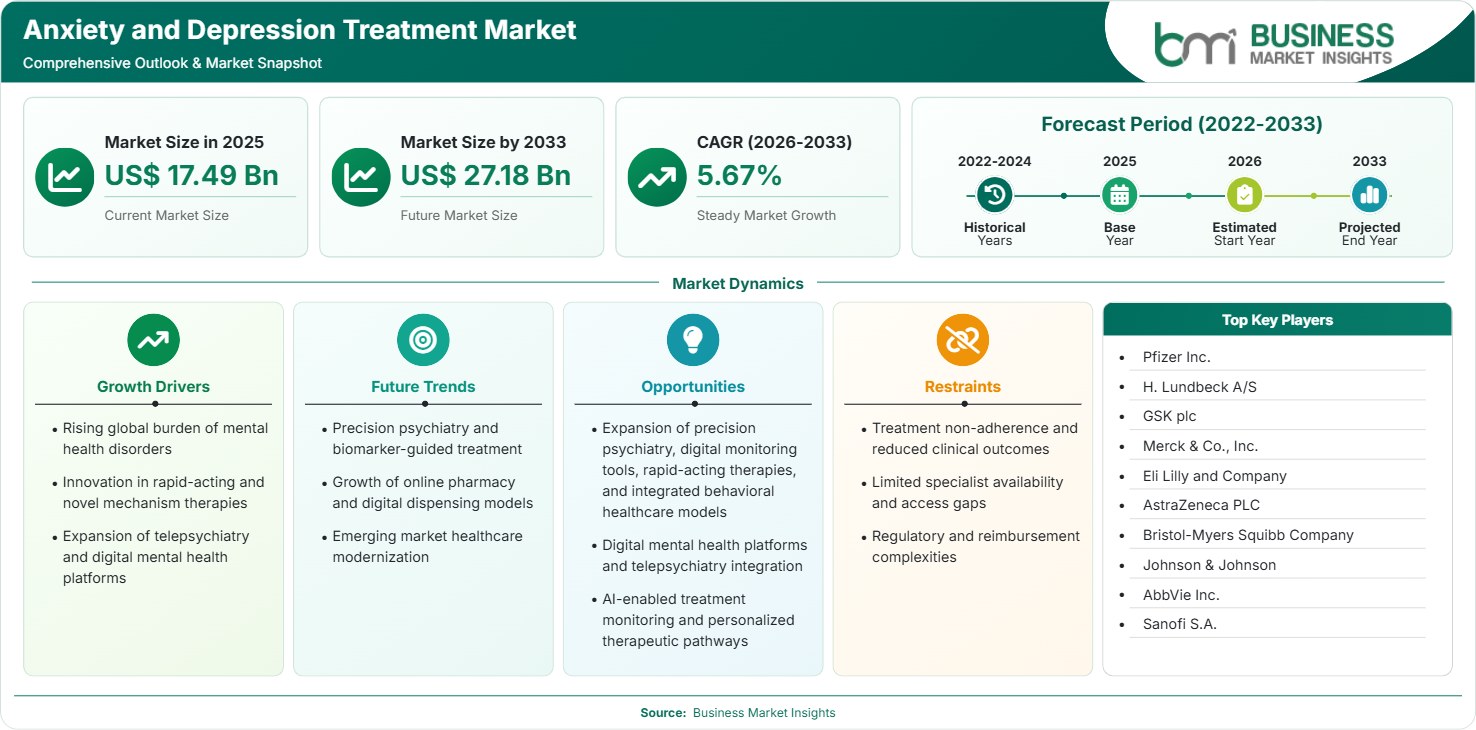
The Anxiety and Depression Treatment Market size was valued at US$ 17.49 Billion in 2025 and is projected to reach US$ 27.18 Billion by 2033, growing at a CAGR of 5.67% during 2026–2033. Rising mental health awareness, expanding access to psychiatric care, wider antidepressant adoption, digital therapeutics integration, and innovation in rapid-acting treatments continue creating substantial commercial opportunities.

Report Coverage
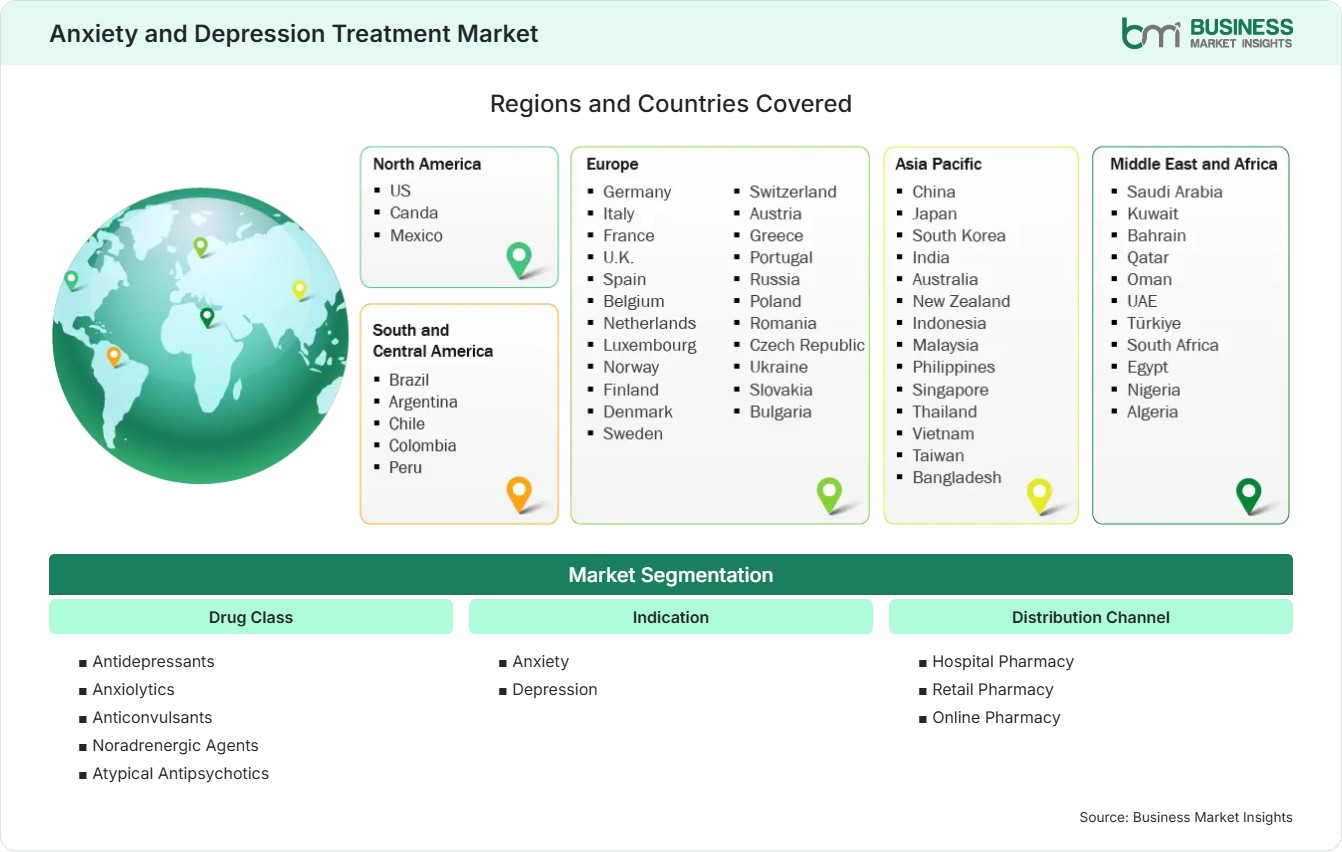
  • Drug Class: Antidepressants, Anxiolytics, Anticonvulsants, Noradrenergic Agents, Atypical Antipsychotics
  • Indication: Anxiety, Depression
  • Distribution Channel: Hospital Pharmacy, Retail Pharmacy, Online Pharmacy
US$ 17.49 Bn Market size in 2025
US$ 27.18 Bn Market Size by 2033
5.67% CAGR, 2026 - 2033
2026-2033 Forecast Period

AI Overview

Anxiety and Depression Treatment Market Summary

  • North America Region: North America holds a market share of 38%–41% in 2025, growing at a CAGR of 4.8%–5.3% during 2026–2033. Strong reimbursement, high diagnosis rates, telepsychiatry expansion, innovative drug launches, and supportive mental health policies accelerate treatment adoption. US market remains dominant, supported by broad insurance coverage, specialist availability, and estimated CAGR of 4.9%–5.4%.
  • Fastest Growing Region: Asia Pacific accounts for 23%–26% share in 2025 and advances at a CAGR of 7.0%–7.6% through 2026–2033. Mental health investments, urbanization pressures, digital healthcare adoption, expanding psychiatric infrastructure, and growing treatment awareness stimulate regional demand.
  • Leading Segment: Antidepressants represent 44%–47% share in 2025 and expand at a CAGR of 5.2%–5.8% through 2033. Established prescribing practices, broad indication coverage, generic accessibility, physician familiarity, and guideline-supported efficacy sustain segment leadership.
  • High Growth Segment: Online Pharmacy represents 12%–15% share in 2025 and grows at a CAGR of 8.1%–8.8% through 2033. Greater convenience, telehealth integration, medication adherence programs, digital prescriptions, and expanding internet penetration drive accelerated adoption.
  • Key Market Opportunity: Expansion of precision psychiatry, digital monitoring tools, rapid-acting therapies, and integrated behavioral healthcare models enables providers to improve outcomes while pharmaceutical companies diversify revenue streams globally.
  • Major Market Players: Pfizer Inc.; H. Lundbeck A/S; GSK plc; Merck & Co., Inc.; Eli Lilly and Company; AstraZeneca PLC; Bristol-Myers Squibb Company; Johnson & Johnson; AbbVie Inc.; Sanofi S.A.
Strategic Insights

Anxiety and Depression Treatment Market: Strategic Insights

Anxiety and Depression Treatment Market Strategic Framework
FREE PDF
Request your free sample
Request free sample
Stakeholder View

Key Takeaways

  • The market ecosystem increasingly combines pharmaceutical therapies, digital health platforms, telehealth providers, hospital systems, and retail distribution networks to deliver comprehensive mental healthcare solutions.
  • Online pharmacy channels and emerging rapid-acting therapies provide the strongest growth potential as patients seek accessible, convenient, and outcome-focused treatment pathways.
  • Innovation is moving toward precision psychiatry, biomarker-assisted treatment selection, digital adherence monitoring, and therapies targeting novel neurotransmitter pathways.
  • Asia Pacific offers a compelling investment case due to healthcare modernization, expanding middle-class populations, and improving mental health awareness programs.
  • Strategic collaborations between pharmaceutical companies and digital health providers are accelerating commercialization and enhancing patient engagement outcomes.
  • Greater attention to workplace mental health and population-level screening programs is expanding addressable patient pools across multiple healthcare markets.
Geographic Outlook

Anxiety and Depression Treatment Market Regional Highlights

North America Anxiety and Depression Treatment Market

North America accounts for 38%–41% of global revenue in 2025 and is projected to grow at a CAGR of 4.8%–5.3% through 2033. The region benefits from high healthcare spending, advanced psychiatric infrastructure, broad insurance coverage, and strong pharmaceutical innovation. Anxiety and Depression Treatment Market share leadership is reinforced by high diagnosis rates and expanded telepsychiatry utilization. Growing adoption of rapid-acting therapies and integrated behavioral care models continues supporting treatment access while enhancing patient engagement across healthcare networks.

  • Expanding reimbursement for psychiatric services supports wider treatment initiation and longer therapy duration.
  • Strong clinical research activity accelerates commercialization of innovative antidepressant and anxiolytic therapies.
  • Digital mental health platforms improve medication adherence and remote patient management efficiency.
  • Employer-sponsored wellness initiatives increase screening rates and encourage early intervention approaches.

US Anxiety and Depression Treatment Market

The United States represents 82%–86% of the regional market and records a CAGR of 4.9%–5.4% during the forecast period. High prevalence of mental health disorders, large specialty care networks, and favorable commercial insurance coverage support demand. Access to innovative treatments and rapid regulatory approvals enhance patient options. The market also benefits from increasing adoption of measurement-based care and digital therapeutic platforms that complement pharmacological treatment strategies across diverse patient populations.

  • Strong uptake of branded psychiatric therapies supports value growth across specialty treatment centers.
  • Federal and state mental health initiatives broaden access to screening and treatment services.
  • Telehealth utilization remains elevated, improving continuity of psychiatric care delivery.
  • Expansion of integrated behavioral health programs enhances outcomes within primary care settings.

Europe Anxiety and Depression Treatment Market

Europe holds 27%–30% share in 2025 and is expected to expand at a CAGR of 5.0%–5.6%. Public healthcare systems, mental health policy development, and broad antidepressant availability sustain regional demand. Germany and the United Kingdom remain leading revenue contributors, while Poland and Spain demonstrate faster expansion with CAGR ranges exceeding regional averages. Healthcare modernization, digital mental health adoption, and increasing public awareness campaigns continue encouraging treatment initiation and adherence throughout the region.

  • Government-funded mental health programs strengthen access and reduce diagnosis barriers.
  • Germany remains the largest revenue-generating country due to advanced psychiatric infrastructure.
  • Spain demonstrates above-average growth through digital care adoption and awareness initiatives.
  • Telepsychiatry integration improves access in underserved and rural populations.
  • Greater acceptance of mental wellness services supports long-term treatment engagement.

Asia Pacific Anxiety and Depression Treatment Market

Asia Pacific captures 23%–26% share in 2025 and represents the fastest-growing region with CAGR between 7.0%–7.6%. Rising urban stress levels, healthcare investments, expanded insurance penetration, and increasing awareness drive demand. China and Japan lead regional revenue generation, while India exhibits the strongest expansion potential. Anxiety and Depression Treatment Market growth benefits from digital healthcare adoption, growing psychiatric infrastructure, and improving access to diagnosis and treatment services throughout major economies.

  • China continues expanding mental healthcare capacity through policy and infrastructure investments.
  • India records strong expansion supported by telemedicine adoption and awareness improvement.
  • Japan maintains significant demand through aging demographics and established healthcare systems.
  • Digital platforms expand specialist access across large population centers.
  • Pharmaceutical investments improve treatment availability and commercial reach.

Rest of World Anxiety and Depression Treatment Market

Rest of World accounts for 8%–11% of global revenue and advances at a CAGR of 5.8%–6.4% through 2033. South and Central America benefit from expanding healthcare access and awareness initiatives. The Middle East and Africa experience gradual improvements in psychiatric infrastructure and policy support. Brazil remains a leading contributor within Latin America, while Saudi Arabia demonstrates notable expansion. Cross-border partnerships and healthcare reforms continue improving treatment access across developing healthcare markets.

  • Brazil benefits from broader mental health integration within public healthcare structures.
  • Saudi Arabia increases investment in specialized mental health facilities and services.
  • Awareness campaigns reduce stigma and encourage treatment-seeking behavior.
  • International partnerships support workforce training and service accessibility.
  • Expanding pharmacy networks improve medication distribution across underserved areas.
Global Market Geography
FREE PDF
Request your free sample
Request free sample
Segment Analysis

Anxiety and Depression Treatment Market Segmentation

Drug Class

Drug Class accounts for the largest revenue contribution, supported by extensive pharmacological treatment adoption. This segment represents 54%–57% market share in 2025 and grows at a CAGR of 5.3%–5.9%. The Anxiety and Depression Treatment Market scope continues expanding due to newer mechanisms, broader clinical evidence, generic availability, and increasing physician confidence in combination treatment approaches.

  • Antidepressants: Remain foundational therapy across major depressive and anxiety disorders, supported by broad prescribing familiarity, favorable efficacy profiles, and expanding access through generic formulations globally.
  • Anxiolytics: Widely utilized for short-term symptom management, supported by rapid effectiveness and growing clinical demand for targeted anxiety intervention approaches.
  • Anticonvulsants: Applied in selected psychiatric conditions where mood stabilization benefits support broader treatment strategies and improved patient management outcomes.
  • Noradrenergic Agents: Gain traction for patients requiring alternative therapeutic mechanisms and personalized pharmacological treatment pathways.
  • Atypical Antipsychotics: Increasingly used as adjunct therapies in treatment-resistant cases, supporting improved symptom control and therapeutic response.

Indication

Indication segmentation reflects differing patient populations and treatment utilization patterns. The segment maintains 100% market allocation, with Depression representing the larger treatment cohort. Growth remains supported by rising diagnosis rates, treatment awareness programs, and expanded access to psychiatric care services globally.

  • Anxiety: Rising workplace stress, social pressures, and awareness programs continue increasing diagnosis and prescription volumes across healthcare settings.
  • Depression: Represents a major treatment category, supported by growing clinical recognition, improved access, and continuing therapeutic innovation.

Distribution Channel

Distribution Channel remains crucial to market accessibility. The segment records steady expansion, with retail pharmacies maintaining leadership while online pharmacy channels demonstrate the strongest momentum. Anxiety and Depression Treatment Market trends increasingly favor digital prescription fulfillment and multi-channel patient engagement models.

  • Hospital Pharmacy: Supports acute care management, specialist oversight, and complex medication administration within institutional treatment settings.
  • Retail Pharmacy: Maintains strong positioning through accessibility, prescription fulfillment efficiency, and broad geographic presence across developed and emerging markets.
  • Online Pharmacy: Expands rapidly through convenience, home delivery services, telehealth integration, and improved digital healthcare engagement.
Market Forces

Anxiety and Depression Treatment Market Dynamics

Key Market Drivers

Rising Global Burden of Mental Health Disorders

The World Health Organization estimates there are hundreds of millions of people suffering from depression, and at the same time anxiety disorders are still among the most common mental disorders. Better awareness of these conditions has led to better diagnosis and treatment options. There are a number of population factors contributing to the growth in numbers of patients. Anxiety and Depression Treatment Market growth is strengthened by reduced stigma, expanded employer wellness initiatives, and improvements in mental health literacy. Greater diagnosis frequency directly supports prescription volumes, counseling integration, and broader demand for pharmaceutical interventions across healthcare systems globally.

Innovation in Rapid-Acting and Novel Mechanism Therapies

Scientific advances targeting glutamate pathways and treatment-resistant psychiatric conditions are reshaping therapeutic strategies. There is an increasing amount of funding on differentiated drugs that can offer more rapid relief from symptoms when compared to regular drugs. There is a development of new mechanisms that allow improved patient results when current drugs do not offer adequate solutions. Continued research activity supports Anxiety and Depression Treatment Market trends toward precision-focused interventions. These developments improve treatment diversity, increase physician confidence in advanced therapies, and expand commercial opportunities across specialty mental healthcare markets.

Expansion of Telepsychiatry and Digital Mental Health Platforms

Digital healthcare infrastructure is improving patient access to psychiatric consultation, prescription management, and treatment monitoring. Telepsychiatry helps solve the problem of lack of specialists and ensures continuity of treatment in rural and underserved regions. Electronic communication helps to foster compliance, facilitates timely interventions, and makes treatment more sustainable. Healthcare professionals incorporate digital evaluation capacities along with drug-based treatment approaches. Increased access makes people from disadvantaged groups more inclined to begin therapy. Acceptance of digital behavioral health care further increases demand for prescription medicine.

Key Market Opportunities

Precision Psychiatry and Biomarker-Guided Treatment

Advances in data analytics, genetics, and biomarker research create opportunities to improve treatment selection and reduce trial-and-error prescribing practices. Healthcare providers seek tools capable of identifying optimal therapy pathways earlier in the treatment journey. Pharmaceutical companies that develop evidence-backed precision solutions may achieve stronger differentiation and improved patient outcomes. Anxiety and Depression Treatment Market Forecasts increasingly reflect interest in personalized medicine frameworks. Broader integration of predictive analytics with psychiatric care may strengthen adherence, lower healthcare costs, and enhance therapeutic success rates across increasingly diverse patient populations.

Growth of Online Pharmacy and Digital Dispensing Models

Consumer demand for convenience continues driving digital prescription fulfillment. The online pharmacies facilitate repeat prescription management, teleconsultation, and integrated adherence programs. The growth in internet usage and smartphone availability creates the perfect environment for such adoption both in developing nations and developed nations. Proper investments into secure dispensing technology will allow industry players to serve the under-served regions while making their processes more efficient.

Emerging Market Healthcare Modernization

Countries across Asia, Latin America, and the Middle East are increasing expenditure on mental health infrastructure and workforce development. Increased insurance coverage and awareness programs will ensure early diagnosis and early treatment initiation. The development of local production, local marketing, and physician training by pharmaceutical companies could bring them lasting competitive advantages. Increased urban populations and high healthcare demands enhance the need for quality mental healthcare services. Demographic growth and increased access to healthcare translate into commercial opportunities until 2033.

Market Restraints and Challenges

Treatment Non-Adherence and Reduced Clinical Outcomes

Factor: Medication discontinuation remains a major challenge across psychiatric care. Side effects, delayed therapeutic onset, social stigma, and inconsistent follow-up contribute to adherence issues.

Impact: Decreased adherence reduces treatment efficacy, leads to high relapse rates, and results in increased costs of healthcare utilization. Doctors have to spend more efforts on patient education, follow-up, and medication management. Lack of adherence may reduce the value of treatment and have an impact on the results of the process and the efficiency of the healthcare system. Such difficulties become especially visible among newly diagnosed patients.

Limited Specialist Availability and Access Gaps

Factor: Many countries continue to face a shortage of psychiatrists, psychologists, and other specialized mental health professionals, creating significant barriers to timely care.

Impact:  Some of the major problems that patients face include long waiting periods, insufficient availability of follow-up services, and differences in the quality of treatments. These problems are especially significant in remote and rural areas where there is a scarcity of healthcare services. Although telemedicine technology has helped increase accessibility and coverage of services, it can never compensate for the lack of the workforce.

Company Analysis

Competitive Landscape

The competitive environment is characterized by established pharmaceutical manufacturers investing in branded therapies, lifecycle management, and pipeline expansion. Anxiety and Depression Treatment Market analysis indicates continued focus on treatment-resistant conditions, novel mechanisms, and digital-care integration.

Company Name

Overview

Products and Services relevant to this market

Pfizer Inc.

Global biopharmaceutical company with extensive CNS and specialty medicine capabilities.

Antidepressant portfolio support, psychiatric medicines, research collaborations, and commercialization expertise.

H. Lundbeck A/S

Specialized neuroscience company focused on brain health disorders and psychiatric care.

Depression, anxiety, and neuroscience-focused therapies with significant psychiatric research investment.

GSK plc

Global healthcare company with broad pharmaceutical reach across therapeutic categories.

CNS medications, research programs, and distribution capabilities supporting psychiatric treatment access.

Merck & Co., Inc.

Research-driven pharmaceutical company with global healthcare presence.

Therapeutic innovation, clinical development expertise, and mental health treatment research activities.

Eli Lilly and Company

Major pharmaceutical innovator with extensive neuroscience development programs.

Psychiatric therapies, depression-related research, and advanced drug development capabilities.

AstraZeneca PLC

International biopharmaceutical company investing in specialty healthcare solutions.

Central nervous system research and pharmaceutical commercialization infrastructure.

Bristol-Myers Squibb Company

Global biopharmaceutical organization with significant innovation capabilities.

Research platforms and collaborations relevant to neuropsychiatric treatment development.

Johnson & Johnson

Diversified healthcare leader with strong neuroscience and mental health presence.

SPRAVATO and related psychiatric treatment innovations targeting resistant depression.

AbbVie Inc.

Research-based pharmaceutical company developing therapies across major disease areas.

Neuroscience programs, psychiatric research investments, and specialty care capabilities.

Sanofi S.A.

Global healthcare company with broad international therapeutic reach.

Pharmaceutical development, patient access programs, and mental healthcare support initiatives.

Trust & Transparency

Research Methodology

The market analysis combines proprietary research with secondary data from government agencies, company disclosures, regulatory filings, industry databases and expert interviews. Market estimates are validated through data triangulation, cross-market benchmarking and analyst review.

View Full Research Methodology

Questions Answered

Frequently Asked Questions

What does an Anxiety and Depression Treatment Market Report typically evaluate?

It generally assesses market size, competitive positioning, treatment categories, distribution channels, regulatory developments, investment activity, technology trends, and regional growth prospects.

What makes antidepressants the leading drug class?

Antidepressants benefit from broad clinical usage, established efficacy data, treatment guideline support, physician familiarity, and widespread availability through branded and generic formulations.

Which distribution channel is expanding fastest?

Online pharmacy platforms are recording the fastest expansion because of convenience, prescription digitization, telehealth integration, and improved medication access for remote patients.

Which region generates the highest revenue?

North America maintains the largest revenue contribution due to advanced healthcare systems, strong reimbursement frameworks, high diagnosis rates, and significant pharmaceutical innovation activity.

What factors are driving demand for anxiety and depression therapies?

Increasing diagnosis rates, growing awareness, improved access to mental healthcare, telepsychiatry adoption, and continuing pharmaceutical innovation are the principal demand drivers across developed and emerging markets.

Access the Full Anxiety and Depression Treatment Market Report

Get segment-level forecasts, regional estimates, competitive benchmarking, company profiles and downloadable Excel datasets.

Access the full Anxiety and Depression Treatment Market Report
350 pages PDF & Excel | 2026-08-31