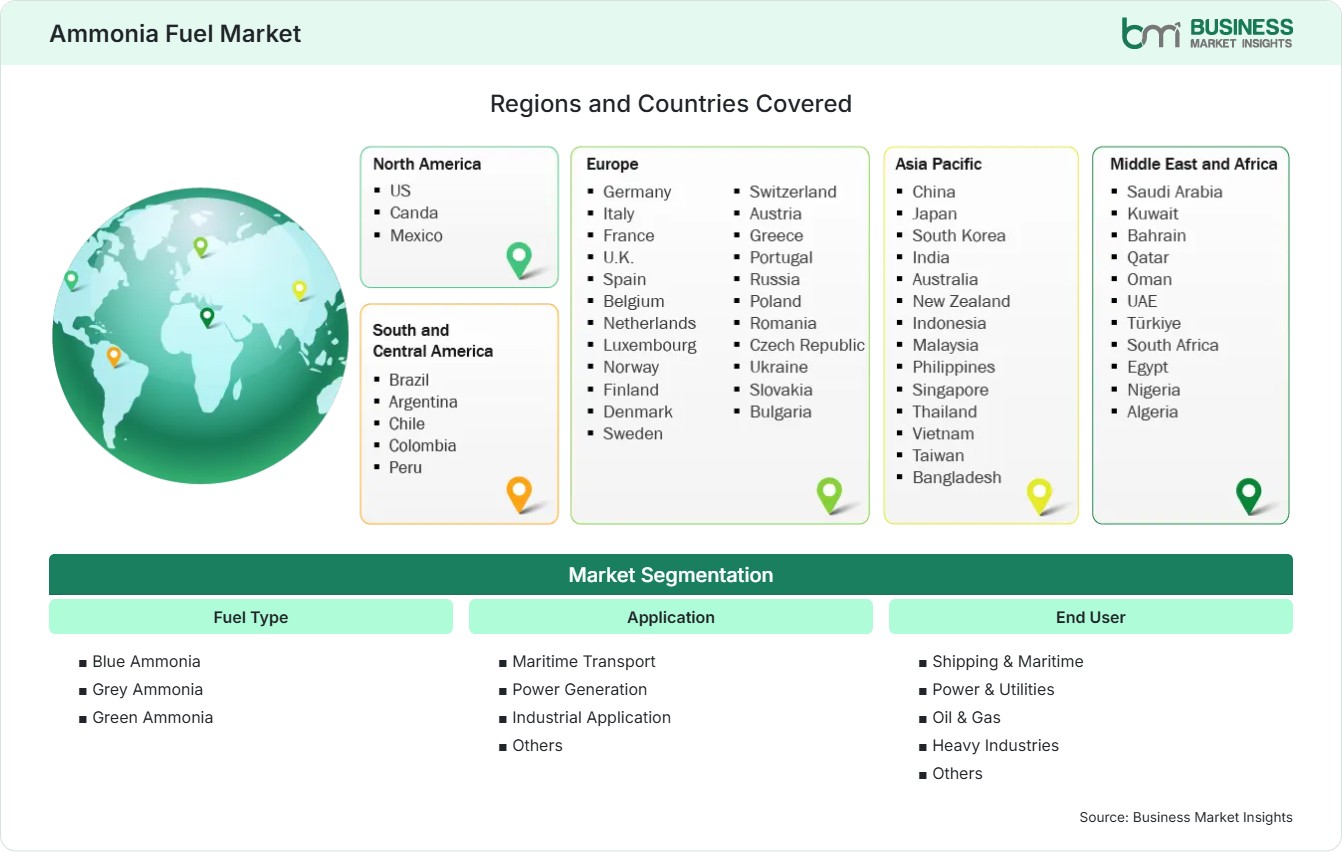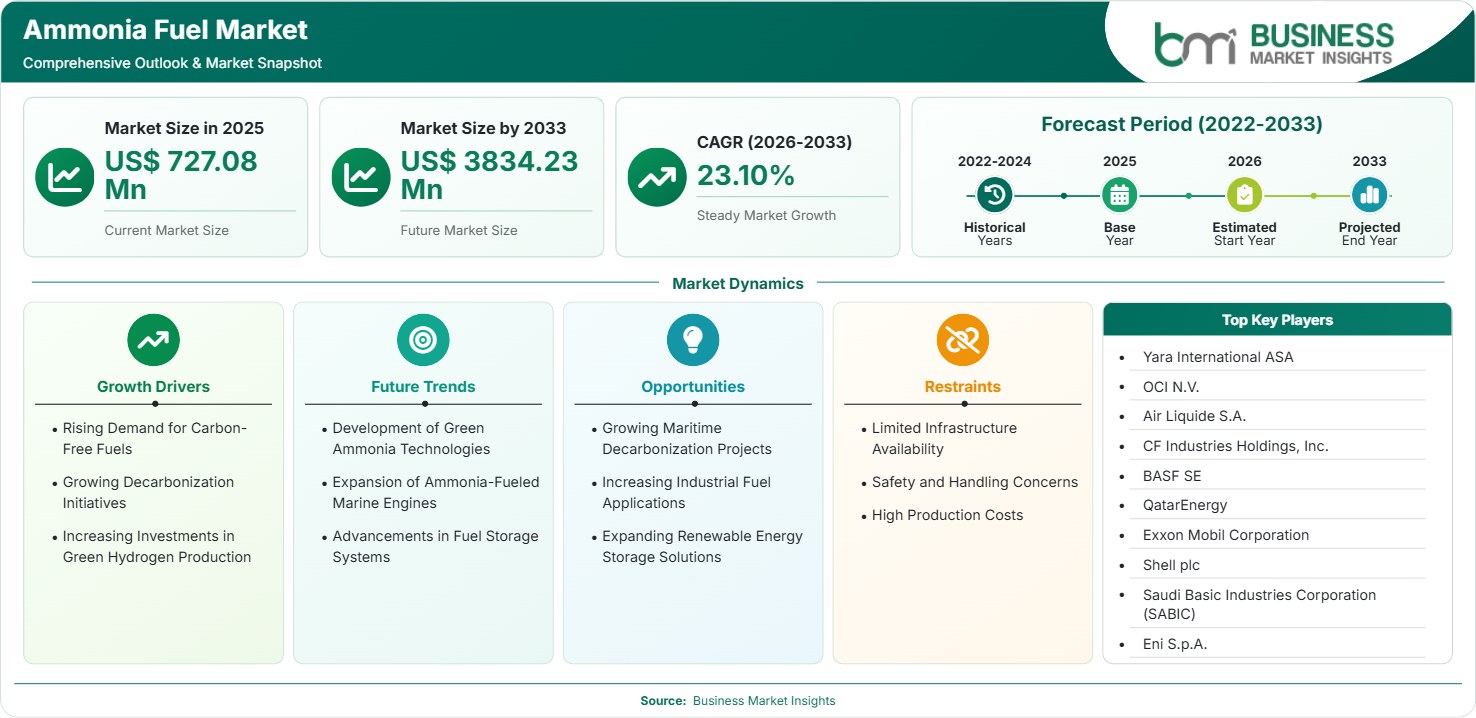
Ammonia Fuel Market Regional Highlights
North America Ammonia Fuel Market
North America accounted for 30%–34% of global revenue in 2025 and is projected to expand at a 21%–23% CAGR through 2033. The region benefits from advanced hydrogen infrastructure, supportive clean-energy policies, established industrial users, and increasing investments in carbon capture projects. The Ammonia Fuel Market share remains supported by growing commercialization initiatives, favorable tax incentives, and strategic investments in export terminals that improve supply chain efficiency across domestic and international energy markets.
- The United States and Canada continue investing in hydrogen hubs, renewable ammonia facilities, and export infrastructure supporting industrial decarbonization and clean maritime fuel development while attracting private sector participation.
- Carbon capture integration with conventional ammonia production enables lower lifecycle emissions, allowing producers to commercialize blue ammonia while preparing for large-scale renewable hydrogen deployment.
- Government funding programs encourage pilot projects involving power generation, industrial heating, and marine transportation, accelerating technology validation and commercial adoption across multiple sectors.
- Strategic collaborations among energy producers, engineering firms, and transportation companies strengthen domestic supply chains while improving investment confidence for future clean fuel projects.
US Ammonia Fuel Market
The United States Ammonia Fuel Market represented 74%–78% of North American demand during 2025 while expanding at a 21%–23% CAGR through 2033. Strong policy incentives, renewable hydrogen investments, and industrial decarbonization programs continue supporting commercial deployment. Federal clean-energy initiatives and private capital investments strengthen ammonia production capacity while expanding infrastructure for transportation, storage, and export activities across multiple industrial sectors.
- Gulf Coast investments continue positioning the country as a major production and export hub supported by existing ammonia manufacturing infrastructure and carbon capture capabilities.
- Maritime operators increasingly evaluate ammonia-powered vessels to comply with future international emission regulations while improving long-term operational sustainability.
- Utilities and industrial operators are expanding demonstration projects using ammonia as a low-carbon energy carrier for power generation and energy storage.
- Public-private partnerships accelerate commercialization by supporting research, pilot facilities, and large-scale hydrogen production projects across multiple states.
Europe Ammonia Fuel Market
Europe accounted for 24%–28% of global revenue in 2025 and is expected to register a 22%–24% CAGR during 2026–2033. Germany remains the leading market through industrial demand and hydrogen infrastructure development, while the Netherlands records the fastest regional growth owing to port modernization, ammonia import terminals, and clean energy trading initiatives.
- European climate legislation and renewable fuel targets continue encouraging investments in green ammonia production, storage facilities, and cross-border hydrogen infrastructure supporting industrial decarbonization.
- Major ports including Rotterdam are expanding ammonia import and bunkering capabilities, strengthening the region's role in future low-carbon maritime fuel supply chains.
- Industrial sectors including steel, chemicals, and fertilizers are evaluating ammonia as an alternative energy carrier to reduce emissions while maintaining operational reliability.
- Public funding and cross-border collaborations continue supporting demonstration projects involving power generation, shipping, and hydrogen transport technologies across several European economies.
Asia Pacific Ammonia Fuel Market
Asia Pacific Ammonia Fuel Market represented 27%–31% of global revenue during 2025 and is projected to record the fastest regional CAGR of 24%–26% through 2033. Strong renewable energy deployment, industrial expansion, and national hydrogen roadmaps continue accelerating investments in ammonia production and export infrastructure. Japan leads technology adoption through advanced fuel utilization programs, while Australia demonstrates the highest regional growth due to abundant renewable resources and large-scale export-oriented green ammonia developments.
- Japan and South Korea continue supporting ammonia co-firing projects for thermal power generation, strengthening commercial demand for low-carbon fuel alternatives.
- Australia is rapidly expanding renewable hydrogen and ammonia production facilities to serve growing export demand from Asian and European energy markets.
- China is increasing investments in electrolyzer manufacturing, renewable energy integration, and industrial decarbonization, supporting future domestic ammonia fuel consumption.
- Strategic partnerships between utilities, shipping companies, and energy producers accelerate commercialization while improving long-term regional supply security.
- Government-backed hydrogen strategies across multiple countries continue encouraging investments in production, logistics, storage, and end-use technologies.
Rest of World Ammonia Fuel Market
The Rest of World region accounted for 14%–18% of global revenue in 2025 and is anticipated to expand at a 22%–24% CAGR through 2033. South & Central America are leveraging renewable electricity resources to establish competitive green ammonia production, while Middle East & Africa benefit from large-scale energy investments, export infrastructure, and established ammonia manufacturing capabilities supporting international trade.
- Middle Eastern producers continue investing in integrated green ammonia facilities supported by abundant renewable resources and established global energy trading networks.
- Brazil and Chile are expanding renewable-powered hydrogen production, creating opportunities for competitive ammonia exports serving international industrial and maritime markets.
- African nations with strong solar and wind resources are attracting investments in future ammonia production projects supporting regional industrial development.
- International financial institutions and private investors continue supporting infrastructure projects that improve storage, transportation, and export capabilities across developing economies.
- Growing cross-border energy partnerships strengthen long-term supply agreements while encouraging commercialization of low-carbon ammonia across emerging global markets.