Market Summary
Executive Summary and Global Market Analysis
Hydrogen fueling stations are systems that store, compress, and provide hydrogen for vehicles. They serve both fuel cell and hydrogen combustion vehicles, delivering hydrogen safely and at the right pressure. Station designs vary depending on mobility, storage, and supply needs, so they can be used in cities, logistics networks, and industrial transport hubs.
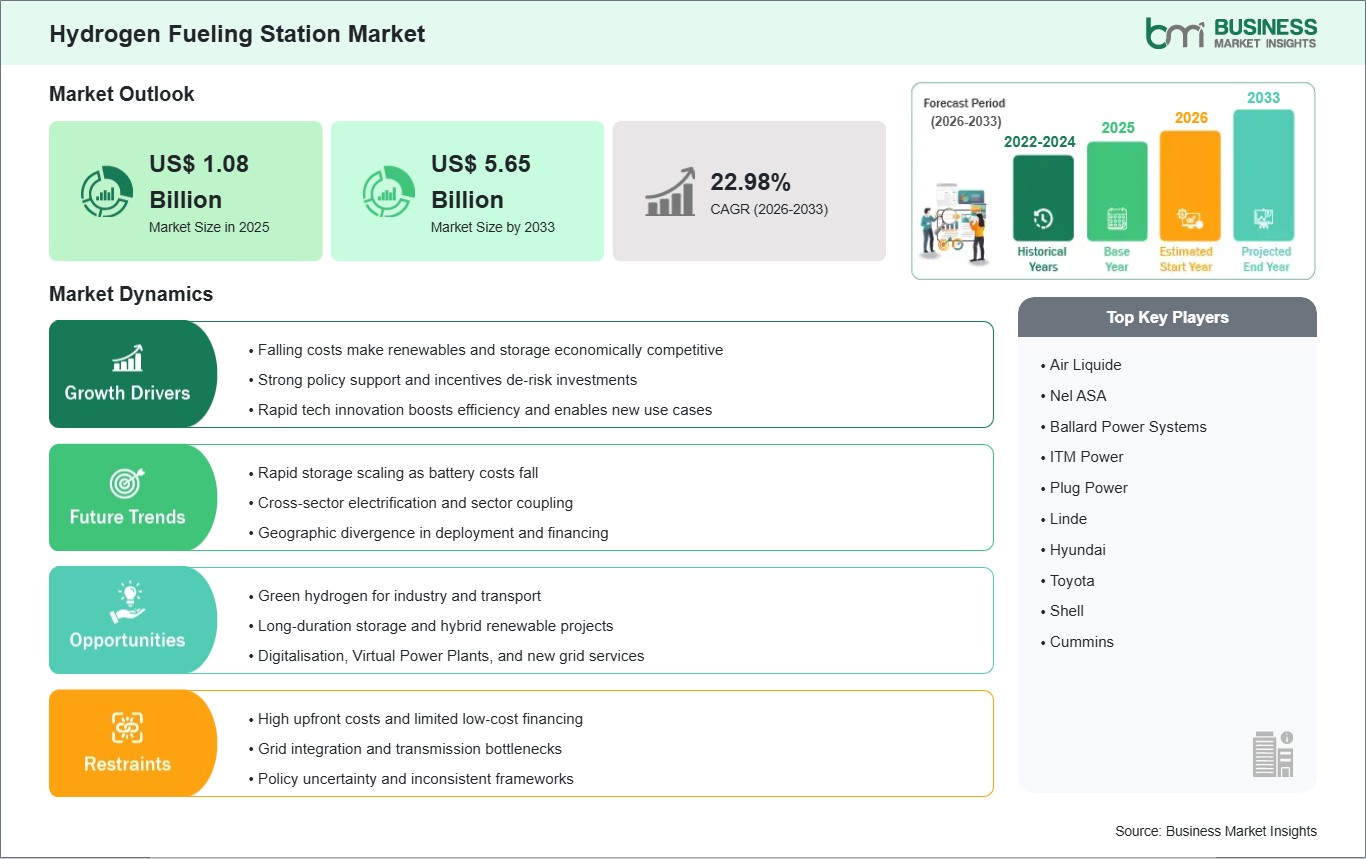
More commercial fleets and public transportation systems are using hydrogen-powered vehicles, which increases the need for fueling stations. Regulations that support low-emission transport have encouraged steady investment in hydrogen refueling. Many fleet operators now view hydrogen as the best option for vehicles that need quick refueling and long driving ranges, especially for freight and heavy-duty use. The market includes a variety of station types, with fixed stations common in cities because they offer permanent and efficient fueling. High-pressure systems are becoming more popular as they suit advanced fuel cell vehicles. On-site hydrogen supply is also gaining attention, as it gives operators more control and lessens the need for delivered hydrogen.
New technology is changing how hydrogen stations are designed and how efficiently they work. Modern stations use automated pressure controls, better compression, and improved storage materials to make fueling easier. Digital monitoring helps with maintenance and keeps stations running smoothly. Mobile hydrogen stations are now being used for pilot projects and temporary needs. Companies are forming partnerships and working on new engineering solutions to expand the hydrogen network. The industry is focused on making stations scalable, cost-effective, and compatible with renewable hydrogen production to support long-term growth in transportation.
Segment Analysis
Hydrogen Fueling Station Market Segmentation
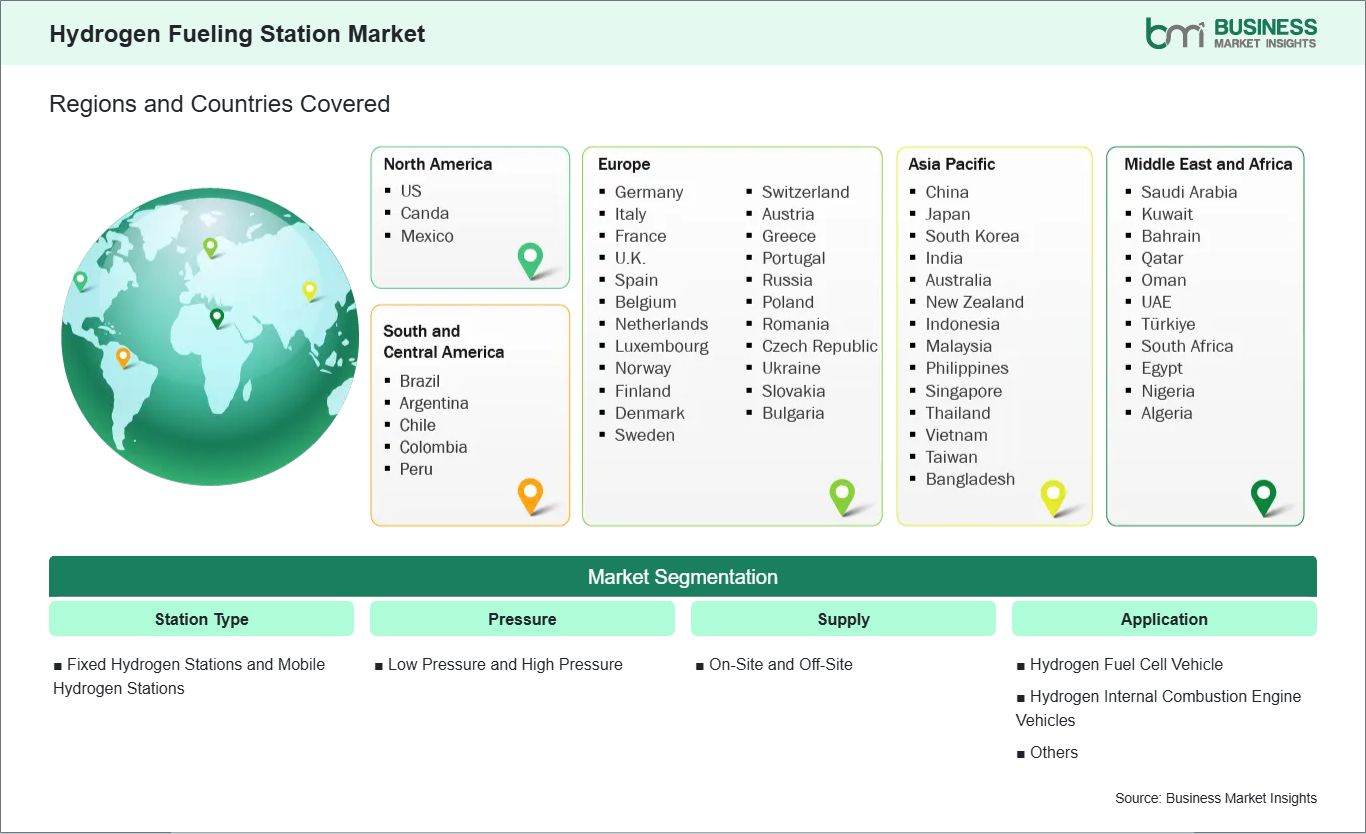
The Hydrogen Fueling Station market is divided by station type, pressure, supply, and application. This shows how different fueling setups, supply methods, and vehicle uses shape the infrastructure.
By Station Type
- Fixed Hydrogen Stations – Preferred for permanent urban and highway fueling infrastructure.
- Mobile Hydrogen Stations – Suitable for pilot deployments and temporary transportation projects.
By Pressure
- Low Pressure – Applied in controlled fleet environments with moderate fueling requirements.
- High Pressure – Supports advanced fuel cell vehicle refueling efficiency.
By Supply
- On-Site – Enhances operational flexibility through localized hydrogen generation capabilities.
- Off-Site – Enables centralized hydrogen production and distributed station delivery.
By Application
- Hydrogen Fuel Cell Vehicle – Accounts for broader infrastructure integration across mobility programs.
- Hydrogen Internal Combustion Engine Vehicles – Gains traction in specialized heavy-duty transportation applications.
- Others – Includes emerging industrial and experimental mobility deployments.
Market Forces
Hydrogen Fueling Station Market Drivers and Opportunities
Expansion of Hydrogen Mobility Infrastructure Initiatives
National efforts to lower transportation emissions are leading to more investment in alternative fueling systems. Building hydrogen stations helps modernize commercial fleets and reduce emissions in public transit. Logistics companies are looking at hydrogen vehicles for long trips that need fast refueling. Because of this, planning and building hydrogen stations is speeding up in important transport and industrial areas.
As more stations are built, it becomes easier for hydrogen-powered vehicles to run. Government programs and industry partnerships are making stations more connected and reliable. Public transit agencies are adding hydrogen buses and utility vehicles, which increases station use. These steps help build trust in hydrogen fueling.
Expansion of Distributed and Decentralized Energy Infrastructure
Better ways to produce renewable hydrogen are opening up new options for building fueling station networks. More projects now use on-site electrolysis to make hydrogen, which gives more supply flexibility and reduces the need for delivered hydrogen. Using renewable electricity makes hydrogen production cleaner and supports goals for low-emission transport. These improvements are leading to more trials in industrial and city transport programs.
Future infrastructure will likely focus on producing hydrogen locally and using smart energy systems. More stations powered by renewable energy could make fueling more efficient and easier to distribute. Providers are also looking at modular station designs that can grow as transportation needs increase. These changes should make it easier to expand hydrogen transport into new markets.
Size and Share Analysis
Hydrogen Fueling Station Market Size and Share Analysis
The Hydrogen Fueling Station Market is projected to grow from US$ 1.08 Billion in 2025 to US$ 5.65 Billion by 2033 , registering a CAGR of 22.98% from 2026 to 2033. This growth comes from continued investment in hydrogen vehicle infrastructure and efforts to cut transportation emissions. More stations are being built for freight, public transit, and commercial fleets.
Fixed hydrogen stations are still important because they work well for large-scale fueling and long-term plans. High-pressure systems are preferred since they allow faster refueling and support advanced fuel cell vehicles. On-site hydrogen supply is also becoming more popular because it offers flexibility and independence.
Hydrogen fuel cell vehicles are the main application in this market, thanks to their growing use in both passenger and heavy-duty transport. Public transit agencies and logistics companies are adding more fuel cell vehicles to their fleets, especially for routes that need long range and quick refueling. Hydrogen internal combustion engine vehicles are also starting to play a role, helping to diversify infrastructure in industrial transport.
Report Coverage
Hydrogen Fueling Station Market Report Coverage and Deliverables
The " Hydrogen Fueling Station Market Size and Forecast (2022-2033)" report provides a detailed analysis of the market covering below areas:
- Market size and forecast at global, regional, and country levels for all market segments covered under the scope
- Market trends, as well as drivers, restraints, and opportunities
- Market analysis covering key trends, global and regional framework, major players, regulations, and recent developments
- Industry landscape and competition analysis covering market concentration, heat map analysis, prominent players, and recent developments for the Hydrogen Fueling Station market
- Detailed company profiles, including SWOT analysis
Geographic Insights
Hydrogen Fueling Station Market Geographic Insights
The Hydrogen Fueling Station market looks different in each region, depending on local goals for electric transport, energy policies, infrastructure, and cutting industrial emissions. Around the world, there is a focus on building hydrogen corridors that connect logistics hubs, cities, and industrial areas. Planning also aims to link these efforts with renewable energy and long-term emission reduction targets.
North America is seeing strong growth in hydrogen infrastructure, helped by programs to modernize transportation and promote clean mobility. Efforts in the region focus on making hydrogen refueling easy for commercial fleets and public transit. Infrastructure operators are working on scalable station designs to meet the needs of freight transport, especially along major logistics and interstate routes. Urban transport projects, the spread of fuel cell vehicles, and growth in manufacturing are all speeding up the rollout of stations in cities and industrial areas.
Europe is moving forward with policies that support hydrogen and efforts to coordinate infrastructure between countries. The region is focusing on renewable hydrogen and building sustainable transport systems. In the Middle East, Africa, and South and Central America, new markets are beginning to explore hydrogen infrastructure as part of plans to diversify industry and modernize transport, which could help the global market expand.
Industry Activity
Recent Developments
The Hydrogen Fueling Station market is evaluated by gathering qualitative and quantitative data post-primary and secondary research, which includes important corporate publications, association data, and databases. A few of the key developments in the Hydrogen Fueling Station market are:
- In May 2026, Tyczka Hydrogen inaugurated a new green hydrogen refueling station at the Port of Schweinfurt, marking a significant step in the development of its hydrogen hub. The ceremony included notable attendees such as Bavaria's Economic Minister, Hubert Aiwanger, and Schweinfurt's Lord Mayor, Ralf Hofmann, along with representatives from partner firms and local officials, highlighting the collaborative effort towards advancing hydrogen mobility and promoting a sustainable energy future.
- In May 2026, Toyota and the government handed over a locally developed hydrogen refueling station to support hydrogen mobility, particularly in commercial transport. This initiative is part of the HySA program, a national initiative launched in 2008 to promote research and innovation in hydrogen and fuel-cell technologies.
Trust & Transparency
Research Methodology
The market analysis combines proprietary research with secondary data from government agencies, company disclosures, regulatory filings, industry databases and expert interviews. Market estimates are validated through data triangulation, cross-market benchmarking and analyst
review.
View Full Research Methodology
Key Sources Referred:
European Commission
US Department of Energy
International Energy Agency
Company Websites
Company Annual Reports
Company Investor Presentations