Market Summary
Executive Summary and Global Market Analysis
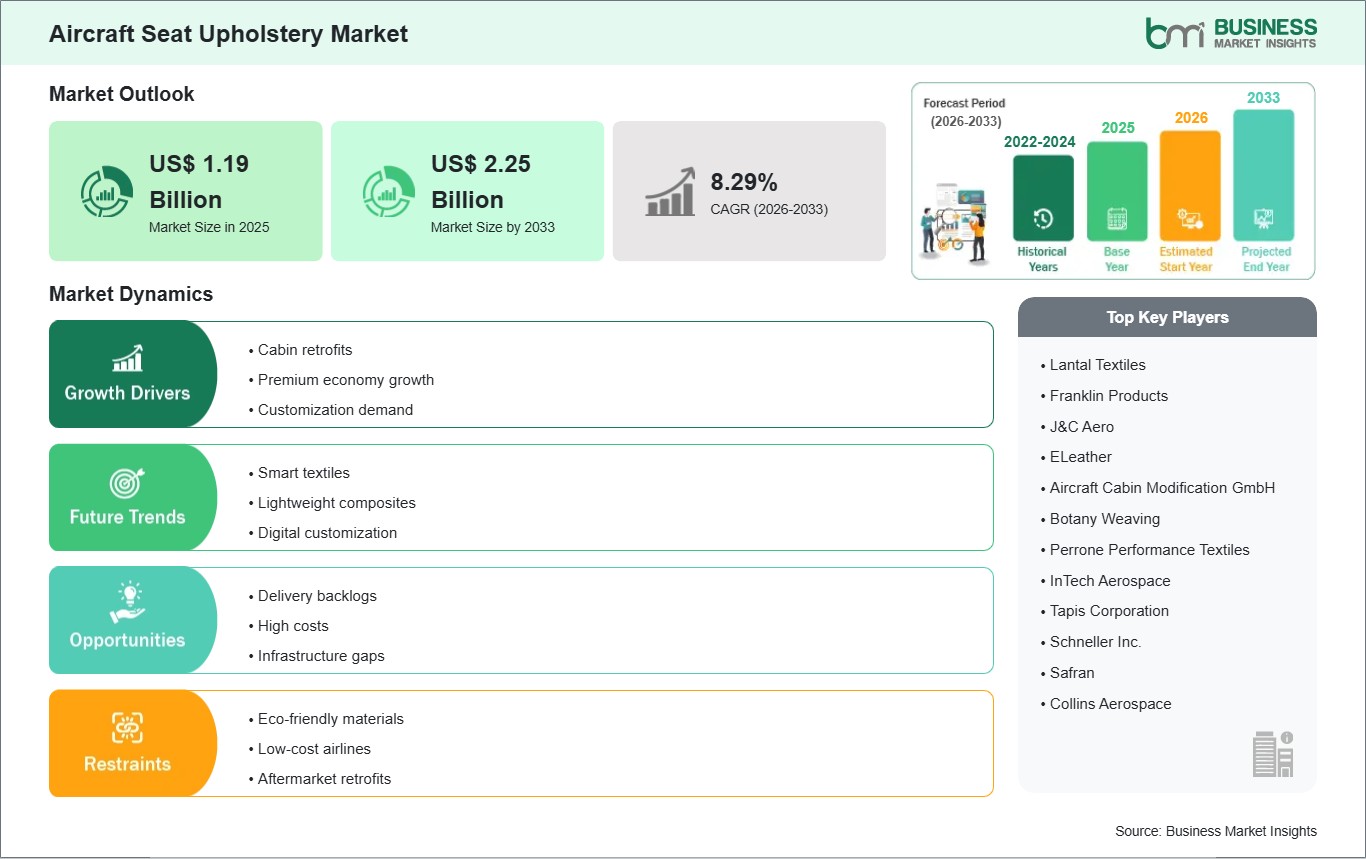
Aircraft Seat Upholstery refers to the materials, coverings, and finishing components used in aircraft seating systems to provide passenger comfort, durability, safety, and aesthetic appeal across commercial, business, and general aviation aircraft. These upholstery solutions include leather, vinyl, and fabric materials that are applied to various seating components such as bottom covers, backrests, headrests, armrests, and seat pockets. The market is influenced by growing air passenger traffic, increasing aircraft deliveries, cabin modernization programs, and the rising focus on enhancing passenger experience. Airlines and aircraft operators are increasingly investing in high-quality seating interiors that improve comfort while meeting strict aviation safety and durability requirements. The demand for lightweight and easy-to-maintain upholstery materials is also increasing as operators seek to improve operational efficiency and reduce maintenance costs.
Several operational and industry-specific factors continue to shape the Aircraft Seat Upholstery market. Aircraft interior materials must comply with stringent aviation regulations related to fire resistance, durability, hygiene, and passenger safety. The industry also faces challenges associated with fluctuating raw material costs, long certification procedures, and frequent need for replacement during the process of cabin renovation. Disruption in the supply chain and demand for eco-friendly materials may also impact the processes of manufacture and procurement. There is also the issue that aircraft manufacturers will receive requests for personalized designs from airlines.
Despite these challenges, the market continues to benefit from ongoing investments in fleet expansion and aircraft cabin upgrades. Premium seating categories are driving demand for advanced upholstery materials that can provide improved comfort and better looks. The leather seat remains popular in high-end cabins; however, the fabric and vinyl seats have gained popularity as they come with reasonable costs and easier maintenance. The competition in this market sector lies in producing lighter and environmentally friendly materials, along with passenger comfort improvement.
Segment Analysis
Aircraft Seat Upholstery Market Segmentation
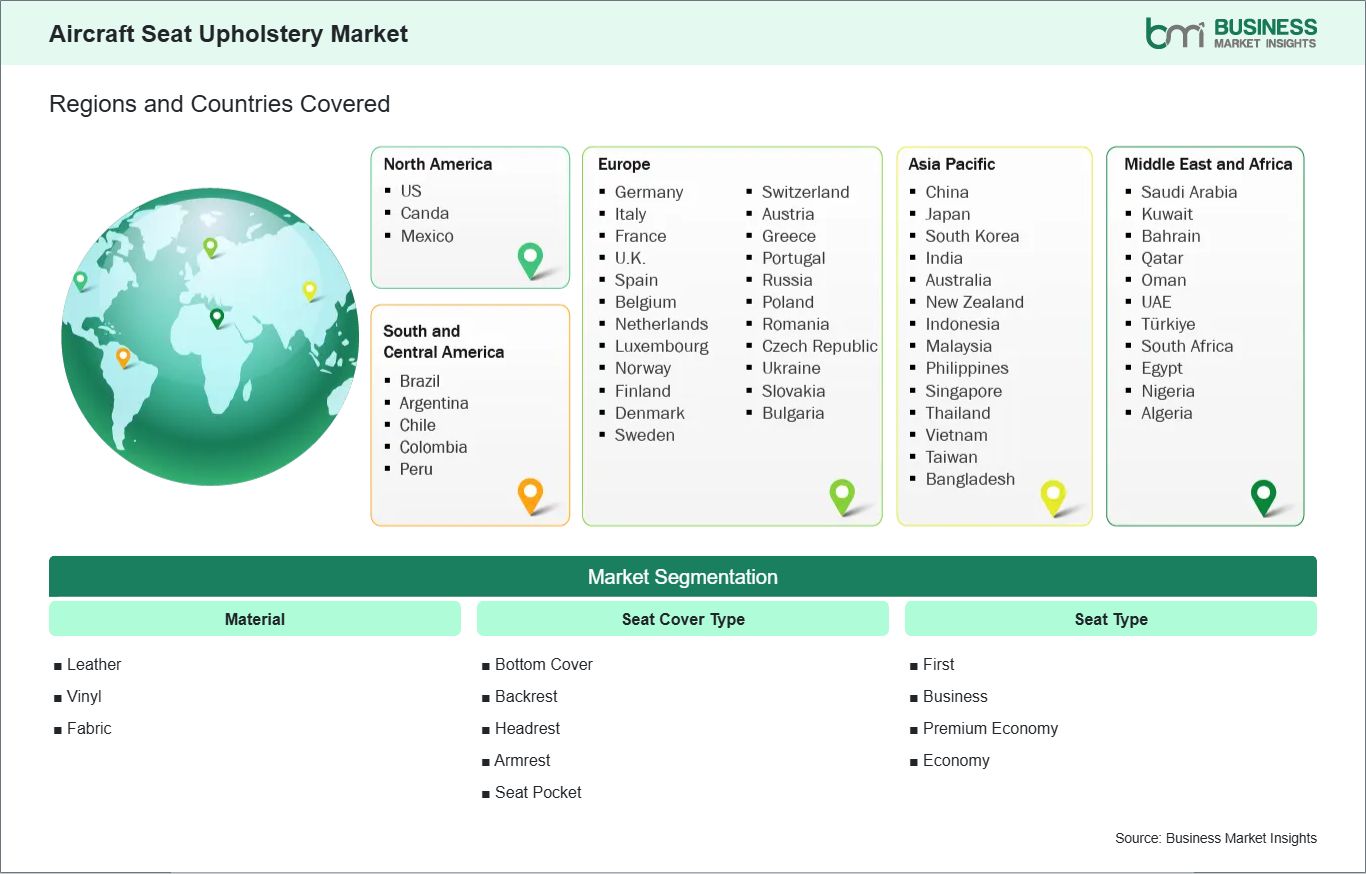
The Aircraft Seat Upholstery market is segmented based on material, seat cover type, and seat type. These segments influence product selection, passenger comfort requirements, maintenance needs, and cabin design preferences.
By Material
- Leather: Widely used in premium cabins due to its durability, premium appearance, and passenger comfort.
- Vinyl: Preferred for its ease of cleaning, cost efficiency, and resistance to wear.
- Fabric: Commonly used in economy cabins due to flexibility, lightweight properties, and design versatility.
By Seat Cover Type
- Bottom Cover: Provides seat surface protection and passenger comfort.
- Backrest: Supports passenger posture and contributes to cabin aesthetics.
- Headrest: Enhances comfort and hygiene during travel.
- Armrest: Improves seating convenience and passenger experience.
- Seat Pocket: Offers storage functionality while supporting cabin organization.
By Seat Type
- First: Focuses on luxury materials and customized upholstery solutions.
- Business: Emphasizes comfort, durability, and premium design.
- Premium Economy: Balances enhanced comfort with cost considerations.
- Economy: Prioritizes durability, maintenance efficiency, and large-scale deployment.
Market Forces
Aircraft Seat Upholstery Market Drivers and Opportunities
Rising Aircraft Cabin Modernization and Passenger Comfort Expectations
The increasing focus on passenger experience is a major factor supporting growth in the Aircraft Seat Upholstery market. Airlines are continuously upgrading cabin interiors to attract travelers, improve customer satisfaction, and strengthen brand differentiation. The modern traveler is expecting comfort in terms of seats, as well as aesthetics within the cabin, irrespective of the class of travel. Airlines are increasingly focusing on interior renovations that include the reupholstery of worn-out seats, fitting light-weighted materials, and adopting new cabin layouts. The aviation industry has set stringent requirements of safety and performance that need to be adhered to, and hence necessitate the adoption of quality upholstery materials.
Growing competition among airlines has further accelerated investments in premium cabin upgrades and enhanced seating configurations. As fleets continue to expand and existing aircraft undergo refurbishment cycles, demand for innovative and compliant upholstery solutions remains strong. These developments are supporting the adoption of advanced seat covering materials across both new aircraft production and retrofit applications.
Growing Adoption of Sustainable and Lightweight Upholstery Materials
The aviation industry's increasing emphasis on sustainability is creating new opportunities for the Aircraft Seat Upholstery market. Airlines and aircraft manufacturers are exploring environmentally responsible materials that reduce environmental impact while maintaining performance standards required for aviation applications. The use of lighter materials for upholstery is increasingly becoming more significant since it helps reduce the weight of the plane. The development of new kinds of fabrics, eco-leather, and synthetic materials provides more product choices.
The growing trend toward customized cabin experiences is also creating opportunities for upholstery manufacturers to develop specialized designs, textures, and material combinations. With the increasing emphasis placed by airlines on delivering unique experiences to their passengers while meeting their sustainability goals, there is going to be a growing demand for new types of upholstery. Advances in materials technology and production processes will contribute significantly to the continued growth of the market.
Size and Share Analysis
Aircraft Seat Upholstery Market Size and Share Analysis
The Aircraft Seat Upholstery Market is projected to grow from US$ 1.19 Billion in 2025 to US$ 2.25 Billion by 2033 , registering a CAGR of 8.29% from 2026 to 2033.
By material, leather accounts for a significant share due to its widespread use in premium aircraft cabins where comfort, durability, and aesthetics are key priorities. Vinyl remains an important segment because of its low maintenance requirements and cost efficiency, while fabric continues to see adoption in economy-class seating due to its lightweight characteristics and design flexibility.
By seat cover type, bottom covers and backrests represent major demand areas because they experience continuous passenger use and require periodic replacement during cabin refurbishment programs. Headrests, armrests, and seat pockets also contribute to market demand as airlines seek to maintain cabin quality and passenger comfort standards.
By seat type, economy seating holds a considerable share owing to its large installation base across global commercial aircraft fleets. Business and first-class seating segments continue to generate demand for premium upholstery materials, while premium economy cabins are gaining importance as airlines expand differentiated seating offerings to improve passenger experience.
Report Coverage
Aircraft Seat Upholstery Market Report Coverage and Deliverables
The "Aircraft Seat Upholstery Size and Forecast (2022-2033)" report provides a detailed analysis of the market covering below areas:
- Aircraft Seat Upholstery Market size and forecast at global, regional, and country levels for all the key market segments covered under the scope
- Aircraft Seat Upholstery Market trends, as well as market dynamics such as drivers, restraints, and key opportunities
- Aircraft Seat Upholstery Market analysis covering key market trends, global and regional framework, major players, regulations, and recent market developments
- Industry landscape and competition analysis covering market concentration, heat map analysis, prominent players, and recent developments for the market
- Detailed company profiles, including SWOT analysis
Geographic Insights
Aircraft Seat Upholstery Market Geographic Insights
The Aircraft Seat Upholstery Market shows diverse regional adoption patterns influenced by airline fleet expansion, aircraft refurbishment activities, passenger comfort requirements, aviation infrastructure development, and evolving cabin interior standards.
North America represents a mature market supported by a large commercial aviation fleet, established aircraft maintenance infrastructure, and continuous cabin upgrade programs. Airlines across the United States and Canada regularly invest in seat refurbishment and interior modernization initiatives to improve passenger experience and maintain competitive positioning. The region benefits from strong aviation maintenance, repair, and overhaul capabilities that support recurring demand for replacement upholstery materials. Premium cabin upgrades and business aviation activities further contribute to the adoption of advanced upholstery solutions. Aircraft operators in North America are increasingly evaluating sustainable interior materials and lightweight seating components to align with environmental objectives and operational efficiency goals.
Asia Pacific is experiencing growing demand driven by expanding airline fleets, rising air passenger traffic, and significant investments in aviation infrastructure. Countries such as China, India, Japan, Singapore, and South Korea continue to strengthen their aviation sectors through airport expansion and fleet modernization programs. The airlines in the region are improving their cabins to cater to the changing expectations of the passengers. In addition, the increasing number of operations being carried out by the low-cost airlines results in the need for more robust and economical materials for the upholstery of aircraft seats. The Asia Pacific region sees growth from rising aircraft deliveries and customization. Rising demand for premium economy and business-class seating across major regional carriers is encouraging the adoption of advanced upholstery materials that balance comfort, durability, and maintenance efficiency.
Industry Activity
Recent Developments
The Aircraft Seat Upholstery Market is analyzed using a mix of primary and secondary research sources, including corporate publications, industry associations, and verified databases. This approach ensures accurate tracking of innovation trends and strategic developments influencing the market.
- In April 2024, Recaro Aircraft Seating introduced sustainable seat cover solutions and expanded its focus on environmentally responsible cabin interior materials during industry events and product showcases. The initiative emphasized the use of recyclable and lightweight materials designed to support airline sustainability goals while maintaining passenger comfort and durability standards. The development reflects growing industry interest in sustainable aircraft seat upholstery solutions.
- In May 2023, Collins Aerospace highlighted advanced aircraft cabin interior technologies, including seating and upholstery innovations designed to improve passenger comfort, durability, and maintenance efficiency. The company showcased solutions supporting airline cabin modernization programs and next-generation passenger experience requirements. The development demonstrates continued investment in aircraft interior enhancement technologies.
Trust & Transparency
Research Methodology
The market analysis combines proprietary research with secondary data from government agencies, company disclosures, regulatory filings, industry databases and expert interviews. Market estimates are validated through data triangulation, cross-market benchmarking and analyst
review.
View Full Research Methodology
Key Sources Referred:
World Bank - Global Trade Indicators World Trade Organization (WTO) International Monetary Fund (IMF) International Trade Administration (ITA) Company Websites Company Annual Reports Company Investor Presentations