Market Summary
Executive Summary and Global Market Analysis
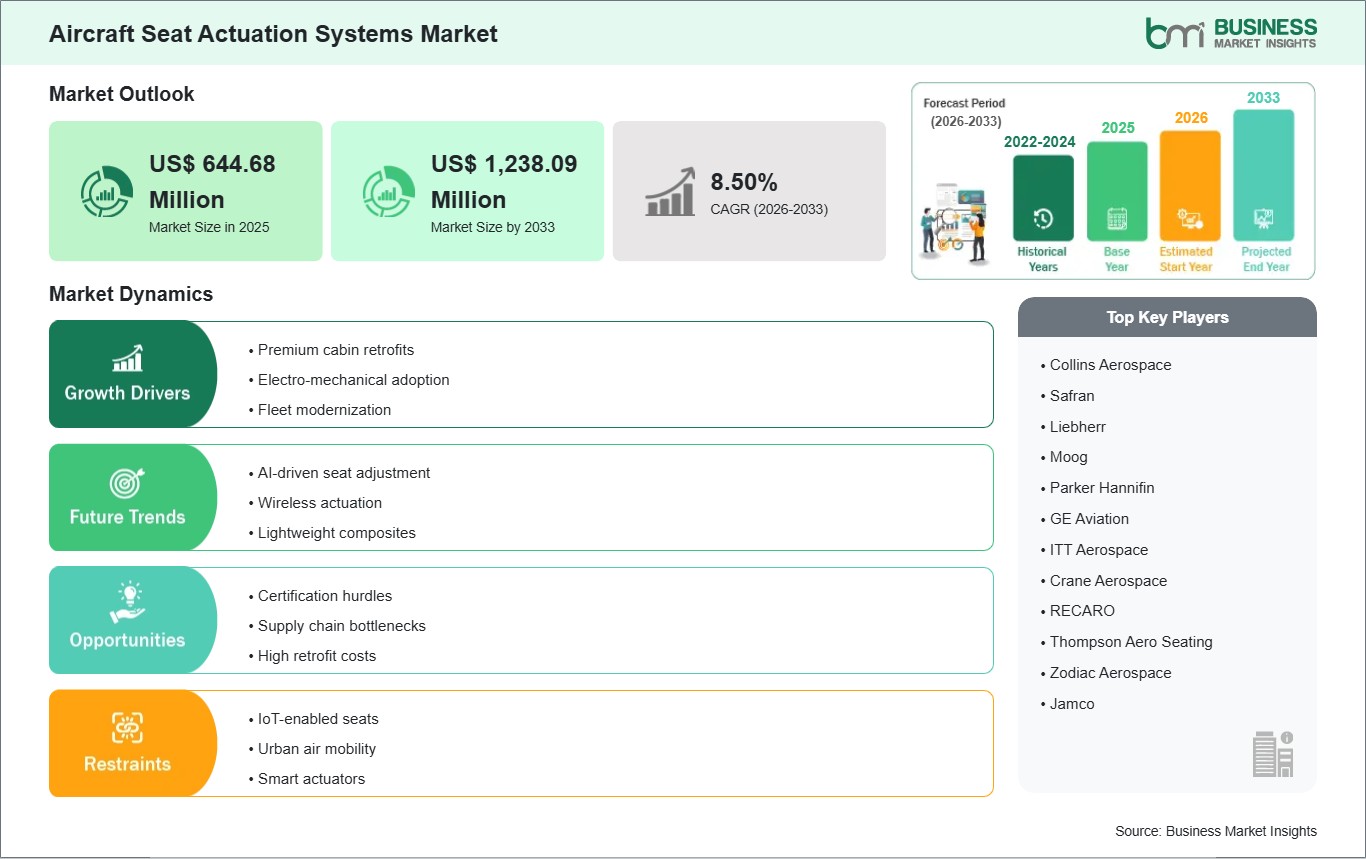
Aircraft Seat Actuation Systems refer to the electromechanical and electronic mechanisms used to adjust, recline, elevate, and position aircraft seats to improve passenger comfort, accessibility, and cabin functionality. Such systems have been extensively adopted in the commercial aircraft cabin, business jets, and premium aviation cabins to facilitate proper seat adjustment as well as seating. Increasing demands by passengers for improved comfort in flight, significant investments in cabin upgrades, and increased long-haul air transport are driving the use of sophisticated seat actuator technology. Airlines and aircraft manufacturers are increasingly focusing on improving passenger experience through ergonomic seating solutions that offer greater flexibility, convenience, and customization.
Several operational and industry-specific challenges continue to influence the Aircraft Seat Actuation Systems market. Aircraft manufacturers and airlines face strict certification requirements and safety regulations governing cabin equipment and passenger seating systems. Attempts to minimize the weight of airplanes and, at the same time, retain durability and performance could complicate the design process. Moreover, inconsistent production of aircraft, logistics problems, and maintenance issues could have impacts on systems' implementation and replacement timelines.
Despite these challenges, the market continues to expand due to rising demand for premium seating, cabin refurbishment programs, and next-generation aircraft interiors. Business and first-class seating segments remain key adopters due to their reliance on advanced adjustment features and personalized comfort settings. The retrofit segment is also witnessing increasing activity as airlines seek to upgrade aging fleets with modern cabin technologies. Competitive activity within the market is focused on lightweight designs, enhanced passenger comfort features, improved reliability, energy-efficient operation, and integration of smart seating technologies.
Segment Analysis
Aircraft Seat Actuation Systems Market Segmentation
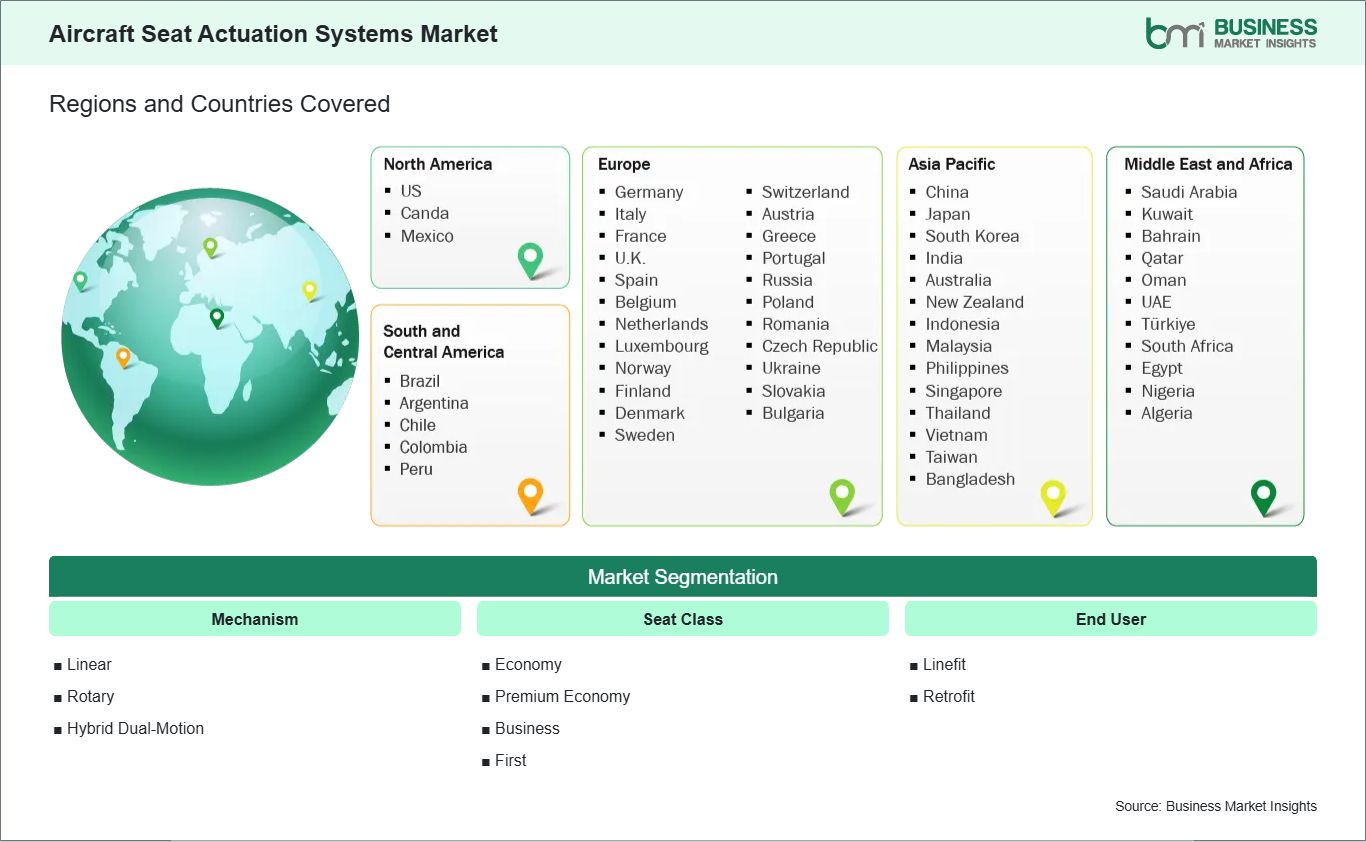
The Aircraft Seat Actuation Systems market is segmented based on mechanism, seat class, and end user. These segments help manufacturers and airlines address varying operational, comfort, and cabin design requirements.
By Mechanism
- Linear: Widely used for reclining, leg-rest movement, and seat positioning functions requiring precise motion control.
- Rotary: Used in applications involving rotational seat adjustments and compact actuation mechanisms.
- Hybrid Dual-Motion: Combines linear and rotary movement capabilities to support advanced premium seating configurations.
By Seat Class
- Economy: Focuses on basic adjustment functions, reliability, and cost efficiency.
- Premium Economy: Offers enhanced comfort features and additional seat adjustment options.
- Business: Requires sophisticated actuation systems for lie-flat and customized seating arrangements.
- First: Utilizes advanced actuation technologies to maximize luxury, comfort, and personalized passenger experience.
By End User
- Linefit: Installed during aircraft manufacturing and original equipment assembly.
- Retrofit: Integrated during cabin refurbishment and fleet modernization programs.
Market Forces
Aircraft Seat Actuation Systems Market Drivers and Opportunities
Rising Demand for Enhanced Passenger Comfort and Premium Cabin Experiences
The aviation industry is increasingly prioritizing passenger comfort as airlines compete to improve travel experiences and differentiate service offerings. Growing passenger expectations for adjustable seating, personalized comfort settings, and improved cabin ergonomics are encouraging airlines to invest in advanced seat actuation systems. These systems enable multiple seat movements, including reclining, elevation, lumbar support, and leg-rest adjustment, helping carriers enhance customer satisfaction. The expansion of long-haul routes and premium travel services is further increasing the importance of sophisticated seating technologies. Business and first-class cabins rely heavily on advanced actuation systems to provide fully adjustable and lie-flat seating configurations.
Aircraft manufacturers are also collaborating with cabin interior suppliers to integrate lightweight and energy-efficient seating solutions that align with operational efficiency goals. Moreover, aviation regulations concerning the safety and accessibility of passengers still affect product design and manufacturing. With carriers looking to increase comfort in their cabins while also staying compliant with safety regulations, the need for efficient seat actuators will remain high in both new aircraft and retrofit operations.
Growth Opportunities in Smart Cabin Technologies and Fleet Modernization
The growing adoption of smart cabin technologies is creating significant opportunities for the Aircraft Seat Actuation Systems market. Airlines are increasingly exploring connected cabin environments where seating systems can communicate with passenger service units, entertainment platforms, and digital control interfaces. This is contributing to the growth of smart seat actuation solutions, which can enable automation and customization of seat positions for individual passengers. There is also tremendous potential for growth from programs aimed at fleet modernization in the commercial aviation industry. Many airlines are upgrading cabin interiors to improve operational efficiency and passenger satisfaction while extending aircraft service life. Retrofit projects often include the replacement of older mechanical seating systems with modern electric actuation technologies.
The introduction of electric and hybrid-powered aircraft has led to the production of lightweight and efficient seat actuation devices that will be useful for future aircraft structures. Inventions in smaller motors, electronic controllers, and lightweight materials will ensure the efficiency of the products and reduce the power used. These innovations are likely to expand the application scope of advanced seat actuation technologies across multiple aircraft categories during the forecast period.
Size and Share Analysis
Aircraft Seat Actuation Systems Market Size and Share Analysis
The Aircraft Seat Actuation Systems Market is projected to grow from US$ 644.68 Million in 2025 to US$ 1,238.09 Million by 2033 , registering a CAGR of 8.50% from 2026 to 2033.
By mechanism, linear actuation systems account for a significant share due to their widespread use in seat reclining, positioning, and passenger comfort functions across multiple aircraft categories. Rotary systems continue to support specialized seating applications, while hybrid dual-motion systems are gaining traction in premium cabins that require advanced seat movement capabilities and enhanced passenger customization.
By seat class, business class represents a major share of the market because of its extensive use of advanced seat adjustment technologies and premium comfort features. First-class cabins continue to adopt highly sophisticated actuation systems for luxury seating configurations, while premium economy is witnessing growing demand as airlines expand enhanced seating options. By end user, linefit installations maintain strong demand through new aircraft production programs, whereas retrofit applications are expanding steadily as airlines invest in fleet modernization and cabin upgrade initiatives.
Report Coverage
Aircraft Seat Actuation Systems Market Report Coverage and Deliverables
The "Aircraft Seat Actuation Systems Size and Forecast (2022-2033)" report provides a detailed analysis of the market covering below areas:
- Aircraft Seat Actuation Systems Market size and forecast at global, regional, and country levels for all the key market segments covered under the scope
- Aircraft Seat Actuation Systems Market trends, as well as market dynamics such as drivers, restraints, and key opportunities
- Aircraft Seat Actuation Systems Market analysis covering key market trends, global and regional framework, major players, regulations, and recent market developments
- Industry landscape and competition analysis covering market concentration, heat map analysis, prominent players, and recent developments for the market
- Detailed company profiles, including SWOT analysis
Geographic Insights
Aircraft Seat Actuation Systems Market Geographic Insights
The Aircraft Seat Actuation Systems Market shows diverse regional adoption patterns influenced by aircraft production activity, airline fleet modernization programs, passenger comfort requirements, and aviation infrastructure development.
North America remains a mature market supported by established aircraft manufacturing capabilities, extensive airline networks, and continuous investments in cabin innovation. The United States leads regional adoption due to strong commercial aviation activity and ongoing demand for premium seating solutions. Modern airlines tend to improve their passengers' travel experience by utilizing new seat adjustments and other improvements to the cabin itself. In addition, Canada adds value through its knowledge of aerospace manufacturing and involvement in production processes related to aircraft parts. The industry can rely on a solid regulatory environment, technology, and aviation infrastructure development.
Europe represents another significant market driven by aircraft production, sustainability initiatives, and the modernization of airline fleets. Countries such as France, Germany, and the United Kingdom play important roles in aircraft manufacturing and cabin interior development. Airlines across the region continue investing in premium cabin upgrades and advanced seating systems to improve passenger satisfaction and operational competitiveness. The region also emphasizes lightweight and energy-efficient technologies that support aviation sustainability goals. Growing refurbishment activity among established carriers and demand for next-generation cabin experiences continue to support the adoption of advanced aircraft seat actuation systems throughout Europe.
Industry Activity
Recent Developments
The Aircraft Seat Actuation Systems Market is analyzed using a mix of primary and secondary research sources, including corporate publications, industry associations, and verified databases. This approach ensures accurate tracking of innovation trends and strategic developments influencing the market.
- In May 2024, Safran Seats introduced its latest business-class seating solutions designed to improve passenger comfort and optimize cabin space utilization. The new seating platform incorporates advanced electric adjustment functions and enhanced ergonomic features. The development reflects growing airline demand for premium seating technologies and next-generation cabin interiors.
- In April 2023, Collins Aerospace announced advancements in aircraft seating technologies focused on passenger comfort, connectivity, and cabin modernization. The company highlighted innovations in seating architecture and integrated electronic control systems designed to support evolving airline requirements. These developments contribute to broader adoption of advanced seat actuation technologies across commercial aviation fleets.
Trust & Transparency
Research Methodology
The market analysis combines proprietary research with secondary data from government agencies, company disclosures, regulatory filings, industry databases and expert interviews. Market estimates are validated through data triangulation, cross-market benchmarking and analyst
review.
View Full Research Methodology
Key Sources Referred:
World Bank - Global Trade Indicators
World Trade Organization (WTO)
International Monetary Fund (IMF)
International Trade Administration (ITA)
Company Websites
Company Annual Reports
Company Investor Presentations