Market Summary
Executive Summary and Global Market Analysis
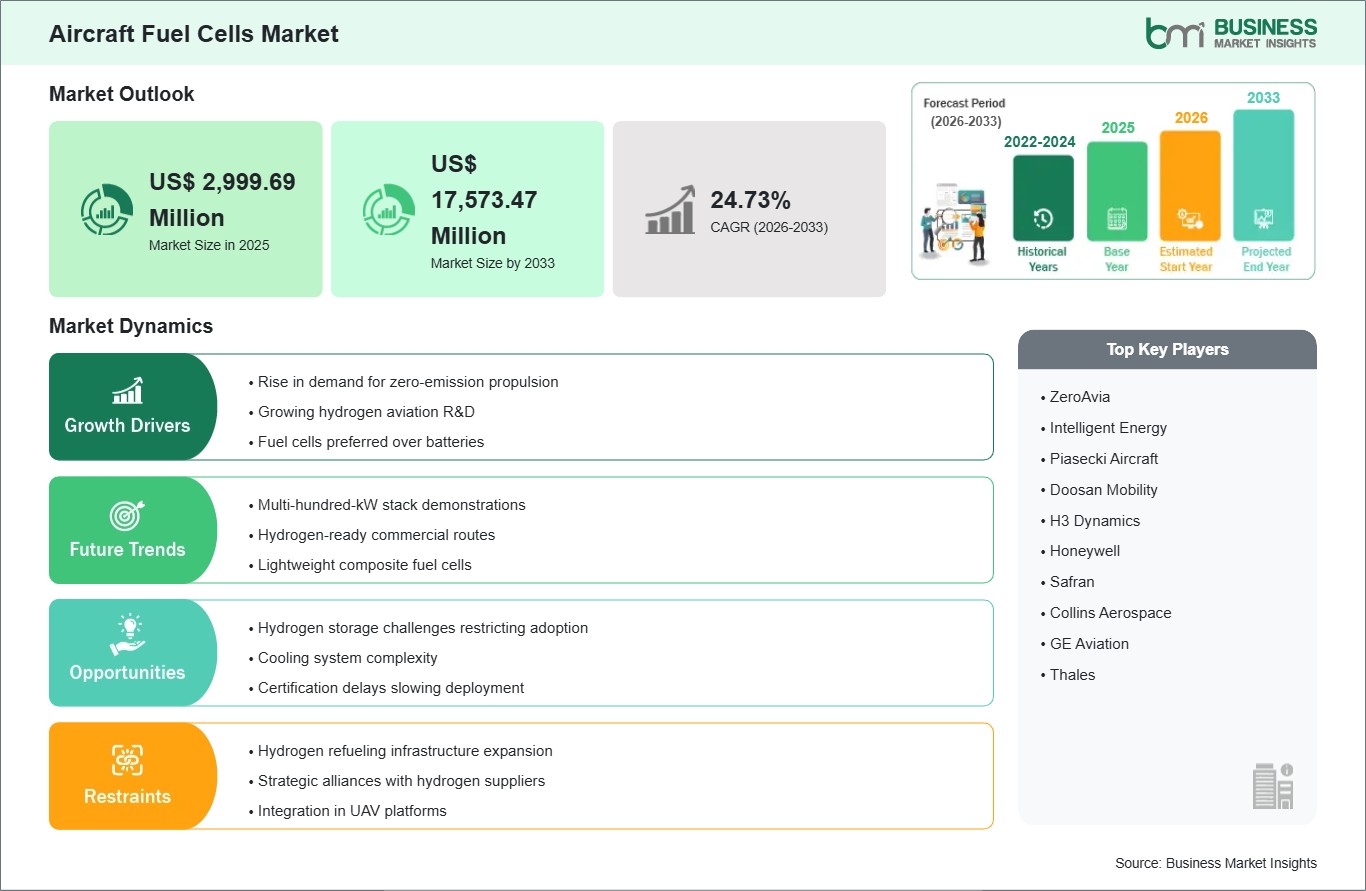
Aircraft fuel cells are advanced power generation systems that convert chemical energy into electrical energy through electrochemical reactions. These systems are being developed to help achieve environmentally sustainable operations of the aviation industry in terms of low emissions and high energy efficiency. Fuel cells for airplanes find application in propulsion, auxiliary power generation, and electrical systems on fixed-wing, rotary-wing, UAVs, and advanced air mobility vehicles. The market is gaining attention as the aviation industry focuses on sustainable propulsion technologies, lightweight power systems, and reduced dependence on conventional fossil fuels.
There are several challenges that may affect the growth of the Aircraft Fuel Cells market. The development of hydrogen storage infrastructure for aviation applications remains limited in many regions, creating operational and logistical barriers. Fuel cell systems also require advanced thermal management and lightweight materials to meet strict aviation performance standards. High development and certification costs can slow the commercialization process, especially for smaller aircraft manufacturers and emerging mobility operators.
Despite these challenges, the Aircraft Fuel Cells market is expected to grow steadily as governments, aerospace organizations, and technology developers continue investing in sustainable aviation technologies. Opportunities are emerging from the expansion of urban air mobility, electric aircraft programs, and next-generation unmanned aerial systems. Advancements in hydrogen fuel storage, lightweight composite materials, and high-efficiency fuel cell stacks are supporting better performance and operational feasibility.
Segment Analysis
Aircraft Fuel Cells Market Segmentation
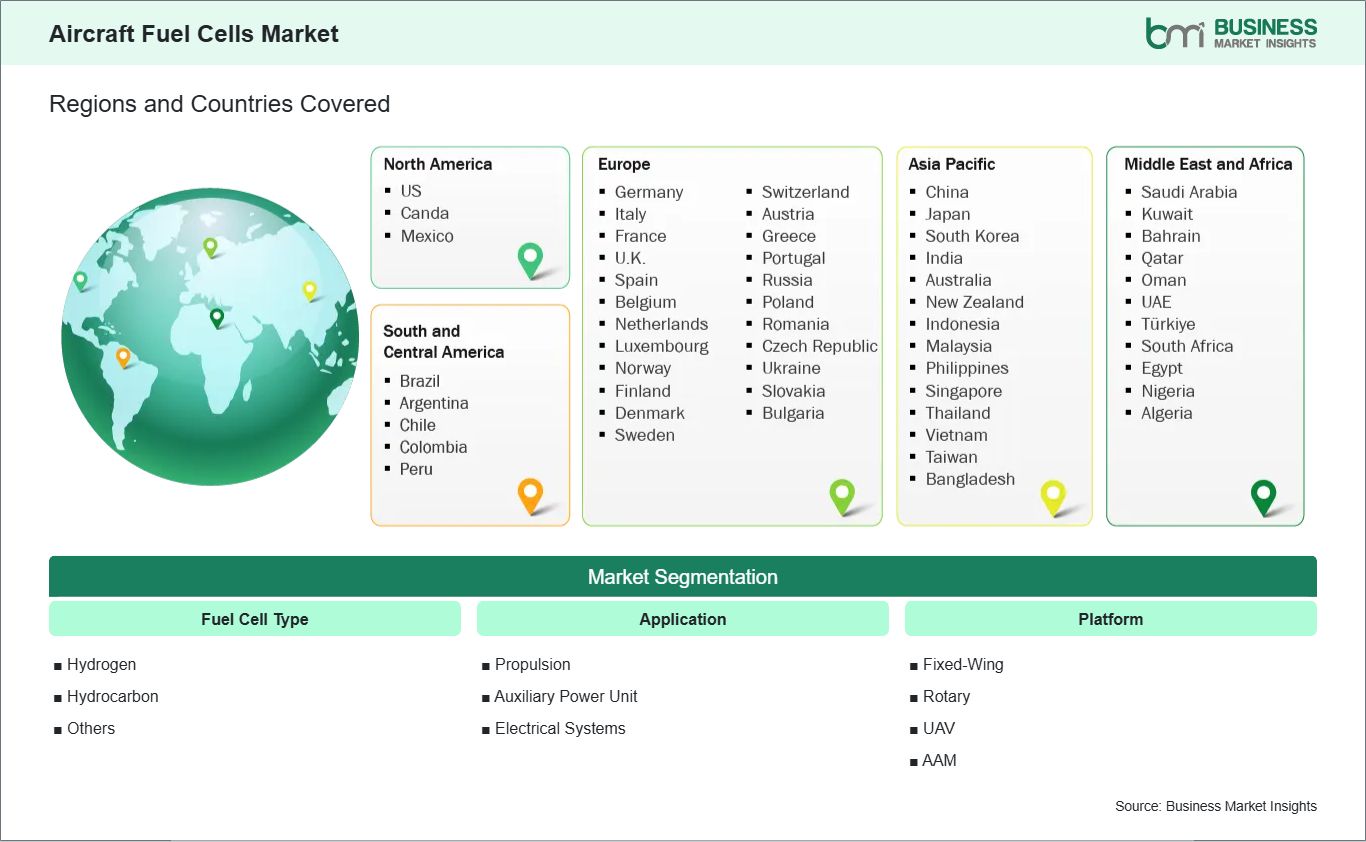
The Aircraft Fuel Cells market is segmented based on fuel cell type, application, and platform. Different segments are supporting market expansion through advancements in sustainable aviation technologies and next-generation aircraft systems.
By Fuel Cell Type
- Hydrogen: Hydrogen fuel cells are gaining strong attention due to their low-emission operation and suitability for sustainable aviation applications.
- Hydrocarbon: Hydrocarbon fuel cells continue to be explored for applications requiring higher energy density and compatibility with existing fuel infrastructure.
- Other Fuel Cell Type: Other fuel cell technologies are being researched for specialized aerospace applications and future aircraft power systems.
By Application
- Propulsion: Propulsion applications are driving demand for fuel cells as aircraft manufacturers explore cleaner alternatives to conventional engines.
- Auxiliary Power Unit: Fuel cells are increasingly used in auxiliary power systems to improve onboard energy efficiency and reduce fuel consumption.
- Electrical Systems: Electrical system applications are growing with the increasing electrification of aircraft operations and onboard systems.
By Platform
- Fixed-Wing: Fixed-wing aircraft remain a key segment due to ongoing development of sustainable regional and commercial aviation platforms.
- Rotary: Rotary aircraft are adopting fuel cell systems to support quieter and more energy-efficient operations.
- UAV: UAV platforms are expanding fuel cell adoption for longer endurance and reduced operational emissions.
- AAM: Advanced air mobility platforms are creating new opportunities for lightweight and compact fuel cell technologies.
Market Forces
Aircraft Fuel Cells Market Drivers and Opportunities
Growing Focus on Sustainable Aviation and Emission Reduction
The aviation industry is under increasing pressure to reduce greenhouse gas emissions and improve environmental sustainability. Governments and aviation regulatory bodies are encouraging the adoption of cleaner propulsion technologies to support long-term climate goals. This shift is creating strong interest in aircraft fuel cells as an alternative energy solution for future aviation systems. Fuel cells provide lower emissions, reduced noise levels, and improved energy efficiency compared to conventional combustion-based systems.
With the rise in the development of electric and hybrid-electric aircraft, there has been an increased demand for new and innovative power generation solutions. Fuel cell technology has become popular among airlines as a means to lower emissions while reducing the reliance on fuel. In addition, advancements in hydrogen production and storage technologies are making hydrogen-based aviation systems increasingly feasible. Fuel cell research and light-weight fuel cells for use on airplanes are areas where aerospace firms and research organizations are focusing their efforts.
Expansion of Urban Air Mobility and Next-Generation Aircraft Programs
The rapid development of urban air mobility and next-generation electric aircraft programs is creating new growth opportunities for the Aircraft Fuel Cells market. Advanced air mobility platforms require lightweight, efficient, and low-emission power systems capable of supporting short-distance urban transportation. Fuel cells are becoming attractive for these applications because they can provide longer operating range and faster refueling compared to battery-only systems.
The increasing focus on unmanned aerial systems and autonomous aircraft is also supporting demand for compact and efficient fuel cell technologies. Fuel cells can improve flight endurance and operational reliability for UAV platforms used in surveillance, cargo delivery, and industrial inspection activities. In addition, the aviation industry is investing in hybrid-electric aircraft concepts that combine fuel cells with batteries to improve energy management and operational flexibility. Ongoing improvements in hydrogen infrastructure, fuel cell durability, and lightweight aerospace materials are expected to further accelerate commercialization opportunities. These trends are likely to create long-term growth potential across multiple aviation segments.
Size and Share Analysis
Aircraft Fuel Cells Market Size and Share Analysis
The Aircraft Fuel Cells Market is projected to grow from US$ 2,999.69 Million in 2025 to US$ 17,573.47 Million by 2033 , registering a CAGR of 24.73% from 2026 to 2033.
By fuel cell type, hydrogen fuel cells account for a major share due to their strong alignment with sustainable aviation initiatives and low-emission operational capabilities. Hydrocarbon fuel cells continue to support applications requiring higher energy density and compatibility with existing fuel systems, while other fuel cell technologies are gradually expanding through ongoing research and experimental aerospace programs.
By application, propulsion systems represent a significant share of the market as aircraft manufacturers increasingly explore fuel cells for next-generation electric and hybrid-electric aircraft. Auxiliary power unit applications are growing steadily with rising demand for efficient onboard energy management, while electrical systems are witnessing increasing adoption as aircraft platforms become more electrified and digitally integrated.
Report Coverage
Aircraft Fuel Cells Market Report Coverage and Deliverables
The "Aircraft Fuel Cells Size and Forecast (2022-2033)" report provides a detailed analysis of the market covering below areas:
- Aircraft Fuel Cells Market size and forecast at global, regional, and country levels for all the key market segments covered under the scope
- Aircraft Fuel Cells Market trends, as well as market dynamics such as drivers, restraints, and key opportunities
- Aircraft Fuel Cells Market analysis covering key market trends, global and regional framework, major players, regulations, and recent market developments
- Industry landscape and competition analysis covering market concentration, heat map analysis, prominent players, and recent developments for the market
- Detailed company profiles, including SWOT analysis
Geographic Insights
Aircraft Fuel Cells Market Geographic Insights
The Aircraft Fuel Cells Market shows diverse regional adoption patterns influenced by sustainability initiatives, aerospace innovation programs, hydrogen infrastructure development, and investments in next-generation aviation technologies.
North America remains one of the leading regions in the Aircraft Fuel Cells market due to strong aerospace research capabilities and growing investments in sustainable aviation technologies. The United States is actively supporting hydrogen aviation projects, electric aircraft development, and advanced air mobility programs through collaborations between aerospace manufacturers, technology developers, and government agencies. Canada is also strengthening its position through research in hydrogen fuel systems and clean aviation initiatives. The region benefits from a mature aerospace infrastructure, strong regulatory support for innovation, and increasing focus on reducing aviation emissions. Demand for fuel cell-powered UAVs and hybrid-electric aircraft is further supporting market expansion across military, commercial, and urban mobility applications.
Europe is witnessing significant growth in the Aircraft Fuel Cells market due to aggressive carbon reduction targets and strong policy support for green aviation technologies. Countries such as Germany, France, and the United Kingdom are investing in hydrogen-powered aviation research and clean aerospace infrastructure. European aerospace companies are focusing on lightweight aircraft systems, advanced propulsion technologies, and sustainable fuel alternatives to support long-term environmental goals. The region is also encouraging public-private partnerships to accelerate fuel cell integration into regional aircraft and advanced air mobility platforms. Growing investments in hydrogen production facilities and clean energy ecosystems are expected to strengthen the regional market outlook over the coming years.
Industry Activity
Recent Developments
The Aircraft Fuel Cells Market is analyzed using a mix of primary and secondary research sources, including corporate publications, industry associations, and verified databases. This approach ensures accurate tracking of innovation trends and strategic developments influencing the market.
- In July 2024, Airbus continued advancing its ZEROe hydrogen-powered aircraft initiative by expanding research activities related to hydrogen propulsion technologies and onboard fuel cell systems. The program focuses on improving hydrogen storage, fuel distribution, and fuel cell integration for future commercial aviation platforms. These developments are supporting long-term adoption of sustainable aircraft propulsion technologies.
- In September 2023, Honeywell announced progress in hydrogen fuel cell power systems designed for advanced air mobility and regional aviation applications. The development supports cleaner aviation technologies by improving lightweight energy systems and operational efficiency for future aircraft platforms. The initiative also highlights the increasing commercial interest in hydrogen-powered aviation solutions.
Trust & Transparency
Research Methodology
The market analysis combines proprietary research with secondary data from government agencies, company disclosures, regulatory filings, industry databases and expert interviews. Market estimates are validated through data triangulation, cross-market benchmarking and analyst
review.
View Full Research Methodology
Key Sources Referred:
World Bank - Global Trade Indicators
World Trade Organization (WTO)
International Monetary Fund (IMF)
International Trade Administration (ITA)
Company Websites
Company Annual Reports
Company Investor Presentations