Market Summary
Executive Summary and Global Market Analysis
Aircraft fuel tanks are critical components used for the storage and safe distribution of aviation fuel within an aircraft. These tanks are designed to maintain fuel integrity under varying flight conditions while supporting operational efficiency and aircraft range. Aircraft fuel tanks are used across commercial and military aviation platforms and are manufactured using different materials such as metallic alloys, composites, and specialized polymers. The market is influenced by the continuous demand for aircraft modernization, fuel efficiency improvements, and enhanced safety requirements. Aircraft manufacturers are increasingly focusing on lightweight fuel tank solutions that help reduce aircraft weight and improve fuel economy. The growing adoption of advanced materials and integrated fuel storage systems is also contributing to technological development across the industry.
The market faces several operational and engineering challenges. Fuel tanks must comply with strict aviation safety regulations related to fuel containment, fire resistance, structural integrity, and impact protection. The development of lightweight tanks often involves higher manufacturing costs and complex certification processes. Retrofitting modern fuel tanks into aging aircraft fleets can also be technically demanding due to structural limitations and compatibility requirements. Fluctuations in raw material costs and supply chain disruptions may further affect production schedules and overall manufacturing efficiency. These factors can increase development timelines and create challenges for both aircraft manufacturers and component suppliers.
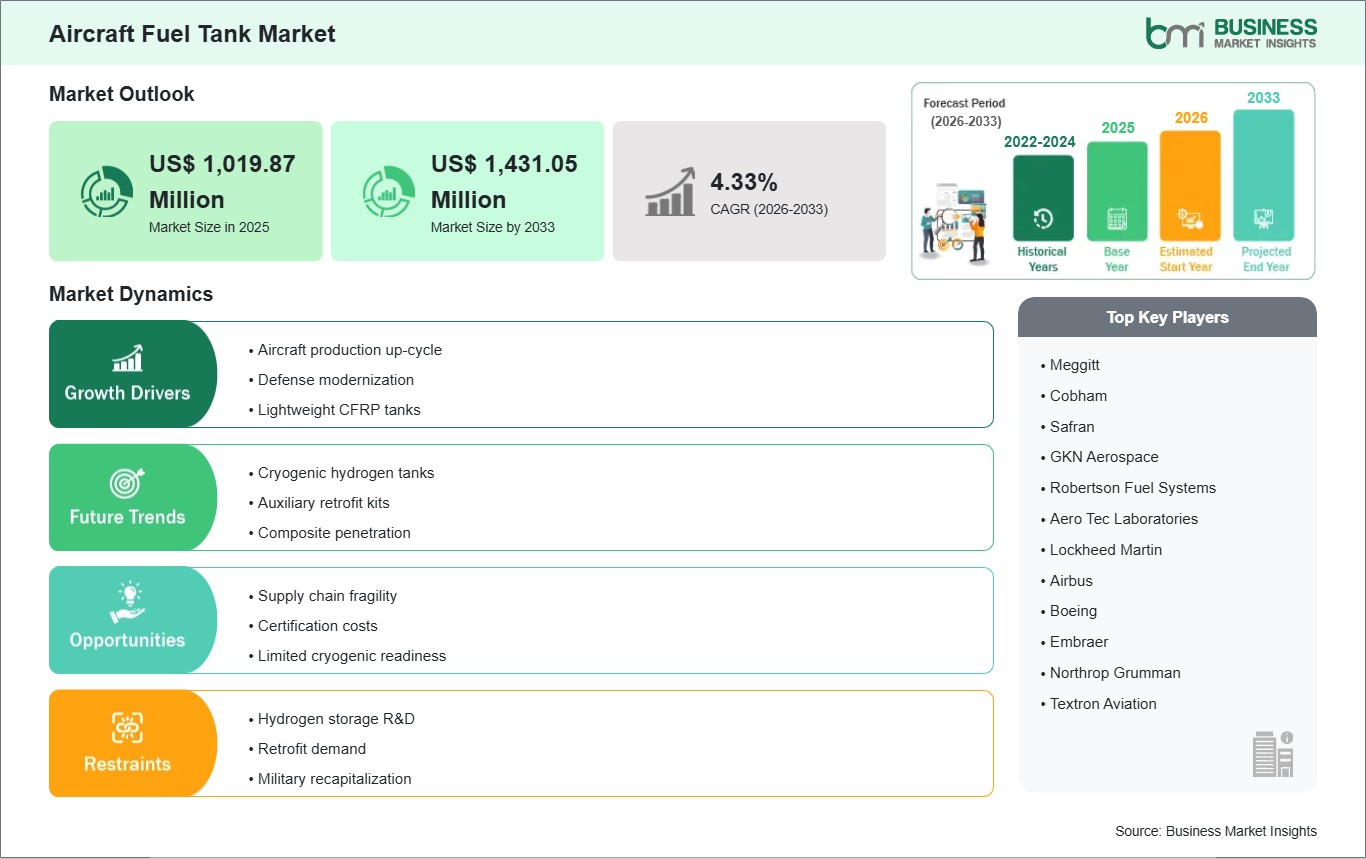
Despite these limitations, the Aircraft Fuel Tank market continues to benefit from ongoing advancements in aerospace materials and fuel storage technologies. Carbon composite tanks and advanced polymer-based solutions are attracting attention due to their lightweight characteristics and corrosion resistance. The growing focus on sustainable aviation, long-range aircraft development, and future hydrogen-powered aircraft concepts is creating opportunities for next-generation fuel tank designs. Military aviation programs are also supporting demand for durable and self-sealing fuel tanks capable of operating in demanding environments. Competitive activity remains focused on material innovation, safety enhancement, regulatory compliance, and long-term operational reliability.
Segment Analysis
Aircraft Fuel Tank Market Segmentation
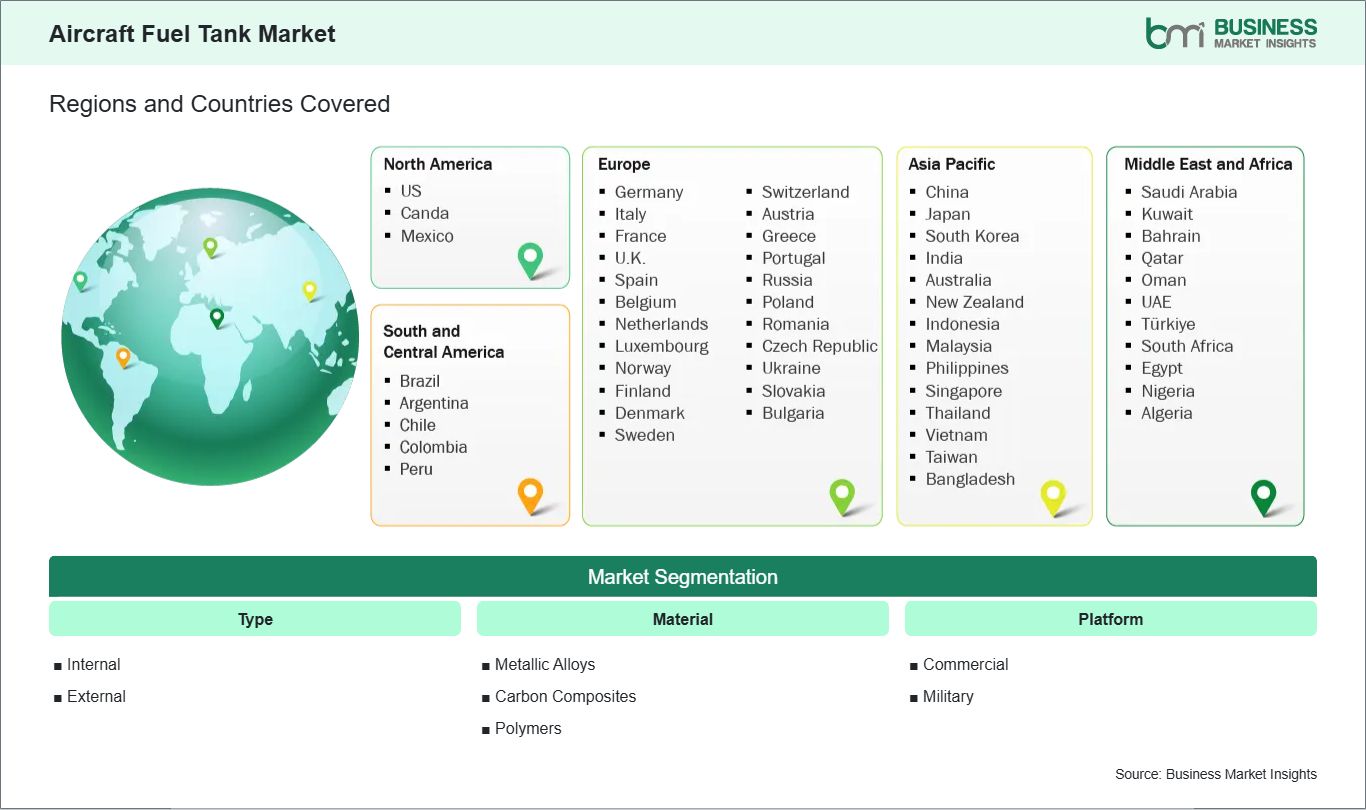
The Aircraft Fuel Tank market is segmented based on type, material, and platform, reflecting varying fuel storage requirements across aviation applications.
By Type
- Internal: Widely used due to better aerodynamic efficiency and integration within aircraft structures
- External: Primarily adopted in military aircraft to extend operational range and mission endurance
By Material
- Metallic Alloys: Commonly used for their structural strength, durability, and established manufacturing processes
- Carbon Composites: Gaining popularity due to lightweight properties and improved fuel efficiency benefits
- Polymers: Utilized in specialized applications requiring corrosion resistance and design flexibility
By Platform
- Commercial: Represents significant demand driven by aircraft deliveries and fleet expansion activities
- Military: Requires advanced fuel tank systems with enhanced durability, safety, and operational performance
Market Forces
Aircraft Fuel Tank Market Drivers and Opportunities
Growing Demand for Lightweight and Fuel-Efficient Aircraft
The aviation industry continues to focus on reducing aircraft weight and improving fuel efficiency, creating strong demand for advanced aircraft fuel tank technologies. Fuel tanks play an important role in aircraft performance because their weight, design, and storage capacity directly affect operational efficiency and flight range. Aircraft manufacturers are increasingly incorporating lightweight materials such as carbon composites and advanced alloys into fuel tank structures to improve fuel economy and reduce emissions.
Commercial airlines are seeking aircraft that offer lower operating costs and improved fuel utilization, encouraging manufacturers to optimize fuel storage systems. Military aviation programs are also emphasizing lightweight structures to improve mission flexibility and aircraft endurance. In addition, aviation authorities continue to enforce stringent safety requirements related to fuel containment, impact resistance, and fire protection. These regulations support the adoption of advanced fuel tank designs that meet both performance and safety expectations. As airlines modernize fleets and manufacturers develop next-generation aircraft platforms, demand for efficient and durable fuel tank systems is expected to remain stable.
Emerging Opportunities in Sustainable Aviation and Advanced Materials
The growing transition toward sustainable aviation is creating new opportunities for innovation within the Aircraft Fuel Tank market. Aerospace companies are actively researching alternative fuels, hydrogen-powered aircraft, and next-generation propulsion technologies that require specialized fuel storage systems. These developments are encouraging investment in advanced fuel tank materials capable of supporting new aviation energy requirements.
Carbon composite fuel tanks are attracting significant interest due to their lightweight characteristics and ability to improve overall aircraft efficiency. Research is also expanding into advanced polymers and hybrid materials that offer improved durability, corrosion resistance, and structural performance. Future hydrogen aviation programs may require highly specialized cryogenic fuel tanks designed for safe storage and transport of liquid hydrogen. In addition, military aircraft programs continue to explore self-sealing fuel tanks and advanced protective technologies that enhance survivability during operations. As aviation manufacturers focus on sustainability, efficiency, and long-range aircraft capabilities, advanced fuel tank technologies are expected to play an increasingly important role in future aircraft development strategies.
Size and Share Analysis
Aircraft Fuel Tank Market Size and Share Analysis
The Aircraft Fuel Tank Market is projected to grow from US$ 1,019.87 Million in 2025 to US$ 1,431.05 Million by 2033 , registering a CAGR of 4.33% from 2026 to 2033.
By type, internal fuel tanks account for a significant share due to their widespread integration within commercial and military aircraft structures. Their aerodynamic advantages and efficient use of aircraft space support continued adoption. External fuel tanks maintain demand in military aviation applications where extended range and mission flexibility are essential operational requirements.
By material, metallic alloys continue to dominate the market because of their proven durability, structural strength, and long-term use across aviation platforms. Carbon composites are witnessing growing adoption as manufacturers seek lightweight alternatives that improve fuel efficiency and reduce aircraft weight. Polymer-based materials are also finding applications in specialized fuel storage systems requiring corrosion resistance and design adaptability.
By platform, commercial aircraft represent a major share of the market due to ongoing fleet modernization, aircraft production programs, and increasing air travel demand. Military aircraft continue to generate steady demand for advanced fuel tank technologies, particularly for combat aircraft, transport aircraft, and long-range mission platforms requiring enhanced fuel storage performance.
Report Coverage
Aircraft Fuel Tank Market Report Coverage and Deliverables
The "Aircraft Fuel Tank Size and Forecast (2022-2033)" report provides a detailed analysis of the market covering below areas:
- Aircraft Fuel Tank Market size and forecast at global, regional, and country levels for all the key market segments covered under the scope
- Aircraft Fuel Tank Market trends, as well as market dynamics such as drivers, restraints, and key opportunities
- Aircraft Fuel Tank Market analysis covering key market trends, global and regional framework, major players, regulations, and recent market developments
- Industry landscape and competition analysis covering market concentration, heat map analysis, prominent players, and recent developments for the market
- Detailed company profiles, including SWOT analysis
Geographic Insights
Aircraft Fuel Tank Market Geographic Insights
The Aircraft Fuel Tank Market shows diverse regional adoption patterns influenced by aircraft manufacturing activity, defense modernization programs, aviation infrastructure development, and advancements in aerospace materials.
North America remains a key market due to its strong aerospace manufacturing ecosystem and extensive commercial and military aviation operations. The United States continues to support demand through aircraft production programs, defense procurement initiatives, and investments in next-generation aviation technologies. Aircraft manufacturers in the region are increasingly focusing on lightweight composite fuel tanks and advanced fuel storage solutions to improve efficiency and sustainability. Canada also contributes through aerospace engineering capabilities and component manufacturing activities. The region benefits from a mature maintenance, repair, and overhaul network that supports retrofit demand for upgraded fuel tank systems across aging aircraft fleets.
Europe maintains a strong position in the Aircraft Fuel Tank market due to its advanced aerospace sector and growing focus on sustainable aviation technologies. Countries such as France, Germany, and the United Kingdom continue investing in aircraft development programs and fuel efficiency improvements. The region is actively exploring hydrogen-powered aviation concepts, creating demand for innovative fuel storage technologies and advanced tank materials. Military modernization programs across several European nations are also supporting the adoption of durable and high-performance fuel tank systems. Strong regulatory frameworks, technological research initiatives, and established aerospace supply chains contribute to continued market development throughout the region.
Industry Activity
Recent Developments
The Aircraft Fuel Tank Market is analyzed using a mix of primary and secondary research sources, including corporate publications, industry associations, and verified databases. This approach ensures accurate tracking of innovation trends and strategic developments influencing the market.
- In March 2024, Gloyer-Taylor Laboratories announced successful validation testing of its composite liquid hydrogen dewar tank technology designed for aviation applications. The testing demonstrated strong thermal insulation performance and efficient liquid hydrogen storage capabilities. The development supports future hydrogen-powered aircraft programs and highlights growing innovation in lightweight aircraft fuel tank solutions.
- In June 2024, Airbus confirmed certification approval for the additional center fuel tank developed for Qantas' A350-1000 Project Sunrise aircraft. The redesigned fuel tank supports ultra-long-range operations and enables extended nonstop flight capabilities. The development highlights continued investment in advanced fuel storage technologies for next-generation commercial aviation programs.
Trust & Transparency
Research Methodology
The market analysis combines proprietary research with secondary data from government agencies, company disclosures, regulatory filings, industry databases and expert interviews. Market estimates are validated through data triangulation, cross-market benchmarking and analyst
review.
View Full Research Methodology
Key Sources Referred:
World Bank - Global Trade Indicators
World Trade Organization (WTO)
International Monetary Fund (IMF)
International Trade Administration (ITA)
Company Websites
Company Annual Reports
Company Investor Presentations