Market Summary
Executive Summary and Global Market Analysis
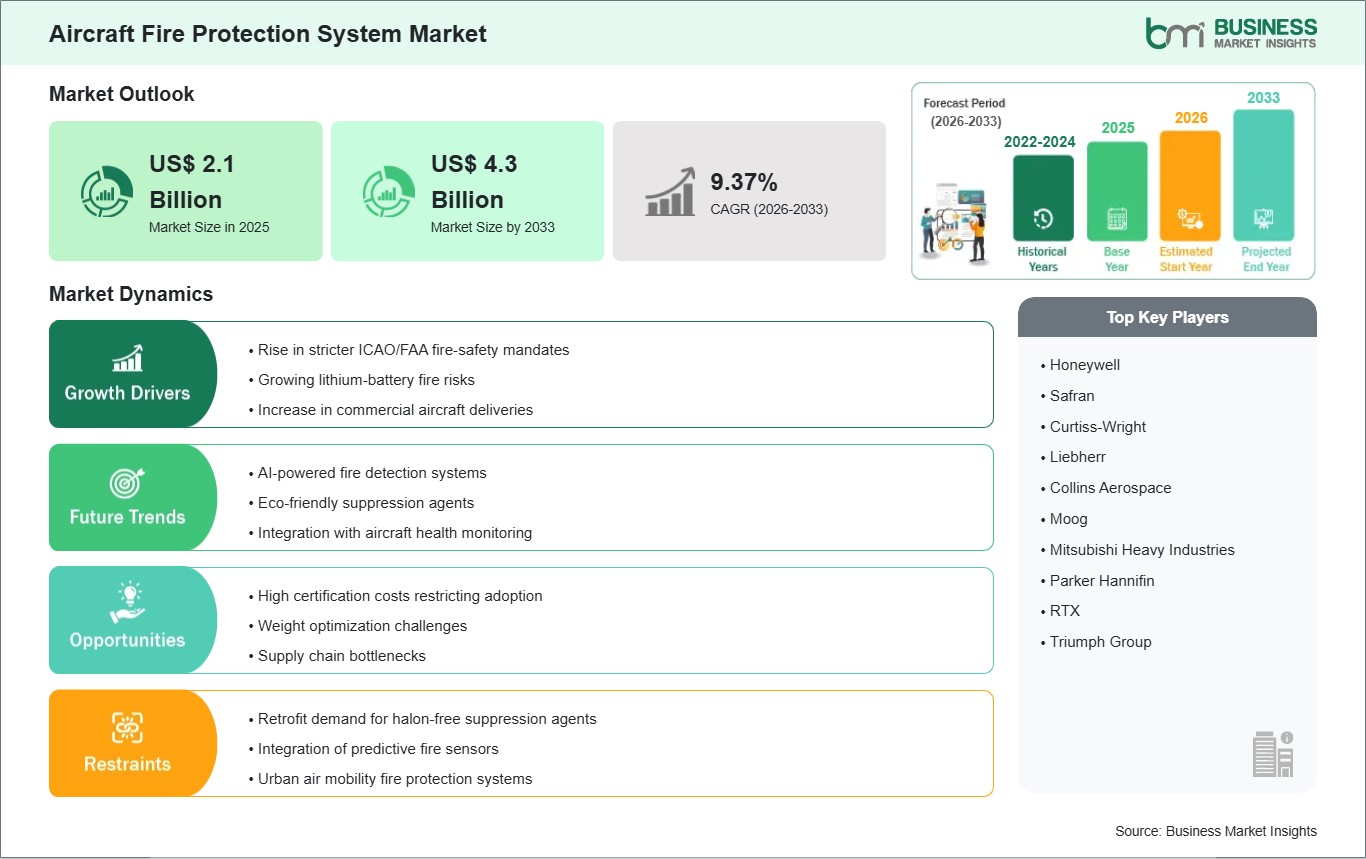
Aircraft fire protection systems are designed to detect, warn, and suppress fire-related incidents in aircraft cabins, cargo compartments, engines, lavatories, and auxiliary power units. These systems are essential for maintaining passenger safety, protecting aircraft equipment, and ensuring compliance with aviation safety regulations. The market includes smoke detectors, fire alarms, extinguishing systems, thermal sensors, and automated suppression technologies used across commercial, military, and general aviation aircraft.
The market faces several operational and technical challenges that may affect growth over the forecast period. Aircraft fire protection systems require regular maintenance, testing, and certification to comply with aviation safety standards, which increases operational costs for airlines and maintenance providers. Integrating advanced fire suppression technologies into older aircraft fleets can also be complex due to limited space, wiring compatibility, and aircraft downtime during retrofitting. In addition, manufacturers must continuously improve system reliability while reducing system weight to support fuel efficiency goals.
Despite these challenges, the Aircraft Fire Protection System market is expected to expand steadily due to increasing investments in aircraft modernization and smart safety technologies. The adoption of advanced sensor-based fire detection systems, lightweight suppression materials, and automated monitoring technologies is creating new growth opportunities. Demand for retrofit solutions is also rising as airlines upgrade aging fleets to meet updated aviation regulations. The expansion of urban air mobility platforms and next-generation aircraft programs is further supporting innovation in compact and energy-efficient fire protection systems designed for future aviation environments.
Segment Analysis
Aircraft Fire Protection System Market Segmentation
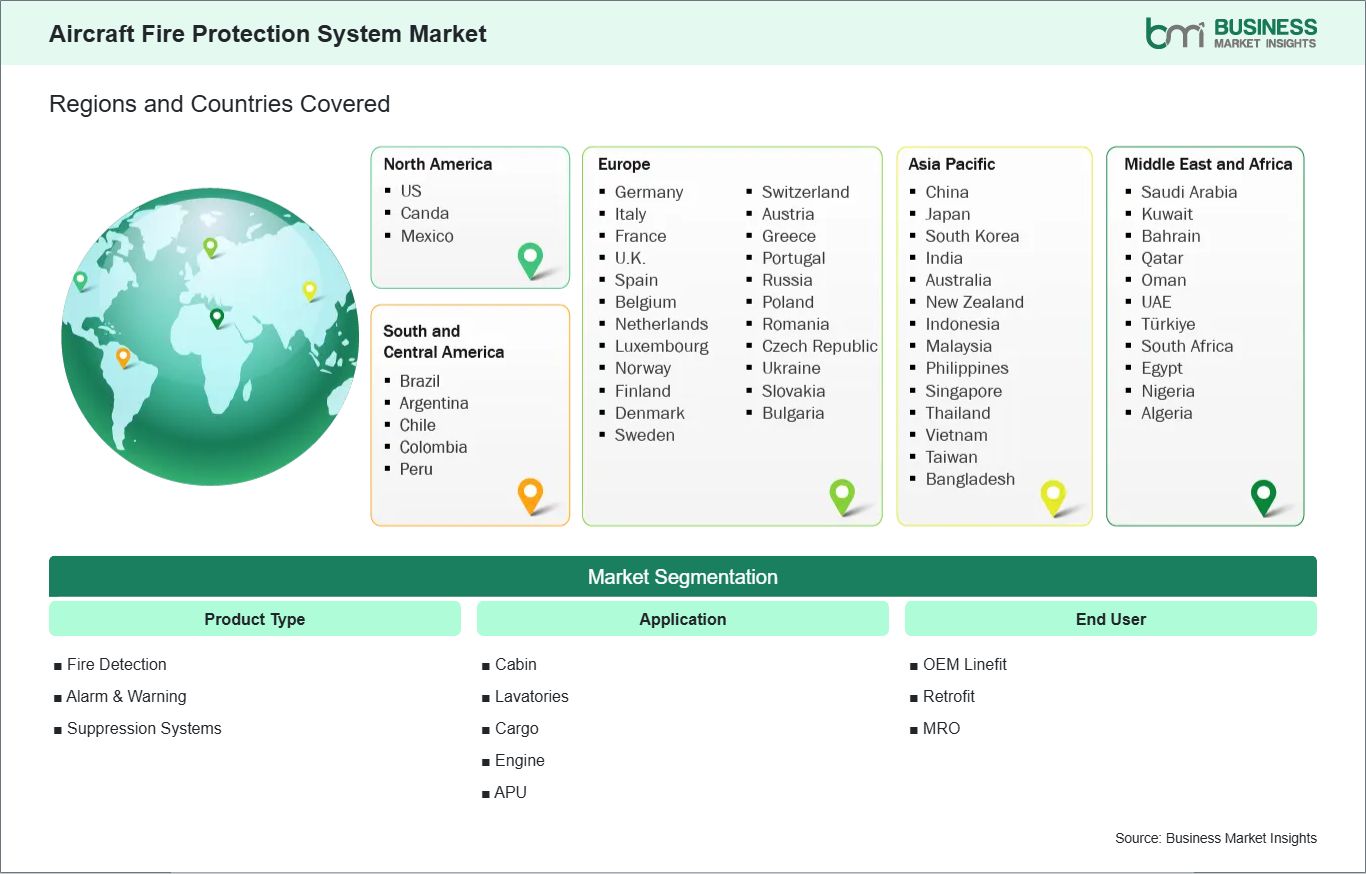
The Aircraft Fire Protection System market is segmented based on product type, application, and end-user. Growing emphasis on aircraft safety, operational reliability, and regulatory compliance continues to influence demand across these segments.
By Product Type
- Fire Detection: Widely used for identifying smoke, heat, and fire risks in aircraft compartments through advanced sensors and monitoring systems.
- Alarm & Warning: Supports rapid crew response by providing real-time alerts and cockpit notifications during fire-related incidents.
- Suppression Systems: Designed to control and extinguish fires using specialized extinguishing agents and automated activation technologies.
By Application
- Cabin: Focuses on passenger safety through smoke detection and emergency fire suppression systems.
- Lavatories: Includes automatic extinguishing systems and smoke monitoring devices to meet aviation safety standards.
- Cargo: Uses advanced fire containment and suppression technologies to manage hidden fire risks during cargo transport.
- Engine: Critical for detecting overheating and suppressing fire in high-temperature engine environments.
- APU: Protects auxiliary power units using thermal monitoring and automatic suppression mechanisms.
By End-User
- OEM Linefit: Involves factory-installed fire protection systems integrated during aircraft manufacturing.
- Retrofit: Supports modernization of older aircraft with upgraded fire detection and suppression technologies.
- MRO: Includes maintenance, inspection, replacement, and testing services for aircraft fire protection systems.
Market Forces
Aircraft Fire Protection System Market Drivers and Opportunities
Rising Aircraft Safety Regulations and Fleet Expansion
The increasing emphasis on aviation safety regulations is a major factor driving the growth of the Aircraft Fire Protection System market. Aviation authorities across multiple regions continue to enforce strict safety standards for fire detection, warning, and suppression systems in commercial and military aircraft. Airlines and aircraft operators are investing in advanced fire protection technologies to improve passenger safety, reduce operational risks, and maintain regulatory compliance. The expansion of global airline fleets and rising aircraft deliveries are also increasing demand for integrated fire protection systems during aircraft manufacturing.
Modern aircraft are equipped with an increase in the number of electrical systems, electronics, and high-density seating in the cabin, thus leading to an increased need for fire detection technologies. Manufacturers of airplanes are focusing on the manufacture of lightweight and efficient fire suppression systems that do not have any negative impact on the fuel consumption efficiency of the plane. Moreover, the increasing application of composite materials and advanced propulsion systems necessitates thermal management systems. These factors are encouraging continuous upgrades in fire detection sensors, automated extinguishing systems, and predictive safety monitoring technologies across the aerospace industry.
Smart Detection Technologies Creating Future Growth Potential
Emerging advancements in smart fire detection and monitoring technologies are creating significant opportunities for the Aircraft Fire Protection System market. The increasing reliance on artificial intelligence, predictive analytics, and connectivity of aircraft is facilitating improved detection of heat-related issues that can lead to serious problems in the future. Sensing technology and diagnostic capabilities are becoming increasingly vital with the emphasis of airlines on safety and preventative maintenance.
The growing adoption of electric and hybrid-electric aircraft platforms is also expected to increase demand for specialized fire protection systems capable of managing battery-related thermal events. Urban air mobility platforms and next-generation aircraft designs require compact, lightweight, and highly responsive fire safety technologies suitable for smaller aircraft architectures. In addition, retrofit opportunities remain strong owing to modernizing existing fleets to enhance their safety capabilities. Airlines are increasingly looking to use eco-friendly fire suppression agents along with other automation technologies to ensure sustainable results.
Size and Share Analysis
Aircraft Fire Protection System Market Size and Share Analysis
The Aircraft Fire Protection System Market is projected to grow from US$ 2.1 Billion in 2025 to US$ 4.3 Billion by 2033 , registering a CAGR of 9.37% from 2026 to 2033.
By product type, fire detection systems account for a significant share due to their critical role in identifying smoke, heat, and fire hazards across aircraft compartments. Alarm and warning systems continue to gain importance with increasing adoption of automated cockpit alert technologies, while suppression systems are witnessing stable demand owing to strict aviation safety regulations and the growing need for reliable onboard fire control mechanisms.
By application, engine applications dominate the market because of the high-temperature operating environment and the importance of preventing engine-related fire incidents. Cargo compartment applications are also expanding steadily with the growth of global air freight operations and stricter cargo safety standards. Cabin and lavatory fire protection systems continue to see strong demand as airlines focus on passenger safety, operational compliance, and enhanced onboard monitoring technologies across commercial and military aircraft fleets.
Report Coverage
Aircraft Fire Protection System Market Report Coverage and Deliverables
The "Aircraft Fire Protection System Size and Forecast (2022-2033)" report provides a detailed analysis of the market covering below areas:
- Aircraft Fire Protection System Market size and forecast at global, regional, and country levels for all the key market segments covered under the scope
- Aircraft Fire Protection System Market trends, as well as market dynamics such as drivers, restraints, and key opportunities
- Aircraft Fire Protection System Market analysis covering key market trends, global and regional framework, major players, regulations, and recent market developments
- Industry landscape and competition analysis covering market concentration, heat map analysis, prominent players, and recent developments for the market
- Detailed company profiles, including SWOT analysis
Geographic Insights
Aircraft Fire Protection System Market Geographic Insights
The Aircraft Fire Protection System Market shows diverse regional adoption patterns influenced by aviation safety regulations, aircraft manufacturing activities, defense modernization programs, and fleet maintenance requirements.
North America remains a mature market due to the strong presence of aircraft manufacturers, advanced aerospace infrastructure, and high investments in aviation safety technologies. The United States continues to lead regional demand with extensive commercial aviation operations, military aircraft programs, and growing retrofit activities for aging aircraft fleets. Airlines and MRO providers across the region are increasingly adopting advanced fire detection and suppression technologies to improve operational safety and meet regulatory standards. Canada also contributes to market growth through investments in aerospace engineering, regional aircraft development, and aviation maintenance facilities focused on modern aircraft safety systems.
Asia Pacific is experiencing steady growth driven by rising air passenger traffic, expanding airline fleets, and increasing aircraft procurement activities. Countries such as China and India are investing heavily in airport infrastructure, domestic aviation expansion, and military modernization programs, supporting demand for aircraft fire protection systems. Japan and South Korea are focusing on advanced aerospace technologies and aircraft component manufacturing, contributing to regional market development. Growing MRO activities and the increasing adoption of modern aircraft platforms across Southeast Asia are also supporting the installation of upgraded fire detection and suppression systems in both commercial and defense aviation sectors.
Industry Activity
Recent Developments
The Aircraft Fire Protection System Market is analyzed using a mix of primary and secondary research sources, including corporate publications, industry associations, and verified databases. This approach ensures accurate tracking of innovation trends and strategic developments influencing the market.
- In April 2024, RTX announced advancements in aircraft safety and sensing technologies through expanded aerospace systems integration initiatives supporting next-generation commercial and defense aircraft platforms. The developments included enhanced monitoring and safety technologies designed to improve aircraft operational reliability and onboard safety management systems.
- In July 2023, Parker Hannifin expanded its aerospace safety and fluid systems portfolio with continued investments in aircraft system technologies supporting fire detection, suppression, and thermal management applications. The initiative focused on improving aircraft safety performance and operational efficiency across commercial and military aviation sectors.
Trust & Transparency
Research Methodology
The market analysis combines proprietary research with secondary data from government agencies, company disclosures, regulatory filings, industry databases and expert interviews. Market estimates are validated through data triangulation, cross-market benchmarking and analyst
review.
View Full Research Methodology
Key Sources Referred:
World Bank - Global Trade Indicators
World Trade Organization (WTO)
International Monetary Fund (IMF)
International Trade Administration (ITA)
Company Websites
Company Annual Reports
Company Investor Presentations