
Wind Tower Market Outlook: Size, Share, Trends, Growth Analysis, Competitive Landscape & Forecast, 2026-2033

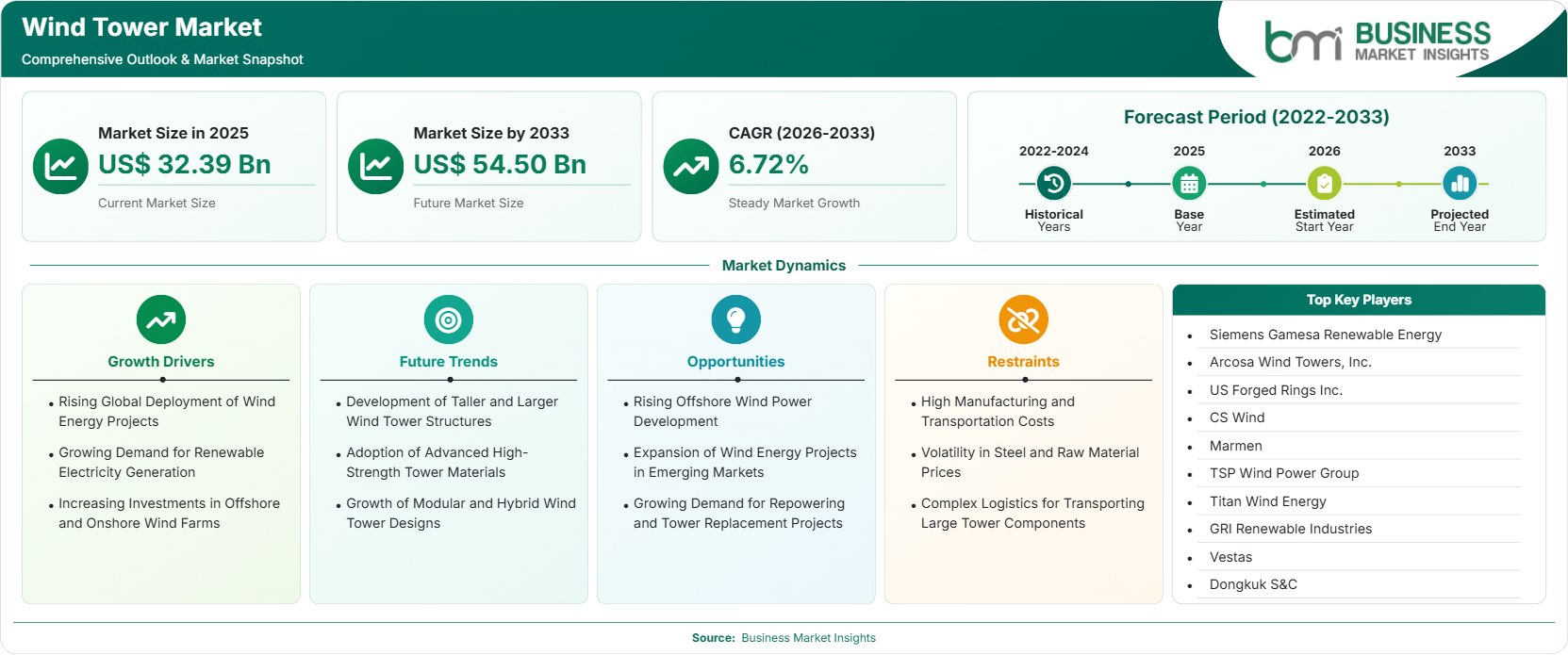
The Wind Tower Market size was valued at US$ 32.39 Billion in 2025 and is projected to reach US$ 54.50 Billion by 2033, growing at a CAGR of 6.72% during 2026–2033. Rising investments in renewable energy projects, expanding wind power capacity installations, and increasing government support for clean energy infrastructure are supporting market growth globally. Growing demand for high-capacity turbines and advancements in wind energy technology are further contributing to market expansion across both developed and emerging economies.

Report Coverage
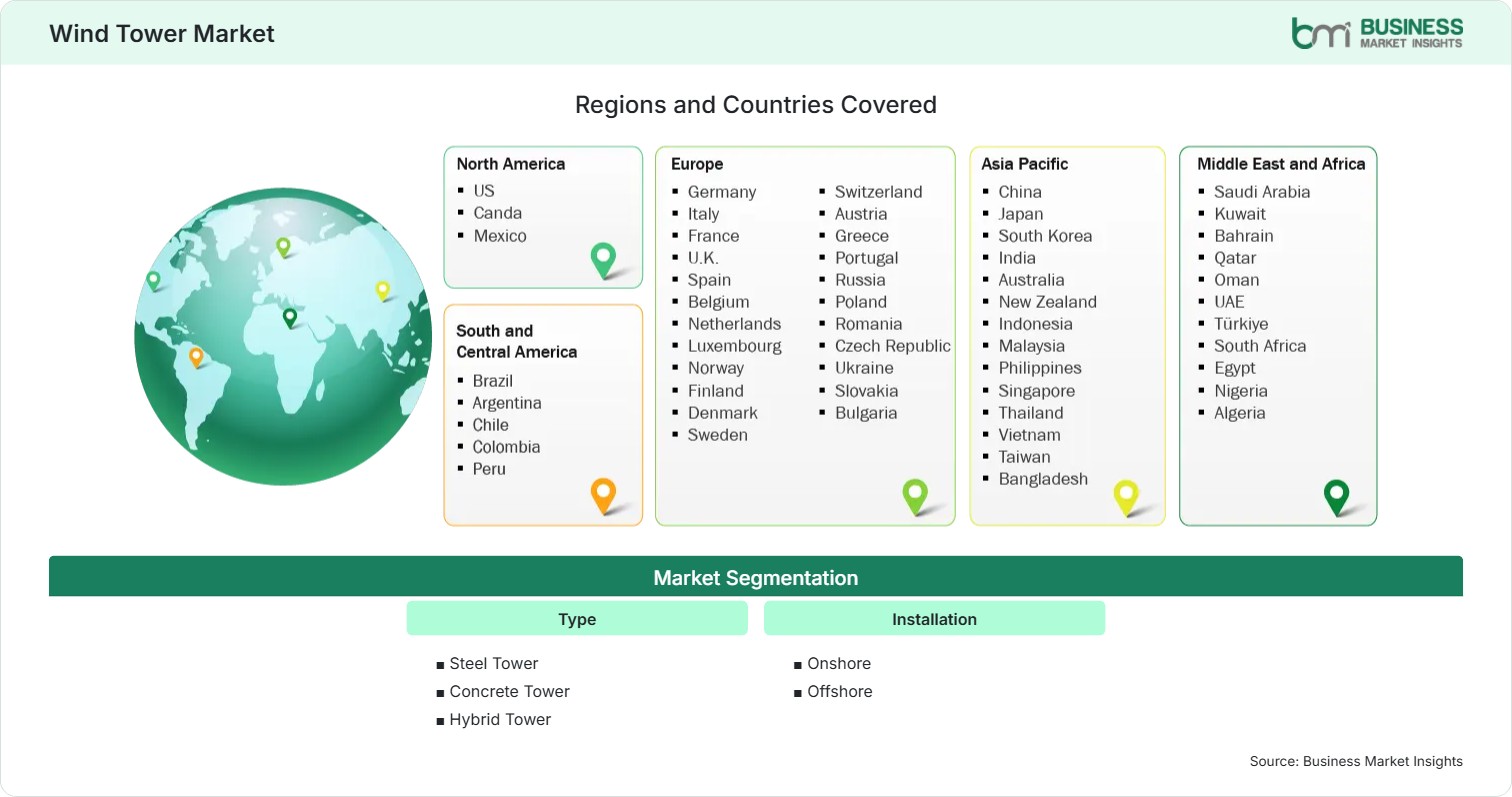
  • Type: Steel Tower, Concrete Tower, Hybrid Tower
  • Installation: Onshore, Offshore
US$ 32.39 Bn Market size in 2025
US$ 54.50 Bn Market Size by 2033
6.72% CAGR, 2026 - 2033
2026-2033 Forecast Period

01 AI Overview

Wind Tower Market Summary

  • North America Region: North America holds a market share of 28%–31% in 2025, growing with a CAGR of 6.3%–7.0% during 2026–2033. Strong renewable energy investments, expanding onshore wind projects, and favorable regulatory support continue supporting regional growth. The U.S. market is expected to register a CAGR of 6.5%–7.2%.
  • Fastest Growing Region: Asia Pacific accounts for 42%–45% share in 2025 and is projected to grow at a CAGR of 7.1%–7.8% through 2033. Rapid wind energy expansion, increasing electricity demand, and large-scale renewable energy projects continue driving regional growth.
  • Leading Segment: Steel Tower represents 68%–71% share in 2025 and is expected to grow at a CAGR of 6.8%–7.5% through 2033. Strong structural performance, manufacturing efficiency, and widespread usage continue supporting segment dominance.
  • High Growth Segment: Offshore accounts for 22%–25% share in 2025 and is forecast to grow at a CAGR of 7.5%–8.2% during 2026–2033. Increasing offshore wind investments and larger turbine installations continue accelerating segment growth.
  • Key Market Opportunity: Expansion of offshore wind projects, development of taller wind towers, increasing renewable energy targets, and adoption of advanced tower technologies are creating substantial growth opportunities.
  • Major Market Players: Siemens Gamesa Renewable Energy, S.A.U., Arcosa Wind Towers, Inc., US Forged Rings Inc., CS Wind, Marmen, Titan Wind Energy, TSP Wind Power Group, GRI Renewable Industries, Vestas, and Dongkuk S&C.
02 Strategic Insights

Wind Tower Market: Strategic Insights

Wind Tower Market Strategic Framework
FREE PDF
Request your free sample
Request free sample
03 Stakeholder View

Key Takeaways

  • Wind towers remain essential structural components supporting modern wind energy infrastructure and turbine deployment.
  • Steel towers continue to dominate due to established manufacturing capabilities, durability, and widespread project adoption.
  • Offshore installations represent the fastest-growing segment as countries accelerate large-scale offshore wind development.
  • Rising wind power capacity additions continue to strengthen demand for advanced and reliable tower systems.
  • Taller tower designs enable turbines to access stronger and more consistent winds, improving energy generation efficiency.
  • North America remains a leading market, supported by renewable energy investments and expanding wind power projects.
  • Asia Pacific is expected to record the fastest growth, driven by large-scale wind energy deployment and infrastructure development.
  • Offshore expansion, taller towers, innovative materials, and advanced manufacturing technologies are creating significant opportunities for market participants.
04 Geographic Outlook

Wind Tower Market Regional Highlights

North America Wind Tower Market

North America accounts for 28%–31% Wind Tower Market share in 2025 and is projected to grow at a CAGR of 6.3%–7.0% through 2033. The region benefits from strong renewable energy investments, expanding utility-scale wind projects, and supportive clean energy policies.

  • Wind farm developers continue investing in new installations to strengthen renewable electricity generation capacity.
  • Utility companies are expanding renewable energy portfolios through large-scale wind projects.
  • Demand for taller tower structures is increasing as operators seek improved energy output.
  • Manufacturing capabilities across the region continue supporting domestic project development.
  • Grid modernization initiatives are encouraging continued investment in renewable energy infrastructure.
  • Long-term energy transition strategies remain supportive of wind power expansion.

US Wind Tower Market

The United States contributes approximately 89%–93% of North American revenue and is expected to register a CAGR of 6.5%–7.2% through 2033. The country remains the largest wind tower market in the region due to its extensive installed wind power capacity and ongoing renewable energy investments.

  • Utility-scale wind projects continue creating consistent demand for tower manufacturing and installation activities.
  • Renewable energy developers are investing in advanced turbine technologies and larger project capacities.
  • Expansion of transmission infrastructure is supporting growth in wind energy deployment.
  • Domestic manufacturing initiatives continue strengthening supply chain capabilities.
  • Energy companies are seeking solutions that improve operational efficiency and electricity generation.
  • Renewable energy targets continue supporting long-term industry development.

Europe Wind Tower Market

Europe represents 21%–24% of global revenue in 2025 and is anticipated to expand at a CAGR of 6.6%–7.3% through 2033. Growing offshore wind investments and ambitious renewable energy targets continue supporting regional growth.

  • Germany continues leading regional demand through significant wind energy development activities.
  • Poland is among the fastest-growing markets and is estimated to register a CAGR of 7.5%–8.2% during the forecast period.
  • Offshore wind projects continue generating substantial demand for advanced tower solutions.
  • Renewable energy transition goals remain supportive of long-term market expansion.
  • Wind farm operators are increasingly investing in larger and more efficient turbine systems.
  • Government policies continue encouraging adoption of renewable energy technologies.

Asia Pacific Wind Tower Market

Asia Pacific accounts for 42%–45% of global revenue in 2025 and is expected to achieve the fastest CAGR of 7.1%–7.8% through 2033. Rapid renewable energy deployment, growing electricity demand, and expanding industrialization continue supporting strong regional growth.

  • China remains the largest regional market due to its extensive wind power installation activities.
  • India is projected to achieve approximately 8.0%–8.7% CAGR, supported by growing renewable energy investments.
  • Wind project developers continue expanding capacity to meet rising electricity requirements.
  • Government clean energy initiatives remain favorable for market growth.
  • Increasing adoption of high-capacity turbines is supporting demand for advanced tower structures.
  • Domestic manufacturing capabilities continue strengthening regional supply chains.

Rest of World Wind Tower Market

Rest of World accounts for 8%–11% of global revenue in 2025 and is projected to expand at a CAGR of 5.8%–6.5% through 2033. Growing renewable energy investments and increasing interest in sustainable electricity generation continue supporting market development across Latin America, the Middle East, and Africa.

  • Brazil continues generating demand through expanding utility-scale wind energy projects and renewable power investments.
  • The UAE is witnessing growing interest in renewable energy diversification and clean power initiatives.
  • Saudi Arabia is expected to maintain strong market growth through 2033, supported by renewable energy development programs.
  • Rising electricity demand is encouraging investments in alternative and sustainable energy sources.
  • Wind energy projects are increasingly supporting national clean energy strategies and decarbonization objectives.
  • Infrastructure development initiatives continue creating favorable conditions for long-term wind energy market expansion.
Global Market Geography
FREE PDF
Request your free sample
Request free sample
05 Segment Analysis

Wind Tower Market Segmentation

Type

The type segment represents the primary tower structures utilized in modern wind energy installations. This segment accounts for approximately 68%–71% share in 2025 and is projected to grow at a CAGR of 6.8%–7.5% through 2033. The expanding Wind Tower Market Scope is supported by increasing renewable energy investments, growing wind power capacity additions, and rising demand for efficient turbine support structures. Tower manufacturers continue focusing on durability, height optimization, and cost-effective production to address evolving project requirements.

  • Steel Tower: Steel towers dominate the market due to their high strength, ease of manufacturing, transportation flexibility, and widespread suitability for both onshore and offshore wind projects.
  • Concrete Tower: Concrete towers are increasingly utilized for taller wind turbine installations where enhanced structural stability and local material sourcing offer economic advantages.
  • Hybrid Tower: Hybrid towers continue gaining attention because they combine steel and concrete benefits, enabling greater heights and improved performance for large-scale wind farms.

Installation

The installation segment highlights the primary deployment environments for wind towers. This segment accounts for approximately 75%–78% share in 2025 and is expected to register a CAGR of 6.9%–7.6% through 2033. Current Wind Tower Market Trends indicate strong demand for onshore installations while offshore developments continue creating long-term growth opportunities for advanced tower solutions.

  • Onshore: Onshore installations dominate the market due to lower project costs, established infrastructure, easier maintenance access, and growing renewable energy deployment across major economies.
  • Offshore: Offshore installations are witnessing rapid growth as governments and energy developers invest in large-scale offshore wind farms capable of generating higher and more consistent energy output.
06 Market Forces

Wind Tower Market Dynamics

Key Market Drivers

Rising Global Deployment of Wind Energy Projects

The continued expansion of wind energy projects worldwide remains a major driver for the wind tower market. Governments, utilities, and private developers are increasing investments in renewable energy infrastructure to support clean electricity generation and reduce dependence on fossil fuels. Wind power has become an important component of national energy transition strategies across many countries. As new wind farms are developed, demand for reliable tower structures continues increasing. Ongoing capacity additions across both mature and emerging renewable energy markets are expected to provide consistent support for wind tower demand throughout the forecast period.

Growing Demand for Renewable Electricity Generation

Demand for renewable electricity continues increasing as countries seek sustainable energy sources capable of supporting long-term environmental and energy security goals. Wind energy is widely recognized as a scalable and commercially viable solution for clean power generation. Utility providers and independent power producers are expanding renewable energy portfolios to meet rising electricity requirements. Wind towers play a critical role in supporting efficient turbine operation and maximizing energy capture. As renewable electricity generation becomes a central element of global energy strategies, demand for wind tower infrastructure is expected to remain strong.

Increasing Investments in Offshore and Onshore Wind Farms

Investments in both offshore and onshore wind projects continue supporting expansion of the wind tower industry. Developers are increasingly constructing large-scale projects to meet growing renewable energy targets and improve power generation capacity. Offshore projects are creating demand for specialized tower designs capable of operating in challenging marine environments, while onshore developments continue supporting volume demand across major markets. Financial incentives, long-term power purchase agreements, and supportive regulatory frameworks are encouraging project development. Continued investment in new wind farms remains an important contributor to market growth.

Key Market Opportunities

Rising Offshore Wind Power Development

Offshore wind power development represents one of the most attractive opportunities within the market. Many countries are expanding offshore renewable energy programs to take advantage of stronger and more consistent wind resources. Offshore projects typically require larger turbines and advanced tower structures capable of supporting greater energy generation capacities. As developers pursue utility-scale offshore installations, demand for specialized tower manufacturing and engineering expertise is expected to increase. Growing investments in offshore renewable infrastructure continue creating long-term opportunities for wind tower suppliers and manufacturers.

Expansion of Wind Energy Projects in Emerging Markets

Emerging markets are becoming important growth areas for wind energy development and related infrastructure investments. Rising electricity demand, urbanization, and government support for renewable energy are encouraging deployment of new wind projects across several developing economies. These markets often offer substantial untapped wind resources and significant potential for future capacity additions. Manufacturers are increasingly focusing on regional partnerships and localized production strategies to support project development. Expansion of wind energy infrastructure in emerging economies is expected to generate significant opportunities for the wind tower industry.

Growing Demand for Repowering and Tower Replacement Projects

Many existing wind farms are approaching stages where repowering and tower replacement activities become economically attractive. Developers are increasingly upgrading older installations with more efficient turbine technologies capable of improving electricity generation and operational performance. Repowering projects often require stronger and taller tower structures designed to support modern equipment. This trend is creating additional demand beyond new project construction. Long-term Wind Tower Market Forecast projections remain favorable as aging wind infrastructure continues requiring modernization and performance upgrades.

Market Restraints and Challenges

High Manufacturing and Transportation Costs

Factor: Wind towers are large-scale structures requiring substantial quantities of steel, concrete, fabrication resources, and specialized transportation equipment. Manufacturing and logistics expenses can represent a significant portion of overall project costs.

Impact: High production and transportation costs may affect project economics, particularly in regions with limited manufacturing infrastructure or challenging logistics conditions. Developers and manufacturers must continually improve operational efficiency to maintain competitiveness.

Volatility in Steel and Raw Material Prices

Factor: Wind tower manufacturing depends heavily on steel and other raw materials whose prices can fluctuate due to supply chain conditions, commodity market changes, and geopolitical developments.

Impact: Raw material price volatility can influence manufacturing costs, project budgets, and profit margins. Unpredictable input costs may create planning challenges for manufacturers and developers involved in long-term wind energy projects.

07 Company Analysis

Competitive Landscape

The Wind Tower Market Analysis is characterized by competition among wind turbine manufacturers, tower fabricators, renewable energy equipment suppliers, and structural engineering companies. Market participants are focusing on advanced tower designs, lightweight materials, improved manufacturing efficiency, and solutions capable of supporting larger wind turbines. Growing investments in renewable energy projects, increasing deployment of offshore wind farms, and rising demand for higher-capacity turbines continue shaping competitive strategies across the industry. Companies are investing in production capacity expansion, tower engineering innovation, logistics optimization, and strategic partnerships with wind farm developers to strengthen market positions. The transition toward taller towers and next-generation wind energy infrastructure is further encouraging technology development and manufacturing advancements across the market.

Company Name

Overview

Products and Services Relevant to this Market

Siemens Gamesa Renewable Energy, S.A.U.

Renewable energy company specializing in wind power technologies and infrastructure solutions.

Wind tower solutions, wind turbine systems, offshore wind technologies, and renewable energy infrastructure services.

Arcosa Wind Towers, Inc.

Manufacturer focused on utility-scale wind tower production.

Steel wind towers, tower fabrication services, structural components, and wind energy infrastructure products.

US Forged Rings Inc.

Industrial manufacturer supporting renewable energy and heavy engineering applications.

Forged components, structural wind tower parts, industrial metal products, and engineering solutions.

CS Wind

Global wind tower manufacturing company serving onshore and offshore wind projects.

Wind towers, tower sections, structural components, and wind energy manufacturing services.

Marmen

Manufacturer of large-scale components for renewable energy and industrial applications.

Wind tower fabrication, structural assemblies, precision manufacturing, and energy infrastructure components.

Modvion

Renewable energy technology company specializing in innovative tower solutions.

Modular wind towers, engineered structural solutions, sustainable tower technologies, and wind infrastructure systems.

CNBM

Industrial manufacturing group serving energy and infrastructure sectors.

Wind tower products, construction materials, renewable energy infrastructure, and industrial engineering solutions.

GRI Renewable Industries

Manufacturer focused on wind energy tower production and renewable infrastructure.

Steel wind towers, offshore tower solutions, structural wind components, and renewable energy manufacturing services.

Vestas

Global wind energy company providing turbine and infrastructure solutions.

Wind tower systems, turbine technologies, renewable energy solutions, and wind project support services.

PVUNITE Ltd.

Engineering and renewable energy solutions provider.

Wind tower structures, renewable energy equipment, engineering services, and infrastructure development solutions.

10 Trust & Transparency

Research Methodology

The market analysis combines proprietary research with secondary data from government agencies, company disclosures, regulatory filings, industry databases and expert interviews. Market estimates are validated through data triangulation, cross-market benchmarking and analyst review.

View Full Research Methodology

11 Questions Answered

Frequently Asked Questions

How are taller wind towers influencing the wind energy industry?

Taller wind towers enable turbines to access stronger and more consistent wind speeds, improving electricity generation efficiency and project performance. Developers are increasingly adopting taller tower designs to maximize energy output and enhance project economics.

What does this Wind Tower Market Report cover?

This report covers type analysis, installation assessment, regional trends, competitive landscape analysis, market drivers, opportunities, restraints, challenges, and future growth prospects through 2033.

Why is Offshore the fastest-growing installation segment?

Offshore wind installations are growing rapidly because they benefit from stronger wind resources, higher energy generation potential, and increasing government support for large-scale renewable energy projects. Investments in offshore wind farms continue creating demand for advanced tower structures.

Which type segment dominates the market?

Steel Tower dominates the market due to its structural strength, cost-effectiveness, manufacturing scalability, and suitability for a wide range of wind energy applications. Steel towers continue to be the preferred choice for most utility-scale wind projects worldwide.

What is driving growth in the market?

Rising global deployment of wind energy projects, growing demand for renewable electricity generation, and increasing investments in offshore and onshore wind farms are major factors driving market growth. Expanding clean energy targets and growing wind power capacity additions are also supporting demand for wind tower infrastructure.

Access the Full Wind Tower Market Report

Get segment-level forecasts, regional estimates, competitive benchmarking, company profiles and downloadable Excel datasets.

Access the full Wind Tower Market Report
350 pages PDF & Excel | 2026-08-20