Market Summary
Executive Summary and Global Market Analysis
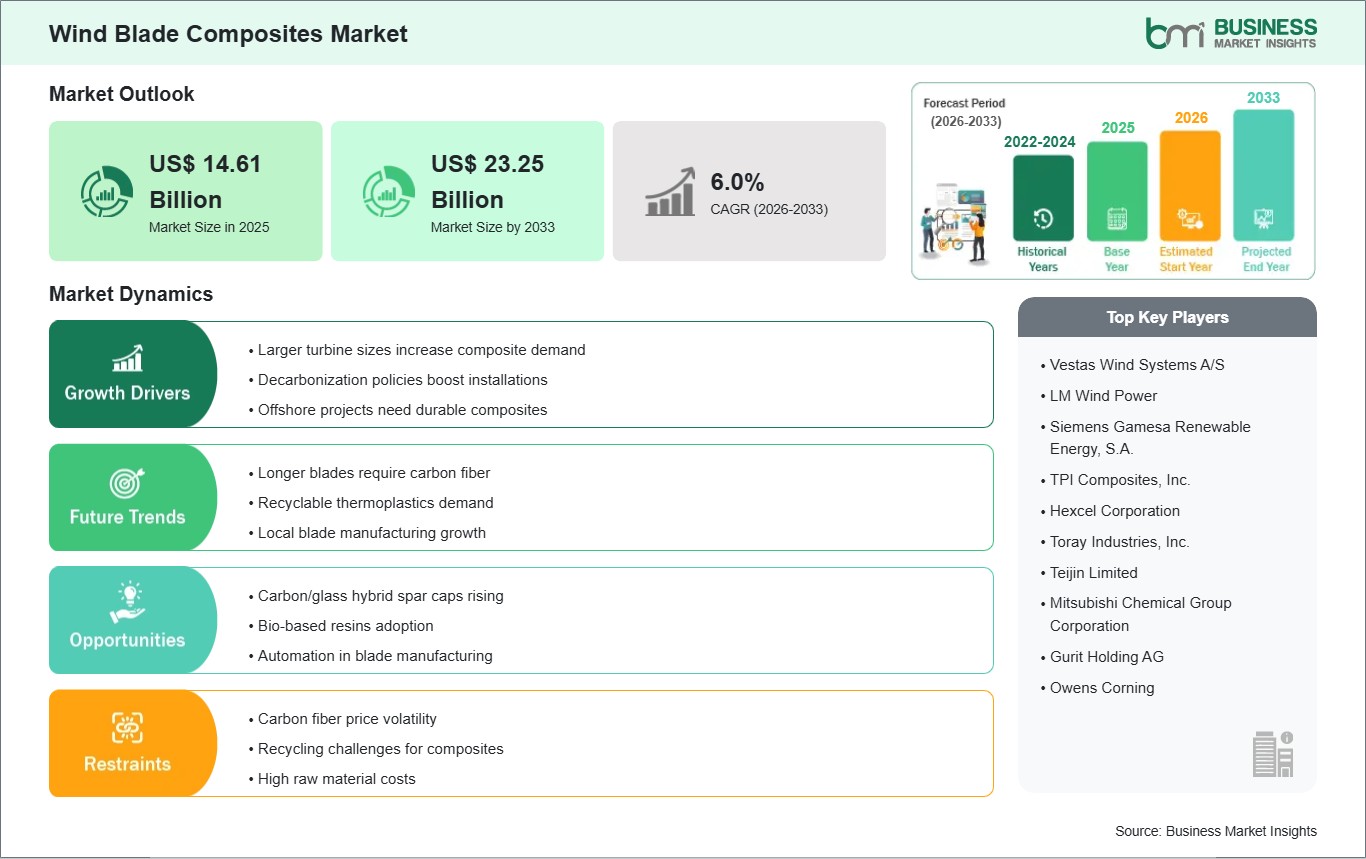
Composite materials used in wind energy systems combine reinforcing fibers with resin matrices to make lightweight, durable, and structurally efficient parts. In turbine manufacturing, these materials are crucial for creating blades that can handle continuous mechanical stress, environmental exposure, and long operational lifetimes. Their performance helps manufacturers balance strength needs with weight reduction goals. The industry is benefitting from the ongoing growth of wind energy installations and the drive for higher energy generation efficiency. Turbine manufacturers are increasingly looking for composite solutions that allow for longer blade designs without sacrificing structural strength. As turbine capacities grow, the demands on material performance increase, leading to a wider use of engineered composite systems. Market segmentation shows different material preferences in blade manufacturing.
Glass fiber remains popular due to its processing characteristics and cost-effectiveness. Carbon fiber is gaining attention for applications that need higher stiffness and less weight, while natural and hybrid fiber options are being considered in sustainability-focused programs. The choice of resin also affects manufacturing efficiency and long-term performance. Material innovation is continually changing this sector's technology.
Advances in thermoplastic composites, new epoxy formulations, and recyclable composite structures are supporting the next generation of blade designs. Manufacturers are also seeking solutions that enhance fatigue resistance, simplify production, and tackle end-of-life management issues related to large composite structures. Competition is focused on improving materials, scaling production, and meeting sustainability goals. Industry players are concentrating on fiber-resin compatibility, production efficiency, and improving lifecycle performance. Collaboration across the wind energy value chain is driving the development of composite technologies that meet the evolving needs of turbine design and the broader goals of renewable energy deployment.
Segment Analysis
Wind Blade Composites Market Segmentation
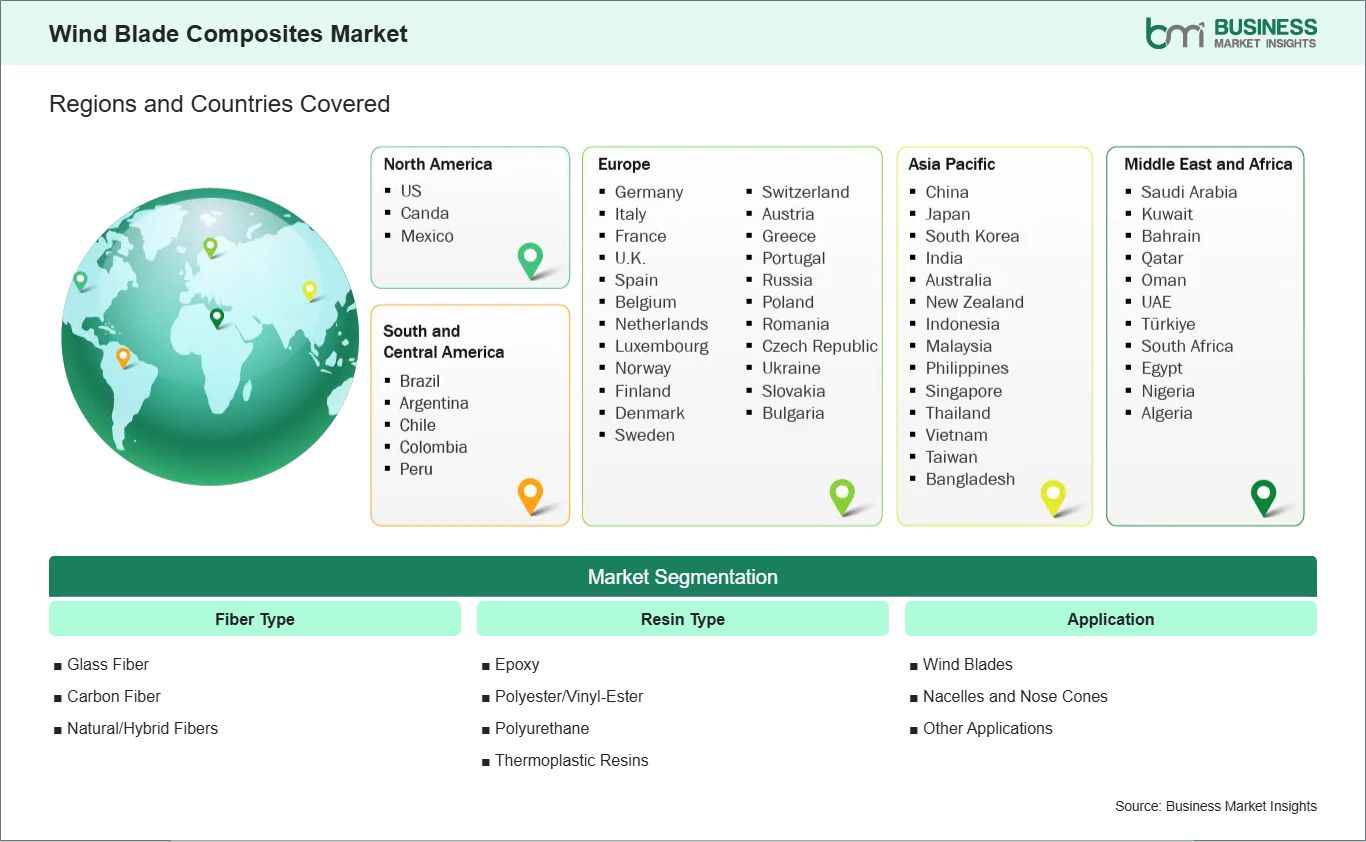
The market is segmented according to fiber composition, resin chemistry, and end-use application requirements.
By Fiber Type
- Glass Fiber - maintains wide use in standard blade manufacturing programs
- Carbon Fiber - provides superior stiffness for extended blade designs
- Natural/Hybrid Fibers - supports sustainable material development projects
By Resin Type
- Epoxy - offers strong adhesion and long-lasting fatigue performance
- Polyester/Vinyl-Ester - allows efficient processing for high-volume manufacturing
- Polyurethane - improves production flexibility and structural consistency
- Thermoplastic Resins - enables recyclability and improved processing options
By Application
- Wind Blades - represents as the main area of use for composite materials
- Nacelles and Nose Cones - needs lightweight structures that withstand environmental conditions
- Other Applications - meets the manufacturing needs of additional turbine components
Market Forces
Wind Blade Composites Market Drivers and Opportunities
Expansion of Utility-Scale Wind Energy Installations
The ongoing development of onshore and offshore wind projects has increased the demand for composite materials. Larger turbines need blades that can maintain their performance under higher loads and longer operational periods. This need has pushed manufacturers to use specialized fiber and resin systems that improve durability while enabling efficient energy generation. Choosing materials affects turbine efficiency, transportation issues, and overall reliability. As project developers aim for higher energy output from each installation, blade manufacturers are focusing more on composites that create lightweight but strong structures. This focus on engineering performance highlights the importance of composite technologies throughout the wind energy supply chain.
Development of Recyclable and Sustainable Composite Solutions
The industry's shift toward circular manufacturing practices is creating chances for new composite technologies. Manufacturers are looking into recyclable resin systems, bio-based materials, and different fiber designs that lessen environmental impacts while keeping mechanical performance strong. These innovations are being considered for future blade designs and manufacturing processes.
Long-term opportunities go beyond just changing materials. They involve complete strategies for optimizing the entire lifecycle. Improvements in recyclable composites and reusable material systems may support broader sustainability goals in the renewable energy sector. Increasing the use of these solutions could enhance resource efficiency, boost environmental standings, and change future material purchasing strategies within the industry.
Size and Share Analysis
Wind Blade Composites Market Size and Share Analysis
The wind blade composites market size is expected to reach US$ 23.25 billion by 2033, up from US$ 14.61 billion in 2025. The market is projected to have a CAGR of 6.0% from 2026 to 2033.
This growth shows the ongoing use of composite materials in modern turbine manufacturing. The industry is also focusing on improving energy efficiency through better blade design. Among fiber types, glass fiber remains a leader due to its good balance of performance and ease of manufacturing.
Carbon fiber is gaining traction in applications that need higher stiffness and reduced weight. Hybrid materials are also drawing interest for specific performance goals. Wind blades are the primary application segment since they use a large amount of composites during turbine production. Nacelles, nose cones, and supporting turbine structures also use these materials. This shows how composite technologies are widely integrated into wind energy systems.
Report Coverage
Wind Blade Composites Market Report Coverage and Deliverables
The "Wind Blade Composites Market Size and Forecast (2022-2033)" report provides a detailed analysis of the market covering below areas:
- The market size and forecast at global, regional, and country levels for all market segments covered under the scope
- The market trends, as well as drivers, restraints, and opportunities
- The market analysis covering key trends, global and regional framework, major players, regulations, and recent developments
- Industry landscape and competition analysis covering market concentration, heat map analysis, prominent players, and recent developments for the market
- Detailed company profiles, including SWOT analysis
Geographic Insights
Wind Blade Composites Market Geographic Insights
The Wind Blade Composites market shows different patterns of regional adoption influenced by investments in renewable energy, manufacturing abilities, turbine design trends, and sustainability goals. Around the globe, suppliers of composite materials and turbine manufacturers keep improving material technologies to meet changing performance needs. The market gains from the ongoing shift toward larger and more efficient wind energy systems.
North America shows steady use of advanced composite materials in both onshore and offshore wind projects. Manufacturers in this region focus on material durability, production efficiency, and long-term reliability during operation. Innovation efforts are increasingly directed at lightweight blade designs that can support next-generation turbine platforms while keeping structural strength.
Asia Pacific is a key hub for the manufacturing and consumption of wind energy components. Active turbine production, growing renewable energy programs, and established composite processing capabilities contribute to strong market engagement. Companies in the region invest in initiatives to optimize materials to improve blade performance while supporting efficient large-scale manufacturing.
Europe is making progress in composite innovation by emphasizing sustainability, recyclability, and offshore wind development. Research projects and industry partnerships are speeding up the development of alternative resin systems and circular material solutions. Emerging markets in the Middle East, Africa, and South and Central America are gradually adopting advanced wind technologies, creating more opportunities for composite material suppliers as renewable energy infrastructure projects expand.
Industry Activity
Recent Developments
The wind blade composites market is evaluated by gathering qualitative and quantitative data post primary and secondary research, which includes important corporate publications, association data, and databases. Recent developments and news in the market include:
- In March 2026, TPI Composites agreed to sell its global wind blade manufacturing business to ECP as part of a restructuring plan. This deal aims to simplify corporate operations, improve financial flexibility, and provide ongoing support for wind turbine manufacturers through a more focused operational framework.
- In January 2026, Gurit announced a long-term supply agreement with a major global wind turbine OEM for advanced composite core material kits. This agreement strengthens Gurit's role in the wind energy supply chain and helps produce high-performance turbine blades designed for better efficiency and durability.
Trust & Transparency
Research Methodology
The market analysis combines proprietary research with secondary data from government agencies, company disclosures, regulatory filings, industry databases and expert interviews. Market estimates are validated through data triangulation, cross-market benchmarking and analyst
review.
View Full Research Methodology
Key Sources Referred:
Global Wind Energy CouncilInternational Renewable Energy AgencyWindEuropeAmerican Clean Power AssociationCompany WebsitesCompany Annual ReportsCompany Investor Presentations