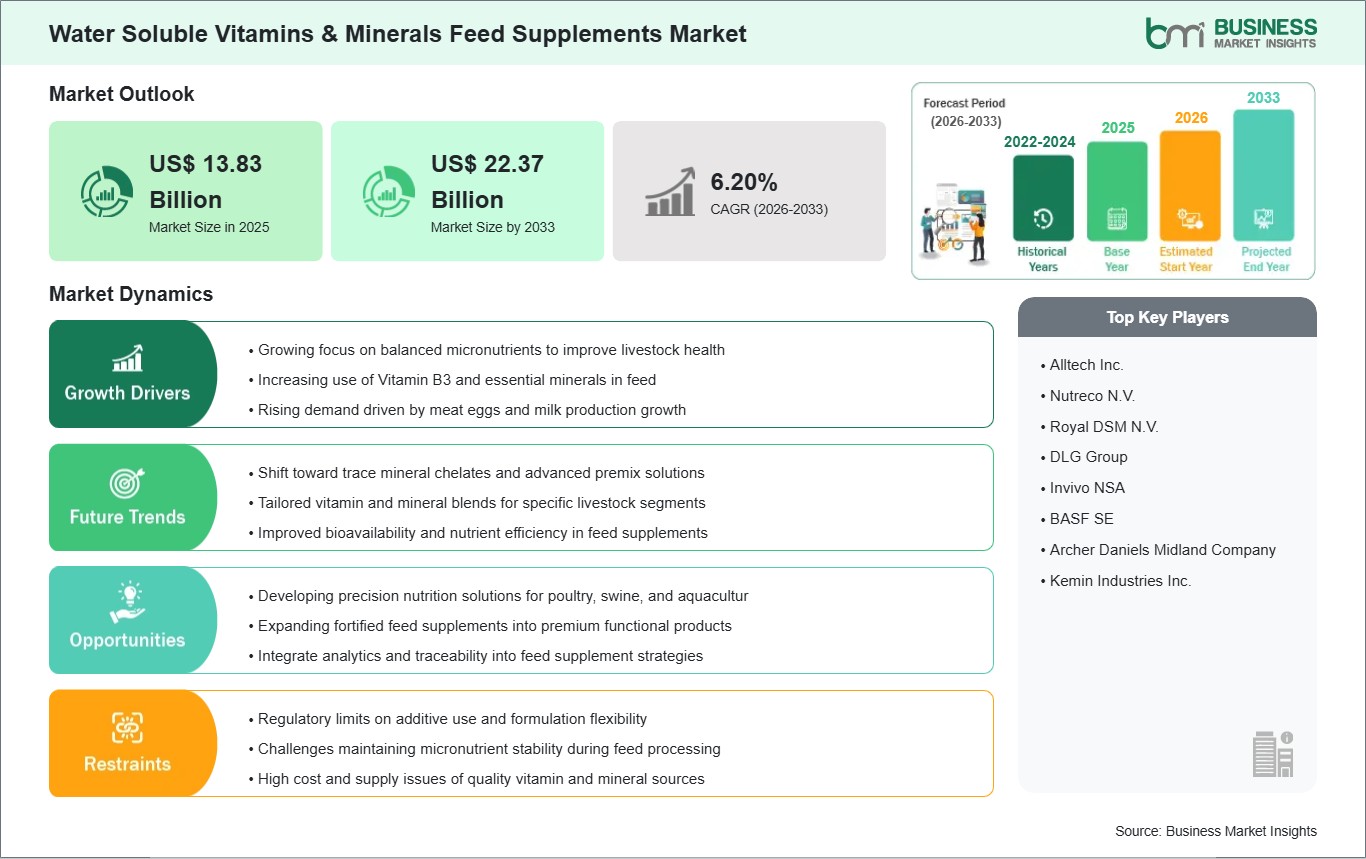
Growing focus on balanced micronutrients to improve livestock health
Livestock managers are increasingly prioritizing feed supplements that provide a balanced mix of water-soluble vitamins and minerals to support animal health and productivity. These nutrients play a critical role in metabolic processes, immunity, and growth, making supplementation essential in modern livestock operations. By integrating precise combinations of vitamins such as B-complex, C, and trace minerals, feed suppliers help maintain optimal health, prevent deficiencies, and reduce the risk of disease, ultimately improving overall herd or flock performance.
The focus on micronutrient balance also stems from the growing awareness that conventional feed may not meet the nutritional demands of high-performing animals. Intensive poultry, swine, and aquaculture operations often push animals to achieve faster growth or higher yields, which can deplete natural nutrient stores. Water-soluble supplements allow for quick absorption and effective distribution of key nutrients, ensuring animals maintain energy levels, reproductive performance, and resistance to stress even under demanding production conditions.
Beyond growth and immunity, proper micronutrient management contributes to product quality and farm profitability. For example, vitamin and mineral balance can influence meat, egg, or milk composition, improving nutritional value and marketability. Consistently healthy animals reduce veterinary costs and enhance operational efficiency, making the adoption of water-soluble feed supplements a practical and strategic choice for livestock operations of all sizes.
Developing precision nutrition solutions for poultry, swine, and aquaculture
The need for precision nutrition is driving the development of water-soluble vitamins and minerals feed supplements. Such supplements are specifically formulated to meet the needs of different kinds of animals. They are particularly important in that they allow farmers to optimize the growth and performance of different animals. The precision with which water-soluble vitamins and minerals are delivered ensures that no waste occurs. In addition, it helps in the efficient use of feed.
The innovation in the way in which water-soluble vitamins and minerals are delivered is improving their effectiveness. Water-soluble vitamins and minerals can be delivered via water. This ensures that all animals in a given farm receive equal quantities of the supplement. In this way, water-soluble vitamins and minerals are particularly important in aquaculture because they ensure that no form of waste occurs. By improving the absorption of water-soluble vitamins and minerals, farmers can achieve consistency while at the same time improving the environment by conserving water.
The shift toward precision nutrition also supports long-term sustainability and operational efficiency. Targeted supplementation not only improves animal welfare and growth but also allows for better monitoring of nutritional outcomes and feed costs. As livestock production systems evolve toward data-driven management, water-soluble vitamins and minerals feed supplements are emerging as essential tools to maintain optimal performance while supporting responsible, efficient, and profitable animal farming practices.