Transmission Line Market Regional Highlights
North America Transmission Line Market
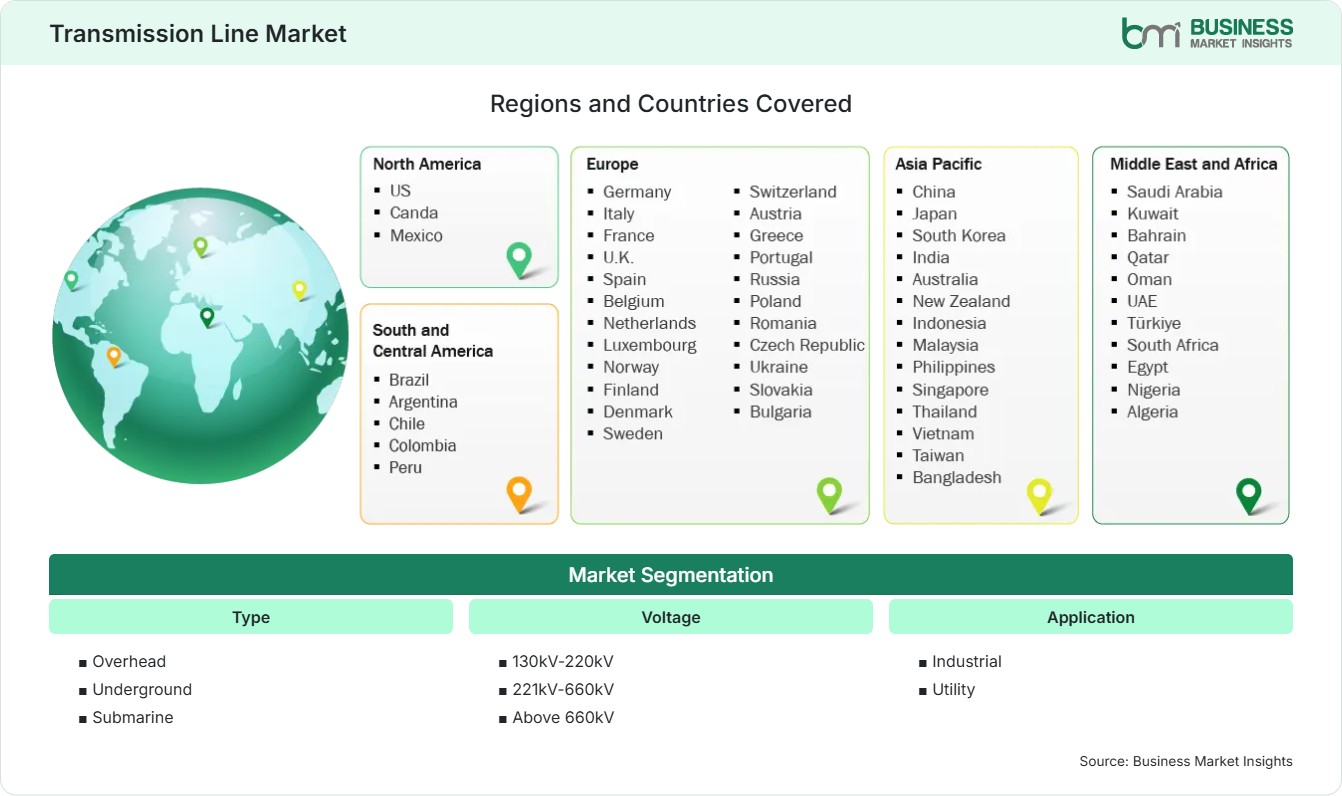
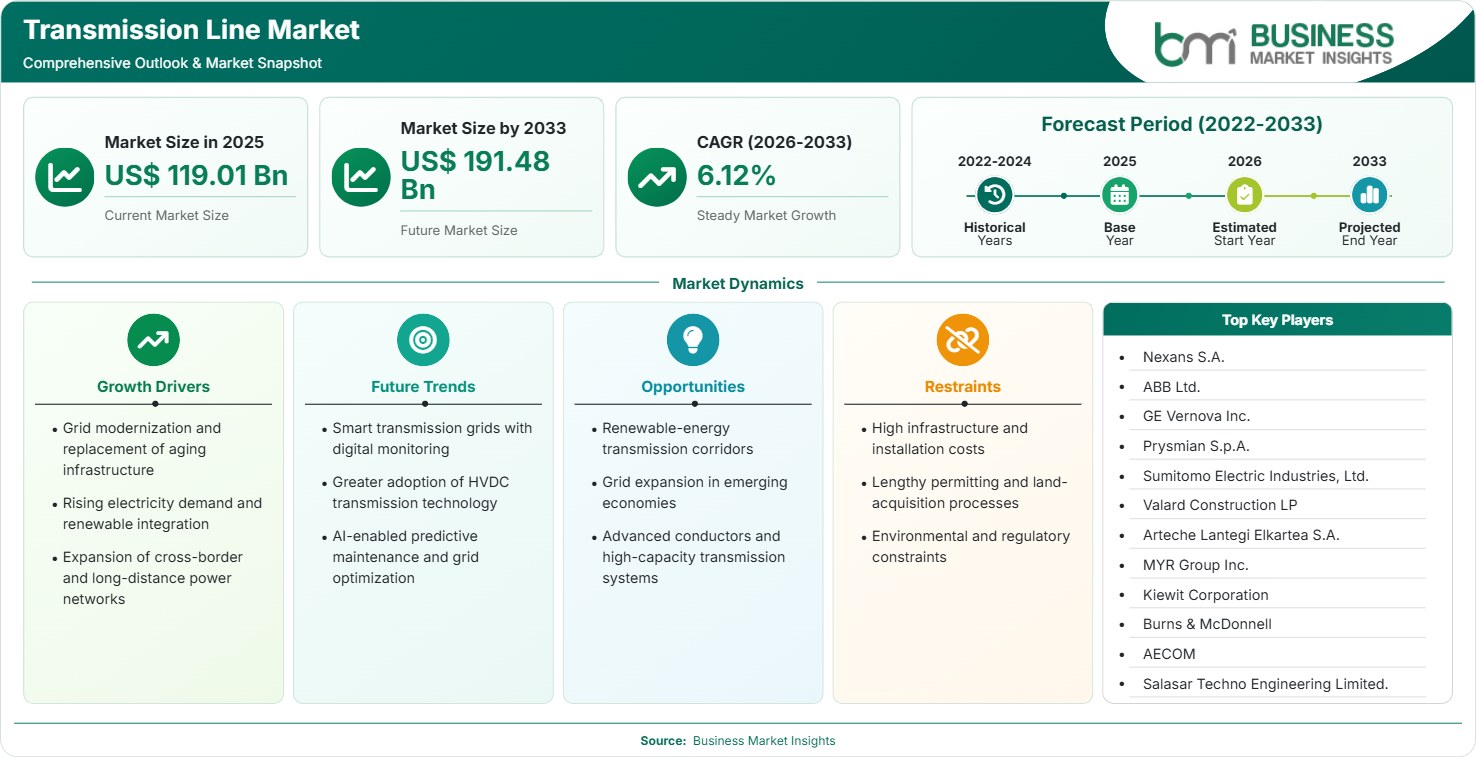
North America accounted for 34%–37% of the global market in 2025 and is projected to register a 5.5%–6.1% CAGR during 2026–2033. The region benefits from aging grid replacement, renewable integration, and increasing investment in high-capacity transmission corridors. Federal funding, utility modernization initiatives, and growing electricity demand from data centers and electrification projects continue supporting infrastructure expansion. The Transmission Line Market share remains the largest globally due to advanced utility networks, strong capital expenditure, and supportive regulatory frameworks encouraging long-distance transmission development.
- Grid modernization programs across the United States and Canada continue replacing aging transmission assets with high-capacity conductors, digital monitoring systems, and resilient towers, improving reliability while supporting increasing renewable electricity integration and long-distance power transfer.
- Utility companies are accelerating investment in HVDC corridors connecting renewable generation hubs with major consumption centers, reducing transmission congestion and improving operational flexibility across interconnected regional grids.
- Renewable energy integration from wind and solar projects requires extensive transmission expansion, encouraging utilities to deploy advanced conductor technologies capable of carrying greater electrical loads with reduced energy losses.
- Rising electricity demand from electric vehicles, manufacturing expansion, and hyperscale data centers continues driving long-term investments in transmission infrastructure, creating opportunities for engineering contractors and equipment manufacturers.
US Transmission Line Market
The United States represents approximately 76%–79% of North America's regional market and is anticipated to expand at a 5.7%–6.2% CAGR through 2033. Federal infrastructure spending, deployment of renewable energy, grid resiliency programs, and growing electricity use are some of the factors that are still pushing for further development of the transmission system. The development of interstate transmission systems, digital substations, and modern grids is ensuring reliability while meeting decarbonization targets.
- Federal infrastructure funding continues supporting high-voltage transmission expansion connecting renewable generation facilities with industrial and metropolitan electricity demand centers across multiple states.
- Utilities increasingly adopt digital asset management platforms, drone inspections, and predictive maintenance technologies to improve operational efficiency while minimizing network outages and maintenance costs.
- Expanding offshore wind developments along the Atlantic coast are creating sustained demand for new transmission corridors and advanced submarine cable infrastructure supporting grid integration.
- Rapid growth of artificial intelligence infrastructure, semiconductor manufacturing, and electric vehicle production increases electricity consumption, reinforcing long-term investments in nationwide transmission capacity.
Europe Transmission Line Market
Europe captured 24%–27% market share in 2025 and is forecast to grow at a 5.8%–6.4% CAGR during 2026–2033. Regional investment focuses on cross-border electricity interconnections, renewable integration, offshore wind transmission, and modernization of aging grid infrastructure. Germany leads regional deployment, while Spain demonstrates one of the fastest expansion rates with an estimated 6.5%–7.0% CAGR, supported by renewable energy investments and grid reinforcement initiatives.
- Offshore wind developments across the North Sea continue increasing demand for high-voltage submarine transmission systems connecting large renewable generation projects with national grids.
- Cross-border electricity trading initiatives encourage investment in interconnection infrastructure, improving energy security and optimizing electricity distribution throughout the European power network.
- Germany retains its position as leader by investing in substantial transmission modernization projects to facilitate industrial electrification, renewables, and long-distance energy transmission from production to consumption locations.
- Spain experiences fast growth in infrastructure development due to the necessity for transmission lines, sophisticated substations, and grid connections needed for renewables.
Asia Pacific Transmission Line Market
Asia Pacific represented 29%–32% of the Transmission Line Market market in 2025 and is projected to record the highest 7.2%–7.8% CAGR through 2033. Rapid industrialization, urbanization, renewable energy deployment, and government-backed grid expansion programs continue accelerating infrastructure investments. China dominates regional installations, while India is expected to achieve one of the strongest growth rates at 7.6%–8.2% CAGR, driven by nationwide transmission expansion and renewable integration initiatives.
- China continues deploying ultra-high-voltage transmission corridors that efficiently transport electricity across long distances while supporting renewable energy integration and national energy security objectives.
- India significantly expands interstate transmission infrastructure under large-scale grid modernization initiatives designed to accommodate increasing electricity demand and renewable generation capacity.
- Southeast Asian economies invest heavily in cross-border electricity interconnections and national grid expansion to improve energy access, industrial competitiveness, and regional power trade.
- Increasing manufacturing activities and urban infrastructure development continue generating sustained demand for reliable transmission networks capable of supporting rising electricity consumption.
Rest of World Transmission Line Market
South & Central America and the Middle East & Africa collectively accounted for 9%–12% Transmission Line Market share in 2025 and are anticipated to expand at a 6.0%–6.7% CAGR through 2033. South & Central America are beneficiaries of renewable hydropower integration and interconnection projects, but the Middle East & Africa have seen investments aimed at electrification, industrialization, and infrastructure modernization. Brazil takes the lead in South & Central America, while Saudi Arabia is a clear leader in the Middle East when it comes to infrastructure investments.
- Brazil continues expanding high-voltage transmission infrastructure connecting hydropower facilities and renewable energy projects with major urban and industrial electricity demand centers.
- Saudi Arabia accelerates transmission investments supporting economic diversification, renewable energy deployment, and large-scale smart city developments requiring highly reliable electricity networks.
- African nations increasingly invest in regional power pools and cross-border transmission corridors to improve electricity access, grid reliability, and industrial competitiveness.
- International financing institutions continue supporting transmission infrastructure development across emerging economies through long-term funding, technical assistance, and public-private partnership programs.