Synthetic Aperture Radar Market Regional Highlights
North America Synthetic Aperture Radar Market
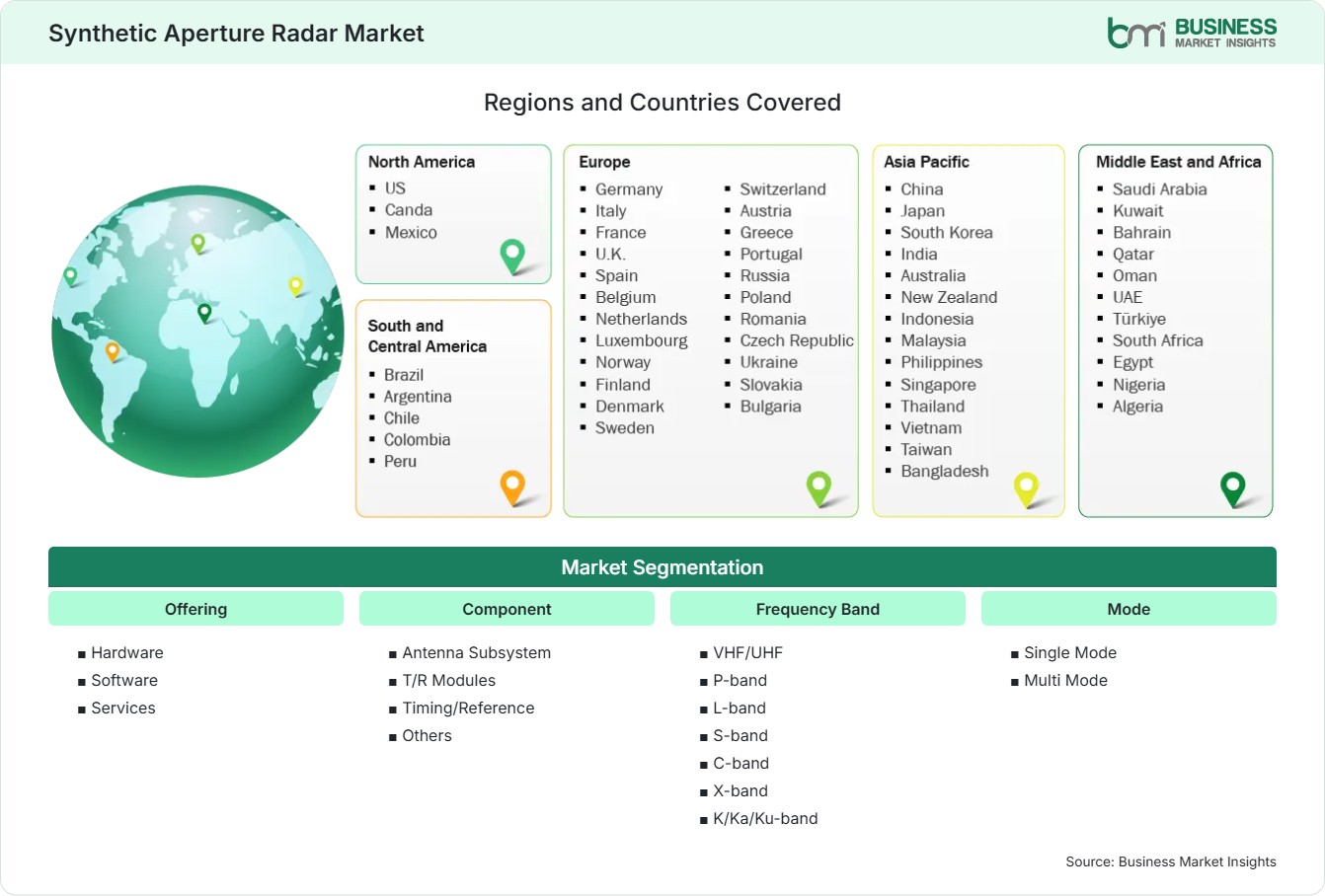
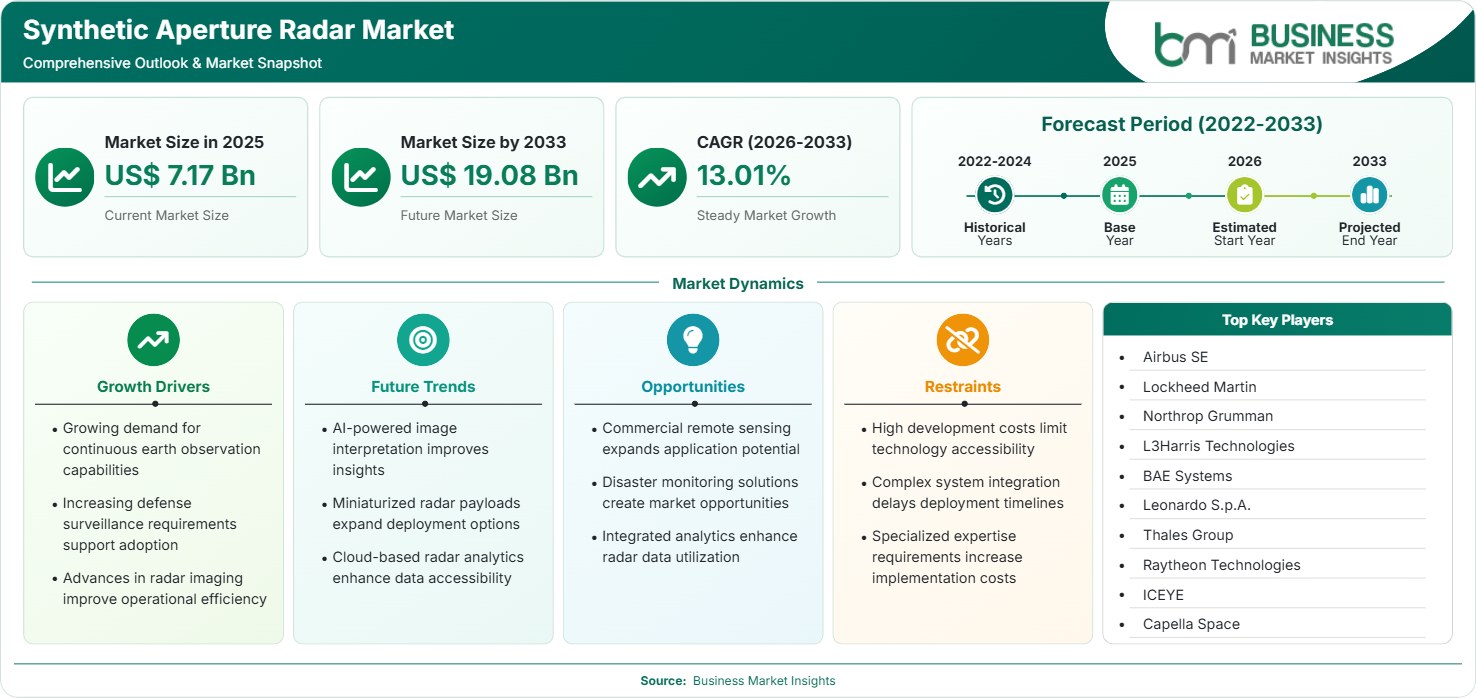
North America accounts for 34%–37% Synthetic Aperture Radar Market share in 2025 and is projected to grow at a CAGR of 12.4%–12.9% during 2026–2033. The region benefits from strong defense expenditure, established aerospace capabilities, satellite infrastructure, and increasing commercial adoption of radar-based geospatial services. The U.S. dominates regional demand through military surveillance programs, intelligence applications, and private satellite imaging investments, while Canada supports growth through environmental monitoring and resource management applications.
- Defense agencies continue investing in advanced radar surveillance systems for strategic intelligence and border monitoring.
- Commercial satellite operators are expanding radar imaging services for agriculture, infrastructure, and environmental analysis.
- Aerospace companies are developing advanced radar payloads with improved resolution and operational flexibility.
- Government earth observation initiatives continue supporting demand for reliable remote sensing technologies.
US Synthetic Aperture Radar Market
The U.S. contributes 82%–85% of North American revenue and is expected to register a CAGR of 12.6%–13.1% through 2033. Strong defense modernization programs, private space investments, and advanced satellite manufacturing capabilities continue supporting market development. The country remains a major innovation hub for radar technologies, data analytics platforms, and commercial earth observation solutions.
- Defense organizations increasingly deploy radar systems for intelligence, surveillance, and reconnaissance missions.
- Private satellite companies are expanding commercial imaging capabilities through innovative constellation models.
- Research institutions continue developing advanced algorithms for radar image processing.
- Infrastructure monitoring applications are increasing adoption among government and commercial users.
Europe Synthetic Aperture Radar Market
Europe represents 23%–26% synthetic aperture radar market share in 2025 and is projected to expand at a CAGR of 12.8%–13.4% during the forecast period. Strong space programs, environmental monitoring initiatives, and defense cooperation support regional demand. Germany remains a leading market due to aerospace capabilities, while France and Italy contribute significantly through satellite development and defense applications.
- European space programs continue expanding earth observation capabilities through satellite missions.
- Defense organizations are adopting radar systems for surveillance and strategic monitoring.
- Environmental agencies utilize radar imagery for climate and land management applications.
- Aerospace manufacturers are investing in next-generation radar payload technologies.
Asia Pacific Synthetic Aperture Radar Market
Asia Pacific holds 27%–30% synthetic aperture radar market share in 2025 and is expected to achieve the fastest 14.1%–14.7% CAGR through 2033. Expanding space programs, defense modernization, disaster management requirements, and infrastructure development are supporting regional adoption. China, Japan, and India represent major markets, while Southeast Asian countries are increasingly adopting radar-based monitoring solutions.
- National space programs are increasing investments in earth observation satellite capabilities.
- Border security requirements are strengthening demand for advanced surveillance technologies.
- Disaster monitoring applications are expanding due to climate-related challenges.
- Commercial satellite companies are developing affordable radar imaging services.
Rest of World Synthetic Aperture Radar Market
The Rest of World region accounts for 8%–11% synthetic aperture radar market share in 2025 and is projected to grow at a CAGR of 12.9%–13.5% during 2026–2033. Latin America, the Middle East, and Africa are adopting radar technologies for resource management, infrastructure development, defense monitoring, and disaster response. Brazil, the UAE, and South Africa are emerging markets supported by space investments and government initiatives.
- Resource exploration companies increasingly use radar data for terrain and environmental assessment.
- Middle Eastern countries are investing in satellite capabilities for security and development planning.
- African nations are adopting remote sensing solutions for agriculture and climate monitoring.
- Regional partnerships are improving access to advanced geospatial intelligence services.