Superconducting Materials Market Regional Highlights
North America Superconducting Materials Market
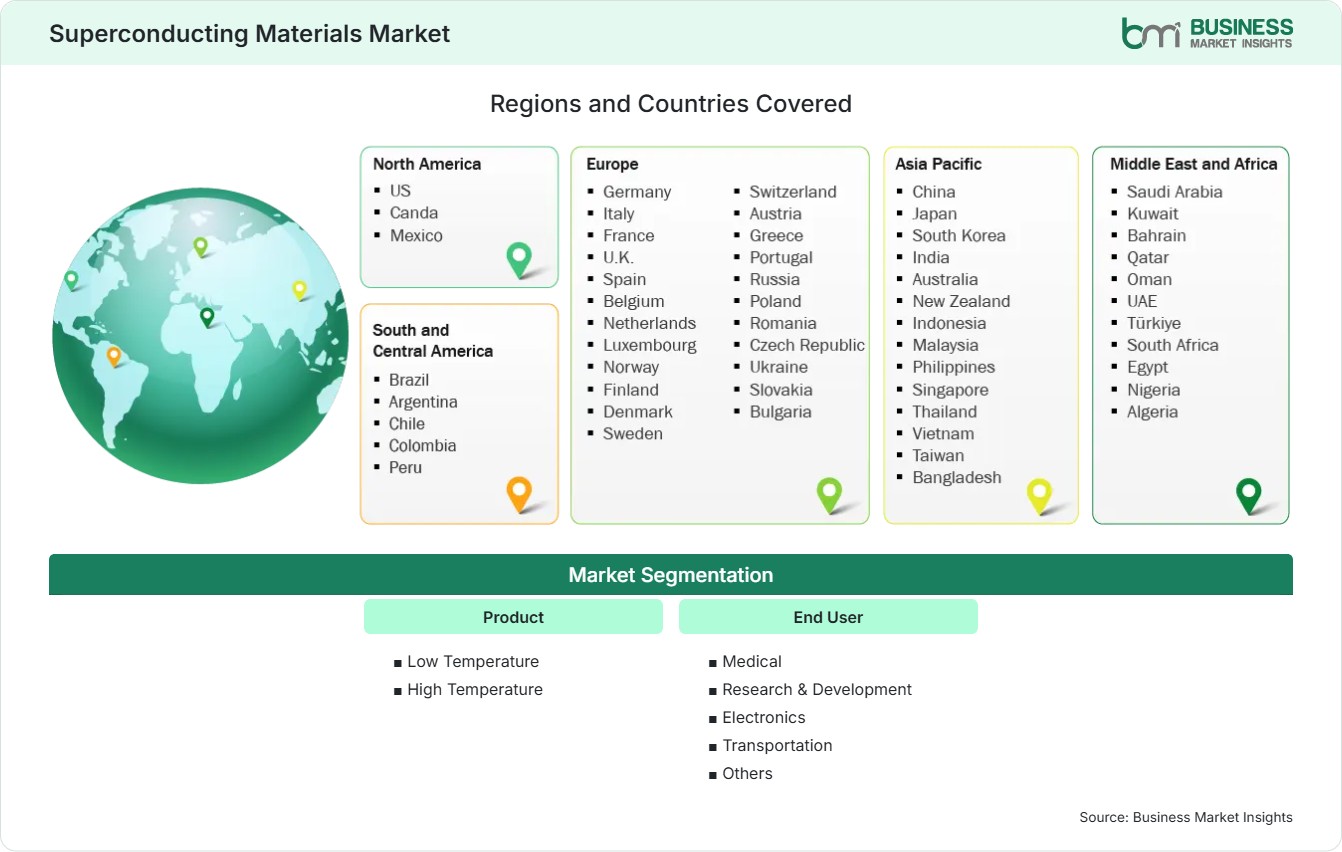
North America accounts for 34%–37% Superconducting Materials Market share in 2025 and is expected to expand at a CAGR of 14.1%–14.8% through 2033. Regional demand is led by advanced healthcare systems, major particle-physics facilities, defense applications, and expanding quantum-computing investments. Federal funding programs support fusion-energy research and advanced materials development. Commercial activity remains concentrated in the United States, while Canada contributes through scientific infrastructure projects and clean-energy initiatives. The region benefits from a mature innovation ecosystem and strong collaboration among manufacturers, laboratories, and universities.
- Quantum computing investments continue increasing demand for specialized conductors, cryogenic systems, and superconducting magnets supporting scalable quantum architectures and research infrastructure.
- Healthcare institutions sustain procurement through MRI modernization projects, enhancing demand for reliable low-temperature superconducting materials across diagnostic applications.
- Utilities are exploring grid-enhancement projects using advanced transmission technologies capable of increasing power density while minimizing losses.
- Fusion-energy programs supported by public and private funding stimulate long-term procurement opportunities throughout the technology ecosystem.
US Superconducting Materials Market
The U.S. represents 72%–76% of North American Superconducting Materials Market share and is projected to grow at 14.3%–15.0% CAGR through 2033. National laboratories, healthcare networks, defense programs, and quantum technology investments create a substantial demand base. Strong venture-capital participation and public funding mechanisms encourage innovation. Domestic manufacturers are expanding capabilities in superconducting wire production, advanced magnets, and power applications to address growing requirements from scientific, industrial, and energy-related end users.
- National fusion-energy initiatives create sustained requirements for advanced conductor technologies and associated cryogenic infrastructure.
- Expanding quantum-computing ecosystems stimulate research spending across superconducting device platforms and supporting materials supply chains.
- Healthcare modernization programs encourage replacement of aging imaging systems with advanced diagnostic equipment.
- Public-private partnerships support commercialization efforts across grid resilience and defense-oriented technologies.
Europe Superconducting Materials Market
Europe maintains 24%–27% share in 2025 and is forecast to expand at a CAGR of 13.6%–14.4%. Regional demand benefits from research institutions, energy-transition programs, and advanced healthcare infrastructure. Germany leads adoption through scientific and industrial applications, while the United Kingdom represents a notable high-growth market with CAGR estimated near 14.8%–15.6% due to fusion and quantum investments. Collaborative research projects across the European Union support continuous innovation and commercialization of superconducting technologies.
- Large research facilities continue procuring advanced superconducting magnets for accelerator and fusion applications.
- Grid modernization objectives encourage utilities to evaluate efficient transmission alternatives for urban and industrial networks.
- Germany remains the leading revenue contributor owing to strong industrial and scientific infrastructure.
- The United Kingdom exhibits strong growth supported by fusion-energy investment programs and innovation funding.
- Medical imaging demand remains a stable consumption source across major European economies.
Asia Pacific Superconducting Materials Market
Asia Pacific holds 28%–31% share and records the fastest Superconducting Materials Market regional CAGR of 16.4%–17.2% through 2033. China leads regional consumption through extensive research spending, power-sector modernization, and transportation projects. Japan remains a technology leader in superconducting wire development, while India demonstrates a high-growth trajectory with CAGR around 17.5%–18.3% supported by research infrastructure expansion. Regional governments increasingly support domestic manufacturing initiatives and strategic technology development.
- China continues investing heavily in fusion-energy research, advanced transportation systems, and power-sector innovation.
- Japan maintains significant technological leadership through established wire manufacturing and superconducting component expertise.
- India advances through expanding scientific infrastructure and growing participation in advanced technology programs.
- Semiconductor manufacturing growth increases demand for precision research and cryogenic technologies.
- Government-backed innovation initiatives strengthen domestic supply-chain development across the region.
Rest of World Superconducting Materials Market
The Rest of World region represents 9%–12% share in 2025 and is expected to grow at a CAGR of 12.8%–13.6%. South and Central America remain led by Brazil's scientific research activities and healthcare infrastructure investments. Middle East and Africa markets are supported by technology diversification initiatives, smart-city development programs, and advanced research facilities. While the installed base remains comparatively smaller, selected countries are increasing investment in high-value scientific and energy technologies.
- Brazil remains the leading contributor within South and Central America due to research and healthcare applications.
- Gulf economies are increasing technology investments linked to diversification strategies and innovation agendas.
- Advanced research centers are creating opportunities for superconducting magnet and cryogenic technology suppliers.
- Energy-sector modernization projects support exploration of efficient transmission technologies.
- International collaborations facilitate knowledge transfer and commercialization activities across emerging markets.