
Standard Pen Needles Market Outlook: Size, Share, Trends, Growth Analysis, Competitive Landscape & Forecast, 2026-2033

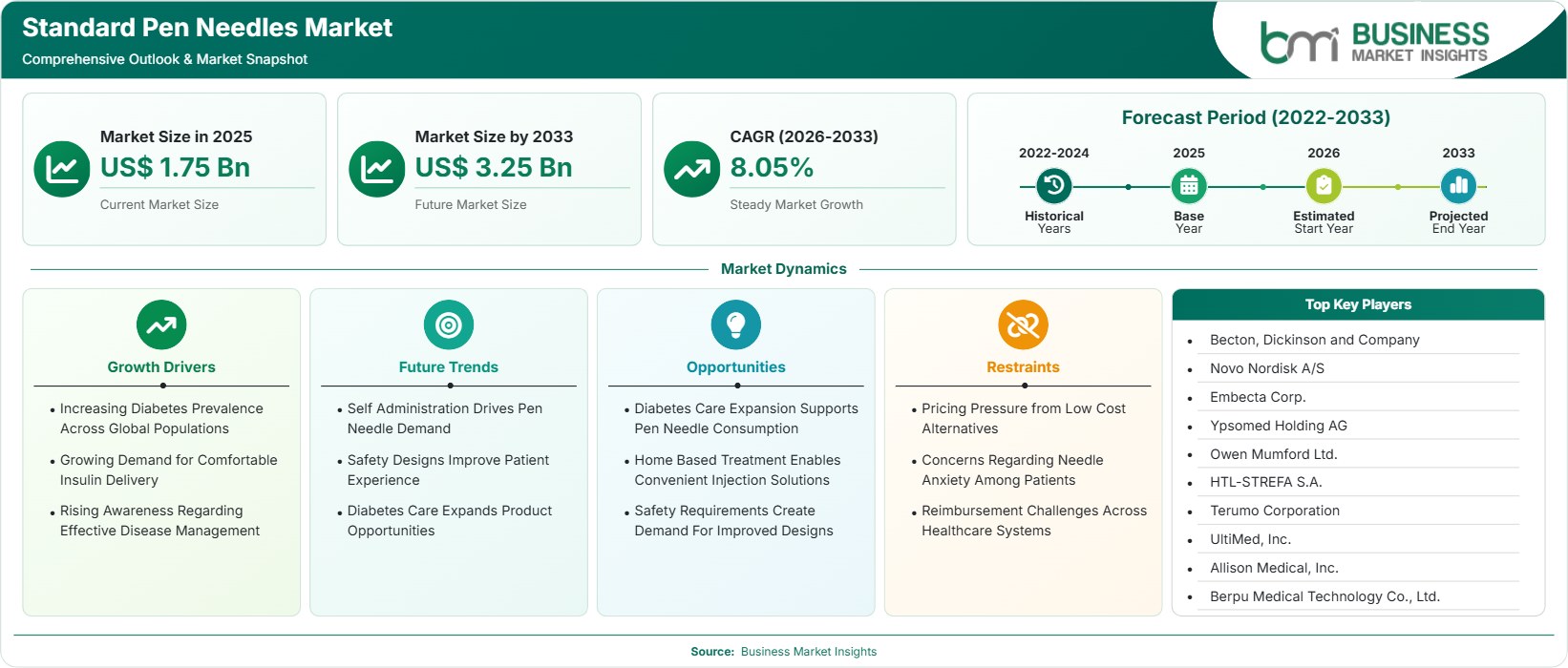
The Standard Pen Needles Market size was valued at US$ 1.75 Billion in 2025 and is projected to reach US$ 3.25 Billion by 2033, growing at a CAGR of 8.05% during 2026–2033. Rising diabetes prevalence, expanding GLP-1 therapy adoption, shorter needle preference, improved reimbursement coverage, and increasing self-administration trends continue supporting market expansion and innovation opportunities.

Report Coverage
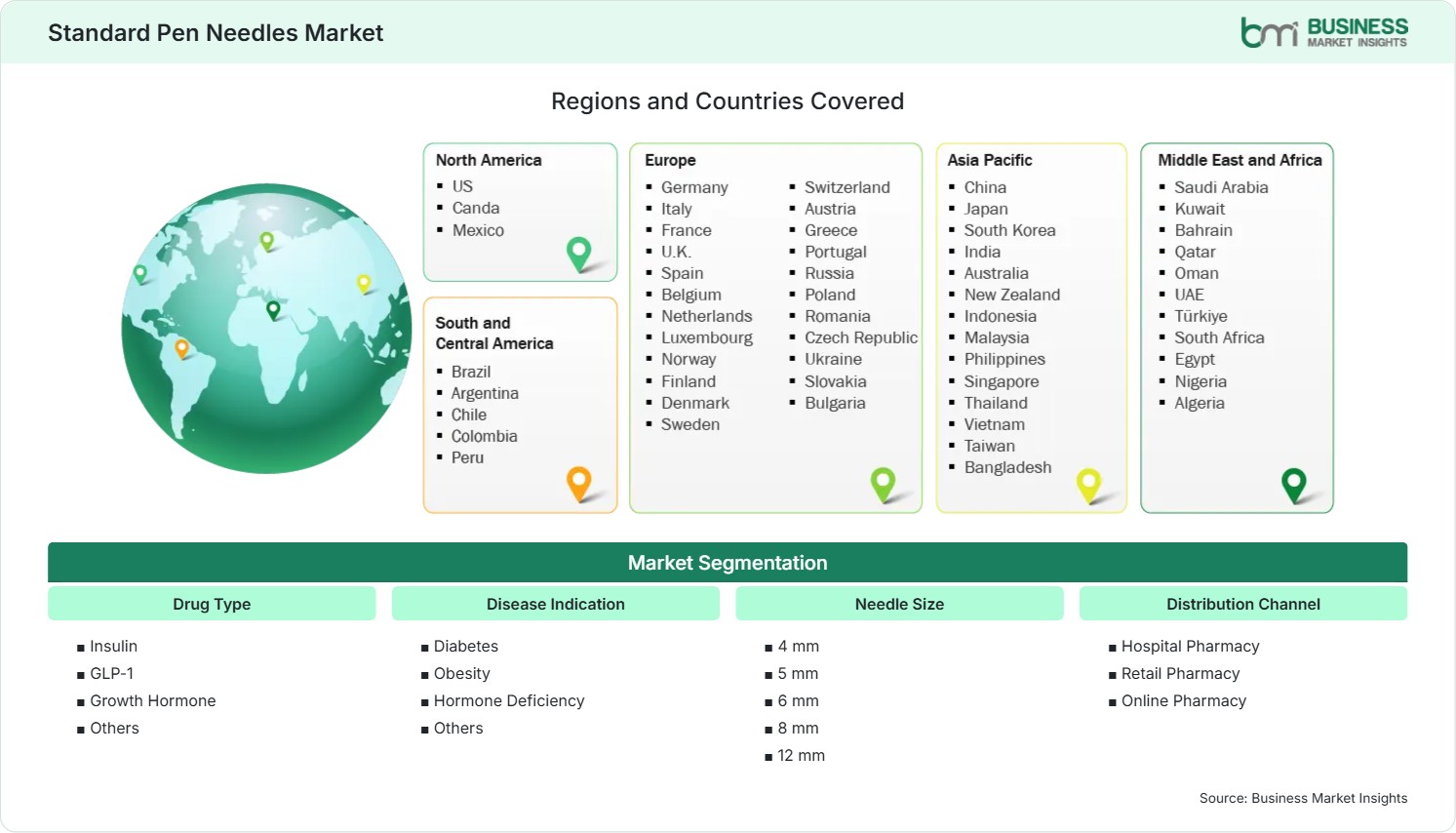
  • Drug Type: Insulin, GLP-1, Growth Hormone, Others
  • Disease Indication: Diabetes, Obesity, Hormone Deficiency, Others
  • Needle Size: 4 mm, 5 mm, 6 mm, 8 mm, 12 mm
  • Distribution Channel: Hospital Pharmacy, Retail Pharmacy, Online Pharmacy
US$ 1.75 Bn Market size in 2025
US$ 3.25 Bn Market Size by 2033
8.05% CAGR, 2026 - 2033
2026-2033 Forecast Period

AI Overview

Standard Pen Needles Market Summary

  • North America Region: North America holds a Standard Pen Needles Market share of 36%–39% in 2025, growing with a CAGR of 7.1%–7.8% influenced by advanced diabetes management adoption, strong reimbursement frameworks, growing obesity treatment demand, increasing homecare use, and continuous product innovation. The U.S. accounts for the largest regional revenue base, advancing at an estimated 7.3%–8.0% CAGR through 2033.
  • Fastest Growing Region: Asia Pacific holds a market share of 24%–28% in 2025, growing with a CAGR of 9.5%–10.3% supported by rising diabetes incidence, improved healthcare access, expanding insurance coverage, increasing treatment awareness, local manufacturing investments, and larger patient populations requiring injectable therapies.
  • Leading Segment: Diabetes represents a 58%–62% share in 2025, expanding at 7.8%–8.6% CAGR driven by increasing insulin-dependent patients, continuous education initiatives, greater diagnostic rates, wider availability of injection devices, and growing emphasis on precise drug delivery solutions.
  • High Growth Segment: GLP-1 under drug type accounts for 18%–22% share of the Standard Pen Needles Market in 2025, while growing at 10.5%–11.5% CAGR due to accelerating obesity treatment uptake, expanding prescribing practices, favorable clinical outcomes, and increasing availability of once-weekly injectable therapies.
  • Key Market Opportunity: Expanding obesity treatment programs across developed and emerging healthcare systems creates substantial demand for compatible disposable needle products, supported by broader reimbursement structures and higher prescription volumes globally.
  • Major Market Players: Becton, Dickinson and Company; Novo Nordisk A/S; Embecta Corp.; Ypsomed Holding AG; Owen Mumford Ltd.; HTL-STREFA S.A.; Terumo Corporation; UltiMed, Inc.; Allison Medical, Inc.; Berpu Medical Technology Co., Ltd.
Strategic Insights

Standard Pen Needles Market: Strategic Insights

Standard Pen Needles Market Strategic Framework
FREE PDF
Request your free sample
Request free sample
Stakeholder View

Key Takeaways

  • The market ecosystem increasingly depends on integrated collaborations among needle manufacturers, insulin producers, pharmacy networks, healthcare providers, and reimbursement agencies to ensure uninterrupted patient access.
  • Obesity management and GLP-1 therapy applications present the strongest commercialization potential as prescription volumes grow faster than traditional injectable treatment categories.
  • Innovation efforts are shifting toward thinner gauges, enhanced lubrication coatings, universal compatibility designs, and sustainability-focused packaging aimed at improving patient experience.
  • Asia Pacific offers a compelling investment case due to expanding diabetes populations, improving healthcare infrastructure, and increasing penetration of injectable therapies.
  • Strategic acquisitions, manufacturing partnerships, and geographic expansion initiatives are becoming common among device suppliers seeking greater scale and distribution efficiency.
  • Digital patient-support platforms integrated with treatment adherence programs are emerging as a differentiating factor for long-term market competitiveness.
Geographic Outlook

Standard Pen Needles Market Regional Highlights

North America Standard Pen Needles Market

North America represented approximately 36%–39% Standard Pen Needles Market share in 2025 and is projected to expand at 7.1%–7.8% CAGR through 2033. High diabetes prevalence, broad availability of injectable therapeutics, favorable reimbursement systems, and strong clinician adoption of shorter needle formats support sustained demand. Product innovation remains concentrated within the United States and Canada, where established healthcare infrastructure encourages rapid uptake of advanced injection accessories. Increasing obesity treatment prescriptions further reinforce Standard Pen Needles Market growth across regional healthcare settings.

  • Growing utilization of GLP-1 therapies is increasing annual disposable needle consumption across retail and specialty pharmacy channels.
  • Leading manufacturers continue expanding automated production capacity to support rising demand from diabetes and obesity treatment programs.
  • Healthcare providers increasingly promote 4 mm and 5 mm products to enhance comfort and treatment adherence.
  • Strong reimbursement coverage reduces out-of-pocket burden and supports recurring purchases among chronic disease patients.
  • Homecare treatment expansion is accelerating demand for easy-to-use injection solutions across all age groups.

US Standard Pen Needles Market

The United States accounts for roughly 82%–86% of North American revenue and is estimated to advance at 7.3%–8.0% CAGR through 2033. Increasing use of injectable diabetes and obesity medications is expanding annual unit requirements. Strong availability through retail pharmacy chains, rising telehealth utilization, and widespread healthcare coverage support consistent market penetration. Adoption of shorter needle options continues to increase due to patient comfort benefits and clinical recommendations. Product innovation and regulatory clarity further strengthen the country's leadership position.

  • Growing obesity treatment prescriptions support rising needle replacement frequency and recurring product sales.
  • Large pharmacy networks improve accessibility and reinforce patient adherence to prescribed injection regimens.
  • Healthcare professionals increasingly recommend shorter needle lengths for pediatric and adult populations.
  • Digital chronic disease management programs encourage proper injection techniques and ongoing treatment compliance.

Europe Standard Pen Needles Market

Europe held approximately 27%–30% market share in 2025 and is expected to record a 7.4%–8.1% CAGR through 2033. Strong public healthcare systems, increasing prevalence of metabolic disorders, and high treatment adherence rates support regional demand. Germany remains the largest national market, while Spain and several Central European countries display stronger expansion rates. Preference for advanced, patient-friendly injection technologies continues growing across hospitals, pharmacies, and homecare environments, creating opportunities for premium and value-oriented product offerings.

  • Germany leads regional revenue generation because of extensive diabetes management infrastructure and reimbursement support.
  • Spain demonstrates above-average growth, supported by obesity treatment adoption and expanding preventive care initiatives.
  • Sustainability considerations increasingly influence procurement strategies among healthcare organizations and distributors.
  • Regulatory alignment across the European Union supports broader commercialization opportunities for device manufacturers.
  • Retail pharmacies remain critical distribution channels because of broad consumer access and recurring prescription volumes.

Asia Pacific Standard Pen Needles Market

Asia Pacific represented approximately a 24%–28% share in 2025 and is forecast to achieve the fastest regional CAGR of 9.5%–10.3% of the Standard Pen Needles Market during 2026–2033. Rising diabetes incidence, expanding healthcare expenditure, and increasing diagnosis rates are driving demand growth. China accounts for the largest revenue contribution, while India demonstrates the strongest expansion trajectory. Improving insurance coverage, domestic manufacturing investments, and growing awareness of self-administered therapies support broader adoption across urban and secondary healthcare markets throughout the region.

  • China benefits from large treatment populations and expanding domestic production capabilities.
  • India records the strongest growth due to increasing healthcare access and chronic disease screening programs.
  • E-commerce pharmacy platforms are improving product accessibility for consumers in remote locations.
  • Rising healthcare investments support penetration of advanced disposable injection accessories.
  • Educational campaigns focused on injection safety are strengthening treatment adherence and replacement practices.

Rest of World Standard Pen Needles Market

Rest of World accounted for nearly 8%–11% share in 2025 and is anticipated to grow at 8.2%–9.0% CAGR through 2033. South and Central America benefit from improving diabetes management programs and expanding pharmacy networks. Middle East and Africa markets are supported by increasing healthcare investment and greater chronic disease awareness. Brazil remains the largest contributor within Latin America, while Saudi Arabia demonstrates notable expansion potential due to healthcare modernization initiatives and growing adoption of injectable therapies.

  • Brazil leads regional demand through extensive diabetes treatment initiatives and broad distribution networks.
  • Saudi Arabia shows strong growth supported by healthcare transformation programs and chronic disease management investments.
  • Increasing private healthcare spending is improving access to modern injection accessories.
  • International manufacturers are strengthening regional partnerships to expand commercial reach.
  • Growing awareness campaigns encourage earlier diagnosis and more consistent treatment engagement.
Global Market Geography
FREE PDF
Request your free sample
Request free sample
Segment Analysis

Standard Pen Needles Market Segmentation

Drug Type

Drug Type accounted for 42%-46 % of market share in 2025 and is predicted to have a CAGR of 8.4%-9.1%. The scope of the Standard Pen Needles Market is widening owing to increased acceptance of injectables, beyond diabetes. The demand is growing due to insulin needs, obesity, growth hormone use, and self-injection techniques supporting treatment adherence.

  • Insulin: Remains the dominant application due to extensive diabetes treatment adoption, recurring injection requirements, and established clinical protocols supporting consistent needle replacement.
  • GLP-1: Experiences rapid expansion driven by obesity management therapies, rising prescription volumes, strong clinical outcomes, and increasing patient acceptance of injectable treatments.
  • Growth Hormone: Supported by pediatric and adult hormone replacement programs requiring reliable, comfortable self-administration solutions with consistent dosing accuracy.

Disease Indication

The disease indication accounted for 58%–62% of the share in 2025 and is expected to grow at a CAGR of 7.8%–8.6%. The Standard Pen Needles Market trends impacting segment growth include the rising incidence of diabetes, the growing use of obesity treatments, and increased diagnoses of endocrine disorders. Treatment adherence programs and the expansion of healthcare access continue to support long-term demand.

  • Diabetes: Generates the largest demand base because of lifelong treatment requirements, increasing diagnosed populations, and recurring usage of injectable therapies.
  • Obesity: Benefits from strong momentum in GLP-1 adoption, improving reimbursement availability, and growing physician confidence in long-term management outcomes.
  • Hormone Deficiency: Supported by expanded screening initiatives, improved diagnosis rates, and increasing acceptance of self-administered treatment regimens.

Needle Size

The needle sizes market accounted for 33%–37% of shares in 2025 and is expected to grow at an 8.6%–9.4% CAGR. Medical experts keep advocating short needles since they are comfortable, reduce injection fear, and provide constant performance in drug delivery. Improvements in manufacturing technology make needles more precise at any length.

  • 4 mm: Preferred for patient comfort, simplified administration, and broad suitability across diverse body types and age groups.
  • 5 mm: Widely utilized because it balances usability, comfort, and clinical familiarity in routine treatment settings.
  • 6 mm: Maintains relevance among users seeking traditional formats and specific administration preferences.
  • 8 mm: Remains established across certain patient groups and healthcare systems with legacy treatment practices.
  • 12 mm: Used in selected clinical circumstances where healthcare provider recommendations support longer needle application.

Distribution Channel

The distribution channels are expected to account for around 31% to 35% in 2025 and to register a CAGR of 8.1% to 8.9% during the forecast period. Pharmacy availability, reimbursement, and digital health care have continued to influence purchasing behavior. Retail and online channels increasingly complement institutional procurement patterns across diverse healthcare systems.

  • Hospital Pharmacy: Supports initial therapy initiation, specialist consultations, and institutional procurement requirements for injectable treatments.
  • Retail Pharmacy: Maintains broad consumer reach through prescription fulfillment, recurring purchases, and convenient neighborhood access.
  • Online Pharmacy: Expands rapidly because of digital ordering convenience, subscription programs, and increasing telehealth-supported prescription management.
Market Forces

Standard Pen Needles Market Dynamics

Key Market Drivers

Rising Global Burden of Diabetes Requiring Injectable Therapies

As per major international organizations specializing in diabetes, hundreds of millions of patients still require insulin injections regularly, necessitating the continued use of disposable injection devices. The growth of the diagnosed population in Asia, North America, and Europe ensures high annual consumption volumes. The Standard Pen Needles market growth is directly associated with increased treatment coverage for new diabetic patients. Better focus by healthcare facilities on achieving good glycemic control and compliance with replacement recommendations further supports consumption growth. Increased prevalence rates among elderly patients, along with higher life expectancy, provide a solid basis for global demand among manufacturers.

Expanding Adoption of GLP-1 and Obesity Management Therapies

Increased prescription of GLP-1 agonists has revolutionized the market for injectable drug therapies. The rising acceptance of use in obese patients will create new revenue streams beyond traditional uses in diabetes. Doctors are now prescribing injectable drugs to more patients who need to keep their metabolism in check. This is fueling the demand for disposable equipment that can work with such injectable drugs. The Standard Pen Needles Market trends show increased usage frequency among obese patients compared to a few older categories. Innovation in pharmaceutical products, good efficacy results, and strong payer acceptance are likely to continue expanding the consumer base, supporting sustained consumption growth throughout the forecast period.

Preference for Shorter and More Comfortable Needle Designs

Clinical guidelines now favor shorter needles due to better comfort and continued efficacy. Manufacturers continue to research thinner walls, better bevels, and lubrication systems to make injections more comfortable for patients. Better experiences will enhance patient compliance and adherence to replacement. Recommendations from health care professionals for modern, shorter versions during initial therapy are an important factor in purchasing. Product differentiation in the marketplace is thus increasingly innovation-based rather than price-related. As home administration of injections gains wider acceptance worldwide, patient comfort and ease of use will remain key purchase criteria supporting long-term market expansion.

Key Market Opportunities

Penetration of Injectable Obesity Therapies Across Emerging Markets

Although obesity rates are increasing, there is still unmet demand for injectable therapy due to large patient populations in developing nations. With improvements in reimbursement policies and healthcare infrastructure, access to injectable metabolic therapies will increase significantly. According to Standard Pen Needles Market Forecasts, increased use of obesity treatments could create a substantial pool of demand among new customers. Companies that can build strategic alliances within their distribution networks, run effective educational campaigns, and maintain a strong product portfolio can gain a competitive advantage in the early stages of development. Other drivers are urbanization, growth in disposable income, and expansion of the private healthcare sector. The opportunity extends beyond pharmaceutical growth, as each incremental injectable therapy user generates recurring needle consumption over extended treatment durations.

Expansion of Online Pharmacy and Direct-to-Patient Channels

Ecosystems in digital healthcare are reshaping purchasing behavior within categories of chronic diseases. Digital pharmacies allow patients to schedule refills automatically to improve treatment continuity. Delivery methods based on subscription minimize disruptions and increase adherence levels. Marketers can use digital media to educate their customers, build brand loyalty, and gather insights into consumer behavior. Telemedicine, combined with prescription management, opens new opportunities for commercialization. As digital healthcare becomes more prevalent in both developed and developing countries, firms that adopt omnichannel marketing strategies are likely to capture greater market share while improving customer retention and operational efficiency.

Localized Manufacturing and Supply Chain Diversification

Medical logistics are being emphasized by the healthcare industry amid disruptions across sectors. Regional manufacturing plants will reduce dependence on transportation, respond to demand changes, and help meet regulatory standards. A number of governments across the globe are encouraging manufacturers to produce devices by offering incentives for local production. The localization of production will be useful for companies in ensuring cost savings and a regular supply. The localization process is important for ensuring market entry and building strong relationships with healthcare institutions. Companies that diversify their production sources can mitigate the risks associated with concentrated production models.

Market Restraints and Challenges

Pricing Pressure From Reimbursement and Procurement Policies

Factor: The increasing attention paid by public and private payers to the cost of managing diabetes is a consistent force driving prices downward in consumable medical devices. Impact: Profit margins may be constrained despite increasing per-unit volume. Large health systems tend to favor cost-effective solutions in purchase decisions, leaving little room for premium pricing. The competitive bidding process may exacerbate such pressure in well-developed markets with more than one qualified competitor. Despite positive consumption volumes, profitability will likely rely on cost efficiency, economies of scale, and logistics.  Smaller participants can face greater challenges sustaining competitive pricing structures while maintaining product quality, regulatory compliance, and ongoing innovation investments.

Regulatory Complexity and Product Compatibility Requirements

Factor: The regulatory standards for medical devices vary significantly across countries and require extensive documentation, testing, and management. Impact: The product introduction could be slowed by lengthy timelines and additional costs associated with commercialization. The company will also have to ensure that its products are compatible with the various injection pens used by healthcare facilities. Otherwise, the adoption of the products and distributors’ approval will be constrained. Additional requirements for regulations, labeling, and quality management further complicate operations. International firms also have to adhere to all regulations, which increases their costs. The constraints may hinder growth strategies and create barriers to entry for new firms.

Company Analysis

Competitive Landscape

The competitive environment reflects ongoing Standard Pen Needles Market analysis focused on manufacturing scale, product compatibility, patient comfort, distribution reach, and strategic partnerships.

Company Name

Overview

Products and Services relevant to this market

Becton, Dickinson and Company

Global medical technology leader with extensive diabetes care capabilities and broad international distribution networks.

Disposable pen needles, injection accessories, diabetes care products, and healthcare supply solutions.

Novo Nordisk A/S

Major diabetes and obesity therapeutics company with integrated injection device ecosystem.

Pen needles, insulin delivery systems, diabetes treatment support products, and injectable therapy solutions.

Embecta Corp.

Specialized diabetes care company focused on injection technologies and patient support.

Pen needles, insulin administration products, diabetes management accessories, and educational solutions.

Ypsomed Holding AG

Swiss healthcare technology company recognized for self-injection and delivery platform development.

Pen needles, injection systems, self-care devices, and drug delivery technologies.

Owen Mumford Ltd.

Medical device manufacturer emphasizing patient-centered injection and diagnostic products.

Safety pen needles, injection solutions, and self-administration technologies.

HTL-STREFA S.A.

European producer of medical devices serving diabetes and diagnostic markets globally.

Pen needles, lancets, diagnostic accessories, and injection components.

Terumo Corporation

Global healthcare company with extensive expertise in injection and vascular devices.

Pen needles, syringe technologies, injection systems, and medical consumables.

UltiMed, Inc.

U.S.-based supplier focused on diabetes management and homecare products.

Pen needles, syringes, diabetic supplies, and patient support products.

Allison Medical, Inc.

Medical consumables supplier serving diabetes care and pharmacy distribution channels.

Pen needles, diabetes accessories, and healthcare consumable products.

Berpu Medical Technology Co., Ltd.

Chinese medical device manufacturer expanding international diabetes care presence.

Pen needles, safety injection products, and disposable medical consumables.

Trust & Transparency

Research Methodology

The market analysis combines proprietary research with secondary data from government agencies, company disclosures, regulatory filings, industry databases and expert interviews. Market estimates are validated through data triangulation, cross-market benchmarking and analyst review.

View Full Research Methodology

Questions Answered

Frequently Asked Questions

What does the Standard Pen Needles Market Report evaluate?

The Market Report assesses market size, growth outlook, segmentation performance, regional dynamics, competitive positioning, technological developments, distribution trends, and strategic opportunities influencing future industry expansion.

How important are online pharmacies to market development?

Online pharmacies improve refill convenience, support recurring purchasing behavior, strengthen treatment continuity, and expand access in areas where traditional pharmacy networks are less developed.

Why are shorter needle sizes gaining popularity?

Shorter needle formats improve patient comfort, reduce injection anxiety, support adherence, and align with evolving clinical recommendations that encourage effective administration with less perceived discomfort.

Which region offers the highest growth potential through 2033?

Asia Pacific presents the strongest growth outlook due to expanding patient populations, improving healthcare infrastructure, increasing diagnosis rates, stronger insurance coverage, and growing utilization of injectable therapies in major economies.

What factors are shaping future demand for the Standard Pen Needles Market?

Future demand is being influenced by rising diabetes prevalence, accelerating obesity therapy adoption, increasing self-administration practices, expanding healthcare access, and broader utilization of injectable biologic treatments across multiple disease categories.

Access the Full Standard Pen Needles Market Report

Get segment-level forecasts, regional estimates, competitive benchmarking, company profiles and downloadable Excel datasets.

Access the full Standard Pen Needles Market Report
350 pages PDF & Excel | 2026-09-04