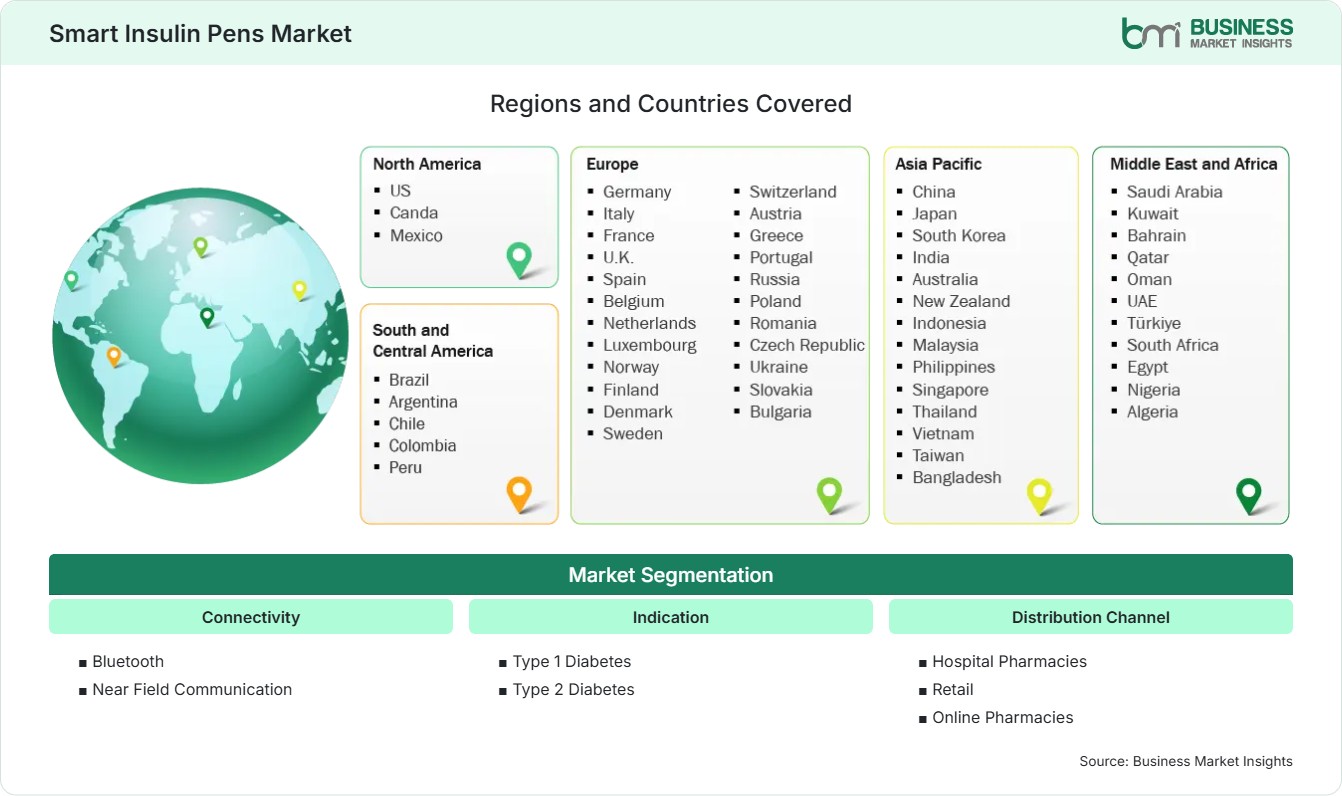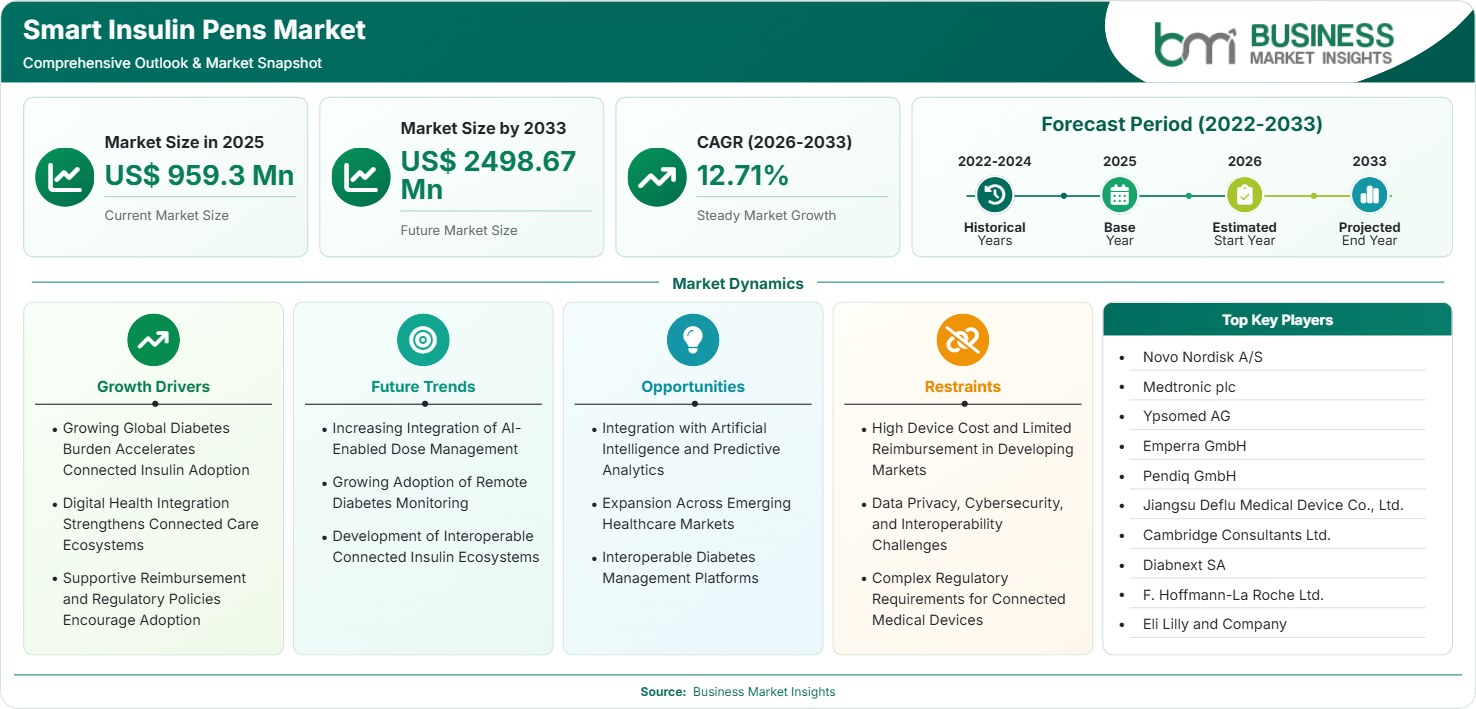
Smart Insulin Pens Market Regional Highlights
North America Smart Insulin Pens Market
North America accounted for 38%–41% of the global market in 2025 and is projected to expand at a CAGR of 11.5%–12.3% during 2026–2033. The region benefits from advanced diabetes care infrastructure, widespread adoption of connected medical devices, strong reimbursement frameworks, and high digital health penetration. The Smart Insulin Pens Market share remains the largest globally because healthcare providers increasingly recommend connected insulin delivery systems to improve treatment adherence, reduce dosing errors, and facilitate remote patient monitoring across both hospital and outpatient settings.
- The United States remains the dominant revenue contributor as healthcare networks adopt connected diabetes management solutions alongside continuous glucose monitoring, supporting data-driven insulin therapy.
- Canada is strengthening regional demand through reimbursement initiatives, diabetes awareness programs, and broader adoption of digital therapeutics supporting personalized insulin management.
- Collaborations among pharmaceutical companies, medical device manufacturers, and software developers are improving interoperability between insulin delivery devices, cloud platforms, and electronic health records.
- Regulatory support for connected medical devices and cybersecurity standards is encouraging manufacturers to develop smart insulin delivery platforms with secure connectivity, improved usability, and stronger patient engagement.
US Smart Insulin Pens Market
The United States Smart Insulin Pens Market represented approximately 79%–82% of North American revenue in 2025 while recording a CAGR of 11.7%–12.5% through 2033. Healthcare providers increasingly integrate digital dose management into chronic disease care pathways, while insurers recognize adherence improvement as an important strategy for reducing long-term diabetes-related healthcare expenditures and improving patient outcomes.
- Major endocrinology centers increasingly combine connected insulin pens with continuous glucose monitoring, creating integrated diabetes management systems that improve treatment precision and reduce administration errors.
- Large retail pharmacy networks are expanding digital prescription fulfillment and connected device availability, improving patient access and adoption through omnichannel distribution.
- Federal investment in digital health infrastructure and interoperability is strengthening healthcare data integration, encouraging secure connected insulin devices compatible with electronic health records.
- Technology companies and software developers are accelerating AI-enabled dose recommendations, patient education applications, and clinician dashboards for personalized diabetes management across healthcare settings.
Europe Smart Insulin Pens Market
Europe captured 28%–31% of global Smart Insulin Pens Market revenue during 2025 and is expected to expand at a CAGR of 12.0%–12.8% between 2026 and 2033. Germany remains the leading national market, while the United Kingdom demonstrates one of the fastest regional expansion rates because of increasing digital healthcare investments, telemedicine integration, and growing acceptance of connected therapeutic devices among healthcare professionals.
- Germany maintains regional leadership through strong medical device manufacturing, established endocrinology networks, and growing adoption of digital diabetes technologies supported by reimbursement and innovation.
- The United Kingdom is expanding as healthcare providers implement digital chronic disease management, encouraging connected insulin delivery across primary and specialty care.
- France and Nordic countries emphasize value-based healthcare, supporting connected technologies that improve medication adherence, reduce complications, and optimize healthcare resources.
- European regulatory harmonization under updated medical device requirements is strengthening quality standards and encouraging secure, interoperable, clinically validated connected insulin platforms.
- Partnerships between pharmaceutical manufacturers and digital health companies are accelerating integrated diabetes ecosystems combining medication delivery, mobile applications, cloud analytics, and remote clinician support.
Asia Pacific Smart Insulin Pens Market
Asia Pacific represented 24%–27% of worldwide revenue in 2025 and is forecast to achieve the fastest CAGR of 14.1%–15.2% through 2033. The region benefits from rapidly increasing diabetes prevalence, expanding healthcare expenditure, growing middle-class populations, and accelerating digital healthcare transformation. The Smart Insulin Pens Market growth is supported by improving insulin accessibility, government chronic disease management initiatives, expanding smartphone penetration, and rising investment in connected healthcare infrastructure throughout developing economies.
- China leads regional revenue generation through large diabetic populations, expanding medical device manufacturing, healthcare digitization, and government support for advanced chronic disease management.
- India shows strong growth due to rising diabetes incidence, digital health awareness, private healthcare investment, and wider access to connected therapeutic devices.
- Japan maintains strong adoption through advanced healthcare infrastructure, aging demographics, and investment in precision diabetes management integrating connected devices and digital monitoring.
- Australia and South Korea are expanding connected healthcare through supportive reimbursement, digital health programs, and increasing physician adoption of advanced insulin management technologies.
Rest of World Smart Insulin Pens Market
The Rest of World region accounted for 8%–10% of global Smart Insulin Pens Market revenue in 2025 and is anticipated to register a CAGR of 12.8%–13.6% during the forecast period. South and Central America continue improving diabetes diagnosis rates and healthcare accessibility through expanding chronic disease initiatives.
- Brazil remains the leading South and Central American market, supported by diabetes awareness programs, improving reimbursement, and wider availability of connected diabetes technologies.
- Mexico is strengthening regional demand through healthcare digitization, expanded pharmacy networks, and government initiatives supporting early diagnosis and long-term diabetes management.
- Saudi Arabia leads Middle Eastern adoption as healthcare transformation programs prioritize digital medicine, chronic disease management, and advanced connected medical technologies.
- South Africa offers long-term opportunities through improving specialist healthcare infrastructure, rising diabetes prevalence, and partnerships with international medical device manufacturers.