
Pen Needles Market Outlook: Size, Share, Trends, Growth Analysis, Competitive Landscape & Forecast, 2026-2033

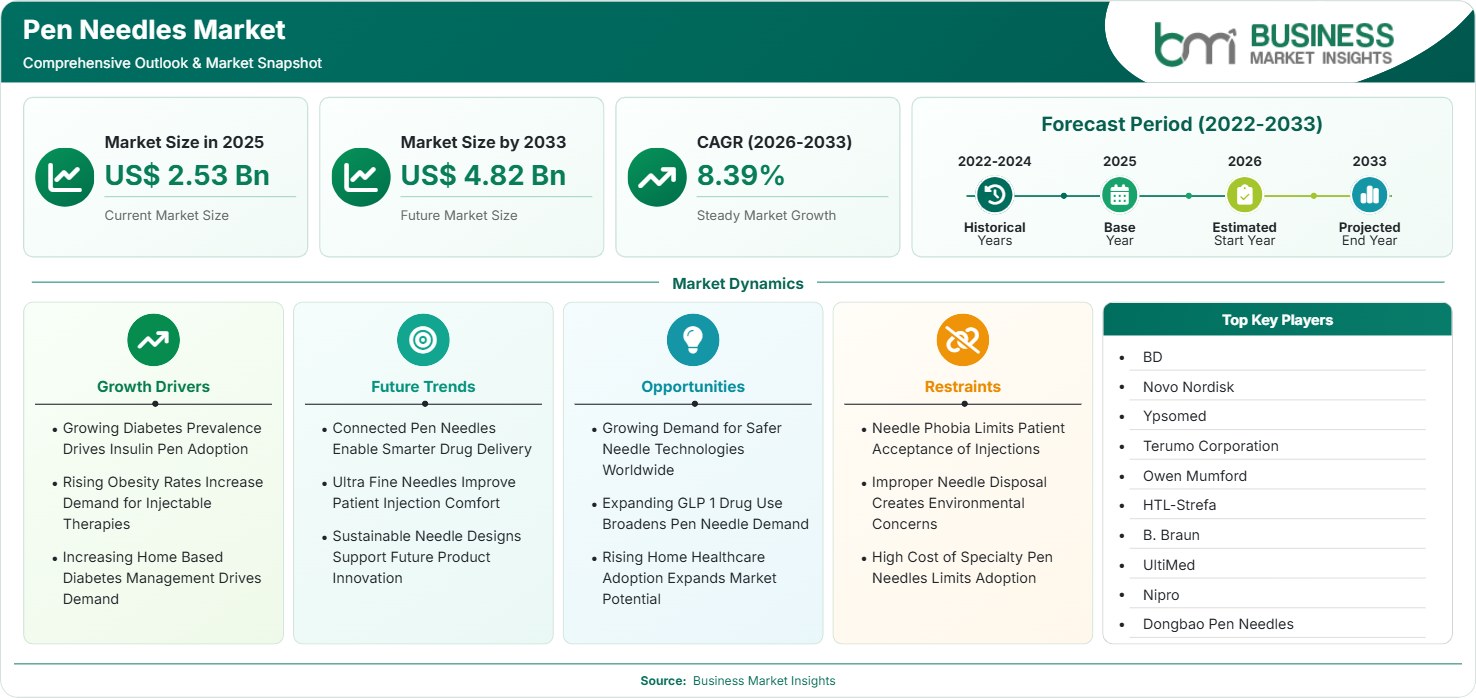
The Pen Needles Market size was valued at US$ 2.53 billion in 2025 and is projected to reach US$ 4.82 billion by 2033, growing at a CAGR of 8.39% during 2026–2033. Rising diabetes prevalence, increasing adoption of insulin delivery devices, growing obesity-related injectable therapy demand, and expansion of home-based disease management are driving market growth. Opportunities are emerging through safer needle technologies, increasing GLP-1 therapy adoption, and broader home healthcare penetration.

Report Coverage
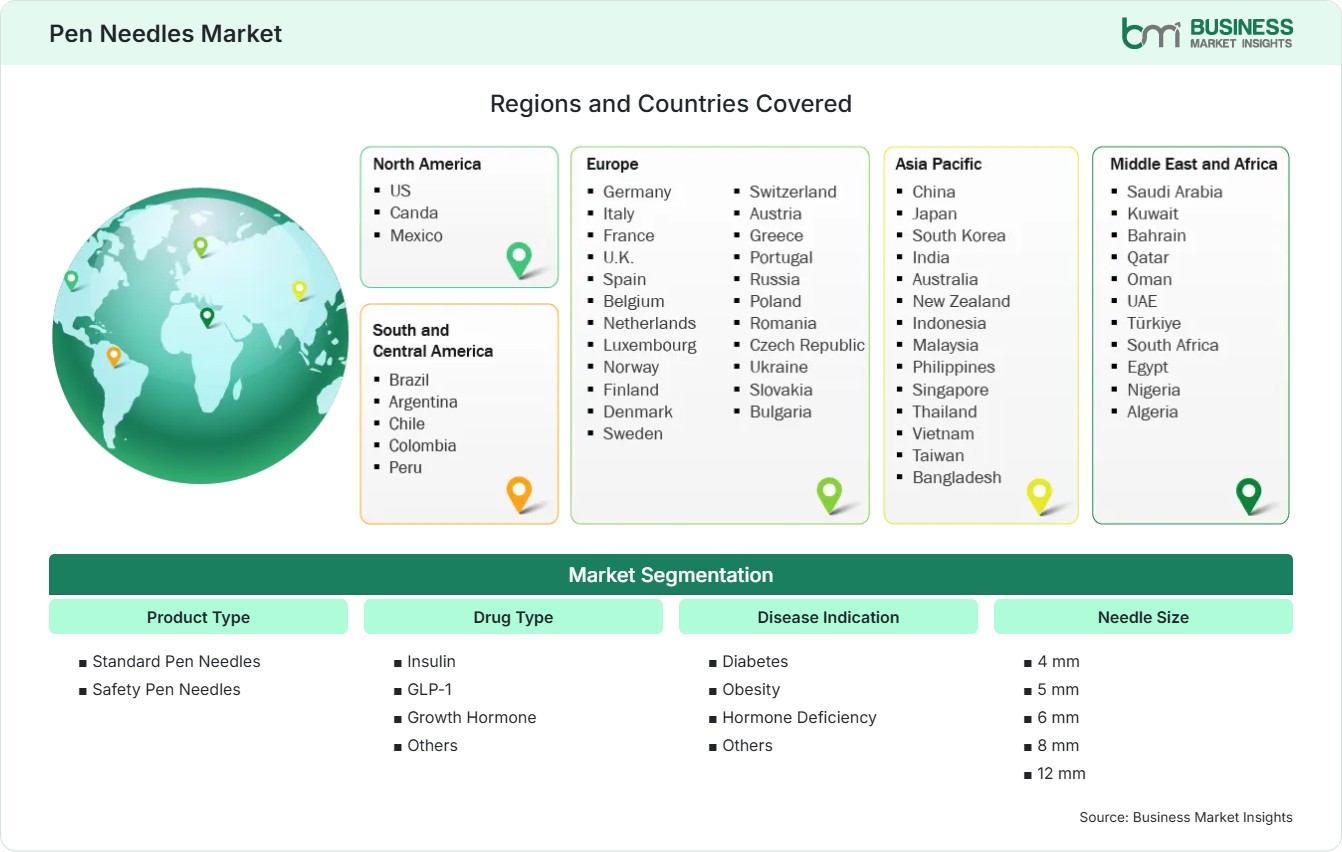
  • Product Type: Standard Pen Needles, Safety Pen Needles
  • Drug Type: Insulin, GLP-1, Growth Hormone, Others
  • Disease Indication: Diabetes, Obesity, Hormone Deficiency, Others
  • Needle Size: 4 mm, 5 mm, 6 mm, 8 mm, 12 mm
  • Distribution Channel: Hospital Pharmacy, Retail Pharmacy, Online Pharmacy
US$ 2.53 Bn Market size in 2025
US$ 4.82 Bn Market Size by 2033
8.39% CAGR, 2026 - 2033
2026-2033 Forecast Period

01 AI Overview

Pen Needles Market Summary

  • North America Region: North America accounted for 38%–41% share in 2025 and is projected to grow at a CAGR of 7.8%–8.3% during 2026–2033. Growth is supported by high diabetes prevalence, advanced healthcare infrastructure, strong adoption of self-injection devices, and increasing preference for home-based care. The U.S. represents 82%–86% of North American demand, supported by widespread insulin therapy adoption, favorable reimbursement systems, and a CAGR of 7.9%–8.4% during 2026–2033.
  • Fastest Growing Region: Asia Pacific represented 24%–27% share in 2025 and is expected to expand at a CAGR of 9.0%–9.5% during 2026–2033. Growth is driven by rising diabetes cases, improving healthcare access, increasing awareness of injectable therapies, and expanding pharmaceutical distribution networks.
  • Leading Segment: Standard Pen Needles accounted for 65%–69% share in 2025 and are projected to grow at a CAGR of 7.7%–8.2% during 2026–2033. Segment growth is supported by widespread insulin usage, affordability advantages, and established patient familiarity.
  • High Growth Segment: Safety Pen Needles represented 31%–35% share in 2025 and are expected to grow at a CAGR of 9.2%–9.7% during 2026–2033. Rising focus on injection safety, healthcare worker protection, and patient convenience is supporting adoption.
  • Key Market Opportunity: Growing demand for advanced injection safety solutions, GLP-1 therapies, and self-administration technologies is creating opportunities for manufacturers developing patient-friendly and innovative pen needle products.
  • Major Market Players: BD, Novo Nordisk, Ypsomed, Terumo Corporation, Owen Mumford, HTL-Strefa, B. Braun, UltiMed, Nipro, Dongbao Pen Needles.
02 Strategic Insights

Pen Needles Market: Strategic Insights

pen-needles-market-market-strategic-framework
FREE PDF
Request your free sample
Request free sample
03 Stakeholder View

Key Takeaways

  • The Pen Needles Market ecosystem includes needle manufacturers, insulin and pharmaceutical companies, medical device providers, hospitals, pharmacies, diabetes care specialists, and home healthcare networks supporting injectable therapy delivery.
  • Safety pen needles, compatible injection systems, and products designed for GLP-1 therapies provide significant growth opportunities as patients increasingly prioritize convenience and safer self-administration.
  • Innovation is shifting toward thinner needles, improved lubrication technologies, safety mechanisms, reduced injection discomfort, and device compatibility for diverse therapeutic applications.
  • Asia Pacific provides an attractive expansion opportunity due to rising diabetes prevalence, improving healthcare access, increasing pharmaceutical availability, and growing adoption of self-injection practices.
  • Strategic investments are increasingly directed toward injection device technologies, chronic disease management platforms, manufacturing capacity expansion, and partnerships between medical device and pharmaceutical companies.
  • Product reliability, regulatory compliance, patient comfort, and compatibility with leading drug delivery systems remain important competitive factors influencing market positioning.
04 Geographic Outlook

Pen Needles Market Regional Highlights

North America Pen Needles Market

North America held 38%–41% share in 2025 and is projected to grow at a CAGR of 7.8%–8.3% during 2026–2033. The region benefits from advanced diabetes management infrastructure, high adoption of insulin pens, strong healthcare reimbursement frameworks, and established medical device manufacturers. The Pen Needles Market share is supported by increasing demand for home-based treatment, patient convenience, and safer injection technologies. The United States remains the largest contributor due to high chronic disease prevalence and widespread availability of advanced drug delivery systems.

  • The U.S. market is supported by strong insulin pen adoption and increasing demand for convenient diabetes management solutions.
  • Canada is experiencing increased adoption of self-injection technologies due to improving chronic disease management programs.
  • Medical device companies are investing in safer needle designs to improve patient confidence and healthcare worker protection.
  • Retail and online pharmacies are expanding access to pen needles through convenient distribution models.
  • Growing obesity treatment demand is creating additional opportunities for injectable therapy accessories.

US Pen Needles Market

The U.S. accounted for 82%–86% of North America’s share in 2025 and is expected to grow at a CAGR of 7.9%–8.4% during 2026–2033. Growth is supported by high diabetes prevalence, widespread insulin therapy adoption, and increasing use of injectable medications for chronic disease management. The country has strong demand for both standard and safety pen needles due to established healthcare access and increasing preference for home-based treatment approaches.

  • Diabetes care providers are encouraging self-management through easy-to-use injection technologies.
  • GLP-1 medication adoption is increasing demand for compatible injection accessories.
  • Healthcare systems are emphasizing safer injection practices to reduce administration-related risks.
  • Online pharmacy channels are improving product accessibility for chronic disease patients.

Europe Pen Needles Market

Europe accounted for 26%–29% share in 2025 and is projected to grow at a CAGR of 7.2%–7.7% during 2026–2033. The region benefits from strong healthcare systems, increasing diabetes management initiatives, and adoption of advanced injection technologies. Germany, the United Kingdom, France, and Italy represent major markets, while Nordic countries are adopting safety-focused healthcare practices. Regulatory emphasis on patient safety and medical device standards supports market development.

  • Germany remains a leading market due to advanced healthcare infrastructure and medical device manufacturing capabilities.
  • The United Kingdom is witnessing increased adoption of self-injection technologies for chronic disease management.
  • France and Italy are expanding access to diabetes care products through pharmacy networks.
  • European manufacturers are focusing on sustainable production and safer needle technologies.
  • Healthcare providers are promoting patient education to improve injection technique and adherence.

Asia Pacific Pen Needles Market

Asia Pacific represented 24%–27% share in 2025 and is expected to register a CAGR of 9.0%–9.5% during 2026–2033. The region is experiencing rapid expansion due to rising diabetes prevalence, increasing healthcare expenditure, and improving access to injectable therapies. China, India, Japan, and South Korea are key contributors. Growing awareness of self-care management and expanding pharmaceutical distribution networks are strengthening regional demand.

  • China is witnessing rising demand due to increasing diabetic population and healthcare modernization initiatives.
  • India is expanding adoption through improved diabetes awareness and growing pharmaceutical accessibility.
  • Japan is focusing on advanced injection technologies for elderly diabetes patients.
  • South Korea is adopting innovative drug delivery solutions through healthcare technology integration.
  • Emerging economies are creating opportunities through expanding retail pharmacy networks.

Rest of World Pen Needles Market

Rest of World accounted for 8%–10% share in 2025 and is projected to grow at a CAGR of 8.0%–8.5% during 2026–2033. Latin America, the Middle East, and Africa are experiencing gradual growth due to rising chronic disease burden, healthcare infrastructure development, and improved access to injectable medicines. Brazil, Mexico, Saudi Arabia, and South Africa represent important markets supported by expanding healthcare services.

Increasing investments in diabetes care programs and private healthcare facilities are improving availability of injection products across developing regions.

  • Latin American countries are increasing access through pharmacy expansion and chronic disease management programs.
  • Middle Eastern markets are investing in healthcare modernization and diabetes treatment infrastructure.
  • African markets are gradually improving access to essential medical devices through healthcare initiatives.
  • International manufacturers are strengthening regional distribution partnerships.
global-market-geography
FREE PDF
Request your free sample
Request free sample
05 Segment Analysis

Pen Needles Market Segmentation

Product Type

The Product Type segment is led by Standard Pen Needles, which accounted for 65%–69% share in 2025 and are projected to grow at a CAGR of 7.7%–8.2% during 2026–2033. Standard products maintain widespread adoption due to affordability, compatibility with commonly used injection devices, and established patient familiarity. Safety Pen Needles are gaining momentum as healthcare providers emphasize safer injection practices. The Pen Needles Market scope is expanding through innovations focused on reducing discomfort, improving usability, and supporting chronic disease management.

  • Standard Pen Needles: Standard pen needles remain widely adopted due to cost advantages, broad compatibility, and routine use among insulin therapy patients.
  • Safety Pen Needles: Safety pen needles are gaining demand through improved protection mechanisms, reduced injury risks, and healthcare safety requirements.

Drug Type

The Drug Type segment is influenced by increasing adoption of insulin therapies and expanding injectable medication applications. Insulin remains the dominant application due to diabetes prevalence, while GLP-1 therapies are creating new opportunities. Growth is supported by increasing chronic disease management requirements and pharmaceutical innovation.

  • Insulin: Insulin applications represent the primary demand area due to widespread diabetes treatment requirements and long-term patient usage.
  • GLP-1: GLP-1 therapies are increasing demand due to expanding obesity and metabolic disease treatment applications.
  • Growth Hormone: Growth hormone therapies require specialized injection systems for patient-specific treatment needs.
  • Others: Other injectable medications contribute through expanding applications across healthcare specialties.

Disease Indication

The Disease Indication segment is driven by increasing prevalence of chronic conditions requiring injectable therapies. Diabetes remains the leading application, while obesity and hormone-related disorders are contributing to future demand growth.

  • Diabetes: Diabetes represents the largest application area due to extensive insulin therapy requirements worldwide.
  • Obesity: Obesity treatment growth is increasing demand through expanding injectable medication adoption.
  • Hormone Deficiency: Hormone deficiency treatments support demand through regular injection requirements.
  • Others: Other conditions contribute through specialized injectable therapy applications.

Needle Size

The Needle Size segment is evolving as manufacturers focus on patient comfort, injection efficiency, and improved adherence. Shorter needle sizes are gaining popularity due to ease of use and reduced discomfort.

  • 4 mm: Four-millimeter needles are preferred for comfortable injections and suitability across diverse patient groups.
  • 5 mm: Five-millimeter needles provide balanced usability and reliable medication delivery.
  • 6 mm: Six-millimeter needles continue supporting patients requiring slightly longer injection options.
  • 8 mm: Eight-millimeter needles remain used in specific patient requirements and treatment preferences.
  • 12 mm: Twelve-millimeter needles serve specialized applications requiring deeper injection delivery.

Distribution Channel

The Distribution Channel segment is expanding through improved pharmacy access and digital healthcare adoption. Online pharmacies are gaining importance by providing convenience and recurring supply management for chronic disease patients.

  • Hospital Pharmacy: Hospital pharmacies support patients requiring professional guidance and prescribed injection products.
  • Retail Pharmacy: Retail pharmacies provide convenient access for routine purchase and replacement of pen needles.
  • Online Pharmacy: Online pharmacies are expanding through digital ordering, home delivery, and improved accessibility for long-term therapy users.
06 Market Forces

Pen Needles Market Dynamics

Key Market Drivers

Growing Diabetes Prevalence Drives Insulin Pen Adoption

The growing worldwide burden of diabetes has been one of the most important drivers of the Pen Needles Market growth. The rise in the number of type 1 and type 2 diabetes cases has resulted in the rising requirement for accurate insulin injection systems, especially among those needing frequent self-injection. The increasing popularity of insulin pens, along with compatible pen needles, is attributed to the convenience and ease of use they offer compared to other injection methods. Efforts by health organizations to promote self-management practices have also contributed to market growth.

Rising Obesity Rates Increase Demand for Injectable Therapies

The increasing rate of obesity cases worldwide is leading to the creation of new avenues for growth in the market for injectable therapy devices, as more advanced treatment methods for weight loss gain popularity amongst health professionals. The rise in popularity of GLP-1 therapies is driving up the need for pen needles to be used in conjunction with the treatments, especially for those patients who are required to undergo regular self-injections. The Pen Needles Market trends suggest that the evolving treatment practices are pushing companies to diversify their portfolios beyond just insulin products. Obesity management, higher healthcare spending, and greater knowledge about metabolic disorders are helping the use of injectable drugs gain acceptance. As pharmaceutical companies keep developing treatments for obesity and other associated diseases, the need for safe and easy-to-use injection devices is growing.

Increasing Home Based Diabetes Management Drives Demand

The move towards home-based treatment of diabetes is making a huge impact on the demand for pen needles because many people will be treating themselves at home. Self-injection has become easier as it allows more convenience to the patients and helps them avoid visiting hospitals. Home-based care has become a popular concept due to patient education and the emergence of various healthcare platforms and convenient injection devices. The involvement of caregivers and healthcare support systems remotely has also led to the adoption of home-based care methods. The trend will continue to grow as patients are placed at the center of the healthcare system.

Key Market Opportunities

Growing Demand for Safer Needle Technologies Worldwide

Growing concerns about safe injections are creating new opportunities for manufacturers to develop improved needle technology, which can help reduce risks associated with the injection process. There is growing interest in safety-pen needles among healthcare professionals due to the safety measures they provide. There are growing numbers of healthcare organizations adopting medical safety devices to improve workplace safety standards. According to the Pen Needles Market forecast, there are many opportunities for manufacturers that develop innovative safety solutions with easy-to-use features.

Expanding GLP-1 Drug Use Broadens Pen Needle Demand

The growing use of GLP-1 therapies for the treatment of obesity and metabolic diseases represents an immense opportunity for the pen needle market. Often, such treatments include self-injections, hence the need for pen needles. With the growing number of new GLP-1 drugs being developed by pharmaceutical firms, it is expected that the number of drug delivery devices needed will increase. According to the Pen Needles Market analysis, manufacturers have been concentrating on developing needles that can be used with the new drugs. Clinical use of GLP-1 therapies other than diabetes treatment represents another area of opportunity.

Rising Home Healthcare Adoption Expands Market Potential

As home healthcare practices become more popular, new opportunities are emerging for pen needles due to increased demand for self-administration products. Patients who have been diagnosed with chronic diseases will need reliable medical equipment that can help them administer medications regularly. Healthcare professionals are advocating for a home healthcare approach to streamline treatment for patients and reduce pressure on the health system. Digital health systems, monitoring systems, and online pharmacies are providing greater access to injection equipment. New markets are also presenting new prospects.

Market Restraints and Challenges

Needle Phobia Limits Patient Acceptance of Injections

Factor: Fear of needles remains a psychological barrier that can affect patient willingness to begin or continue injectable therapies. Impact: Needle phobia might affect the compliance with prescribed medications, delay treatment, and cause problems for the healthcare professionals treating patients with certain diseases. The problem of needle phobia still affects the willingness of patients to take injectable drugs due to advances in technology and medical devices for injections. Some patients might have a feeling of anxiety, discomfort, or even some problems with the administration of medication through injections. Such an issue becomes especially relevant for people who have to use injections on a regular basis because of their disease. One example of the disease that requires injections on a permanent basis is diabetes mellitus.

Improper Needle Disposal Creates Environmental Concerns

Factor: Improper disposal of used pen needles can create safety risks, environmental concerns, and challenges for healthcare waste management systems. Impact: Disposal issues may lead to additional regulations and increased demand for better ways to collect, recycle, or dispose of medical waste. Increased use of injectable treatments has led to the recognition of the need for proper medical waste disposal. Pen needles should be disposed of properly to prevent injuries, contamination, and environmental impacts. Disposal facilities that are lacking, especially in underdeveloped countries, pose an extra challenge to healthcare systems. Awareness is being raised on the proper disposal of medical waste through government and healthcare bodies.

07 Company Analysis

Competitive Landscape

The competitive landscape includes medical device manufacturers, pharmaceutical companies, and healthcare technology providers focused on improving injection safety, patient comfort, and product compatibility. Companies are investing in advanced needle designs, manufacturing efficiency, strategic partnerships, and expanded distribution networks to strengthen their market position. The Pen Needles Market Report highlights that competitive differentiation depends on product quality, regulatory compliance, innovation capabilities, and the ability to support evolving chronic disease management requirements.

Company Name

Overview

Products and Services Relevant to this Market

BD

Global medical technology company specializing in injection and medication delivery solutions.

Pen needles, safety injection technologies, and diabetes care products.

Novo Nordisk

Global pharmaceutical company focused on diabetes and metabolic disease treatments.

Insulin therapies, injection systems, and diabetes management solutions.

Ypsomed

Medical device company specializing in injection and drug delivery systems.

Pen needles, injection devices, and self-medication technologies.

Terumo Corporation

Japanese medical technology company providing healthcare devices worldwide.

Injection products, medical devices, and drug delivery solutions.

Owen Mumford

Healthcare device manufacturer focused on self-injection technologies.

Injection devices, pen needle solutions, and patient-focused delivery systems.

HTL-Strefa

Medical device company specializing in injection products.

Pen needles, safety needles, and diabetes care accessories.

B. Braun

Global healthcare company offering medical and pharmaceutical solutions.

Injection devices, safety products, and healthcare technologies.

UltiMed

Medical device manufacturer providing diabetes care products.

Pen needles and injection-related healthcare products.

Nipro

Healthcare company producing medical devices and pharmaceutical solutions.

Injection systems, pen needles, and diabetes care products.

Dongbao Pen Needles

Manufacturer focused on diabetes-related injection products.

Pen needles and supporting injection accessories.

10 Trust & Transparency

Research Methodology

The market analysis combines proprietary research with secondary data from government agencies, company disclosures, regulatory filings, industry databases and expert interviews. Market estimates are validated through data triangulation, cross-market benchmarking and analyst review.

View Full Research Methodology

11 Questions Answered

Frequently Asked Questions

What does the Pen Needles Market Report provide?

The market report provides insights into market size, segmentation, regional trends, competitive landscape, growth drivers, opportunities, restraints, and future industry developments. It helps stakeholders understand market dynamics, emerging opportunities, and key factors influencing industry growth through 2033.

What challenges affect market growth?

Major challenges include needle phobia, improper disposal practices, environmental concerns, and the need for continuous product innovation. These factors may influence patient acceptance, regulatory requirements, and the development of sustainable solutions for needle disposal.

Why are safety pen needles gaining importance?

Safety pen needles help reduce accidental injuries, improve healthcare worker protection, and provide enhanced confidence for patients and caregivers. Increasing focus on injection safety standards and improved patient experience is encouraging healthcare facilities to adopt advanced needle technologies.

How is GLP-1 therapy influencing pen needle demand?

The increasing adoption of GLP-1 therapies for diabetes and obesity management is expanding demand for compatible injection accessories and creating new growth opportunities. As injectable weight management treatments gain acceptance, demand for convenient and reliable pen needle solutions is expected to increase.

Which product type dominates the Pen Needles Market?

Standard pen needles represent the leading product type due to widespread insulin usage, affordability, and compatibility with commonly used injection devices. Their established adoption among diabetes patients and healthcare providers continues to support their dominant market position.

What factors are driving the Pen Needles Market?

The market is driven by rising diabetes prevalence, increasing insulin pen adoption, growing obesity treatment demand, expansion of home healthcare, and increasing use of injectable therapies. Growing awareness of self-management solutions and improvements in injection technologies are further supporting adoption across hospitals, pharmacies, and home care settings.

Access the Full Pen Needles Market Report

Get segment-level forecasts, regional estimates, competitive benchmarking, company profiles and downloadable Excel datasets.

Access the full Pen Needles Market Report
350 pages PDF & Excel | 2026-08-05