Insulin Delivery Devices Market Regional Highlights
North America Insulin Delivery Devices Market
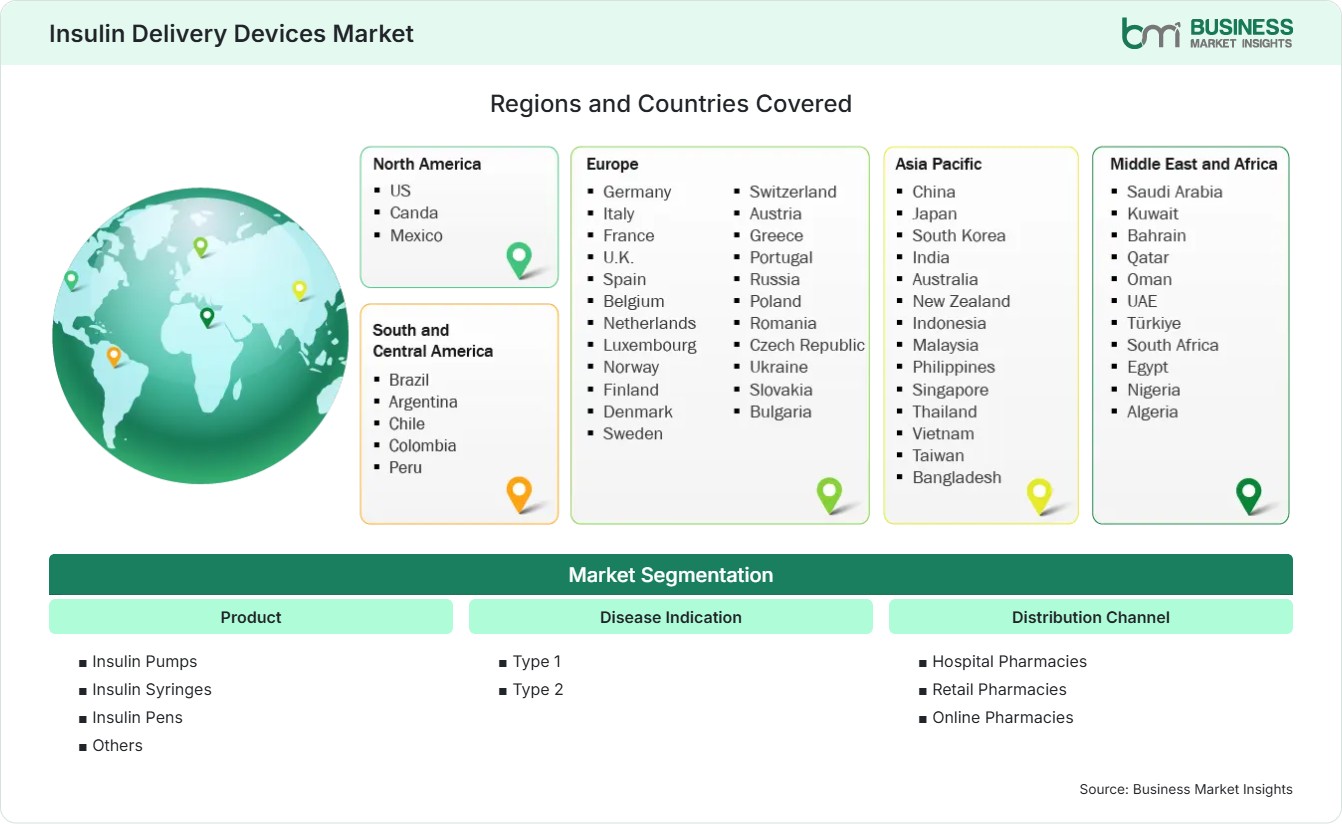
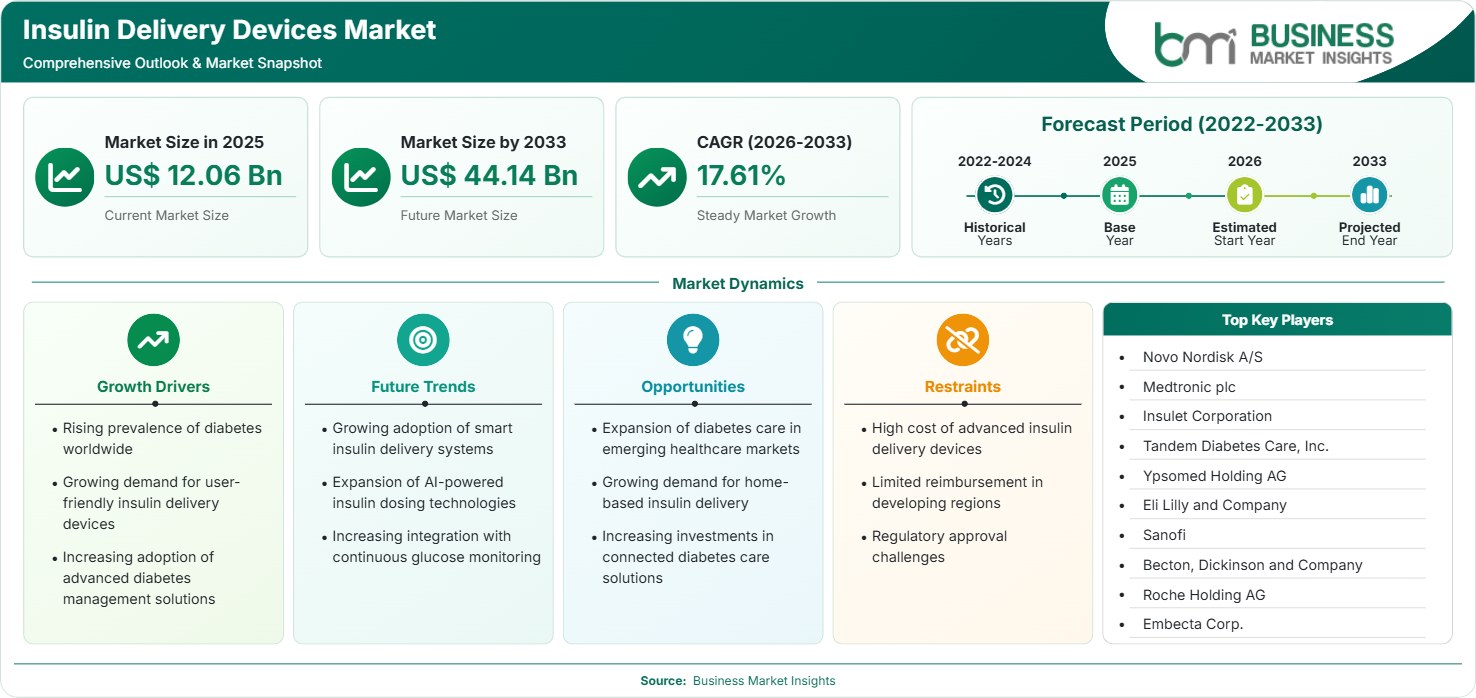
North America accounted for 38%–41% share in 2025 and is expected to grow at a CAGR of 16.80%–17.40% during 2026–2033. The region benefits from advanced healthcare infrastructure, strong reimbursement systems, and high adoption of innovative diabetes technologies. The Insulin Delivery Devices Market share is supported by widespread use of insulin pumps, smart pens, and connected care solutions. The United States remains the largest contributor due to strong medical device adoption and diabetes management investments.
- The US market is expanding through adoption of automated insulin delivery systems.
- Healthcare providers are increasing use of digital diabetes management solutions.
- Device manufacturers are launching patient-focused insulin technologies.
- Strong reimbursement frameworks support advanced device adoption.
US Insulin Delivery Devices Market
The US represents 31%–34% share of North America in 2025 and is projected to grow at a CAGR of 17.00%–17.60% during 2026–2033. The country remains a key market due to increasing diabetes prevalence, high healthcare expenditure, and rapid adoption of advanced insulin technologies. Patients and healthcare providers are increasingly adopting connected devices that support improved monitoring, treatment adjustment, and self-management.
- Insulin pump adoption is increasing among technology-oriented diabetes patients.
- Smart insulin pens are gaining acceptance due to convenience and tracking features.
- Digital health integration is improving diabetes care management.
Europe Insulin Delivery Devices Market
Europe accounted for 22%–25% share in 2025 and is forecast to grow at a CAGR of 16.40%–17.10% between 2026–2033. The region benefits from established healthcare systems, increasing diabetes management initiatives, and growing adoption of advanced medical devices. Germany, the United Kingdom, France, and Italy are major contributors for insulin delivery devices market. Germany demonstrates a CAGR of 16.70%–17.30% due to strong healthcare infrastructure, medical technology adoption, and diabetes care investments.
- European healthcare systems are supporting adoption of advanced insulin technologies.
- Manufacturers are expanding connected device offerings across regional markets.
- Diabetes awareness programs are improving treatment accessibility.
- Home-based disease management is gaining importance among patients.
Asia Pacific Insulin Delivery Devices Market
Asia Pacific accounted for 27%–30% share in 2025 and is projected to grow at a CAGR of 18.20%–18.90% during 2026–2033. The region represents the fastest-growing insulin delivery devices market due to rising diabetes cases, improving healthcare access, and increasing adoption of medical technologies. China, India, Japan, and South Korea are key contributors. China demonstrates a CAGR of 18.40%–19.00% due to expanding healthcare investments and growing demand for diabetes management devices.
- China is increasing adoption of advanced insulin delivery solutions.
- India is witnessing demand growth through expanding diabetes care services.
- Japan and South Korea are adopting connected healthcare technologies.
- Regional manufacturers are focusing on affordable device development.
Rest of World Insulin Delivery Devices Market
Rest of World accounted for 6%–9% share in 2025 and is expected to grow at a CAGR of 15.80%–16.50% during 2026–2033. Latin America, the Middle East, and Africa are witnessing gradual adoption in insulin delivery devices market due to increasing diabetes prevalence, improving healthcare infrastructure, and rising awareness regarding advanced treatment options. Brazil, Mexico, Saudi Arabia, and South Africa are emerging markets with improving access to diabetes management technologies. Healthcare investments, medical device availability, and expansion of private healthcare networks are supporting regional opportunities.
- Brazil and Mexico are expanding diabetes care infrastructure and medical device accessibility.
- Middle Eastern countries are investing in advanced chronic disease management solutions.
- African healthcare systems are improving access through public and private initiatives.
- Online distribution channels are supporting wider device availability in underserved areas.