
Spices & Seasonings Market Outlook: Size, Share, Trends, Growth Analysis, Competitive Landscape & Forecast, 2026-2033

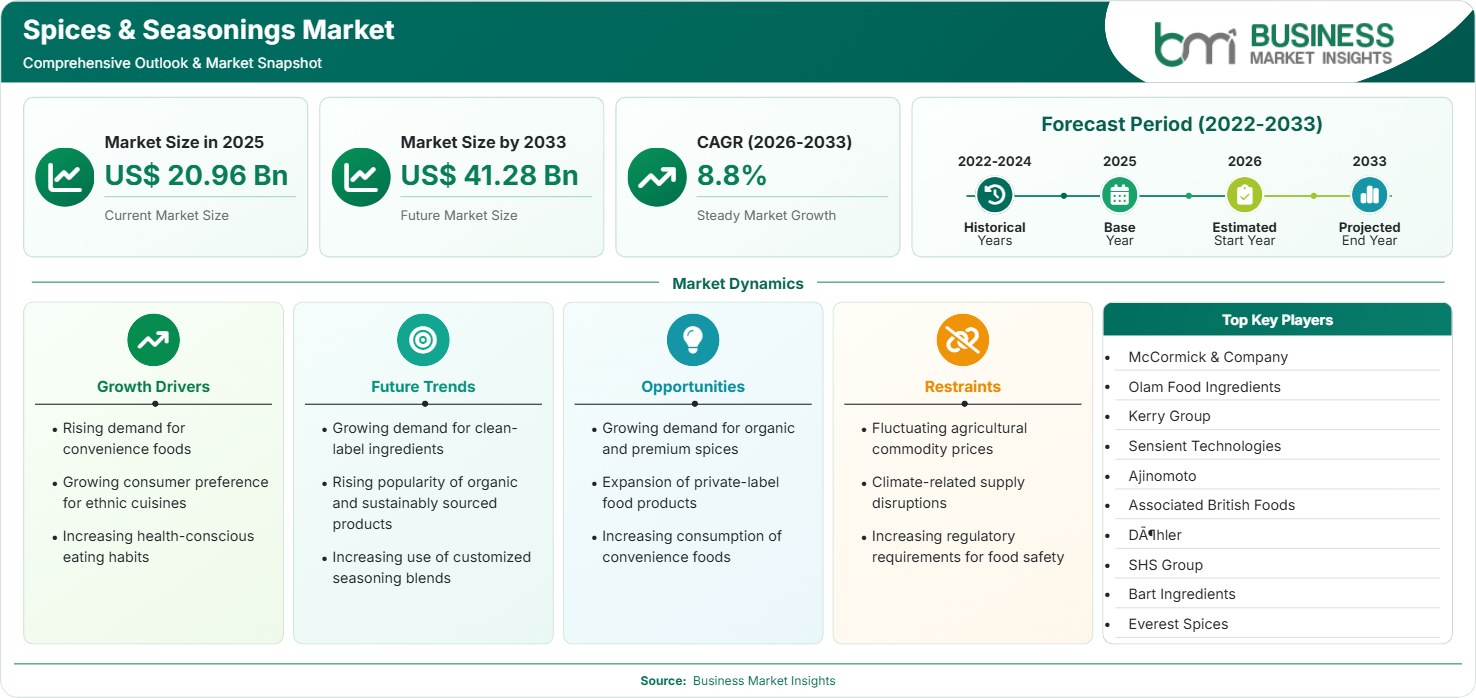
The Spices & Seasonings Market size was valued at US$ 20.96 Billion in 2025 and is projected to reach US$ 41.28 Billion by 2033, growing at a CAGR of 8.8% from 2026 to 2033. Growth is driven by rising convenience food consumption, increasing demand for ethnic flavors, health-focused dietary preferences, premium spice adoption, organic product expansion, and private-label food product development.

Report Coverage
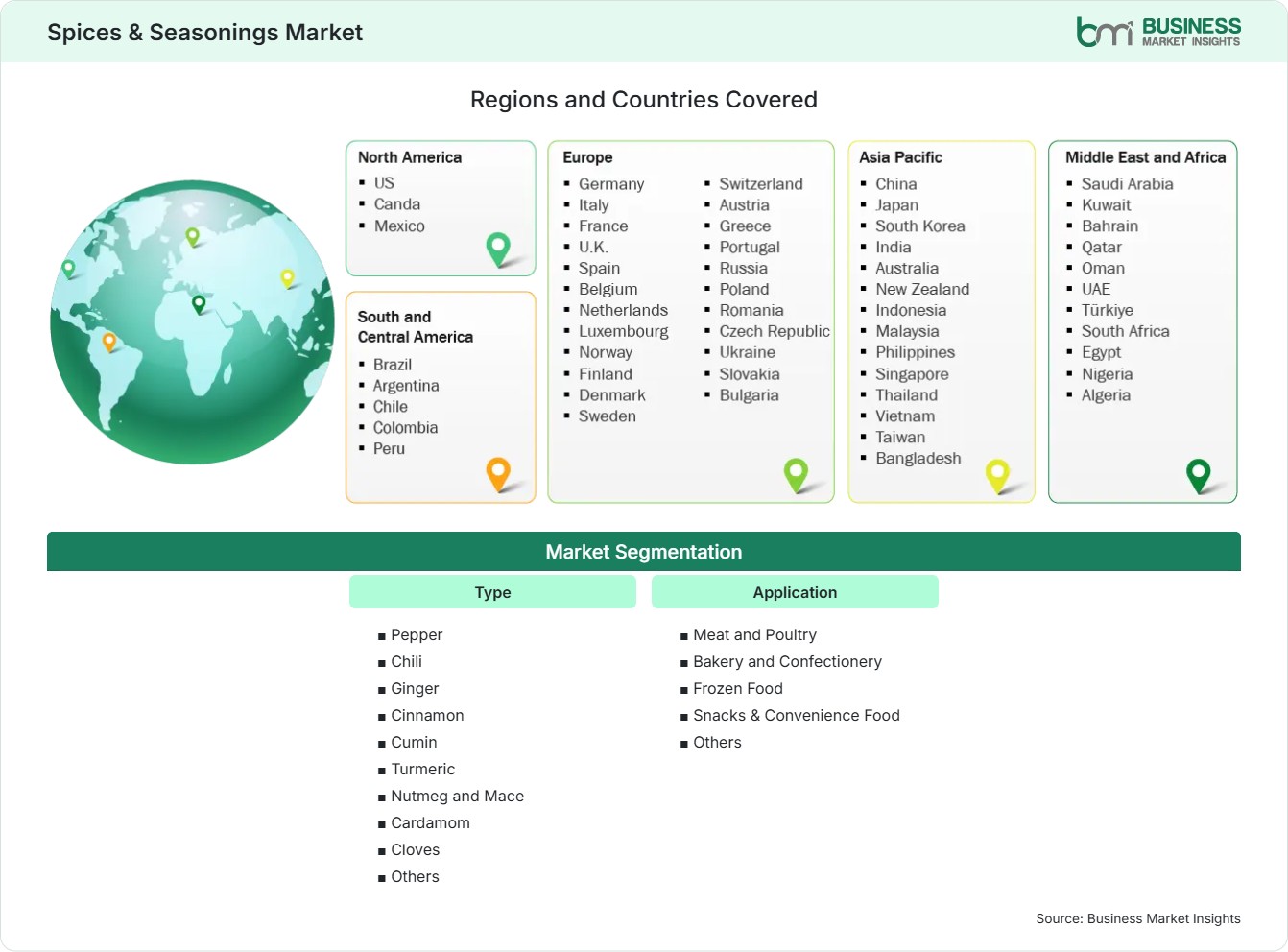
  • Type: Pepper, Chili, Ginger, Cinnamon, Cumin, Turmeric, Nutmeg and Mace, Cardamom, Cloves, and Others
  • Application: Meat and Poultry, Bakery and Confectionery, Frozen Food, Snacks & Convenience Food, and Others
US$ 20.96 Bn Market size in 2025
US$ 41.28 Bn Market Size by 2033
8.8% CAGR, 2026 - 2033
2026-2033 Forecast Period

AI Overview

Spices & Seasonings Market Summary

  • North America Region: North America holds a market share of 27%–30% in 2025 and is projected to grow at a CAGR of 8.2%–9.0% during 2026–2033, supported by demand for international cuisines, clean-label ingredients, convenience foods, and premium seasoning blends. The US market is expected to register a CAGR of 8.4%–9.2% through 2033, driven by packaged food innovation and multicultural flavor preferences.
  • Fastest Growing Region: Asia Pacific represents 35%–38% share in 2025 and is forecast to expand at a CAGR of 9.5%–10.3% during 2026–2033, supported by traditional spice consumption, expanding food processing industries, rising disposable income, growing packaged food demand, and increasing exports from major spice-producing countries.
  • Leading Segment: Pepper accounts for a market share of 18%–21% in 2025 and is projected to grow at a CAGR of 8.5%–9.2% during 2026–2033, supported by broad culinary applications, global trade availability, processed food demand, and widespread use in household and commercial food preparation.
  • High Growth Segment: Turmeric represents a high-growth segment with a market share of 8%–11% in 2025 and is expected to grow at a CAGR of 10.0%–10.8% during 2026–2033, driven by increasing awareness of functional ingredients, wellness-oriented consumption, natural coloring demand, and expanding applications in food and beverage products.
  • Key Market Opportunity: Increasing demand for organic spices, premium seasoning products, private-label offerings, and convenience food applications is creating opportunities for companies to strengthen product portfolios and expand across emerging consumer markets.
  • Major Market Players: McCormick & Company, Olam Food Ingredients, Kerry Group, Sensient Technologies, Ajinomoto, Associated British Foods, Döhler, SHS Group, Bart Ingredients, Everest Spices.
Strategic Insights

Spices & Seasonings Market: Strategic Insights

Spices & Seasonings Market Strategic Framework
FREE PDF
Request your free sample
Request free sample
Stakeholder View

Key Takeaways

  • The spice value chain is becoming more integrated as producers, processors, and food manufacturers focus on traceability, sustainable sourcing, and quality control to address changing consumer expectations and regulatory requirements.
  • Premium, organic, and customized seasoning solutions represent major growth opportunities as consumers increasingly seek healthier food choices and distinctive culinary experiences across retail and foodservice channels.
  • Product innovation is shifting toward functional ingredients, clean-label formulations, and blended seasoning products designed for convenience foods, plant-based products, and health-oriented diets.
  • Asia Pacific remains a strategic growth region due to its established spice production ecosystem, expanding food processing sector, rising domestic consumption, and increasing export capabilities.
  • Competitive strategies are increasingly focused on acquisitions, private-label partnerships, supply chain strengthening, and development of differentiated seasoning portfolios to capture evolving consumer demand.
  • Digital commerce and organized retail expansion are creating additional opportunities for spice companies by improving consumer access to premium products and enabling direct-to-consumer product strategies.
Geographic Outlook

Spices & Seasonings Market Regional Highlights

North America Spices & Seasonings Market

North America accounted for a 27%–30% share of the Spices & Seasonings Market in 2025 and is projected to grow at a CAGR of 8.2%–9.0% during 2026–2033. The region is supported by increasing consumption of ethnic cuisines, demand for convenience foods, premium seasoning blends, and clean-label ingredients. The US remains the largest contributor due to strong food processing industries, multicultural consumers, and growing demand for innovative flavor solutions across retail and foodservice sectors.

  • The US market benefits from rising demand for international flavors, packaged foods, and premium seasoning products across household and commercial applications.
  • Food manufacturers are expanding seasoning portfolios to meet consumer interest in natural ingredients, reduced additives, and customized flavor experiences.
  • Retail expansion and e-commerce growth are improving access to specialty spices, organic products, and premium seasoning categories.
  • Restaurant chains are increasing adoption of differentiated spice blends to develop unique menus and enhance customer experiences.

US Spices & Seasonings Market

The US represented a 23%–26% share of the Spices & Seasonings Market in 2025 and is expected to grow at a CAGR of 8.4%–9.2% from 2026–2033. Growth is supported by strong packaged food demand, increasing interest in global cuisines, and rising consumer preference for healthier flavor-enhancing ingredients. Food companies are investing in innovative seasoning formats, sustainable sourcing, and product diversification to address changing dietary preferences.

  • Increasing multicultural demographics are supporting demand for international spice blends and ethnic cuisine-inspired food products.
  • Food manufacturers are introducing clean-label seasoning products to meet consumer expectations for natural and minimally processed ingredients.
  • Premium spice categories are gaining traction through specialty retail, online channels, and direct-to-consumer food brands.

Europe Spices & Seasonings Market

Europe held a 20%–23% share of the Spices & Seasonings Market in 2025 and is forecast to expand at a CAGR of 8.0%–8.8% during 2026–2033. The region benefits from strong food processing industries, growing demand for international cuisines, and increasing preference for natural ingredients. Germany, the United Kingdom, France, Italy, and Spain represent leading markets due to established culinary traditions and expanding packaged food consumption.

  • Germany demonstrates strong demand through food manufacturing growth, premium seasoning adoption, and increasing interest in global flavor profiles.
  • The United Kingdom is expanding spice consumption through multicultural food preferences and rising demand for convenient meal solutions.
  • France and Italy are increasing adoption of specialty spices through gourmet food segments and premium culinary applications.
  • European manufacturers are focusing on sustainable sourcing and traceability systems to improve supply chain transparency.

Asia Pacific Spices & Seasonings Market

Asia Pacific accounted for a 35%–38% share of the Spices & Seasonings Market in 2025 and represents the fastest-growing region with a CAGR of 9.5%–10.3% during 2026–2033. The region benefits from established spice production, increasing food processing activities, rising urbanization, and growing consumer spending on packaged foods. India, China, Indonesia, Vietnam, and Thailand are major contributors due to strong agricultural capabilities and expanding domestic markets.

  • India remains a leading market due to strong spice production, domestic consumption, export capabilities, and growing packaged food applications.
  • China is experiencing increased demand through food processing expansion, urban consumption growth, and rising interest in diverse flavor profiles.
  • Southeast Asian countries are strengthening spice demand through culinary diversity, tourism growth, and expanding foodservice sectors.
  • Regional producers are investing in processing technologies, quality improvements, and sustainable farming practices to enhance competitiveness.

Rest of World Spices & Seasonings Market

The rest of the world represented a 10%–13% of the Spices & Seasonings Market share in 2025 and is projected to grow at a CAGR of 8.6%–9.4% during 2026–2033. Latin America, the Middle East, and Africa are witnessing increasing demand due to population growth, expanding food industries, and rising consumption of packaged and convenience foods. Growing retail penetration and international cuisine adoption are supporting regional market development.

  • Middle Eastern markets are increasing premium spice consumption through foodservice expansion, tourism development, and demand for traditional flavor profiles.
  • Latin American countries are experiencing growth through processed food expansion and rising adoption of diverse seasoning products.
  • African markets are improving spice accessibility through retail development and increasing investment in food processing infrastructure.
  • Regional companies are strengthening sourcing partnerships to improve product availability and supply chain reliability.
Global Market Geography
FREE PDF
Request your free sample
Request free sample
Segment Analysis

Spices & Seasonings Market Segmentation

Type

The type segment represents a diverse range of spice categories, including pepper, chili, ginger, cinnamon, cumin, turmeric, nutmeg and mace, cardamom, cloves, and other varieties. The segment accounted for the entire market revenue in 2025 and is projected to grow at a CAGR of 8.8% in the Spices & Seasonings Market Forecasts. Consumer preference for authentic flavors, functional ingredients, and diverse culinary experiences is influencing demand across households, restaurants, and food manufacturers. Companies are expanding sourcing networks and developing specialized blends to meet evolving applications.

  • Pepper: Pepper maintains strong demand due to widespread culinary usage, global availability, and extensive application in processed foods, sauces, snacks, and household cooking.
  • Chili: Chili consumption is increasing due to growing preference for spicy flavors, ethnic cuisines, and applications across sauces, snacks, ready meals, and foodservice products.
  • Ginger: Ginger demand is supported by its flavor characteristics, traditional applications, wellness positioning, and increasing use in beverages, bakery products, and functional food formulations.
  • Cinnamon: Cinnamon adoption is rising due to applications in bakery, confectionery, beverages, and consumer interest in naturally derived flavor ingredients.
  • Cumin: Cumin demand is expanding through ethnic cuisine growth, seasoning blends, and increasing use in processed food applications across global markets.
  • Turmeric: Turmeric is gaining momentum due to increasing awareness of functional ingredients, natural coloring applications, wellness trends, and clean-label food product development.
  • Nutmeg and Mace: Nutmeg and mace maintain demand through specialty culinary applications, bakery products, beverage formulations, and premium seasoning blends.
  • Cardamom: Cardamom adoption is supported by premium food applications, beverage innovations, traditional cuisines, and increasing demand for distinctive aromatic flavors.
  • Cloves: Cloves are used across culinary, bakery, beverage, and specialty applications, supported by strong aroma characteristics and traditional food preparation practices.

Application

The application segment defines the major usage areas for spices and seasonings across food industries, including meat and poultry, bakery and confectionery, frozen food, snacks and convenience food, and other applications. The segment accounted for the complete market revenue base in 2025 and is expected to expand at a CAGR of 8.8% during 2026–2033. Growth is supported by increasing processed food consumption, demand for diverse flavors, and product innovation by food manufacturers. The Spices & Seasonings Market trends indicate rising integration of seasoning solutions into convenient meal formats and premium food categories.

  • Meat and Poultry: Meat and poultry applications represent significant demand due to seasoning requirements, flavor enhancement, marinades, and processed protein product development.
  • Bakery and Confectionery: Bakery and confectionery producers use spices for flavor differentiation, premium product development, seasonal offerings, and consumer-focused product innovation.
  • Frozen Food: Frozen food manufacturers are increasing spice usage to improve taste profiles, maintain product appeal, and support convenient meal consumption patterns.
  • Snacks & Convenience Food: Snacks and convenience foods drive demand through increasing consumption of flavored products, ready-to-eat meals, and innovative seasoning combinations.
Market Forces

Spices & Seasonings Market Dynamics

Key Market Drivers

Rising Demand for Convenience Foods

Rising demand for convenience foods is a major driver of the Spices & Seasonings Market growth as consumers increasingly prefer ready-to-eat meals, frozen foods, and packaged products requiring enhanced flavors. Urbanization, changing lifestyles, and reduced meal preparation time are encouraging food manufacturers to develop products with diverse seasoning profiles.

The Spices & Seasonings Market trends indicate increasing collaboration between seasoning suppliers and food companies to create customized blends for convenience applications. Manufacturers are investing in flavor innovation, processing technologies, and ingredient solutions to address consumer expectations for quality and taste. Growth in packaged food consumption continues expanding opportunities across retail and foodservice channels.

Growing Consumer Preference for Ethnic Cuisines

Growing consumer preference for ethnic cuisines is increasing demand for diverse spices and seasoning combinations across global markets. Consumers are exploring international flavors through restaurants, packaged foods, and home cooking, encouraging manufacturers to introduce authentic spice blends inspired by regional cuisines. Migration patterns, culinary media, and global food availability are contributing to wider acceptance of traditional flavors.

 Food companies are expanding product portfolios with regional seasoning options to attract consumers seeking new taste experiences. This trend is supporting demand for ingredients such as chili, cumin, turmeric, cardamom, and other specialty spices across multiple applications.

Increasing Health-Conscious Eating Habits

Increasing health-conscious eating habits are influencing spice consumption as consumers seek natural ingredients, functional food components, and cleaner product formulations. Spices such as turmeric, ginger, and cinnamon are gaining attention due to their association with wellness-oriented diets and natural ingredient preferences.

 Food manufacturers are incorporating spices into products positioned around health, nutrition, and reduced artificial additives. The growing clean-label movement is encouraging companies to replace synthetic flavors and colors with naturally sourced alternatives. This shift is supporting innovation in spice-based formulations across beverages, snacks, functional foods, and premium food categories.

Key Market Opportunities

Growing Demand for Organic and Premium Spices

Growing demand for organic and premium spices is creating opportunities for companies operating in the Spices & Seasonings Market as consumers increasingly prioritize natural ingredients, sustainability, and superior-quality food products. Organic certifications, transparent sourcing practices, and clean-label positioning are becoming important purchasing factors across retail and foodservice channels.

Manufacturers are expanding premium spice portfolios with specialty varieties, organic blends, and ethically sourced ingredients to attract health-conscious consumers. The growth of wellness-oriented diets and demand for authentic flavors are encouraging companies to invest in advanced cultivation practices, supply chain traceability, and differentiated product offerings. Premiumization is creating higher-value opportunities across developed and emerging markets.

Expansion of Private-Label Food Products

The increasing use of private-label food products offers growth opportunities for retailers to develop exclusive seasonings in response to customer demand for reasonably priced, differentiated, high-quality products. Supermarkets, online retail, and specialized food retail are expanding their private-label spice range.

 Companies with efficient sourcing networks, quality assurance facilities, and production flexibility may be able to take advantage of greater collaboration with retailers. Growth in private labels is also aiding the development of packaging, flavors, and regional tastes. With retail organizations expanding around the world, private labels may be becoming an important strategy for market participants.

Increasing Consumption of Convenience Foods

Increasing consumption of convenience foods is creating opportunities for spice and seasoning manufacturers as food producers require innovative flavor solutions for ready-to-eat meals, snacks, frozen products, and processed foods. Changing lifestyles, urbanization, and rising demand for quick meal options are encouraging manufacturers to develop customized seasoning blends that enhance taste and product differentiation.

Companies have started focusing on application-specific formulations that can be used in various types of foods, such as vegetable foods, pre-prepared meals, and snack foods. There is an increased demand for seasoning manufacturers due to the growth of convenience food segments in developing countries.

Market Restraints and Challenges

Fluctuating Agricultural Commodity Prices

Factor: Fluctuating agricultural commodity prices create uncertainty for spice manufacturers due to dependence on farming conditions, crop yields, transportation costs, and global supply-demand changes.

Impact: Price volatility can increase production expenses, affect profit margins, and create challenges in maintaining consistent pricing for customers. The spices are acquired from various agricultural areas depending on weather, labor, and market conditions that determine the cost of raw materials. The manufacturers are coping with the situation through diversification of sources, long-term supply contracts, improved inventory management, and forecasting. However, fluctuations in commodity prices are among the difficulties faced by the industry.

Climate-Related Supply Disruptions

Factor: Climate-related supply disruptions affect spice production by influencing crop quality, agricultural productivity, and availability of key raw materials.

 Impact: Extreme weather events, changing rainfall patterns, and environmental challenges can reduce supply reliability, increase sourcing complexity, and affect product availability. Agriculture industries producing spices rely heavily on favorable climates, and as such, resilience is crucial within these industries. There have been investments by industries in sustainable agriculture, geographical diversity, and better tracking of their supply chain, and developing more resilient supply chains will continue to be a key factor for their continued success.

Company Analysis

Competitive Landscape

The Spices & Seasonings Market analysis indicates a competitive food ingredient landscape involving global seasoning manufacturers, agricultural processors, and specialized flavor solution providers. The areas of competitive advantage include sustainable purchasing, innovative products, private-labeling partnerships, organics, and distribution channel expansion. Some of the leading competitors have been working on initiatives such as traceability programs, the development of premium products, and the creation of seasonings. Increased demand for clean labels and new culinary experiences is forcing organizations to enhance supply chain management and become global.

Company Name

Overview

Products and Services relevant to this market

McCormick & Company

McCormick is a global leader in flavor products and seasoning solutions.

Spices, herbs, seasoning blends, sauces, and flavor solutions for retail and foodservice.

Olam Food Ingredients

Olam Food Ingredients supplies agricultural ingredients globally with strong sourcing capabilities.

Spices, seasoning ingredients, natural flavors, and customized food solutions.

Kerry Group

Kerry Group provides taste and nutrition solutions for global food industries.

Seasonings, flavor systems, spice blends, and food ingredient solutions.

Sensient Technologies

Sensient Technologies develops colors, flavors, and ingredient solutions for food manufacturers.

Natural flavors, spice extracts, seasoning systems, and food technologies.

Ajinomoto

Ajinomoto produces food ingredients and flavor-enhancing solutions worldwide.

Seasonings, flavor ingredients, culinary products, and food solutions.

Associated British Foods

Associated British Foods operates diversified food businesses with global brands.

Spices, seasonings, baking ingredients, and food products.

Döhler

Döhler provides natural ingredients and solutions for food and beverage companies.

Natural flavors, spice extracts, botanical ingredients, and seasoning solutions.

SHS Group

SHS Group develops branded and private-label food products across markets.

Seasonings, sauces, food products, and consumer food solutions.

Bart Ingredients

Bart Ingredients specializes in herbs, spices, and flavor products.

Herbs, spices, seasoning blends, and culinary ingredients.

Everest Spices

Everest Spices is an Indian spice brand offering packaged seasoning products.

Spice blends, powdered spices, and ready-to-use seasoning products.

Industry Activity

Recent Developments

January 2026

McCormick & Company completed the acquisition of an additional 25% ownership interest in McCormick de Mexico from Grupo Herdez for US$ 750 million, increasing its ownership stake to 75%. The transaction strengthens McCormick’s presence in Mexico’s spices, seasonings, condiments, and flavor products market and supports further expansion in Latin America.

January 2025

McCormick launched its 2025 Flavor of the Year – Aji Amarillo Seasoning, introducing a new seasoning blend based on the South American yellow chile pepper as part of its Flavor Forecast initiative to address growing consumer interest in global flavors and new spice profiles.

September 2024

India’s Spices Board launched the SPICED scheme with an approved outlay of US$ 50.5 million (Rs. 422 crore) to improve spice exports, cardamom productivity, post-harvest quality, and value-added spice product development.

September 2024

iD Fresh Food entered the branded spices market with the launch of Pure Spice Red Chilli Powder, Garam Masala, and Sambar Powder, expanding beyond fresh food products into clean-label spice offerings with plans for broader retail distribution.

Trust & Transparency

Research Methodology

The market analysis combines proprietary research with secondary data from government agencies, company disclosures, regulatory filings, industry databases and expert interviews. Market estimates are validated through data triangulation, cross-market benchmarking and analyst review.

View Full Research Methodology

Questions Answered

Frequently Asked Questions

What does this Spices & Seasonings Market Report provide?

This Spices & Seasonings Report provides insights into market size, segmentation, regional performance, competitive developments, growth drivers, opportunities, challenges, and industry trends shaping future expansion.

What opportunities exist for spice manufacturers?

Manufacturers can benefit from organic spice demand, premium product development, private-label partnerships, online retail expansion, and customized seasoning solutions for food processing companies.

How are health trends influencing spice consumption?

Health-focused consumers are increasing demand for natural ingredients such as turmeric, ginger, and cinnamon due to their association with functional food applications and clean-label product development.

Which spice segment holds a leading position in the market?

Pepper maintains a leading position due to its extensive culinary usage, global availability, established trade networks, and applications across household cooking, restaurants, and processed food industries.

What factors are driving the Spices & Seasonings Market growth?

The market is driven by rising convenience food consumption, increasing demand for ethnic cuisines, clean-label preferences, health-focused eating habits, premium spice adoption, and expansion of packaged food applications.

Access the Full Spices & Seasonings Market Report

Get segment-level forecasts, regional estimates, competitive benchmarking, company profiles and downloadable Excel datasets.

Access the full Spices & Seasonings Market Report
350 pages PDF & Excel | 2026-08-04