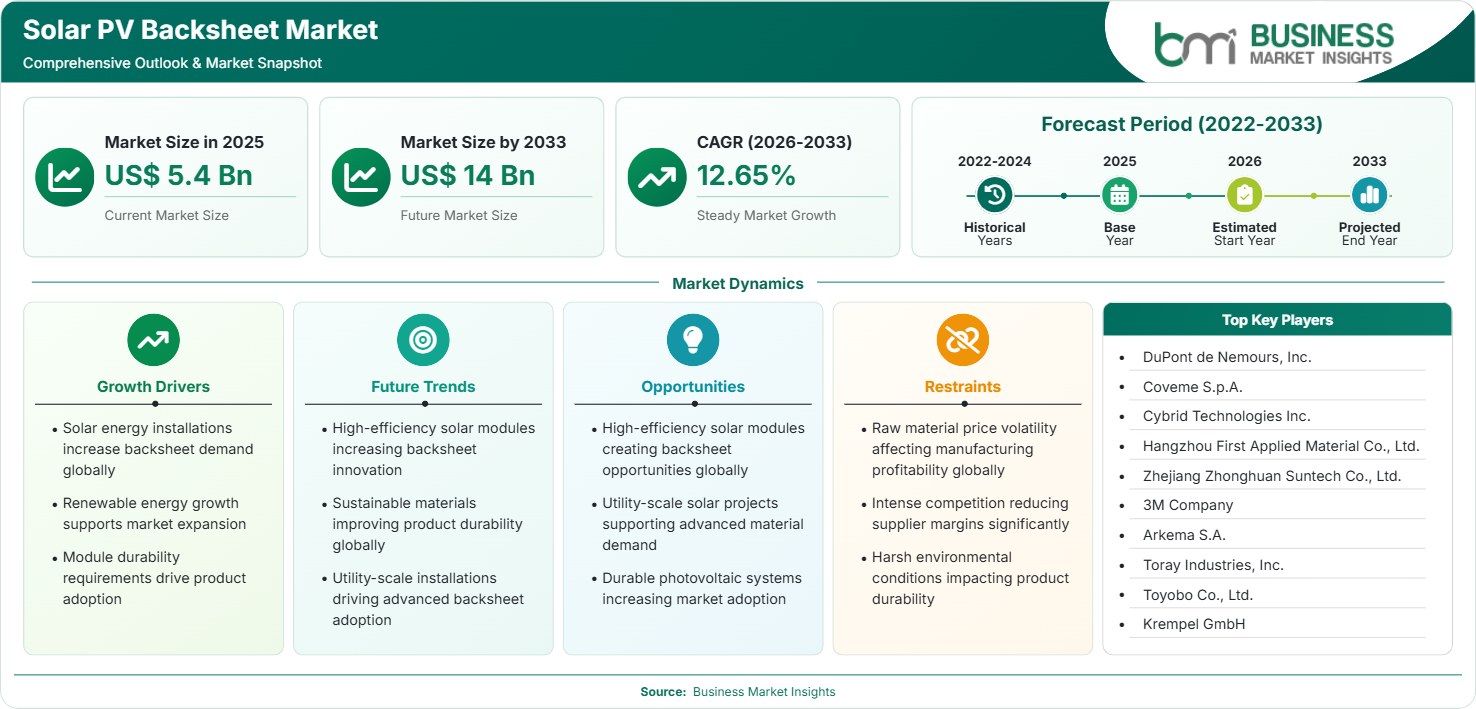
Solar PV Backsheet Market Regional Highlights
North America Solar PV Backsheet Market
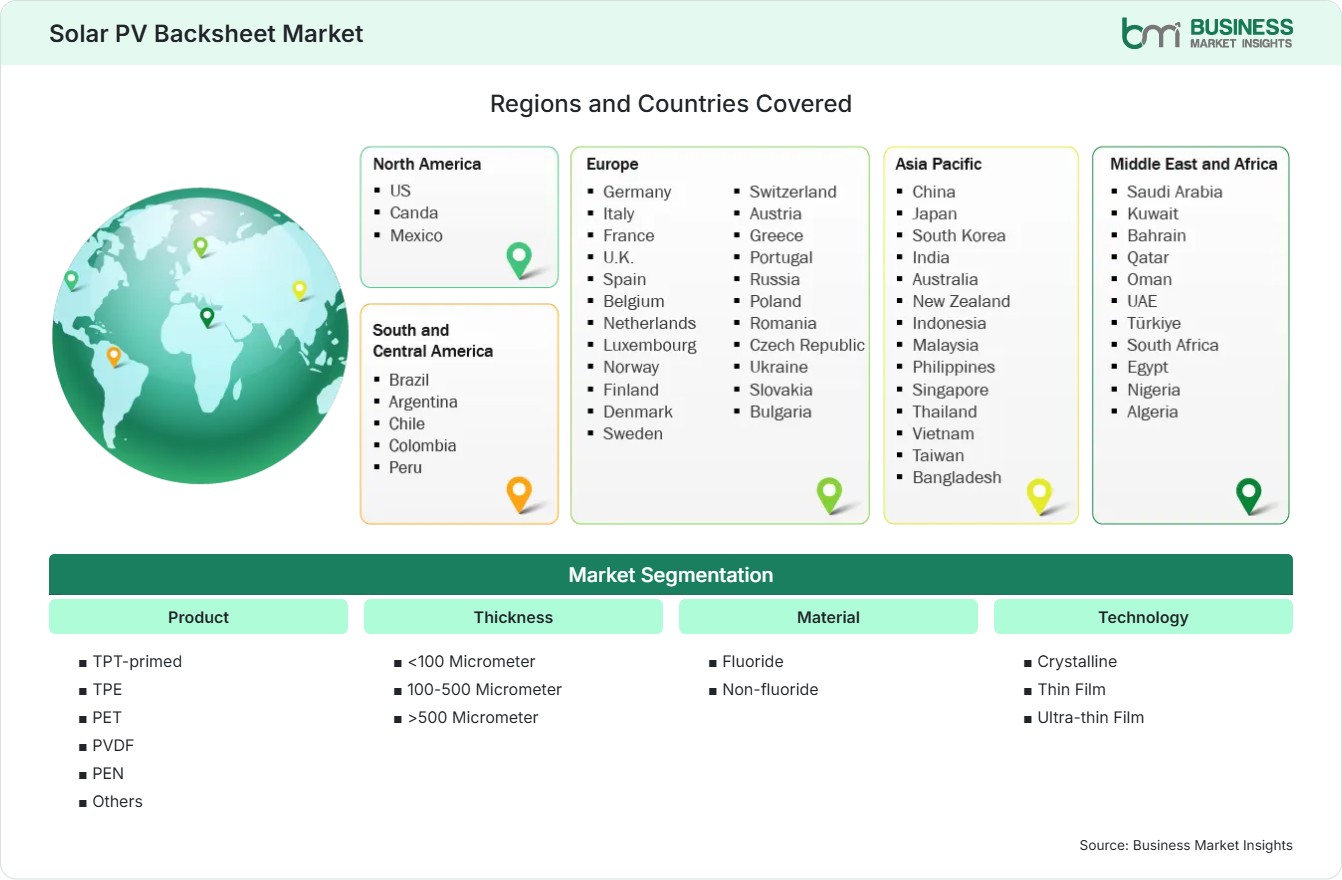
North America is estimated to account for 20%–24% of 2025 demand, with a modelled CAGR of 11%–13% through 2033. The region benefits from utility-scale installations, commercial rooftop projects, and efforts to diversify photovoltaic manufacturing. Buyers emphasize traceable materials, long-term durability, electrical safety, and dependable warranty support. Domestic manufacturing incentives can improve the commercial case for regional suppliers, although project financing, trade policy, and module sourcing decisions influence purchasing cycles. The Solar PV Backsheet Market share in North America will depend on installation growth and the extent to which local manufacturing translates into sustained component demand.
- Support for photovoltaic manufacturing can create opportunities for suppliers that establish local converting capacity or secure qualified supply agreements. However, investment decisions must account for utilization rates, input costs, and competition from established Asian manufacturers.
- Large projects place particular emphasis on consistent module quality, predictable warranties, and documented environmental resistance. Backsheet suppliers that demonstrate reliable performance under heat, humidity, and ultraviolet exposure can strengthen relationships with project developers.
- Distributed solar installations require materials suited to varied roof conditions, installation practices, and operating temperatures. Consistent electrical insulation and resistance to weathering remain important where inspection and component replacement can disrupt building operations.
- Buyers may diversify sourcing to manage trade exposure and delivery interruptions. Suppliers offering stable lead times, transparent material specifications, and reliable technical support can compete beyond price, particularly in long-duration module supply contracts.
US Solar PV Backsheet Market
The United States is estimated to represent 15%–19% of global demand in 2025, with a modelled CAGR of 11%–13% through 2033. Its demand is supported by utility-scale development, commercial installations, and domestic photovoltaic manufacturing investment. Module producers need reliable insulation, moisture barriers, and materials that satisfy applicable qualification requirements. The Solar PV Backsheet Market also presents opportunities for differentiated backsheets used in demanding climates.
- Investment in local photovoltaic manufacturing can encourage supplier qualification and reduce dependence on long international shipping routes. The commercial opportunity depends on production scale, competitive costs, and reliable access to specialty films and adhesives.
- Exposure to intense sunlight, temperature variation, and regional humidity differences makes material validation essential. Suppliers must demonstrate that multilayer structures maintain adhesion, insulation, and mechanical integrity under representative operating conditions.
- Glass-glass modules compete with conventional backsheet designs in several applications. Backsheet suppliers can respond through lighter constructions, improved barrier properties, and solutions tailored to applications where reduced weight or installation flexibility matters.
Europe Solar PV Backsheet Market
The Europe Solar PV Backsheet Market is expected to represent a 17% - 21% share of global consumption by 2025 and to experience a modeled CAGR of 10% - 12% through 2033. Europe represents a blend of solar power deployment and interest in circular material use, manufacturing resiliency, and eco-performance of products. Germany, Italy, Spain, and France represent key demand markets, although growth dynamics vary by country owing to installation pipelines and industrial policy considerations. Germany and Spain may see a 10%-13% CAGR as utility and distributed projects progress.
- Germany established engineering capabilities and distributed solar installations to support demand for technically qualified materials. Suppliers with documented insulation performance, consistent film quality, and responsive engineering support can serve both established module producers and specialized applications.
- Italy and Spain solar resource availability and project development create opportunities across utility and commercial installations. Suppliers should align material portfolios with module requirements and the differing environmental conditions encountered across inland, coastal, and high-temperature sites.
- France distributed generation and utility projects create demand for components that meet module specifications and applicable European requirements. Product reliability, warranty confidence, and supply continuity can influence procurement alongside purchase price.
Asia Pacific Solar PV Backsheet Market
Asia Pacific region is expected to account for 42%-46% of the Solar PV Backsheet Market demand in 2025, with a forecast CAGR of 14%-16% through 2033. There is a high concentration of solar cell manufacturing facilities, a long supply chain of film-based polymers, and significant usage in China, India, Japan, and Southeast Asia. China continues to be key in backsheet manufacturing and solar module production. India and Southeast Asian countries offer opportunities for market diversification. Growth rates for modeled countries range from 14%-17% in India and 13%-16% in Southeast Asia, reflecting manufacturing investment and domestic solar demand. Supplier competition remains intense on cost, quality, and delivery reliability.
- China's integrated material supply chains and large-scale module manufacturing support substantial demand. Producers compete through coating technology, production efficiency, product consistency, and the ability to qualify materials for multiple module designs.
- India's manufacturing incentives and solar deployment ambitions create opportunities for domestic supply development. Suppliers can benefit by building customer relationships with module assemblers and ensuring dependable access to films, adhesives, and technical testing.
- Japan and South Korea established technology ecosystems support demand for qualified materials in specialized photovoltaic applications. Suppliers need to demonstrate consistent manufacturing quality, electrical performance, and compatibility with evolving cell and module architectures.
Rest of World Solar PV Backsheet Market
South and Central America Solar PV Backsheet Market are estimated to represent part of a combined 11%–15% share of global demand in 2025, while the Middle East and Africa account for the remainder of the modelled Rest of World category. The combined category is assigned a modelled CAGR of 11%–14% through 2033. Brazil, Chile, Saudi Arabia, the United Arab Emirates, and South Africa offer different opportunities linked to solar resource availability, project development, and grid investment. Market expansion depends on financing, procurement schedules, and reliable access to qualified modules and replacement components.
Latin America, material supply can be facilitated by the distributed generation market in Brazil and by utility-scale projects, whereas Chile will be advantageous due to solar resources that favor utility-scale projects. In the Middle East, high temperatures, dust, and UV radiation increase the significance of material resistance. Markets in the Gulf region may provide opportunities for suppliers with strong results in weathering their products. For African markets, project finance, currency risk, import logistics, and after-sales service become key factors.
- Brazil distributed and utility-scale solar projects create demand for durable modules. Suppliers should prioritize moisture resistance, consistent product quality, and dependable distribution to serve geographically dispersed installations.
- Chile's high solar irradiation and utility-scale development favor materials designed for prolonged outdoor exposure. Demonstrated resistance to ultraviolet radiation, temperature variation, and electrical stress can help suppliers compete in demanding environments.
- Saudi Arabia and the UAE have hot climates, and dust exposure increases the importance of module reliability. Backsheet suppliers can differentiate through documented weathering resistance and qualified materials suited to local project specifications.
- South Africa Commercial solar and utility projects offer demand potential, although financing and grid constraints can affect deployment timing. Local distribution and responsive technical support can help maintain customer confidence.