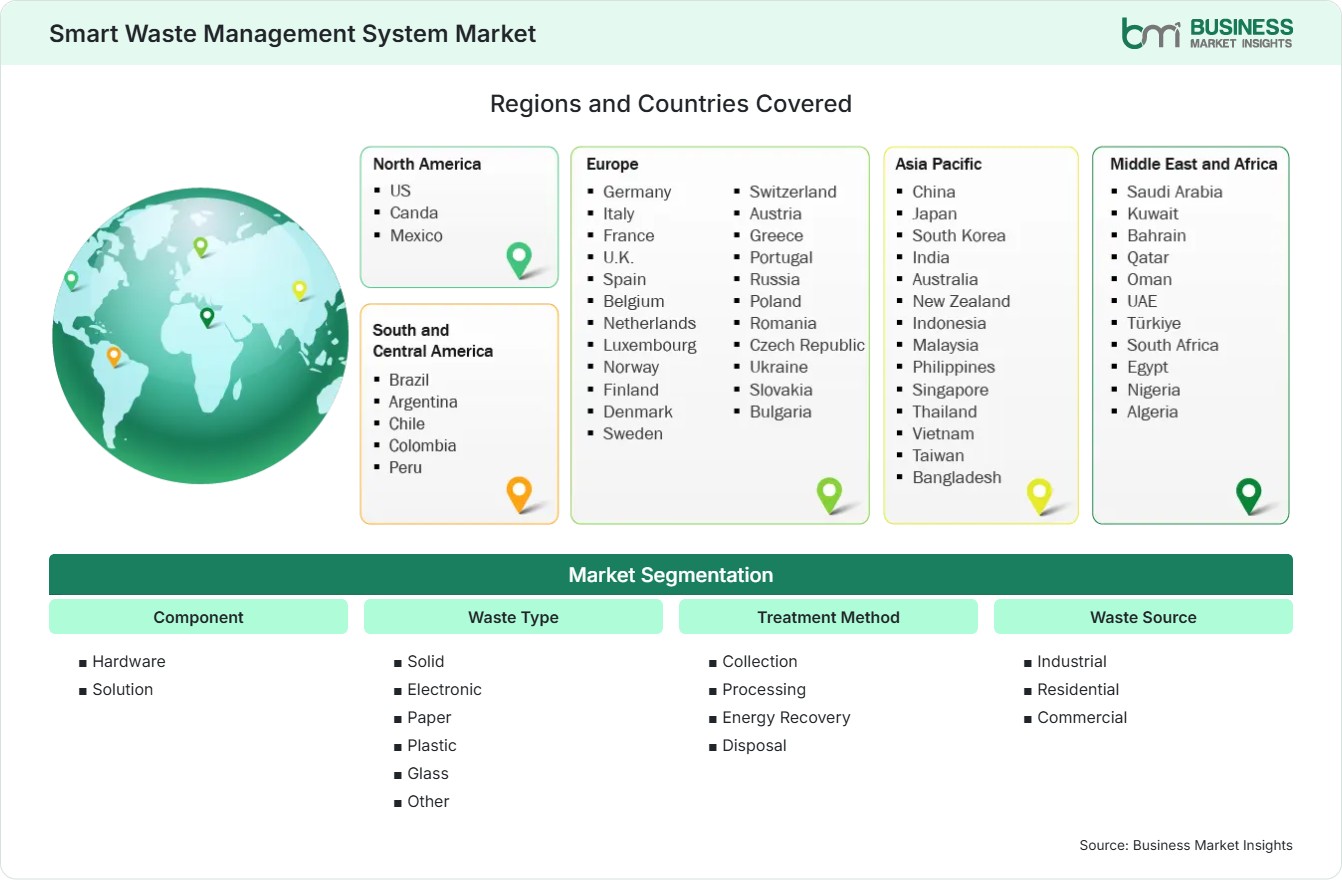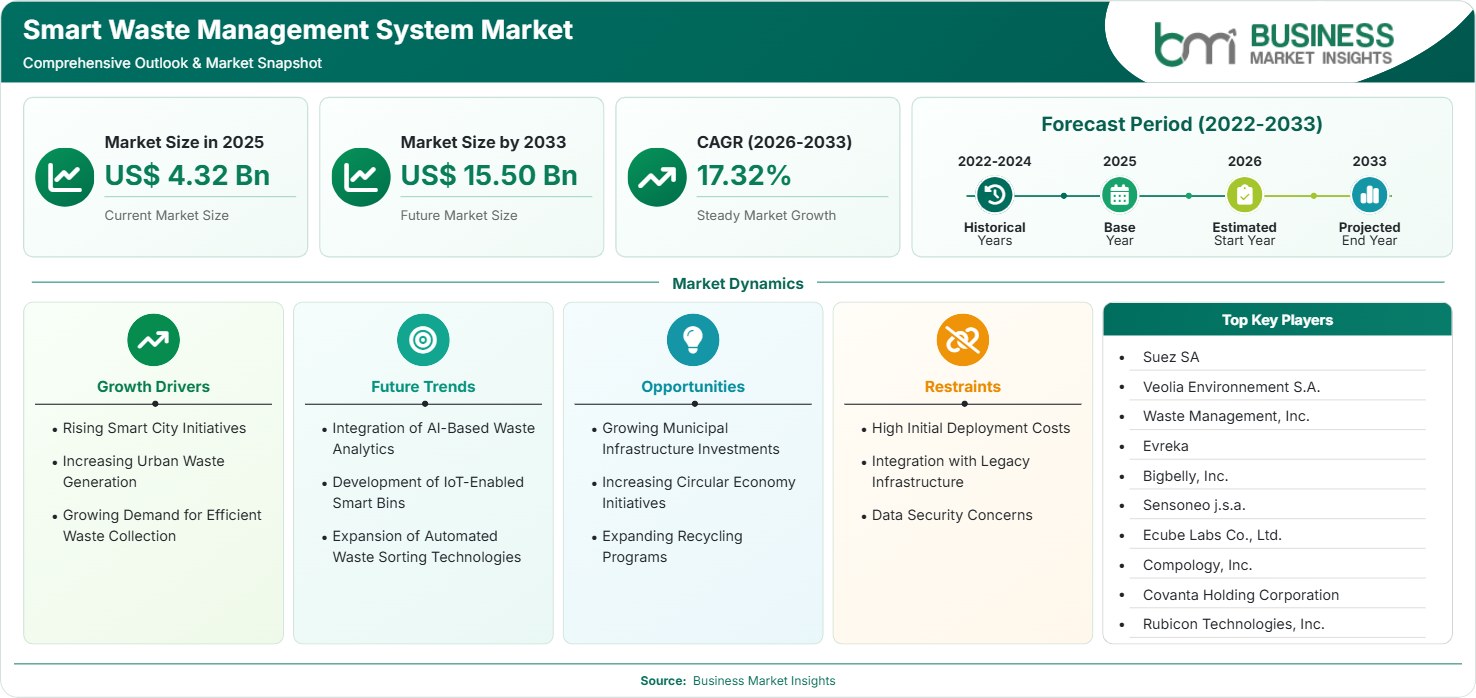
Smart Waste Management System Market Regional Highlights
North America Smart Waste Management System Market
North America accounted for 34%–37% of the global market in 2025 and is projected to expand at a 16.2%–17.0% CAGR through 2033. Public authorities are increasingly implementing intelligent collection systems, cloud-based monitoring platforms, and AI-enabled route optimization to improve operational efficiency, reduce landfill waste, and lower collection costs. The Smart Waste Management System Market share remains highest in this region due to early digital infrastructure adoption.
- Smart city initiatives across the United States and Canada continue accelerating deployment of connected waste bins, sensor-based monitoring, and intelligent fleet management systems, improving operational efficiency while reducing fuel consumption and greenhouse gas emissions.
- Municipal governments increasingly use cloud-based analytics to optimize collection schedules, monitor container capacity in real time, and improve service quality, enabling data-driven waste management across urban environments.
- Strict sustainability regulations and landfill diversion targets encourage investments in recycling infrastructure, digital waste tracking, and AI-powered processing technologies that improve material recovery and environmental performance.
- Public-private collaborations between municipalities and technology providers continue expanding intelligent waste management deployments while encouraging innovation in predictive maintenance, fleet optimization, and operational transparency.
US Smart Waste Management System Market
The United States Smart Waste Management System Market represented 76%–79% of North American revenue in 2025 and is forecast to register a 16.5%–17.3% CAGR during the forecast period. Waste service providers are integrating AI, IoT sensors, and cloud platforms to improve route planning, reduce operating costs, and enhance resource utilization.
- Urban municipalities continue investing in sensor-enabled collection networks that improve waste monitoring while reducing unnecessary vehicle movements and operational expenses.
- Advanced recycling facilities increasingly adopt AI-powered sorting technologies that improve material recovery rates and reduce contamination across recyclable waste streams.
- Commercial property operators deploy connected waste solutions to optimize collection frequency, lower service costs, and improve environmental compliance.
- Digital fleet management platforms support predictive maintenance, fuel optimization, and real-time vehicle tracking, improving operational productivity for waste collection companies.
Europe Smart Waste Management System Market
Europe held 27%–30% of global revenue in 2025 and is expected to record a 16.8%–17.6% CAGR through 2033. Circular economy policies, stringent recycling regulations, and digital municipal transformation continue supporting regional growth. Germany remains the leading market because of advanced environmental infrastructure, while the Netherlands records the fastest growth owing to expanding smart city investments and intelligent recycling initiatives.
- European Union sustainability targets continue encouraging municipalities to modernize waste infrastructure through digital monitoring, smart bins, and automated collection technologies.
- Increasing investments in waste-to-energy facilities and intelligent recycling systems improve resource recovery while reducing landfill dependence across major urban centers.
- Municipal authorities utilize predictive analytics and AI to optimize waste logistics, improving collection efficiency and lowering transportation-related emissions.
- Collaboration between environmental technology firms and local governments accelerates deployment of integrated waste management platforms supporting long-term sustainability objectives.
Asia Pacific Smart Waste Management System Market
Asia Pacific Smart Waste Management System Market share accounted for 26%–29% of the global market in 2025 and is anticipated to register the fastest 18.5%–19.3% CAGR during 2026–2033. Rapid urbanization, expanding municipal infrastructure, and government-supported smart city initiatives continue stimulating demand for intelligent waste management technologies. China leads regional revenue generation, while India demonstrates the highest growth supported by increasing digital transformation of urban public services.
- Large-scale smart city projects across China continue driving adoption of IoT-enabled waste collection infrastructure and centralized monitoring platforms for improved municipal operations.
- India is expanding investments in digital waste management under urban modernization programs, supporting wider deployment of smart bins and route optimization software.
- Japan and South Korea continue implementing advanced automation, robotics, and AI technologies that improve waste segregation accuracy and operational efficiency.
- Rising urban populations and increasing consumer waste generation continue encouraging municipalities to adopt intelligent collection systems capable of improving service quality while reducing operational costs.
Rest of World Smart Waste Management System Market
The Rest of World region represented 8%–10% of global revenue in 2025 and is projected to expand at a 15.8%–16.5% CAGR through 2033.
South and Central America continue adopting intelligent waste management technologies through municipal modernization programs. Brazil leads regional adoption, while Chile demonstrates strong growth supported by expanding digital infrastructure and environmental policy reforms.
The Middle East and Africa are witnessing increasing deployment of smart municipal services. The UAE remains the leading regional market, whereas Saudi Arabia records the fastest expansion through smart city development, digital governance initiatives, and investments in sustainable urban infrastructure.
- Smart infrastructure investments across Gulf countries continue supporting intelligent waste monitoring systems integrated with broader urban digital platforms.
- International funding programs encourage modernization of municipal waste services across emerging economies through connected technologies and data-driven operational models.
- Rising tourism, commercial development, and urban expansion increase demand for efficient waste collection solutions capable of improving cleanliness and sustainability.
- Environmental awareness and national recycling strategies continue supporting gradual adoption of digital waste management technologies across developing regions.