
Sleep Apnea Devices Market Outlook: Size, Share, Trends, Growth Analysis, Competitive Landscape & Forecast, 2026-2033

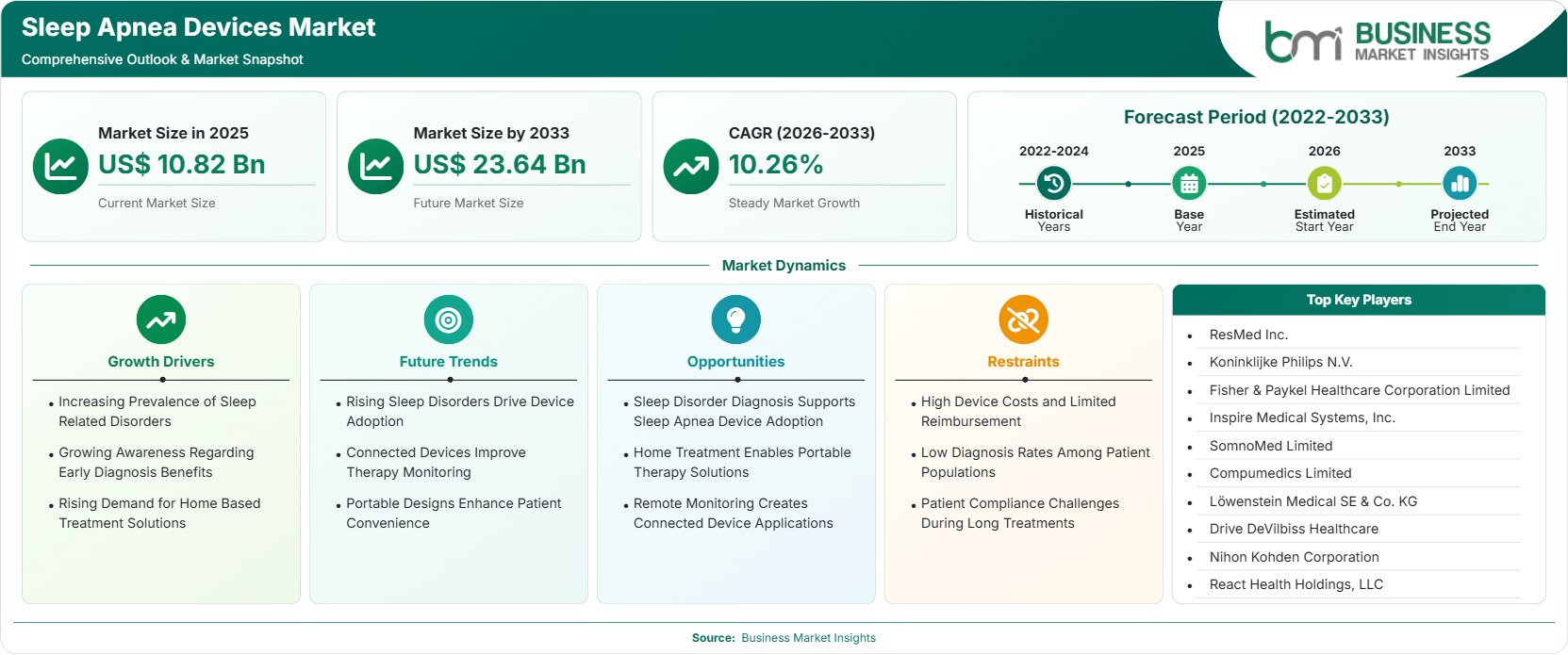
The Sleep Apnea Devices Market size was valued at US$ 10.82 Billion in 2025 and is projected to reach US$ 23.64 Billion by 2033, growing at a CAGR of 10.26% during 2026–2033, driven by rising obstructive sleep apnea prevalence, expanding home-based diagnostics, digital sleep monitoring adoption, favorable reimbursement expansion, and innovation in PAP, wearable, and neurostimulation technologies.

Report Coverage
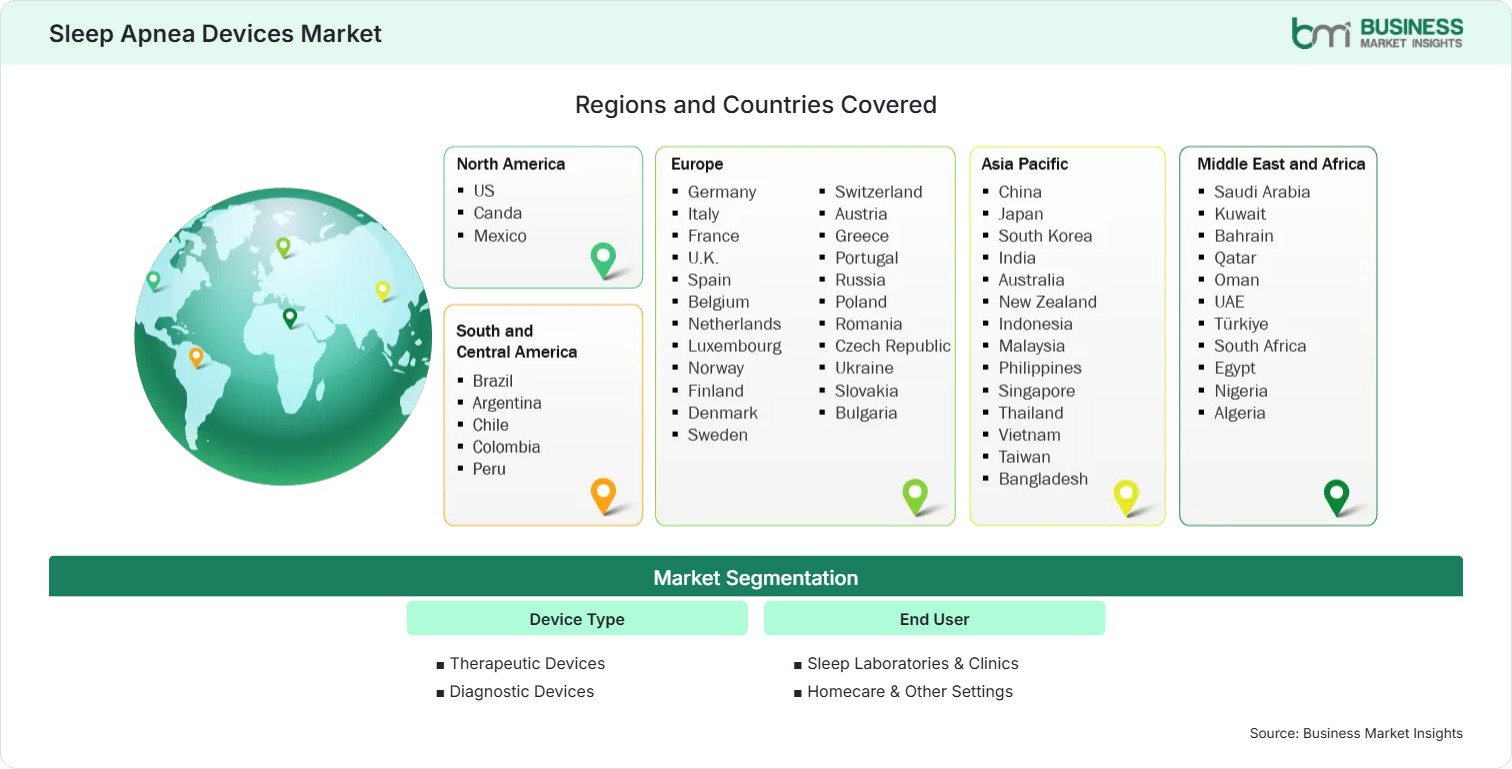
  • Device Type: Therapeutic Devices, Diagnostic Devices
  • End User: Sleep Laboratories & Clinics, Homecare & Other Settings
US$ 10.82 Bn Market size in 2025
US$ 23.64 Bn Market Size by 2033
10.26% CAGR, 2026 - 2033
2026-2033 Forecast Period

AI Overview

Sleep Apnea Devices Market Summary

  • North America Region: North America holds a market share of 38%–41% in 2025, growing at a CAGR of 9.4%–9.8% during 2026–2033. Growth is supported by high diagnosis rates, reimbursement coverage, connected therapy platforms, expanding sleep laboratories, and increasing obesity prevalence. The U.S. market benefits from strong provider networks and digital respiratory monitoring, advancing at an estimated 9.5%–9.9% CAGR.
  • Fastest Growing Region: Asia Pacific holds 24%–27% share in 2025 and is expected to expand at 12.1%–12.7% CAGR during 2026–2033. Growth is driven by healthcare modernization, rising middle-class healthcare spending, urban sleep disorder incidence, improving awareness programs, and wider access to home testing solutions.
  • Leading Segment: Therapeutic Devices account for 68%–71% share in 2025 and are projected to grow at 10.0%–10.4% CAGR. Demand remains supported by PAP therapy adoption, technological enhancements, improved patient comfort, cloud connectivity, and increasing treatment compliance initiatives.
  • High Growth Segment: Homecare & Other Settings represent 42%–45% share in 2025 and are forecast to expand at 11.8%–12.4% CAGR. Expansion reflects decentralization of sleep care, remote monitoring capabilities, telehealth integration, faster diagnosis pathways, and patient preference for convenient treatment environments.
  • Key Market Opportunity: Integration of AI-enabled diagnostics, telehealth workflows, remote compliance tracking, cloud-connected sleep ecosystems, and scalable home testing pathways offers substantial opportunities for healthcare providers, payers, device manufacturers, and digital health platforms.
  • Major Market Players: ResMed Inc.; Koninklijke Philips N.V.; Fisher & Paykel Healthcare Corporation Limited; Inspire Medical Systems, Inc.; SomnoMed Limited; Compumedics Limited; Löwenstein Medical SE & Co. KG; Drive DeVilbiss Healthcare; Nihon Kohden Corporation; React Health Holdings, LLC
Strategic Insights

Sleep Apnea Devices Market: Strategic Insights

Sleep Apnea Devices Market Strategic Framework
FREE PDF
Request your free sample
Request free sample
Stakeholder View

Key Takeaways

  • The value chain is increasingly shifting from hardware-centric models toward integrated ecosystems combining diagnostics, therapy, cloud monitoring, and patient engagement platforms.
  • Home-based testing and treatment pathways offer the highest commercial upside due to lower healthcare costs and faster patient onboarding.
  • Innovation is focused on AI-supported sleep analytics, wearable diagnostics, connected masks, and alternative therapies for CPAP-intolerant patients.
  • India, China, Indonesia, and several Gulf countries present compelling investment opportunities due to growing sleep disorder awareness and healthcare infrastructure expansion.
  • Strategic acquisitions increasingly target digital health capabilities, patient monitoring software, and specialized therapy technologies that improve adherence outcomes.
  • Provider partnerships with telehealth platforms are becoming critical competitive differentiators, particularly in high-volume outpatient sleep care models.
Geographic Outlook

Sleep Apnea Devices Market Regional Highlights

North America Sleep Apnea Devices Market

North America accounted for approximately 38%–41% Sleep Apnea Devices Market share in 2025 and is projected to record a CAGR of 9.4%–9.8% through 2033. Strong reimbursement models, universal screening programs, and sleep medicine technology advancements drive the regional leadership position. Large numbers of installed PAP machines create a continued demand for replacements. The use of connected health technologies and respiratory therapies managed through the cloud helps to drive the market growth in the face of increasing obesity and heart disease.

  • Digital compliance tracking platforms are increasingly integrated with provider workflows, supporting treatment adherence and reimbursement optimization.
  • Obesity prevalence continues expanding patient pools eligible for sleep disorder diagnosis and long-term therapy management.
  • Home sleep testing utilization is increasing as providers seek scalable and cost-efficient screening solutions.
  • Strong commercial insurance and Medicare coverage remain important market drivers for premium technologies.
  • Continuous software innovation supports recurring revenue opportunities beyond traditional equipment sales.

US Sleep Apnea Devices Market

The United States represented around 80%–84% share within North America in 2025 and is expected to advance at 9.5%–9.9% CAGR. There is excellent diagnostic infrastructure, excellent payer coverage, solid specialist networks, and advanced technology from leading manufacturers. Rising knowledge regarding the effect of sleep-disordered breathing on cardiovascular health improves screenings in hospitals and ambulatory clinics.

  • Increasing use of remote patient monitoring supports compliance management and therapy optimization.
  • Hospital systems are investing in integrated respiratory and sleep health platforms.
  • Demand for portable diagnostics continues rising among underserved and rural populations.
  • AI-supported treatment analytics are improving long-term patient engagement outcomes.

Europe Sleep Apnea Devices Market

Europe held approximately 27%–30% of the Sleep Apnea Devices Market share in 2025 and is forecast to grow at a 9.6%–10.1% CAGR. Growth is facilitated through aging populations, healthcare insurance, and the increased awareness about the dangers of undiagnosed sleep apnea. The largest regional market remains Germany, whereas Spain and Eastern Europe are experiencing more growth rates. Telemedicine use and investment into the respiratory healthcare industry are driving the penetration of diagnosis and treatment.

  • Germany leads regional revenue generation with mature sleep clinic infrastructure.
  • Spain is among the faster-growing national markets with CAGR exceeding regional averages.
  • Public health screening programs are supporting earlier disease identification.
  • Healthcare providers increasingly adopt home-based diagnostic pathways.
  • Cross-border regulatory harmonization supports device commercialization efforts.

Asia Pacific Sleep Apnea Devices Market

Asia Pacific accounted for 24%–27% Sleep Apnea Devices Market share in 2025 and remains the fastest-growing regional market with a CAGR of 12.1%–12.7%. Market acceleration is being fueled by urbanization, unmet patient populations, rising health care costs, and an increasing number of private health care networks. China takes the lead for revenue generation in the region, whereas India stands out due to its impressive growth momentum.

  • China benefits from expanding respiratory care infrastructure and healthcare modernization initiatives.
  • India is among the fastest-growing markets due to awareness campaigns and healthcare investments.
  • Homecare-focused solutions gain traction because of affordability advantages.
  • Rising middle-class spending supports premium therapeutic technology adoption.
  • Telemedicine integration is increasing accessibility across geographically dispersed populations.

Rest of World Sleep Apnea Devices Market

The Rest of World region accounted for approximately 7%–10% Sleep Apnea Devices Market share in 2025 and is projected to expand at 10.5%–11.1% CAGR. South and Central America benefit from improving specialist access and private healthcare investment. In the Middle East and Africa, increasing healthcare modernization initiatives are expanding diagnostic capabilities. Brazil leads Latin American demand, while Saudi Arabia demonstrates strong growth prospects.

  • Brazil remains the largest market across South and Central America.
  • Saudi Arabia benefits from substantial healthcare infrastructure investments.
  • Awareness initiatives are improving diagnosis rates across underserved populations.
  • Private hospital expansion supports adoption of advanced respiratory technologies.
  • Growing telehealth utilization strengthens access to sleep medicine expertise.
Global Market Geography
FREE PDF
Request your free sample
Request free sample
Segment Analysis

Sleep Apnea Devices Market Segmentation

Device Type

Device Type accounted for the largest revenue contribution, supported by growing diagnosis rates and expanding treatment adoption. This segment held approximately 68%–71% market share in 2025 and is expected to expand at 10.1%–10.5% CAGR. Sleep Apnea Devices Market scope continues broadening as providers increasingly deploy integrated diagnostic and therapeutic platforms across clinical and homecare environments.

  • Therapeutic Devices: Represent the core revenue-generating category due to widespread PAP therapy adoption, strong clinical evidence, expanding patient pools, and ongoing improvements in comfort, connectivity, portability, and treatment compliance.
    • Continuous Positive Airway Pressure (CPAP) Devices: Remain the primary treatment modality, supported by long-established clinical effectiveness, reimbursement availability, and continuous innovation focused on usability and patient adherence.
    • Bilevel Positive Airway Pressure (BiPAP) Devices: Gain adoption among patients requiring variable pressure support and those intolerant to conventional CPAP therapy approaches.
    • Masks and Accessories: Product innovation emphasizes comfort, fit optimization, reduced leakage, hygienic materials, and enhanced user experience supporting sustained therapy utilization.
  • Diagnostic Devices: Demand is increasing with heightened awareness, earlier detection programs, and growing deployment of portable monitoring technologies.
    • Polysomnography Devices: Continue serving as the clinical benchmark for comprehensive sleep disorder evaluation across hospital and sleep laboratory settings.
    • Pulse Oximeter: Widely utilized for screening and monitoring oxygen saturation patterns associated with sleep-disordered breathing conditions.
    • Actigraphy Devices: Growing interest reflects demand for convenient sleep pattern monitoring and real-world patient assessment capabilities.

End User

End-user adoption patterns continue evolving toward decentralized healthcare delivery. This segment recorded 42%–45% share for Homecare & Other Settings in 2025 and is projected to achieve 11.8%–12.4% CAGR, supported by convenience, affordability, and telehealth integration. Sleep Apnea Devices Market trends indicate stronger migration toward patient-managed care models.

  • Sleep Laboratories & Clinics: Remain crucial for complex diagnostics, treatment initiation, specialist oversight, and management of severe sleep-disordered breathing cases.
  • Homecare & Other Settings: Experience rapid expansion as portable diagnostics, remote monitoring tools, and digital care pathways improve accessibility and patient participation.
Market Forces

Sleep Apnea Devices Market Dynamics

Key Market Drivers

Rising Global Prevalence of Obstructive Sleep Apnea

There is an increase in the prevalence of obstructive sleep apnea associated with increased levels of obesity, aging populations, and other health problems related to lifestyle. Sleep Apnea Devices Market growth will benefit from increased awareness among physicians and greater recognition of the negative impact of undiagnosed sleep-disordered breathing. There will be an ongoing need for diagnosis and treatment due to a large number of undiagnosed patients. There is growing pressure on employers and health insurance companies to conduct screening, due to the connection between undiagnosed cases and lower productivity, hypertension, diabetes problems, and escalating costs of healthcare.

Expansion of Home-Based Sleep Testing Ecosystems

The adoption of portable diagnostics is changing how patients are identified by reducing reliance on laboratory tests. The use of home monitoring is becoming prevalent as a means of reducing testing wait times and increasing access. Digital diagnostics aid timely intervention and treatment initiation while reducing pressure on the health care system. Increased telemedicine and remote consulting practices are driving market growth. Integration of data transmission facilitates rapid evaluation of results without visiting a physician.

Connected PAP Technologies and Data-Driven Care

Connectivity has emerged as a key competitive advantage. Manufacturers are now incorporating cloud-based monitoring, compliance analytics, automated reporting, and patient engagement capabilities into therapy devices. Sleep Apnea Devices Market trends are increasingly tilting towards platforms that offer tangible clinical outcomes. The provider benefits from real-time adherence visibility, while the patient receives personalized treatment options. This ensures better compliance performance, increases payer confidence, and generates recurring revenue through digital services. Increased interoperability with healthcare IT systems improves acceptance by institutional healthcare providers.

Key Market Opportunities

Artificial Intelligence Integration Across Sleep Care

AI-powered algorithms present opportunities for each part of the diagnosis, treatment, and patient monitoring workflow. Sleep analysis, risk stratification, prediction, and personalization help to increase the efficiency of healthcare processes. The vendor can gain a competitive advantage based on software features, not only on hardware parameters. Sleep Apnea Devices Market Forecasts increasingly reflect stronger value creation from digital ecosystems. Healthcare systems seeking productivity improvements are expected to support solutions that reduce clinician workloads while enhancing diagnostic consistency. Investment activity around AI-enabled sleep technologies is therefore expected to remain robust.

Expansion in Emerging Healthcare Economies

Large, untreated populations across Asia, Latin America, the Middle East, and Africa offer substantial revenue potential. Improved economic development, investments in healthcare infrastructure, and greater awareness are contributing to greater accessibility to specialized services in sleep medicine. Foreign manufacturers are constantly forming partnerships and developing distribution channels to meet their needs. Cheaper product formats and mobile diagnostic devices help reduce costs. Countries experiencing rapid urbanization and rising obesity rates can be considered attractive markets for expansion.

Alternative Therapies for CPAP-Intolerant Patients

A meaningful patient population struggles with sustained PAP therapy adherence, creating demand for differentiated treatment approaches. Options that include neuro-stimulation systems, customized mouthpieces, and highly advanced respiration therapy devices have become available. More widespread clinical acceptance and reimbursement for such therapies can accelerate their adoption. Firms that can demonstrate better results and patient comfort can capture a larger share of the market.

Market Restraints and Challenges

High Therapy Costs and Reimbursement Gaps

Factor: Advanced therapeutic devices, connected monitoring solutions, and specialized treatment systems often involve meaningful upfront costs. Impact: Patients in low-income countries might not receive a diagnosis in time or be left untreated, even when there is a medical need. The availability of insurance or limited coverage adds to the challenges of adopting technologies in developing countries. There may also be budget constraints when purchasing technology. While technological innovation can improve the quality of care, cost remains a major hurdle to adoption.

Patient Compliance and Therapy Discontinuation

Factor: Long-term adherence remains challenging because some patients experience discomfort, inconvenience, or lifestyle disruptions associated with therapy usage. Impact: Non-compliance reduces opportunities for successful results and reduces the need for replacements. Healthcare professionals allocate resources towards educating patients about the need for follow-up care and adherence to their prescribed medication, but non-adherence remains an issue in some categories of patients. Better product design, behavioral engagement, and remote monitoring can help overcome the problem, but therapy adherence affects business performance indicators.

Company Analysis

Competitive Landscape

Sleep Apnea Devices Market analysis highlights a competitive environment characterized by respiratory technology leaders, sleep diagnostics specialists, and emerging therapy innovators. Major participants continue investing in connected care, remote monitoring, and patient-centric product development.

Company Name

Overview

Products and Services relevant to this market

ResMed Inc.

Global respiratory care leader with extensive digital health and sleep therapy capabilities.

CPAP devices, masks, cloud-connected sleep management platforms, remote monitoring solutions.

Koninklijke Philips N.V.

Diversified healthcare technology company with strong sleep and respiratory portfolio.

PAP systems, sleep therapy devices, patient monitoring and diagnostic solutions.

Fisher & Paykel Healthcare Corporation Limited

Respiratory care specialist recognized for patient comfort innovations.

CPAP equipment, humidification technologies, masks, respiratory therapy accessories.

Inspire Medical Systems, Inc.

Pioneer in implantable neurostimulation therapies for sleep apnea treatment.

Hypoglossal nerve stimulation systems and related patient management services.

SomnoMed Limited

Specialist developer of oral treatment solutions for sleep-disordered breathing.

Custom oral appliances and dental sleep medicine solutions.

Compumedics Limited

Sleep diagnostics and neurodiagnostic technology provider.

Polysomnography systems, sleep monitoring platforms, diagnostic software.

Löwenstein Medical SE & Co. KG

European respiratory care equipment manufacturer.

PAP devices, ventilation systems, sleep diagnostic technologies.

Drive DeVilbiss Healthcare

Global supplier of respiratory and home healthcare equipment.

PAP systems, respiratory care products, patient support solutions.

Nihon Kohden Corporation

Medical electronics company active in patient monitoring and diagnostics.

Sleep monitoring technologies, diagnostic systems, clinical monitoring devices.

React Health Holdings, LLC

Expanding respiratory therapy and sleep care provider.

CPAP devices, masks, respiratory treatment and monitoring products.

Industry Activity

Recent Developments

February 2026 – ResMed Inc. announced expanded AI-enabled sleep health capabilities across connected respiratory care platforms.

October 2025 – Fisher & Paykel Healthcare Corporation Limited highlighted continued expansion of respiratory and sleep therapy product offerings within global growth initiatives.

September 2025 – Inspire Medical Systems, Inc. reported continued adoption growth of implantable sleep apnea neurostimulation therapies across eligible patient groups.

April 2024 – Koninklijke Philips N.V. advanced remediation and regulatory actions related to respiratory care operations under FDA oversight.

Trust & Transparency

Research Methodology

The market analysis combines proprietary research with secondary data from government agencies, company disclosures, regulatory filings, industry databases and expert interviews. Market estimates are validated through data triangulation, cross-market benchmarking and analyst review.

View Full Research Methodology

Questions Answered

Frequently Asked Questions

What does a Sleep Apnea Devices Market Report typically evaluate?

It generally assesses market size, competitive positioning, technology trends, regulatory influences, demand drivers, investment developments, segment performance, and regional growth prospects across the industry.

What makes Asia Pacific attractive for manufacturers?

The region combines large undiagnosed patient populations, rising healthcare expenditure, increasing urbanization, expanding provider infrastructure, and improving awareness, creating strong long-term commercial opportunities.

Why is homecare becoming important in sleep apnea treatment?

Homecare reduces costs, improves convenience, shortens diagnostic timelines, supports remote physician monitoring, and enables broader access to treatment for patients outside traditional sleep laboratory networks.

Which technology category is transforming sleep apnea management most rapidly?

Cloud-connected PAP devices integrated with AI-driven analytics, remote monitoring, and telehealth capabilities are delivering the most significant transformation across diagnosis, compliance management, and treatment optimization.

What patient group creates the largest demand for sleep apnea devices?

Adults with obstructive sleep apnea, particularly individuals affected by obesity, cardiovascular conditions, metabolic disorders, and age-related respiratory complications, generate the largest long-term demand for diagnostics and therapy solutions.

Access the Full Sleep Apnea Devices Market Report

Get segment-level forecasts, regional estimates, competitive benchmarking, company profiles and downloadable Excel datasets.

Access the full Sleep Apnea Devices Market Report
350 pages PDF & Excel | 2026-09-22
Similar Research

Related Market Reports