Market Summary
Executive Summary and Global Market Analysis
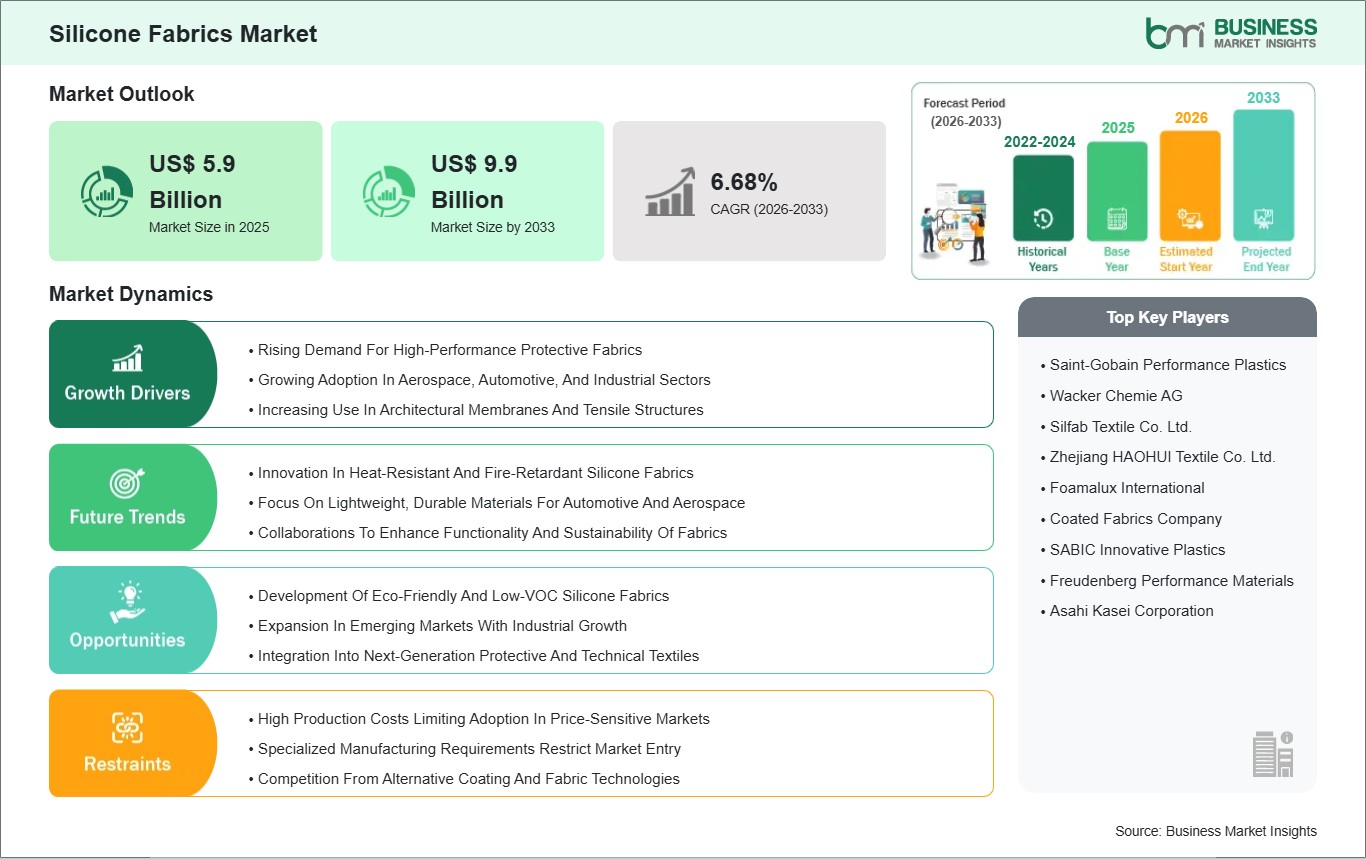
The silicone fabrics market throughout the world undergoes continuous growth because various industries need fabrics that provide maximum performance and long-lasting durability and complete safety. The characteristics of silicone fabrics create a unique textile material because silicone elastomers coat or laminate or impregnate the fabric materials. The exceptional characteristics of silicone fabrics make them essential for various industries which include protective clothing and aerospace and automotive interiors and architectural membranes and industrial belting and medical textiles. Users who need dependable products that maintain performance abilities through extended usage choose these products because of their capacity to endure severe conditions.
The worldwide market needs more protective materials which provide high performance for its primary purpose. The industrial and occupational safety field uses silicone fabrics for fire proximity suits and welding blankets and heat shields because workers need durable protective equipment which protects them from extreme temperatures and chemical dangers. The aerospace and defense sector uses silicone-based textiles for thermal insulation blankets and gaskets and flexible connectors because these materials enhance operational reliability under demanding conditions.
The automotive industry now uses more lightweight composite materials in vehicle interiors and seals and gaskets which leads to higher demand for silicone fabrics because of their strength and ability to withstand heat and oil and environmental deterioration. Architectural and infrastructure applications support worldwide market growth. Silicone‑coated fabrics serve multiple purposes in tensile structures and awnings and canopies and membrane roofs because they maintain outdoor performance over extended periods while allowing different design options.
The materials protect large structures from UV damage and environmental degradation which leads to permanent structural integrity and visual attractiveness. The silicone fabrics market shows good potential for growth but it faces several limitations. Price factors prevent customers from adopting products because high raw material and processing costs prevent price-sensitive customers from buying which applies to emerging markets that prefer low-cost alternatives to non-critical uses.
The production of silicone fabrics requires specific machinery and specialized knowledge which makes it difficult for small businesses to compete in the market. The material advances together with industrial safety regulations and the growing demand for sustainable high-performance materials drive the worldwide market demand for silicone fabrics.
Segment Analysis
Silicone Fabrics Market Segmentation
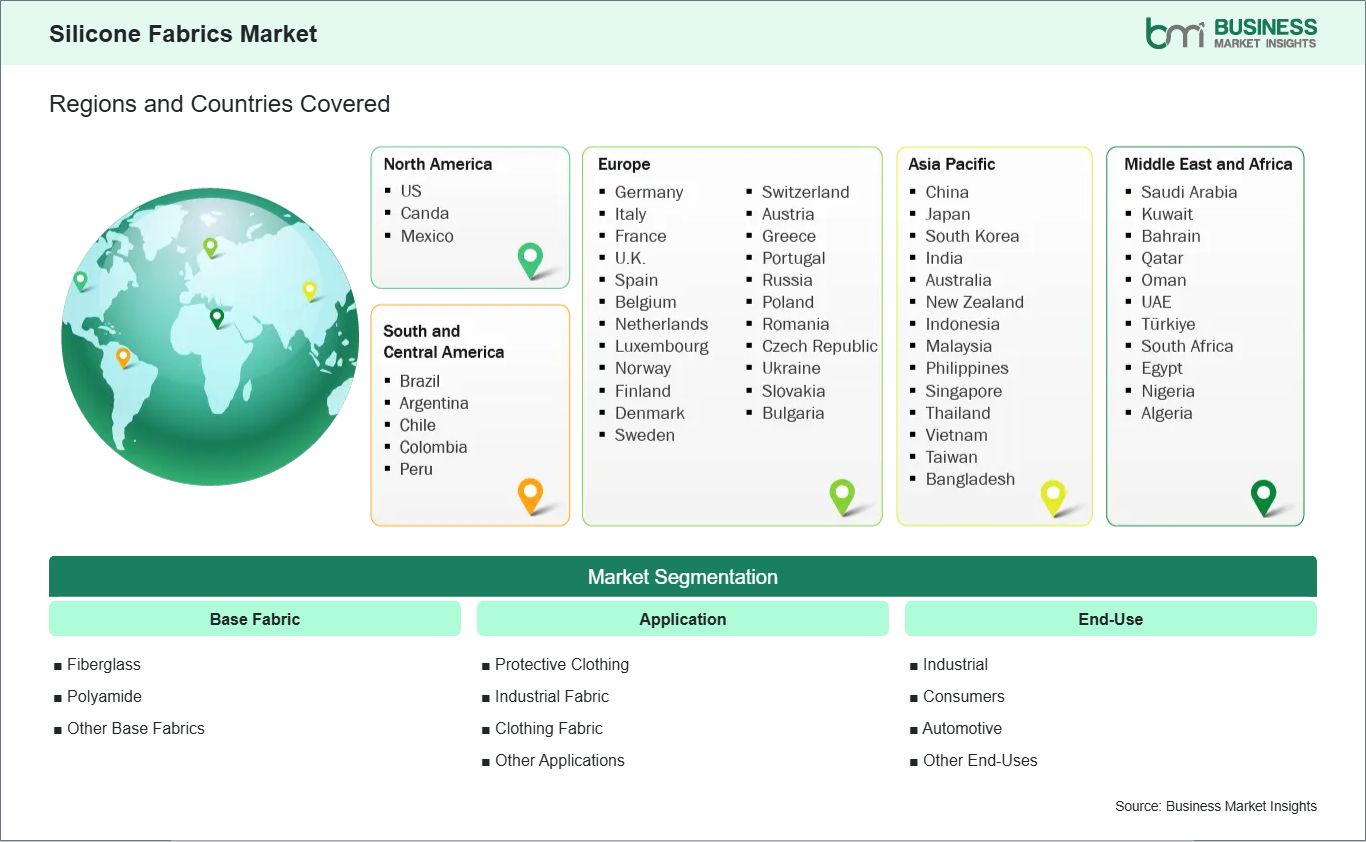
Key segments that contributed to the derivation of the silicone fabrics market analysis are base fabric, application, and end-use.
- By base fabric, the silicone fabrics market is segmented into fiberglass, polyamide, and other base fabrics. The fiberglass segment dominated the market in 2025.
- Based on application, the silicone fabrics market is categorized into protective clothing, industrial fabric, clothing fabric, and other applications. The protective clothing segment dominated the market in 2025.
- In terms of end-use, the silicone fabrics market is categorized into industrial, consumers, automotive, and other end-uses. The industrial segment dominated the market in 2025.
Market Forces
Silicone Fabrics Market Drivers and Opportunities
Rising Demand For High‑Performance Protective Fabrics
The global silicone fabrics market is increasingly driven by the need for high‑performance protective textiles that withstand extreme environments across diverse end‑use sectors. In industrial settings, silicone fabrics are used in protective clothing, welding blankets, and fire proximity suits, which require heat resistance and flexibility and durability to protect workers. These applications are particularly prominent in developed regions like North America and Europe, where firms follow strict regulatory standards for occupational safety while they choose durable material solutions.
The aerospace and defense industry uses silicone fabrics to provide thermal insulation and vibration damping and flame resistance for its flexible ducts and engine covers and structural membranes, which protects equipment from extreme thermal conditions. Automotive manufacturers are integrating high‑performance silicone textiles in gaskets, seals, and interior components to improve thermal management and comfort while reducing maintenance needs. The increased demand for materials that can withstand higher temperatures and provide durability through electric and hybrid vehicle production expansion will occur because global manufacturers develop their vehicle lineups. Silicone fabrics serve as construction and architectural materials because they deliver environmental stability and UV resistance in tensile structures and large membrane roofs and weather‑resistant canopies.
The demand for durable high‑performance silicone textile solutions continues to grow worldwide because Asia Pacific and the Middle East regions experience urban infrastructure development and commercial real estate expansion.
Development Of Eco‑Friendly And Low‑VOC Silicone Fabrics
The silicone fabrics market is currently experiencing increased demand for environmentally friendly solutions that produce low VOC emissions according to the current sustainability requirements and environmental procurement standards. North American and European countries enforce strict air quality regulations and building standards which compel manufacturers to change their silicone coatings and textile laminates through methods that decrease emissions during both production and usage. The low VOC products deliver identical performance benefits which include flexibility and thermal stability and weather resistance while meeting requirements for green building certification and occupational health standards. Architects and industrial buyers now prefer products which provide both lasting performance and environmental sustainability because sustainable materials have gained popularity.
Emerging economies in Asia Pacific are also advancing low VOC silicone fabrics as governments adopt stricter regulations and construction codes to improve indoor air quality and reduce environmental impact. Local manufacturers are developing new production methods which enable them to decrease emissions while maintaining product quality, thus establishing eco-friendly silicone textiles as viable alternatives to standard fabric systems. Brands that operate in the automotive, aerospace, and consumer markets, are testing bio-based silicone substrates together with recyclable fabric designs to create products which have extended lifespans and smaller environmental impact.
The latest trends showcase a complete transition to sustainable materials within high-performance textile markets, as eco-friendly silicone fabrics achieve international market growth.
Size and Share Analysis
Silicone Fabrics Market Size and Share Analysis
The silicone fabrics market demonstrates steady growth, with size and share analysis highlighting evolving trends and competitive dynamics among key players. The report examines subsegments categorized within base fabric, application, and end-use, offering insights into their contribution to overall market performance.
By base fabric, the fiberglass subsegment dominated the market in 2025, driven by its high strength, thermal stability, and wide use as a base material for silicone-coated fabrics.
Based on application, the protective clothing subsegment dominated the market in 2025, driven by growing demand for heat-, flame-, and chemical-resistant fabrics in industrial and safety applications.
In terms of end-use, the industrial subsegment dominated the market in 2025, driven by extensive use of silicone fabrics in conveyor belts, insulation, gaskets, and other heavy-duty industrial applications.
Report Coverage
Silicone Fabrics Market Report Coverage and Deliverables
The "Silicone Fabrics Market Size and Forecast (2022 - 2033)" report provides a detailed analysis of the market covering below areas:
- Silicone Fabrics Market size and forecast at global, regional, and country levels for all the key market segments covered under the scope
- Silicone Fabrics Market trends, as well as drivers, restraints, and opportunities
- Silicone Fabrics Market analysis covering key trends, global and regional framework, major players, regulations, and recent developments
- Industry landscape and competition analysis covering market concentration, heat map analysis, prominent players, and recent developments for the Silicone Fabrics Market
- Detailed company profiles, including SWOT analysis
Geographic Insights
Silicone Fabrics Market Geographic Insights
The geographical scope of the Silicone Fabrics Market report is divided into North America, Asia Pacific, Europe, Middle East & Africa, and South & Central America. North America held the largest share in 2025.
North America serves as the leading region in the global silicone fabrics market because of its developed industrial facilities and strict safety regulations and its early usage of advanced materials across multiple industries. The demand for silicone fabrics in the United States and Canada stems from aerospace and automotive and industrial safety and architectural sectors which require these materials for thermal insulation and protective clothing and gaskets and seals and long-lasting tensile structures with chemical protection and UV defense. The market sees growth because of major OEMs and defense contracts and large construction projects, but companies must follow occupational safety and environmental rules, which lead them to choose high-quality silicone textiles that meet compliance requirements.
Asia Pacific experienced a market expansion which covered India, China, Japan, and South Korea because these countries expanded their industrial sectors and infrastructure networks and automotive manufacturing operations, which increased their demand for silicone fabrics in protective gear and industrial equipment and membrane architectural design. Companies within the region are increasing their capital spending on equipment upgrades and research and development programs to fulfill escalating market requirements while delivering budget-friendly products for developing economies.
European demand remains at a constant level because of Germany France and the UK, which drive required materials for aerospace and automotive and construction sectors that need sustainable materials, which require minimal upkeep, and deliver high performance.
The Middle East and Africa region experiences economic development because its oil and gas and petrochemical and construction sectors require heat- and chemical-resistant fabrics for their work in harsh climate environments.
South and Central America shows steady development because Brazil and Mexico drive industrial growth and urban expansion and automotive manufacturing which creates a need for protective and advanced silicone textiles.
The market operates across all regions because customers require materials that can withstand heat and chemical exposure while meeting environmental standards. North America maintains its dominant market status because Asia Pacific countries serve as important areas for business expansion.
Industry Activity
Recent Developments
The Silicone Fabrics Market is evaluated by gathering qualitative and quantitative data post primary and secondary research, which includes important corporate publications, association data, and databases. A few of the key developments in the silicone fabrics market are:
- In January 2025, Wacker Chemie AG announced that it expanded its production capacity for specialty silicones in Asia, starting up new facilities in Japan and South Korea to strengthen supply of silicone‑based materials for automotive, construction, and electronics applications — underscoring the strategic focus on meeting rising regional demand for advanced silicone solutions. This expansion will help support global silicone materials supply, which is foundational for sectors like silicone coated fabrics serving diverse industries.
- In April 2025, The Mitchell Group announced that it opened a new state‑of‑the‑art manufacturing facility dedicated to its Sta‑Kleen Silicone line, featuring advanced coating lines and sustainable, water‑free production processes to enhance quality, environmental performance, and capacity for silicone‑based coated fabrics.
Trust & Transparency
Research Methodology
The market analysis combines proprietary research with secondary data from government agencies, company disclosures, regulatory filings, industry databases and expert interviews. Market estimates are validated through data triangulation, cross-market benchmarking and analyst
review.
View Full Research Methodology
Key Sources Referred:
World Health Organization (WHO) Organisation for Economic Cooperation and Development (OECD) The World Bank Group Worldometer The Lancet International Bar Association International Trade Administration