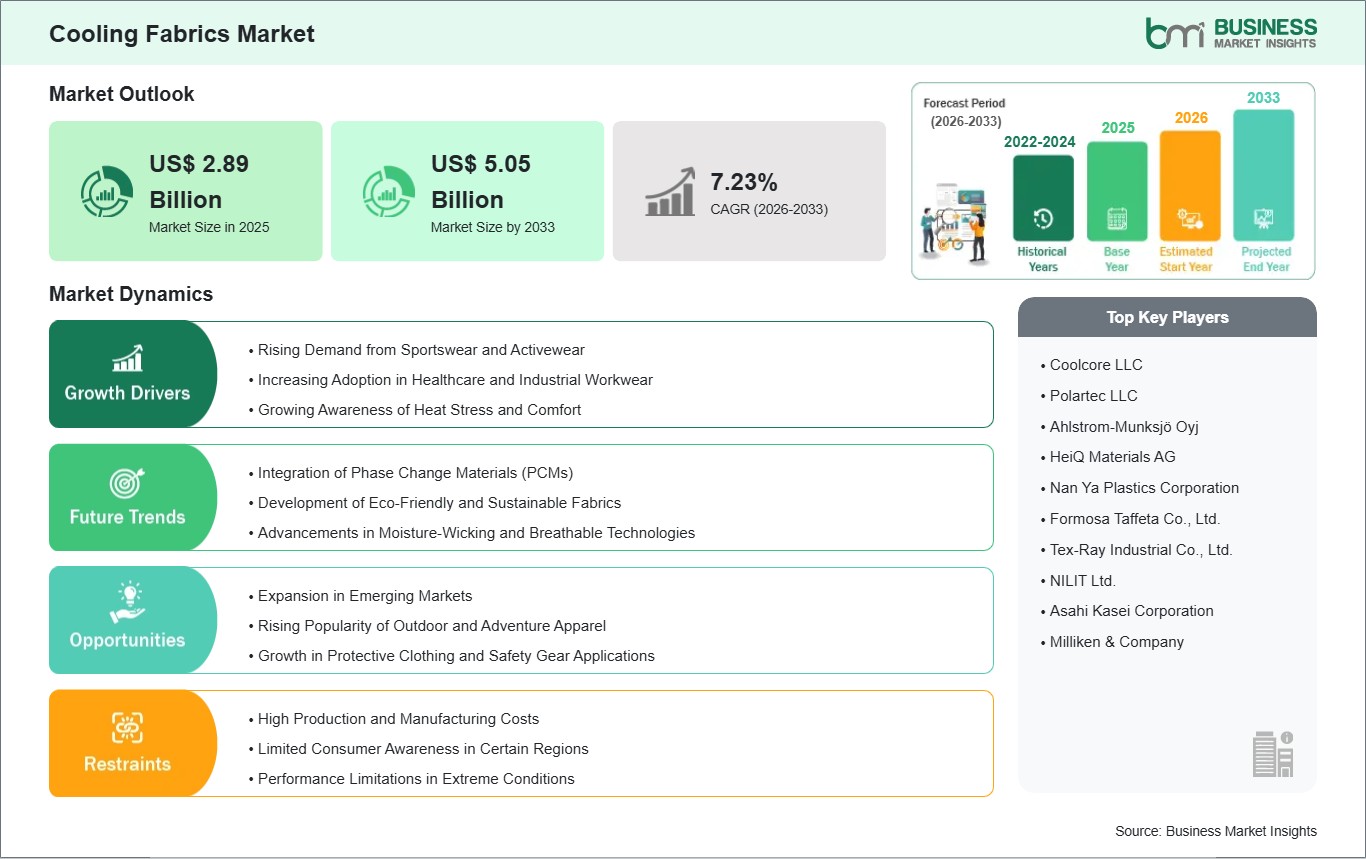
The Cooling Fabrics Market size is expected to reach US$ 5.05 Billion by 2033 from US$ 2.89 Billion in 2025. The market is estimated to record a CAGR of 7.23% from 2026 to 2033.
The global cooling fabrics market is a key part of the broader technical textiles and performance apparel industry. It plays an important role in improving comfort, regulating temperature, and enhancing overall performance in many applications. Cooling fabrics are specially designed textiles that manage heat and moisture by promoting airflow, wicking sweat, and speeding up evaporation. These fabrics help keep body temperature lower, making them ideal for sportswear, protective clothing, medical textiles, and everyday wear. Industries like healthcare, defense, construction, and outdoor recreation increasingly depend on cooling fabrics due to their ability to improve comfort, safety, and productivity in hot environments. Common types of cooling fabrics include synthetic fibers like polyester and nylon, natural fibers such as cotton, and blends infused with cooling technologies, each tailored for specific performance needs. Producing cooling fabrics involves textile engineering processes such as fiber modification, chemical treatments, and the use of phase change materials (PCMs) or cooling finishes. These technologies aim to improve moisture management, breathability, UV protection, and thermal regulation. Manufacturers also use nanotechnology and specialized coatings to enhance durability, antimicrobial properties, and long-term performance. Recent innovations have introduced eco-friendly and sustainable cooling fabrics made from recycled fibers and bio-based materials, responding to growing environmental concerns and regulatory standards. These advancements not only boost product functionality but also support safer and more efficient use in both consumer and industrial settings. Cooling fabrics are essential for improving comfort and performance, particularly in high-temperature situations. In sports and fitness, they help regulate body temperature and reduce fatigue, which can enhance athletic performance. In job settings like construction, mining, and defense, cooling fabrics are used in uniforms and protective gear to lower heat stress and improve worker safety. In healthcare, they are used in bedding, patient garments, and therapeutic textiles to increase comfort and support recovery. Their ability to provide long-lasting cooling effects, moisture control, and resistance to wear makes them valuable in various end-use sectors.
Market growth is fueled by rising awareness of heat-related health issues, greater demand for high-performance sportswear, and expanding uses in industrial and healthcare sectors. Rapid urbanization, climate change, and rising global temperatures are also speeding up the adoption of cooling fabrics. Additionally, the increasing focus on sustainability and eco-friendly consumer preferences is pushing the development of environmentally friendly textile solutions. However, the market faces challenges such as high production costs, limited awareness in some regions, and performance issues in extreme conditions. Despite these challenges, ongoing innovation in textile technology and material science is expected to promote long-term growth. Companies are working on developing multifunctional, durable, and sustainable cooling fabrics to meet changing consumer and industrial needs. Overall, the cooling fabrics market is well-positioned to enhance comfort, safety, and performance in a wide range of global applications.

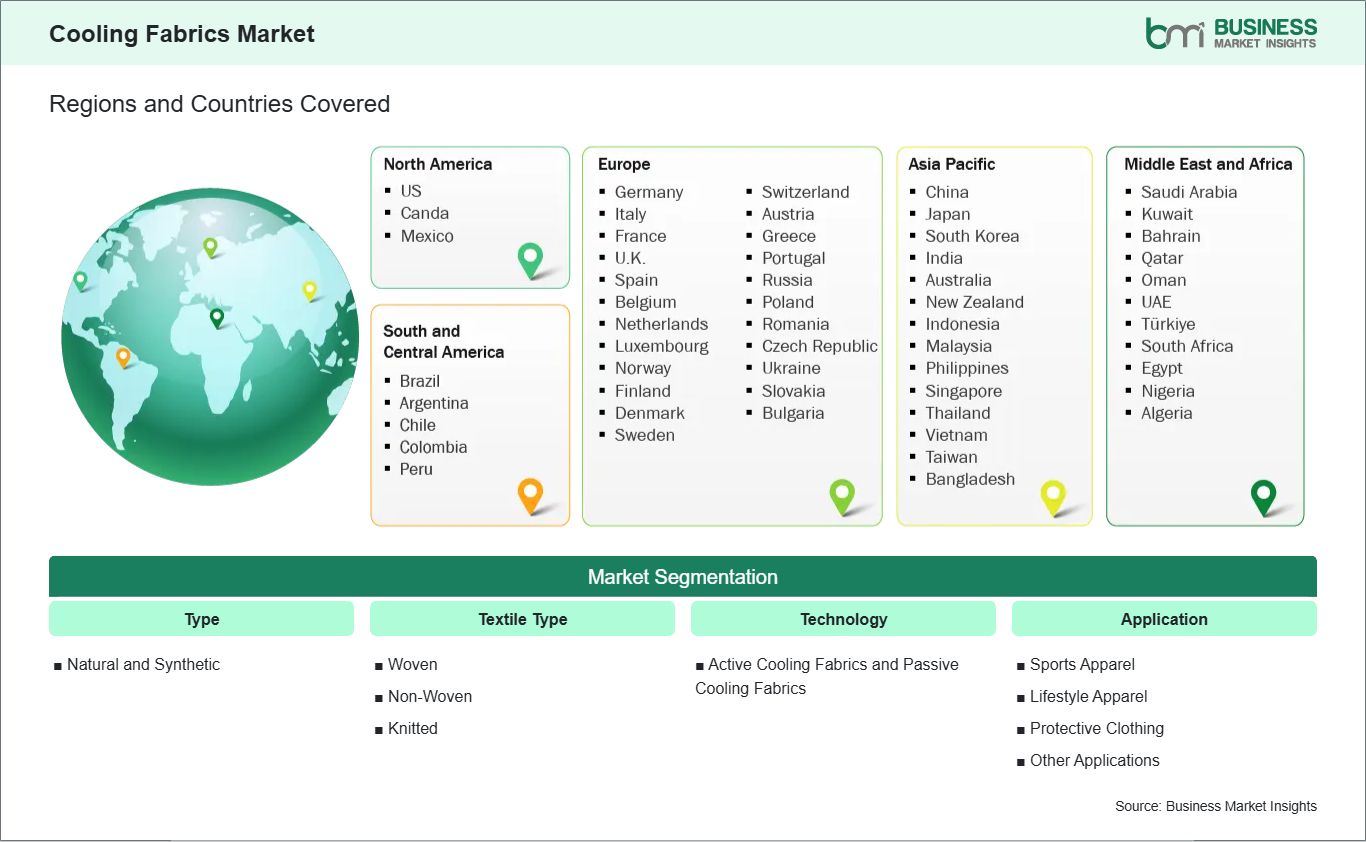
Key segments that contributed to the derivation of the Cooling Fabrics market analysis are type, textile type, technology, and application.
The global cooling fabrics market is growing steadily, mainly due to rising demand in key sectors like sportswear, healthcare, industrial workwear, and outdoor apparel. More people are aware of heat stress, fitness, and active lifestyles. This awareness is boosting the demand for high-performance sportswear that features moisture-wicking and temperature-regulating properties. In healthcare, cooling fabrics are being used more often in patient garments, bedding, and therapeutic textiles to enhance comfort and support recovery, particularly in warm climates. Industrial workers in construction, mining, and manufacturing are also wearing cooling garments to improve safety and productivity by reducing heat-related fatigue. Moreover, the growing popularity of outdoor activities, such as hiking, cycling, and camping, is driving the need for lightweight, breathable, and cooling clothing. Increasing disposable incomes, shifting consumer preferences toward functional clothing, and rising urban populations are also supporting market growth. As global temperatures rise and awareness of comfort and safety increases, the demand for effective cooling fabric solutions should continue to grow in both consumer and industrial areas.
Technological innovation is crucial in shaping the global cooling fabrics market. Continuous advancements focus on improving performance, durability, and environmental sustainability. Changes in textile engineering, such as integrating phase change materials (PCMs), advanced fiber structures, and nanotechnology finishes, enable fabrics to provide better cooling effects, moisture management, and breathability. These improvements allow cooling fabrics to work well in extreme weather and demanding situations. At the same time, there is a strong move toward eco-friendly and sustainable textile solutions, driven by stricter environmental regulations and growing consumer awareness. Manufacturers are concentrating on making fabrics from recycled fibers, bio-based materials, and low-impact chemical treatments to lessen their environmental impact. Modern production methods, including automation and precise processing, help improve product consistency, cut waste, and increase manufacturing efficiency. Additionally, ongoing research aims to extend fabric lifespan, enhance UV protection, and ensure compatibility with various applications. As industries and consumers focus more on sustainability, comfort, and performance, continued innovation in cooling fabric technologies should encourage long-term market growth and change.
Synthetic cooling fabrics lead the market due to their superior moisture-wicking properties, durability, and ability to incorporate advanced cooling technologies. Materials like polyester and nylon offer better performance, lightweight structure, and cost efficiency compared to natural fibers, making them ideal for high-performance applications.
Active cooling fabrics dominate as they provide enhanced temperature regulation through technologies such as phase change materials (PCMs) and chemical treatments. These fabrics deliver more effective and long-lasting cooling performance, especially in high-heat environments and intensive activities.
Non-woven cooling fabrics hold a leading share due to their excellent breathability, lightweight nature, and cost-effective production process. Their versatility and ease of customization make them suitable for applications such as medical textiles, hygiene products, and protective clothing.
The sports apparel segment leads the market driven by rising fitness awareness and demand for high-performance athletic wear. Cooling fabrics are widely used in this segment to enhance comfort, regulate body temperature, and improve athletic performance during intense physical activities.
| Report Attribute | Details |
|---|---|
| Market size in 2025 | US$ 2.89 Billion |
| Market Size by 2033 | US$ 5.05 Billion |
| Global CAGR (2026 - 2033) | 7.23% |
| Historical Data | 2022-2024 |
| Forecast period | 2026-2033 |
| Segments Covered | By Type
|
|
Regions and Countries Covered
| |
| North America | US, Canada, Mexico |
| Europe | Belgium, Austria, Finland, Denmark, Greece, Poland, Romania, Russia, Ukraine, Czech Republic, Slovakia, Bulgaria, Italy, Luxembourg, Germany, Switzerland, France, Netherlands, Norway, Portugal, Spain, Sweden, United Kingdom |
| Asia-Pacific | Australia, China, India, Japan, South Korea, Indonesia, Malaysia, Philippines, Singapore, Thailand, Vietnam, Bangladesh, New Zealand, Taiwan |
| South and Central America | Brazil, Argentina, Peru, Chile, Colombia |
| Middle East and Africa | Bahrain, Kuwait, Oman, Qatar, Saudi Arabia, United Arab Emirates, Turkiye, South Africa, Egypt, Algeria, Nigeria |
| Market leaders and key company profiles |
|
The "Cooling Fabrics Market Size and Forecast (2022 - 2033)" report provides a detailed analysis of the market covering below areas:
The geographical scope of the Cooling Fabrics market report is divided into five regions: North America, Asia Pacific, Europe, Middle East & Africa, and South & Central America. The Cooling Fabrics market in the Asia Pacific is expected to grow significantly during the forecast period.
The Asia-Pacific Cooling Fabrics market is segmented into China, Japan, South Korea, India, Australia, New Zealand, Indonesia, Malaysia, the Philippines, Singapore, Thailand, Vietnam, Taiwan, Bangladesh, and the Rest of Asia.
The Asia-Pacific region is becoming one of the fastest-growing markets for cooling fabrics. This growth is fueled by rapid urbanization, rising temperatures, and high demand for functional textiles. Countries like China, India, Japan, and South Korea are seeing strong growth in sportswear, healthcare, industrial workwear, and outdoor apparel. These sectors increasingly depend on cooling fabrics for added comfort and function. The expanding middle class, improving living standards, and growing health awareness are prompting consumers to choose clothing that offers moisture management and temperature control. Additionally, the booming sports and fitness industry, along with more participation in outdoor activities, is greatly increasing the demand for cooling apparel. Industries such as construction, manufacturing, and mining are also using cooling fabrics in workwear to enhance safety and productivity in hot and humid conditions. The region’s strong textile manufacturing base supports large-scale production and wide availability of these fabrics in both domestic and export markets. The move toward sustainable textiles and eco-friendly production is also influencing the cooling fabrics market in Asia-Pacific. Governments in the region are enforcing stricter environmental rules and encouraging sustainable manufacturing to cut pollution and carbon emissions. This pushes manufacturers to create eco-friendly cooling fabrics using recycled fibers, bio-based materials, and low-impact chemical treatments. At the same time, advances in textile engineering, such as the use of phase change materials, nanotechnology, and innovative fiber structures, are boosting fabric performance in breathability, durability, and cooling efficiency. The availability of affordable labor, access to raw materials, and strong supply chains aid the region’s competitiveness in global markets. Moreover, rising investments in research and development are fostering innovation in multifunctional fabrics that combine cooling with features like UV protection and antimicrobial capabilities. With continued growth in end-use industries, supportive government policies, and a strong emphasis on sustainability and innovation, Asia-Pacific is set to remain a key player in production, technological improvements, and demand in the global cooling fabrics market.

The Cooling Fabrics market is evaluated by gathering qualitative and quantitative data post primary and secondary research, which includes important corporate publications, association data, and databases. A few of the key developments in the Cooling Fabrics market are:
The Cooling Fabrics Market is valued at US$ 2.89 Billion in 2025, it is projected to reach US$ 5.05 Billion by 2033.
As per our report Cooling Fabrics Market, the market size is valued at US$ 2.89 Billion in 2025, projecting it to reach US$ 5.05 Billion by 2033. This translates to a CAGR of approximately 7.23% during the forecast period.
The Cooling Fabrics Market report typically cover these key segments-
The historic period, base year, and forecast period can vary slightly depending on the specific market research report. However, for the Cooling Fabrics Market report:
The Cooling Fabrics Market is populated by several key players, each contributing to its growth and innovation. Some of the major players include:
The Cooling Fabrics Market report is valuable for diverse stakeholders, including:
Essentially, anyone involved in or considering involvement in the Cooling Fabrics Market value chain can benefit from the information contained in a comprehensive market report.
Please tell us your area of interest
(Market Segments/ Regions and Countries/ Companies)