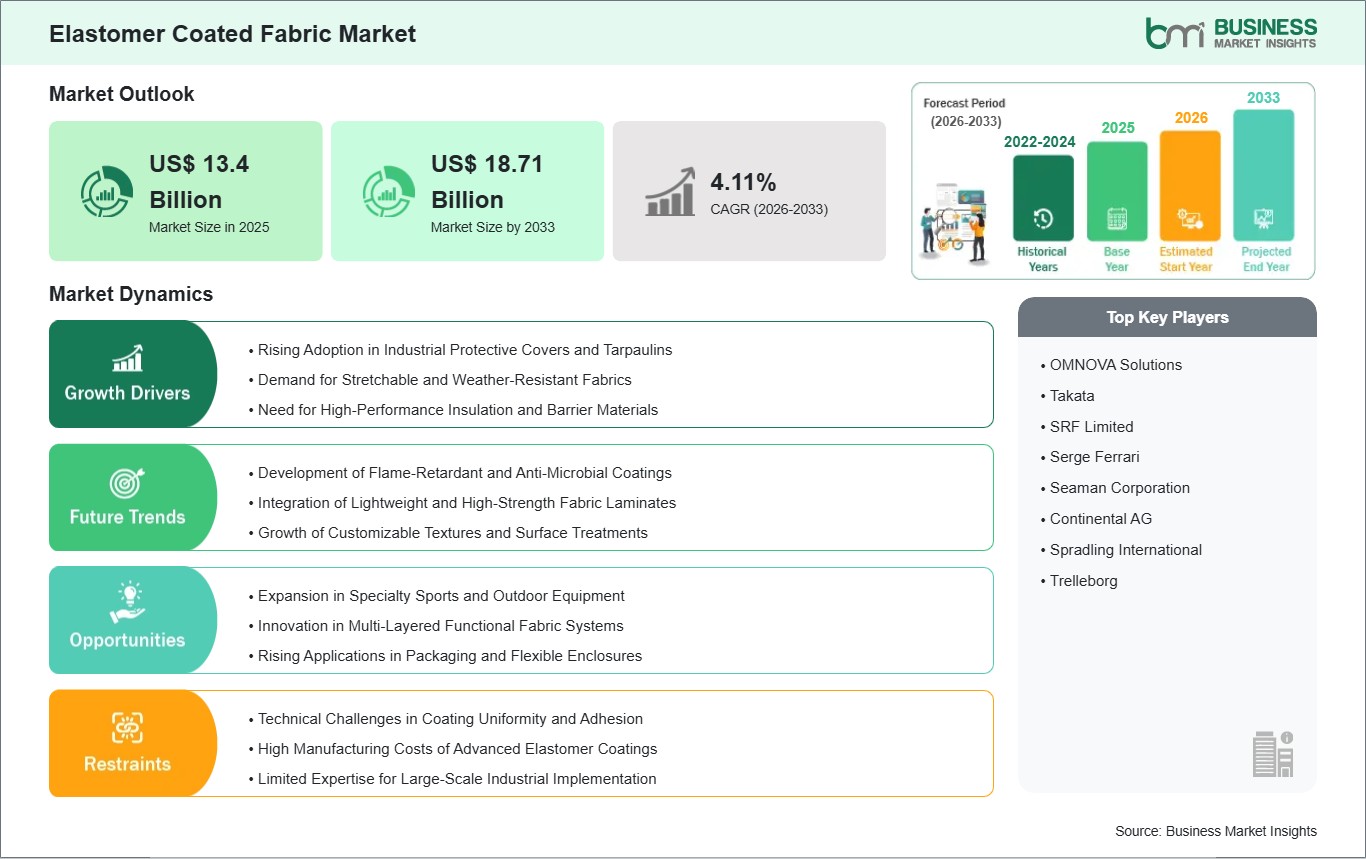
Rising Adoption in Industrial Protective Covers and Tarpaulins
The demand for elastomer coated fabrics is rising as industries increasingly prioritize durability and protection. These fabrics offer resistance to water, chemicals, UV radiation, and abrasion, making them ideal for protective covers, tarpaulins, and equipment enclosures. Companies in sectors such as manufacturing, transportation, and logistics are turning to these materials to safeguard machinery, cargo, and infrastructure from harsh environmental conditions.
Industrial operations are in search of solutions that help reduce costs and extend equipment lifespan. Elastomer coated fabrics offer a flexible and strong protective layer for equipment, guarding them from wear and tear while at the same time offering them strength and resilience unlike other materials. The strength and resilience to withstand extreme weather conditions, temperature changes, and chemical exposure make elastomer coated fabrics ideal for various applications in the industry, including warehouse covers and temporary storage shelters.
Elastomer coated fabrics are also instrumental in enhancing efficiency in operations. The fabrics are quite light and thus easier to work with, making them ideal for operations where equipment is required to be moved around frequently. The strength, flexibility, and resilience of elastomer coated fabrics are instrumental in their adoption as part of protective equipment in operations worldwide.
Expansion in Specialty Sports and Outdoor Equipment
Specialty sports and outdoor equipment represent a growing opportunity for elastomer coated fabrics. From inflatable boats and tents to performance gear like backpacks and protective padding, these fabrics provide the ideal mix of durability, waterproofing, and lightweight performance. Manufacturers are increasingly incorporating elastomer coatings to enhance product longevity and reliability in demanding outdoor environments.
Consumer interest in adventure sports, outdoor activities, and green products is prompting brands to use materials that are effective and durable. Elastomer coated fabrics have the potential to be designed in a way that they are flexible, resistant to tears, and resistant to UV degradation, thus making the products durable and effective even after repeated use and exposure to the elements.
There is also the prospect of innovation in the design and customization of products. The fabric may be designed in a way that it is effective in terms of grip, aesthetics, and even insulation, thus making the products applicable in a wide range of products. As the lifestyle of consumers continues to promote outdoor activities and adventure sports, elastomer coated fabrics are likely to be a major component in the manufacturing of products that are effective in these activities.