
Seafood Market Outlook: Size, Share, Trends, Growth Analysis, Competitive Landscape & Forecast, 2026-2033

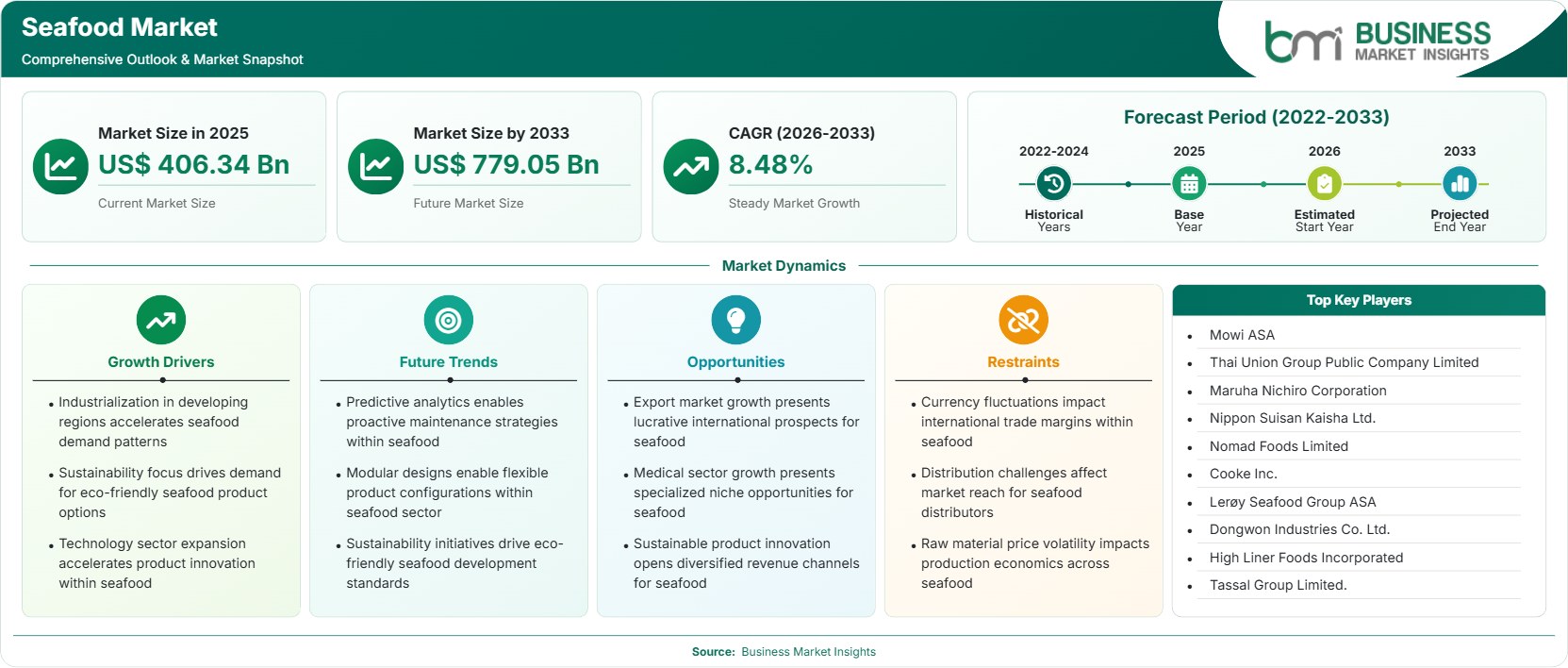
The Seafood Market size was valued at US$ 406.34 Billion in 2025 and is projected to reach US$ 779.05 Billion by 2033, growing at a CAGR of 8.48% during 2026–2033. Rising protein demand, aquaculture expansion, cold-chain modernization, sustainability programs, and value-added seafood innovation continue creating strong growth opportunities across retail and foodservice channels.

Report Coverage
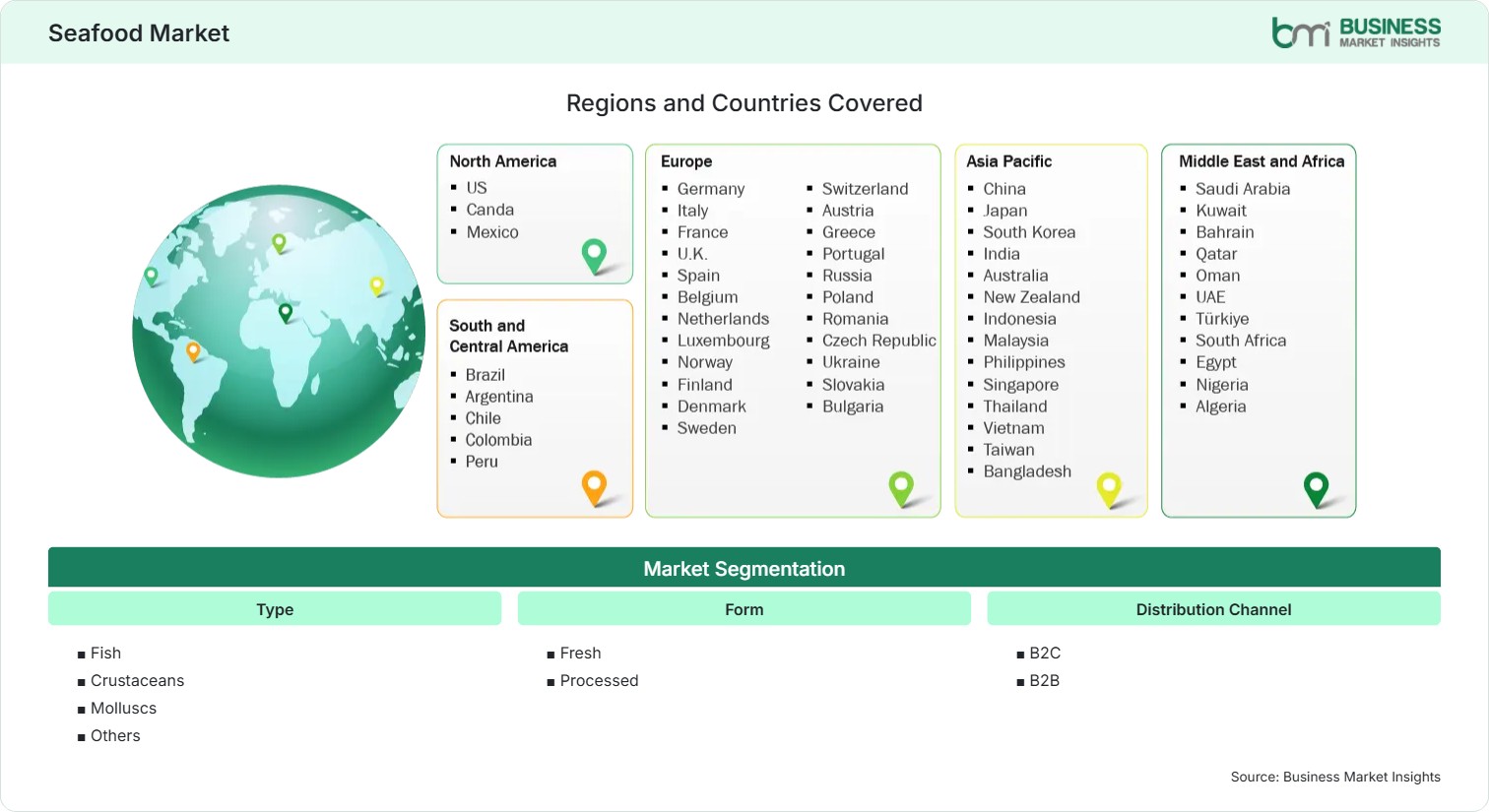
  • Type: Fish, Crustaceans, Molluscs, Others
  • Form: Fresh, Processed
  • Distribution Channel: B2C, B2B
US$ 406.34 Bn Market size in 2025
US$ 779.05 Bn Market Size by 2033
8.48% CAGR, 2026 - 2033
2026-2033 Forecast Period

AI Overview

Seafood Market Summary

  • North America Region: North America holds a market share range of 24%–27% in 2025, growing with a CAGR of 7.2%–8.0% during 2026–2033. Advanced cold chains, premium seafood demand, traceability adoption, restaurant recovery, aquaculture investments, and sustainable sourcing initiatives support long-term expansion across retail and institutional channels. US market benefits from strong imports, health-focused consumption, and value-added products, advancing at a CAGR of 7.4%–8.2%.
  • Fastest Growing Region: Asia Pacific holds a market share range of 38%–41% in 2025, growing with a CAGR of 9.5%–10.3% during 2026–2033. Urbanization, rising incomes, aquaculture output, e-commerce penetration, seafood processing investments, export competitiveness, and dietary protein shifts accelerate demand throughout major consuming economies.
  • Leading Segment: Fish accounts for a 52%–56% share in 2025 and advances at 8.1%–8.9% CAGR. Broad consumer acceptance, nutritional advantages, diversified applications, growing aquaculture production, and premium species commercialization support enduring category leadership across global markets.
  • High Growth Segment: Frozen seafood represents 34%–38% share in 2025 and records 9.2%–10.0% CAGR. Shelf-life advantages, export suitability, logistical efficiency, foodservice utilization, and retail convenience continue driving adoption across developed and developing economies.
  • Key Market Opportunity: Premium sustainable aquaculture, traceability platforms, online seafood retailing, certified products, species diversification, and value-added processing solutions create substantial revenue opportunities while supporting resource efficiency and consumer confidence worldwide.
  • Major Market Players: Mowi ASA, Thai Union Group Public Company Limited, Maruha Nichiro Corporation, Nippon Suisan Kaisha Ltd., Nomad Foods Limited, Cooke Inc., Lerøy Seafood Group ASA, Dongwon Industries Co. Ltd., High Liner Foods Incorporated, Tassal Group Limited.
Strategic Insights

Seafood Market: Strategic Insights

Seafood Market Strategic Framework
FREE PDF
Request your free sample
Request free sample
Stakeholder View

Key Takeaways

  • The industry value chain increasingly integrates fishing, aquaculture, processing, logistics, certification, and retail functions, creating efficiency gains and stronger product traceability.
  • Frozen and value-added product categories offer the strongest upside as convenience-oriented consumers seek longer shelf life and ready-to-cook formats.
  • AI-enabled supply monitoring, blockchain traceability, automated filleting equipment, and advanced quality inspection systems are transforming operational performance.
  • Asia Pacific presents the most compelling expansion opportunity due to consumption growth, processing capacity development, and export-oriented aquaculture investments.
  • Strategic acquisitions continue targeting distribution scale, sustainable sourcing capabilities, and branded product portfolios across developed seafood economies.
  • Sustainability certification and responsible aquaculture practices increasingly influence procurement decisions among retailers, foodservice operators, and institutional buyers.
Geographic Outlook

Seafood Market Regional Highlights

North America Seafood Market

North America holds 24%-27% market share in 2025 and is expected to grow at a CAGR of 7.2%-8.0% through 2033. Consumption is driven by a preference for high-quality seafood, healthy eating habits, and advanced logistics infrastructure. Sustainability in products offered and automation are key initiatives of retailers and processors, respectively. Traceability and food safety compliance continue to play a major role in purchasing decisions. Seafood Market growth in the region is further fueled by restaurant recovery and increased demand for frozen and prepared seafood.

  • Growing demand for certified sustainable products is encouraging investment in traceability systems, responsible sourcing programs, and premium labeling initiatives across retail and foodservice networks.
  • Frozen seafood consumption continues increasing as households prioritize convenience, portion control, reduced waste, and broader product availability.
  • Automation investments help processors manage labor shortages while improving productivity and quality consistency.
  • Health-oriented dietary trends strengthen demand for omega-3-rich fish and shellfish products.

US Seafood Market

The United States comprises 76% - 80% of regional consumption and has an estimated CAGR of 7.4% - 8.2%. The diversification of imports, the development of cold chain logistics, and innovation in seafood categories fuel market growth. Foodservice players remain engaged in expanding their seafood menus, while e-commerce drives direct-to-consumer delivery systems. Certifications for sustainability factor in procurement decisions made by both retailers and institutions.

  • Premium salmon, shrimp, and tuna categories maintain strong consumer demand across retail channels and restaurants.
  • E-commerce seafood fulfillment expands access to specialty species and value-added products.
  • Investments in recirculating aquaculture systems support production efficiency and sustainability objectives.
  • Strong purchasing power supports premiumization across multiple seafood categories.

Europe Seafood Market

Europe accounts for 22%-25% of the Seafood Market share in 2025 and is set to record 7.8%-8.6% CAGR. The main factors that drive the market include sustainability policies, well-established retail networks, and high seafood consumption rates. Norway continues to be an important source for supplies, whereas Spain showcases high levels of seafood consumption. Poland is showing a faster growth rate in its seafood processing sector, exceeding the regional average CAGR. Producers increasingly emphasize certification, transparent sourcing, and product quality differentiation to maintain competitiveness.

  • Sustainability certification plays a central role in retailer procurement standards and consumer purchasing behavior.
  • Ready-to-cook and premium convenience seafood products gain momentum throughout major consumer markets.
  • Norway remains a leading aquaculture producer supporting regional supply stability.
  • Poland continues attracting seafood processing investments due to competitive operating conditions.
  • Traceability technologies improve transparency and regulatory compliance across supply chains.

Asia Pacific Seafood Market

The Asia Pacific region holds a market share of 38%-41% and has the highest CAGR of 9.5%-10.3%. Higher income levels, urbanization, and the expansion of aquaculture ecosystems fuel its expansion. The Chinese market remains the largest; however, the Indian market has been growing faster due to export-oriented manufacturing facilities and increased domestic demand.

  • China maintains leadership through large-scale production, processing capabilities, and consumption volumes.
  • India records strong growth due to aquaculture modernization and increasing domestic demand.
  • Online grocery platforms increase seafood accessibility across urban populations.
  • Export competitiveness benefits from ongoing processing infrastructure upgrades.
  • Premium imported seafood categories continue expanding in metropolitan consumer markets.

Rest of World Seafood Market

Rest of World is estimated to contribute a market share of 11%-14% in 2025 and register a CAGR of 8.3%-9.1%. South and Central America will benefit from developments in aquaculture and export opportunities, especially in countries like Chile and Ecuador. Market segments in the Middle East and Africa region will be driven by factors such as urbanization, tourism, and cold chain investment initiatives.

  • Chile strengthens regional leadership through aquaculture development and export-focused production.
  • Ecuador benefits from expanding shrimp exports and investment in processing infrastructure.
  • Gulf countries increase seafood imports alongside tourism and hospitality sector expansion.
  • Cold-storage investments improve product accessibility across emerging consumer markets.
  • Sustainability initiatives encourage modernization throughout fisheries and aquaculture operations.
Global Market Geography
FREE PDF
Request your free sample
Request free sample
Segment Analysis

Seafood Market Segmentation

Type

Fish continues to dominate, accounting for 52%–56% of market share by 2025, with a CAGR of 8.1%–8.9%. Fish enjoys dominance due to its affordability, nutritional value, scalability through aquaculture, and availability in many products. The Seafood Market scope continues to grow as processors launch new fish products for consumers.

  • Fish: Widely consumed across retail and foodservice channels due to nutritional value, species diversity, availability, and suitability for fresh, chilled, and processed applications.
  • Crustaceans: Demand remains supported by premium dining trends, export opportunities, aquaculture expansion, and rising household consumption in urban markets.
  • Molluscs: Growing acceptance in specialty cuisines and foodservice establishments supports category development, particularly through oysters, mussels, and squid products.

Form

The processed segment is expected to account for 58%-62% of the market share in 2025 and is expected to expand at a CAGR of 8.8%-9.6%. Convenience, storage efficiency, supply chain flexibility, and ease of exportability drive its consumption. Seafood Market trends show increasing consumption of packaged and precooked seafood.

  • Fresh: Premium positioning, perceived quality, and increasing demand from restaurants and specialty retailers support continued consumer interest.
  • Canned: Long shelf life, affordability, and easy storage contribute to stable demand among households and institutional buyers.
  • Chilled: Enhanced freshness retention and retail merchandising advantages drive adoption in urban grocery environments.
  • Frozen: Strong acceptance results from convenience, reduced waste, extended shelf life, and suitability for international trade.

Distribution Channel

The B2C distribution sector holds market shares between 68% and 72% with a CAGR of 8.4% to 9.2%. The modern trends in retailing and consumers' inclination to buy directly have only strengthened its dominance across retail channels.

  • B2C: Continues benefiting from diversified retail formats, broader product assortments, and rising household seafood consumption.
  • Supermarkets/Hypermarkets: Remain critical for volume sales due to extensive distribution reach and promotional capabilities.
  • Convenience Stores & Specialty Stores: Target premium and immediate-consumption demand with curated assortments and localized offerings.
  • Online Sales Channel: Digital platforms enhance access, delivery convenience, and product transparency while attracting younger consumers.
  • B2B: Supported by foodservice recovery, institutional procurement, hospitality expansion, and growing restaurant seafood consumption.
Market Forces

Seafood Market Dynamics

Key Market Drivers

Rising Global Protein Consumption and Health Awareness

Increasing awareness of the high protein content in fish, as well as its other health benefits, such as omega-3 fatty acids, vitamins, and minerals, is another reason for increased seafood consumption. The WHO's growing emphasis on nutrition, along with rising awareness of the need for a balanced diet, is driving people towards diverse protein sources. The growing number of middle-class consumers in Asia, along with urbanization, is also increasing their purchasing power. Retailers respond to this trend by expanding the range of seafood products available, including premium and value-added options.

Expansion of Commercial Aquaculture Operations

Aquaculture provides an ever-growing percentage of the world’s production of aquatic animals as an attempt to solve problems related to the overexploitation of fisheries resources. Advanced breeding techniques, increased feeding efficiency, and new methods of treating diseases enable constant growth in output. Countries and businesses continue investing in sustainable agricultural systems to ensure food safety and export competitiveness. Reliability in production enables product diversification and export expansion.

Advancements in Cold Chain and Processing Infrastructure

Modern refrigeration, cold storage, temperature-tracking, and automated systems improve product quality retention in supply chains. Such advancements prevent spoilage-related losses and facilitate the geographic expansion of markets. Developing countries are focusing on developing their logistics infrastructure to boost seafood exports. Increased efficiency improves margins and expands market access through various channels.

Key Market Opportunities

Sustainable and Certified Seafood Product Expansion

The need for environmentally friendly products is continually increasing among retailers, foodservice companies, and institutional purchasers. Certification programs allow room for differentiation for those producers who satisfy the sustainability criteria. Premium pricing, enhanced branding, and export markets are factors that make the business more attractive to investors. Seafood Market Forecasts take into account the commercial importance of sustainable sourcing and certification, especially in Europe and North America.

Digital Seafood Commerce and Direct Distribution

Online grocery stores and direct-to-consumer channels are revolutionizing buying habits. Digital technology provides greater visibility and traceability, along with better customer engagement, without being reliant on conventional retail intermediaries. Subscription services for seafood and fast delivery are providing chances for value-added pricing. Increased access to the Internet and digital payment solutions bode well for the future of this channel.

Value-Added Processing and Premium Product Development

Manufacturers increasingly focus on marinated, seasoned, ready-to-cook, and portion-controlled seafood. This helps cater to convenience demands and achieve a premium status. Innovation through product development offers differentiation within the competitive retail market while ensuring profitability. Processing techniques and packaging offer greater opportunities for manufacturers when targeting high-end consumer groups.

Market Restraints and Challenges

Environmental Uncertainty Impacting Fisheries Productivity and Supply Stability

Factor: Fluctuating ocean temperatures, shifting marine ecosystems, extreme weather events, and changing migration patterns are affecting fish stock distribution and biological productivity across key fishing regions, making resource availability increasingly difficult to predict. Impact: These environmental challenges contribute to supply volatility, increasing procurement costs and reducing catch consistency for seafood processors, distributors, and retailers. Unpredictable harvesting conditions can disrupt production planning, inventory management, and contract fulfillment, while prolonged ecosystem stress may diminish long-term fishery yields. To maintain operational resilience, companies are investing in diversified sourcing strategies, advanced stock-monitoring technologies, and sustainable fisheries management programs, although such measures often require significant capital and operational resources.

Evolving Regulatory Frameworks Increasing Compliance and Market Access Challenges

Factor: The seafood industry operates within a complex regulatory environment that includes fisheries management policies, import and export requirements, food safety regulations, labor compliance standards, and sustainability certification programs, all of which continue to evolve across global markets. Impact: Compliance with these requirements increases administrative workloads, operational costs, and documentation obligations throughout the supply chain. Companies that fail to meet certification or regulatory standards may face restricted market access, delayed shipments, or reputational risks. Smaller operators are particularly challenged by the financial and operational burden of maintaining compliance, while differences in regulations across countries add further complexity to international trade, sourcing activities, and cross-border supply chain management.

Company Analysis

Competitive Landscape

The Seafood Market analysis indicates competition is shaped by vertically integrated producers, processors, distributors, and branded seafood suppliers focused on sustainability, product innovation, and global sourcing.

Company Name

Overview

Products and Services relevant to this market

Mowi ASA

Leading global seafood producer with extensive aquaculture operations and international distribution network.

Atlantic salmon farming, processing, branded seafood products, distribution, value-added seafood solutions.

Thai Union Group Public Company Limited

Major multinational seafood company with strong global retail and foodservice presence.

Tuna, shrimp, frozen seafood, canned products, sourcing and processing services.

Maruha Nichiro Corporation

Diversified seafood and food company operating across global supply chains.

Seafood processing, frozen products, marine resource procurement, distribution services.

Nippon Suisan Kaisha Ltd.

Integrated seafood producer and processor with a broad international footprint.

Fish products, prepared meals, aquaculture operations, frozen seafood offerings.

Nomad Foods Limited

Major frozen food supplier serving developed consumer markets.

Frozen fish products, prepared seafood meals, retail-branded offerings.

Cooke Inc.

Global seafood enterprise with aquaculture and harvesting operations.

Salmon, shellfish, wild catch products, processing and distribution services.

Lerøy Seafood Group ASA

Norwegian seafood specialist with integrated value-chain operations.

Salmon farming, processing, distribution, fresh and frozen seafood products.

Dongwon Industries Co. Ltd.

Significant seafood producer and fisheries operator in Asia.

Tuna products, marine harvesting, seafood processing, logistics services.

High Liner Foods Incorporated

North American seafood processor focused on value-added categories.

Frozen seafood, prepared products, foodservice and retail solutions.

Tassal Group Limited

Aquaculture-focused producer serving domestic and export markets.

Salmon farming, seafood processing, fresh and frozen seafood offerings.

Trust & Transparency

Research Methodology

The market analysis combines proprietary research with secondary data from government agencies, company disclosures, regulatory filings, industry databases and expert interviews. Market estimates are validated through data triangulation, cross-market benchmarking and analyst review.

View Full Research Methodology

Questions Answered

Frequently Asked Questions

How are sustainability requirements affecting companies?

Certification programs, traceability expectations, and responsible sourcing standards increasingly influence procurement decisions, investment priorities, and access to premium retail channels.

What does the Seafood Market Report typically assess?

A Market Report generally evaluates market size, competitive dynamics, regional performance, product segmentation, investment activity, regulatory developments, and future industry opportunities.

Why is aquaculture important for the industry?

Aquaculture improves supply reliability, supports food security objectives, reduces pressure on wild fisheries, and enables scalable production for growing global demand.

Which region offers the strongest growth potential?

Asia Pacific presents the strongest growth outlook due to urbanization, income growth, aquaculture expansion, and increasing adoption of organized retail and digital commerce.

What factors are most strongly influencing demand?

Health-focused diets, rising protein consumption, premium seafood preferences, and growth in frozen convenience products are the principal drivers of demand expansion across consumer and foodservice sectors.

Access the Full Seafood Market Report

Get segment-level forecasts, regional estimates, competitive benchmarking, company profiles and downloadable Excel datasets.

Access the full Seafood Market Report
350 pages PDF & Excel | 2026-08-31
Similar Research

Related Market Reports