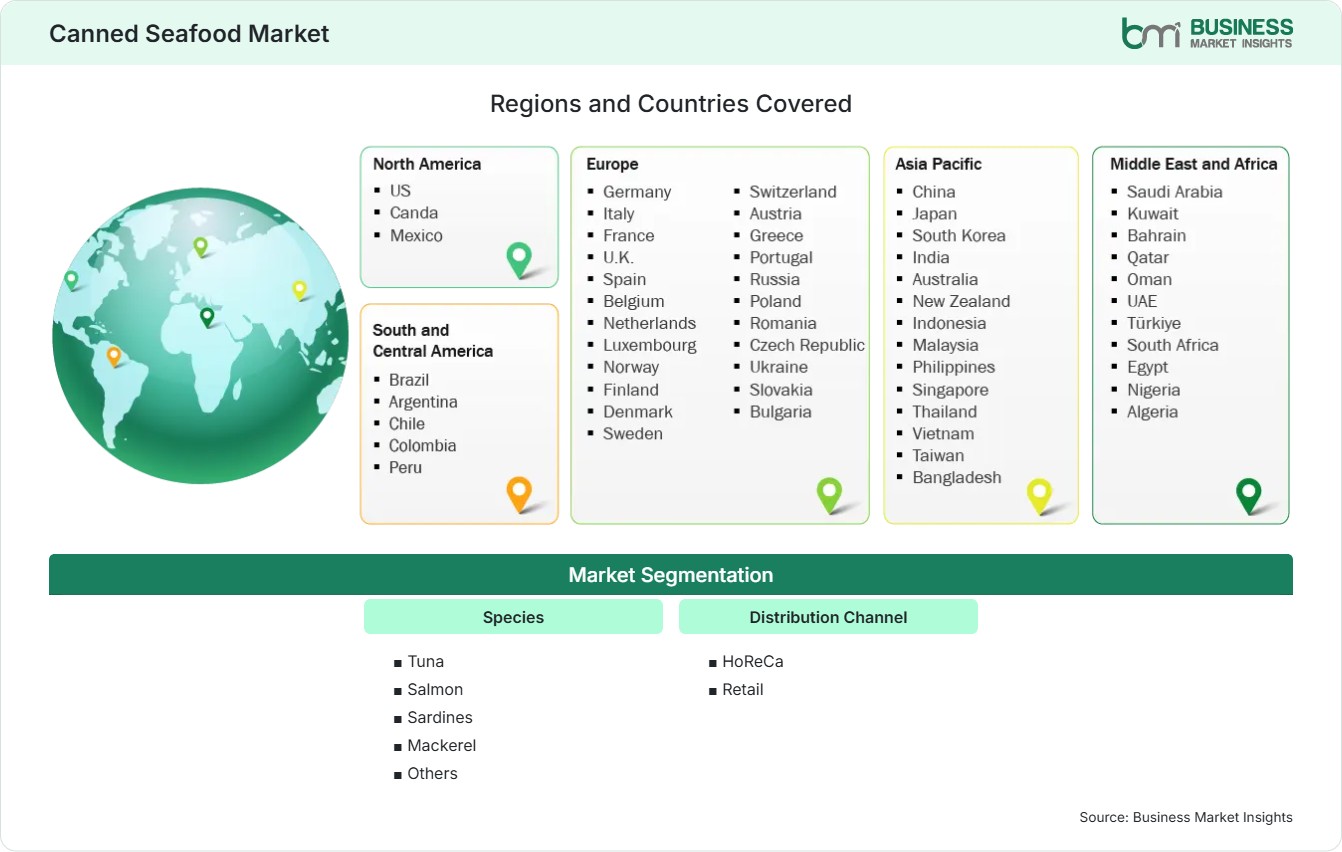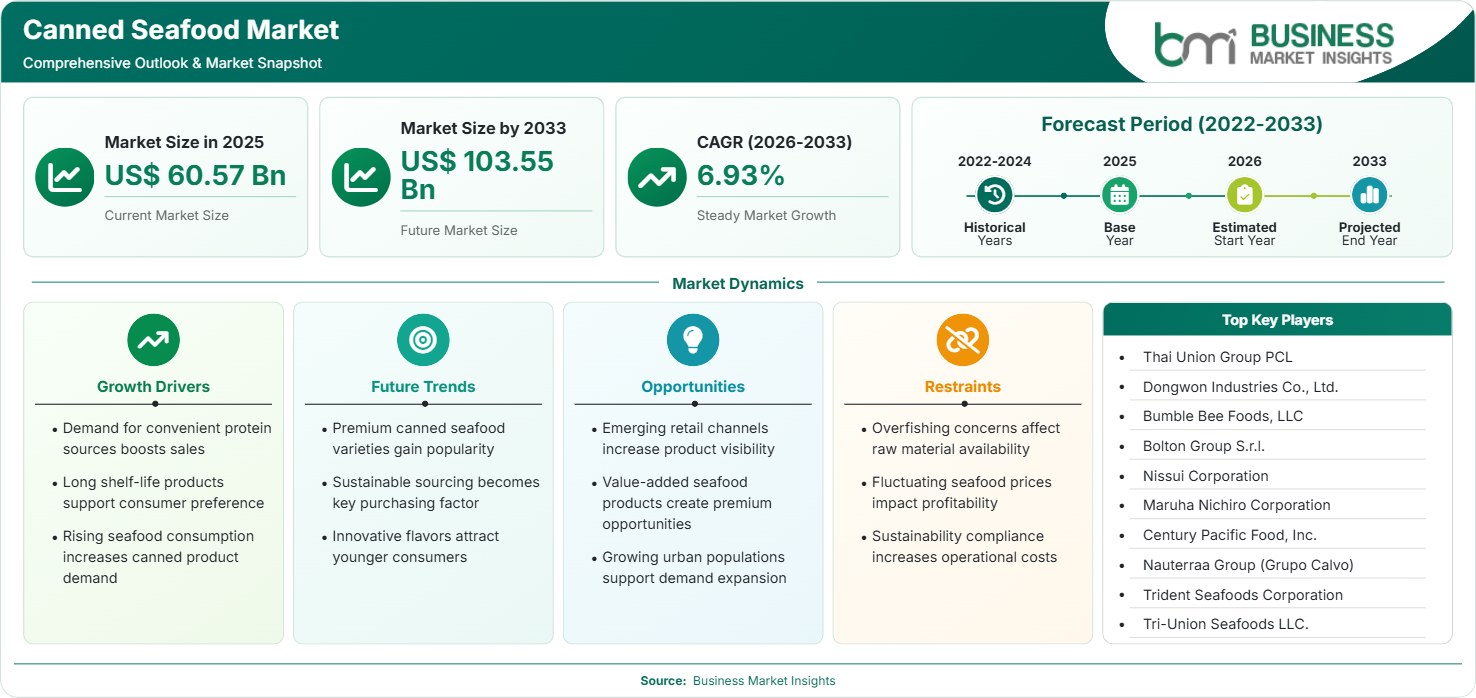
Canned Seafood Market Regional Highlights
North America Canned Seafood Market
North America accounts for 34%–37% of global demand in 2025 and is expected to grow at a CAGR of 5.8%–6.2% through 2033. High consumer awareness regarding omega-3 nutrition, premium seafood preferences, and widespread retail infrastructure support market expansion. The region benefits from strong brand penetration and advanced cold-chain logistics supporting canning operations. Canned Seafood Market share remains substantial due to established consumption habits and increasing demand for convenient protein alternatives.
- Sustainability-certified products continue gaining shelf space across major retail chains.
- Premium tuna and salmon categories increasingly attract health-focused households.
- Retailers expand private-label ranges to improve affordability and consumer access.
- Traceability initiatives strengthen trust and support premium pricing strategies.
US Canned Seafood Market
The United States represents 78%–82% of North American Canned Seafood Market demand and is expected to record a CAGR of 5.9%–6.3% through 2033. Strong supermarket penetration, high seafood awareness, and demand for convenient meal solutions underpin expansion. Product innovation focused on flavor profiles and sustainability claims continues reshaping purchasing behavior.
- Retail e-commerce increasingly supports recurring seafood purchases.
- Tuna remains the dominant species category across mainstream retail formats.
- Premium canned seafood gains traction among younger consumers.
- Sustainability labeling influences purchasing decisions across key demographics.
Europe Canned Seafood Market
Europe accounts for 29%–32% of global Canned Seafood Market demand in 2025 and is projected to expand at a CAGR of 5.7%–6.1%. Spain, Italy, and France remain major consuming countries, while Eastern Europe exhibits stronger growth momentum. Stringent seafood sourcing standards and demand for premium preserved fish products support long-term development.
- Spain remains a leading national market supported by strong seafood culture.
- Poland demonstrates faster regional expansion with CAGR above regional averages.
- Retailers prioritize MSC-certified and responsibly sourced seafood portfolios.
- Premium packaging formats support margin improvement strategies.
Asia Pacific Canned Seafood Market
Asia Pacific holds a 25%–28% Canned Seafood Market share in 2025 and records the fastest CAGR of 8.0%–8.6% through 2033. Expanding urban populations, growing disposable incomes, and increasing demand for convenient foods support regional momentum. China, Japan, Thailand, Indonesia, and the Philippines play important roles across production and consumption ecosystems.
- E-commerce channels accelerate premium seafood accessibility.
- China remains the largest regional consumer market.
- India demonstrates high-growth potential driven by modern retail expansion.
- Processing investments strengthen export competitiveness.
- Convenience-focused dietary habits support sustained demand growth.
Rest of World Canned Seafood Market
Rest of World represents 8%–11% of global demand and is expected to register a CAGR of 6.8%–7.4%. South and Central America benefit from abundant fish resources and export activity, while Middle East and Africa markets gain from population growth and retail modernization. Brazil and Saudi Arabia remain notable growth contributors.
- Brazil supports regional demand through expanding retail channels.
- Gulf countries display increasing appetite for shelf-stable protein products.
- Processing infrastructure investments improve local industry capabilities.
- Growing urban populations stimulate packaged seafood consumption.
- Trade partnerships enhance product availability across emerging markets.