
Canned Fruits Market Outlook: Size, Share, Trends, Growth Analysis, Competitive Landscape & Forecast, 2026-2033

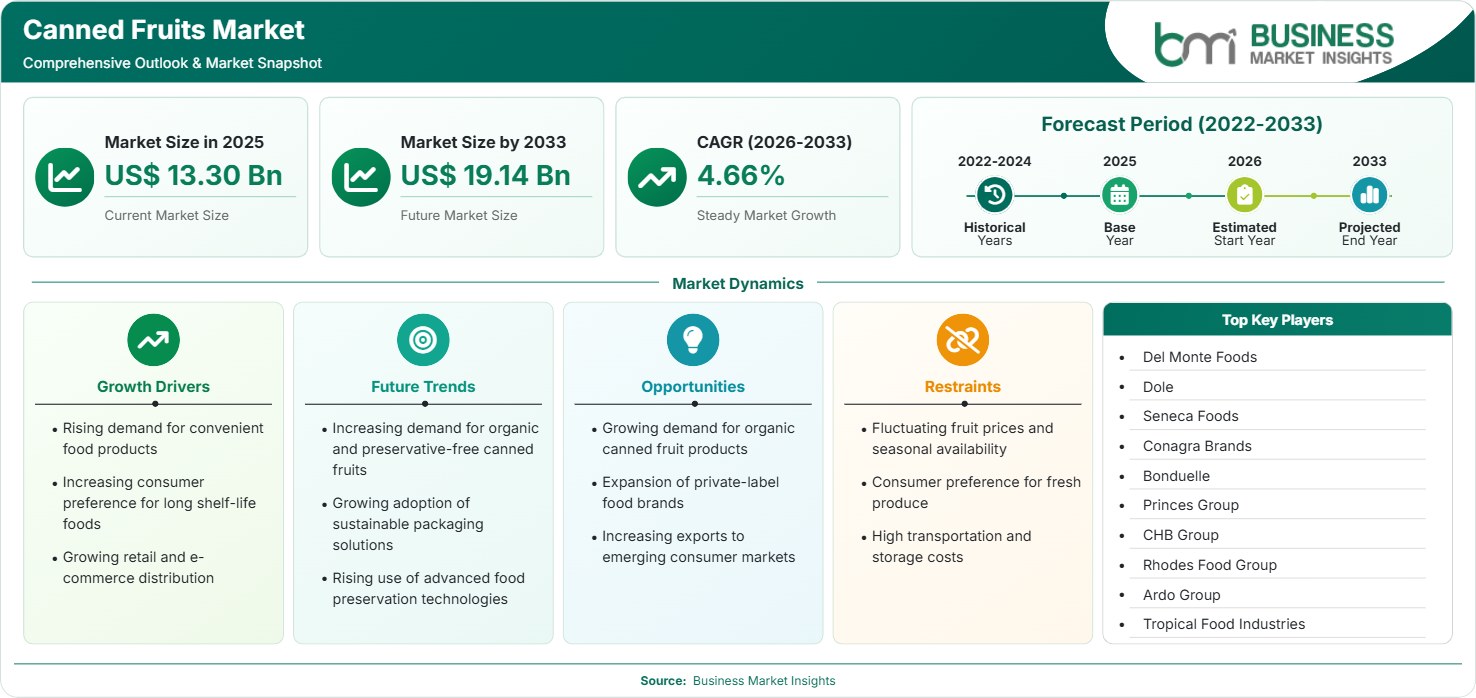
The Canned Fruits Market size was valued at US$ 13.30 Billion in 2025 and is projected to reach US$ 19.14 Billion by 2033, growing at a CAGR of 4.66% during 2026–2033, driven by convenience food demand, longer shelf-life preferences, expanding retail networks, and increasing opportunities in organic and private-label fruit products.

Report Coverage
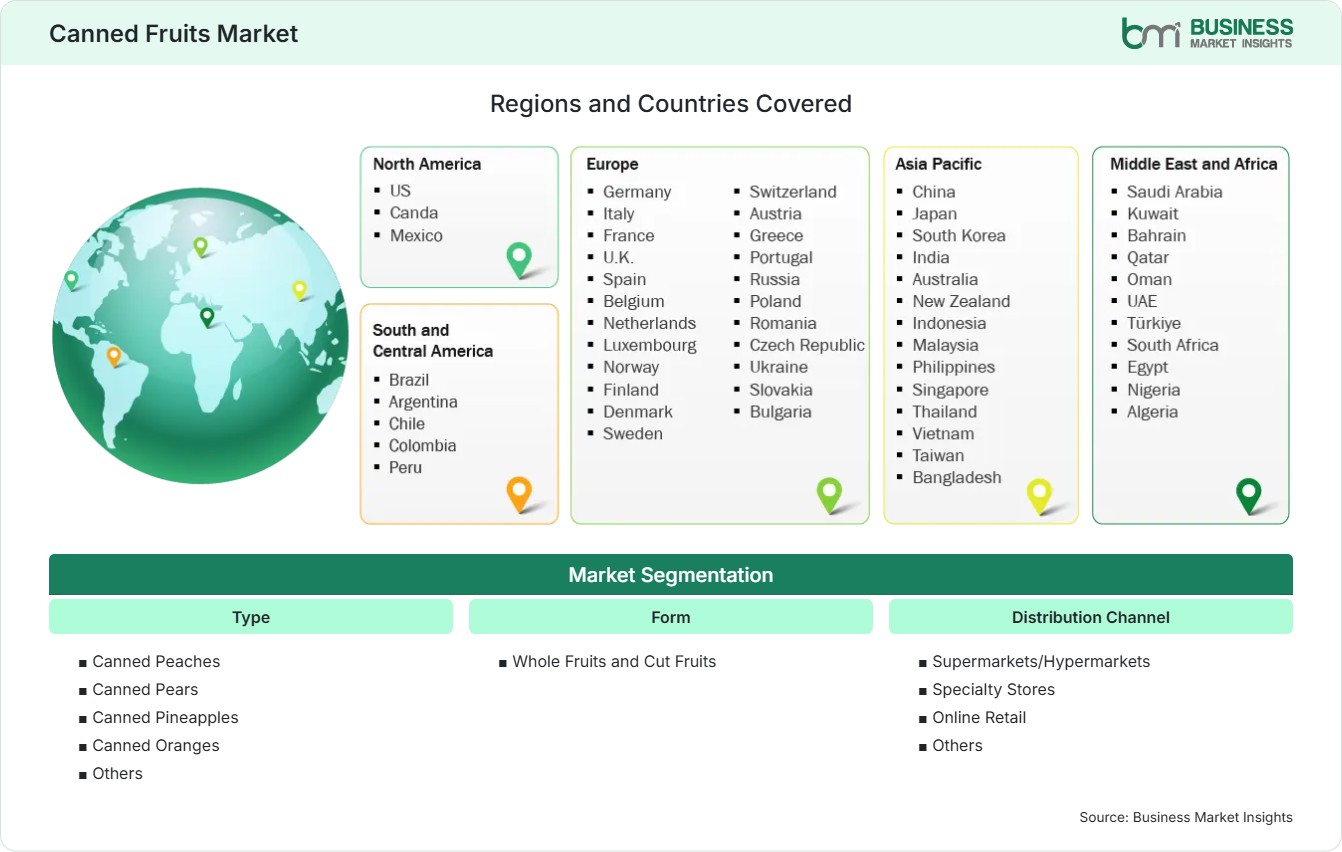
  • Type: Canned Peaches, Canned Pears, Canned Pineapples, Canned Oranges, Others
  • Form: Whole Fruits and Cut Fruits
  • Distribution Channel: Supermarkets/Hypermarkets, Specialty Stores, Online Retail, Others
US$ 13.30 Bn Market size in 2025
US$ 19.14 Bn Market Size by 2033
4.66% CAGR, 2026 - 2033
2026-2033 Forecast Period

01 AI Overview

Canned Fruits Market Summary

  • North America Region: North America holds a 34%–37% share in 2025, growing at a CAGR of 3%–5% during 2026–2033, supported by established processed food consumption, strong retail infrastructure, and demand for convenient meal solutions. The US market expands at a CAGR of 3%–5%, driven by household consumption, premium products, and private-label offerings.
  • Fastest Growing Region: Asia Pacific represents a 28%–31% share in 2025, expanding at a CAGR of 6%–8% during 2026–2033, supported by rising urbanization, changing food preferences, expanding supermarkets, and increasing adoption of packaged fruit products among emerging consumers.
  • Leading Segment: Canned Peaches account for a 28%–31% share in 2025, growing at a CAGR of 4%–5% during 2026–2033, supported by established consumer demand, wide availability, foodservice applications, and strong processing infrastructure across major producing regions.
  • High Growth Segment: Online Retail demonstrates a 10%–13% share in 2025, expanding at a CAGR of 8%–10% during 2026–2033, driven by e-commerce growth, digital grocery adoption, improved logistics, and increasing consumer convenience.
  • Key Market Opportunity: Organic canned fruits, private-label product expansion, and emerging market exports create significant opportunities as consumers seek healthier packaged foods and manufacturers diversify product portfolios across global retail channels.
  • Major Market Players: Del Monte Foods, Dole, Seneca Foods, Conagra Brands, Bonduelle, Princes Group, CHB Group, Rhodes Food Group, Ardo Group, Tropical Food Industries.
02 Strategic Insights

Canned Fruits Market: Strategic Insights

canned-fruits-market-market-strategic-framework
FREE PDF
Request your free sample
Request free sample
03 Stakeholder View

Key Takeaways

  • The market value chain includes fruit growers, processors, packaging suppliers, distributors, retailers, and foodservice operators working together to ensure consistent product availability and quality management.
  • Organic canned fruits, premium formulations, and private-label products represent attractive growth opportunities as consumers increasingly seek healthier packaged food alternatives with transparent sourcing.
  • Innovation is focused on reduced-sugar formulations, sustainable packaging materials, improved preservation techniques, and convenient product formats aligned with changing dietary preferences.
  • Asia Pacific presents strong investment potential due to rising disposable incomes, expanding modern retail infrastructure, urbanization, and increasing demand for processed food products.
  • Strategic partnerships and acquisitions are increasing as food companies seek stronger supply chains, broader distribution networks, and access to emerging consumer markets.
  • Export-oriented manufacturers are gaining opportunities by improving processing capabilities and targeting regions with rising demand for convenient and shelf-stable fruit products.
04 Geographic Outlook

Canned Fruits Market Regional Highlights

North America Canned Fruits Market

North America accounted for a 34%–37% share in 2025 and is projected to grow at a CAGR of 3%–5% during 2026–2033. The region benefits from mature food processing industries, strong retail networks, and established consumer acceptance of packaged fruit products. Canned Fruits Market share remains significant due to convenience-focused lifestyles, foodservice demand, and premium product innovation.

  • The United States remains the largest contributor due to strong household consumption, extensive supermarket networks, and demand for convenient packaged foods.
  • Canada demonstrates steady growth through increasing demand for healthy convenience products and expanding retail availability.
  • Food manufacturers are introducing low-sugar and organic options to address changing consumer preferences.
  • Foodservice operators continue using canned fruits due to consistency, storage advantages, and year-round availability.

US Canned Fruits Market

The US accounted for a 29%–32% share in 2025 and is expected to expand at a CAGR of 3%–5% between 2026–2033. The country benefits from established processing capabilities, strong brand presence, and widespread retail distribution. Demand is supported by convenience food consumption, private-label growth, and increasing availability of healthier canned fruit options.

  • Supermarkets and grocery chains continue expanding product varieties through premium and value-oriented canned fruit categories.
  • Consumers are increasingly selecting products with reduced sugar content, clean labels, and sustainable packaging.
  • Foodservice businesses rely on canned fruits for menu consistency, cost efficiency, and operational convenience.

Europe Canned Fruits Market

Europe represented a 25%–28% share in 2025 and is projected to grow at a CAGR of 4%–6% through 2033. The region benefits from strong processed food consumption, sustainability initiatives, and advanced retail infrastructure. Germany, the United Kingdom, and France are major markets, with Germany expanding at 4%–6% CAGR and the UK growing at 3%–5% CAGR.

  • Germany leads adoption through established food processing capabilities and strong consumer acceptance of preserved fruit products.
  • The United Kingdom demonstrates demand growth through convenience food consumption and expanding online grocery channels.
  • France supports market development through premium packaged food demand and sustainable product initiatives.
  • European consumers increasingly prefer products with ethical sourcing, reduced additives, and improved nutritional profiles.

Asia Pacific Canned Fruits Market

Asia Pacific held a 28%–31% share in 2025 and is projected to register the highest CAGR of 6%–8% during 2026–2033. The region benefits from urbanization, rising disposable incomes, expanding organized retail, and changing dietary habits. China, India, and Southeast Asian countries are major contributors, with India growing at 7%–9% CAGR.

  • China supports market expansion through large food processing capabilities and increasing packaged food consumption.
  • India demonstrates strong potential due to urban lifestyle changes, retail expansion, and rising demand for convenience products.
  • Southeast Asian countries are increasing adoption through tourism growth, foodservice expansion, and modern grocery channels.
  • Manufacturers are investing in regional production facilities to improve supply efficiency and market accessibility.

Rest of World Canned Fruits Market

South and Central America, along with Middle East and Africa, accounted for a 9%–12% share in 2025 and are expected to grow at a CAGR of 5%–7% through 2033. Brazil, Mexico, UAE, and South Africa represent emerging opportunities due to expanding retail networks, food processing development, and changing consumer lifestyles.

  • Brazil benefits from domestic fruit production capabilities and increasing demand for processed food products.
  • Mexico demonstrates growth through retail modernization, export opportunities, and rising packaged food consumption.
  • Middle Eastern markets are adopting canned fruits due to import dependence and demand for year-round availability.
  • African markets are gradually expanding through urbanization, improving distribution networks, and increasing processed food accessibility.
global-market-geography
FREE PDF
Request your free sample
Request free sample
05 Segment Analysis

Canned Fruits Market Segmentation

Type

The Type segment represented a 100% market structure in 2025, with Canned Peaches leading adoption at a 28%–31% share and growing at a CAGR of 4%–5% between 2026–2034. The segment is shaped by established consumer demand, processing availability, foodservice applications, and year-round fruit accessibility. The Canned Fruits Market scope is expanding as manufacturers introduce diversified fruit varieties, healthier formulations, and premium packaged options.

  • Canned Peaches: Canned peaches remain widely consumed due to their established flavor profile, versatility in desserts, beverages, and foodservice applications. Strong processing infrastructure and consumer familiarity support continued market adoption.
  • Canned Pears: Canned pears gain demand through premium fruit applications, bakery usage, and household consumption. Their soft texture, convenience, and availability beyond seasonal periods support consistent consumer acceptance.
  • Canned Pineapples: Canned pineapples benefit from global popularity, tropical fruit demand, and extensive use in beverages, desserts, and culinary preparations. Export-oriented production supports their availability across international markets.
  • Canned Oranges: Canned oranges are supported by demand for citrus-based products and convenient fruit consumption. Manufacturers focus on maintaining flavor quality, nutritional value, and product differentiation through processing innovations.

Form

The Form segment accounted for a complete market structure in 2025, with Cut Fruits representing a 55%–58% share and growing at a CAGR of 5%–6% between 2026–2034. Growth is driven by convenience-focused consumption, foodservice requirements, and easier preparation. Whole Fruits continue maintaining demand among consumers seeking traditional formats, while cut formats align with changing lifestyles and ready-to-eat preferences.

  • Whole Fruits: Whole fruits provide traditional preservation formats preferred by households and foodservice operators. Demand is supported by longer shelf life, product versatility, and applications requiring intact fruit presentation.
  • Cut Fruits: Cut fruits support convenience-oriented consumption by reducing preparation time. They are increasingly adopted in snacks, desserts, bakery products, and ready-to-use food applications.

Distribution Channel

The Distribution Channel segment represented a 100% market structure in 2025, with Supermarkets/Hypermarkets accounting for a 45%–48% share and expanding at a CAGR of 4%–5% between 2026–2034. Growth is supported by strong retail visibility, wide product availability, and consumer purchasing habits. Online Retail is gaining momentum through digital grocery platforms, improved logistics, and increasing preference for convenient shopping experiences.

  • Supermarkets/Hypermarkets: Supermarkets and hypermarkets remain major channels due to broad product assortment, promotional activities, and consumer preference for purchasing packaged food products during regular shopping trips.
  • Specialty Stores: Specialty stores attract consumers seeking premium, organic, and differentiated canned fruit products. These channels support brands targeting health-conscious customers and niche food preferences.
  • Online Retail: Online retail is expanding through e-commerce adoption, digital grocery platforms, and improved delivery networks. Consumers increasingly purchase packaged foods online for convenience, availability, and product comparison.
06 Market Forces

Canned Fruits Market Dynamics

Key Market Drivers

Rising Demand for Convenient Food Products

Changes in lifestyle habits, urbanization, and increased involvement in hectic work schedules have made people increasingly interested in easy-to-prepare foods. Canned fruits make for food that is easily usable, available at all times, and easy to consume. The Canned Fruits Market growth is supported by consumers seeking practical meal solutions without compromising fruit consumption. Manufacturing companies have reacted by introducing better packaging, smaller portions, and varied types of fruits. Convenience is still an important determinant in purchasing decisions as buyers prefer products that can be stored easily, require minimal preparation, and are available throughout the year.

Increasing Consumer Preference for Long Shelf-Life Foods

There has been an increase in consumer interest towards durable foods as a result of economic factors, convenience, and the need for assured food supply. The shelf life of canned fruits is higher than that of their fresh counterparts, minimizing food wastage and improving inventory management. Modernization in techniques of preservation and packing has enabled producers to retain the quality, flavor, and nutritive value of fruits. The Canned Fruits Market trends indicate continued preference for products offering convenience, reliability, and longer usability across developed and emerging consumer markets.

Growing Retail and E-Commerce Distribution

The development of supermarkets, hypermarkets, and web-based grocery stores is enhancing the availability of canned fruits across the globe. Modernization in the retail sector in the developing nations is enabling the production companies to extend their reach to a wider consumer base with organized distribution channels. The e-commerce sites are facilitating the availability of more products through increased choice and convenient purchase methods. This trend in the retail sector is helping the brands that are well-packaged and diversified in their range of products.

Key Market Opportunities

Growing Demand for Organic Canned Fruit Products

The canned fruits market forecasts indicate that organic offerings can provide additional growth avenues as retailers increase shelf space for sustainable food categories. Companies investing in organic supply chains and certification capabilities are positioned to capture evolving consumer preferences. Canned fruits market forecasts show that organic varieties have further potential for growth as more shelf space becomes available for sustainable foods. Companies with the ability to provide organic products are well-placed to tap into these new trends.

Expansion of Private-Label Food Brands

The introduction of private label products in canned fruits has created opportunities in terms of price, formulations, and consumer loyalty. Supermarkets and online retailers have been enhancing their private label lines of products in an attempt to capture the bargain-oriented consumer while still keeping their product differentiations. The manufacturers with efficient manufacturing capabilities will stand to gain from collaborations with retail chains seeking reliable sources of supply. Private label expansion is especially appealing in mature markets because consumers will make comparisons between the quality and prices of brands.

Increasing Exports to Emerging Consumer Markets

Export expansion into emerging consumer markets provides opportunities for canned fruit producers with strong processing capabilities and supply chain networks. Rising urban populations, improving retail infrastructure, and changing dietary patterns are increasing demand for imported and packaged fruit products. Countries with limited seasonal fruit availability are increasingly relying on preserved fruit solutions to provide year-round access. Manufacturers are exploring international partnerships and regional distribution agreements to strengthen market presence. Expanding exports can help producers diversify revenue streams while addressing growing demand across developing economies with evolving food consumption patterns.

Market Restraints and Challenges

Fluctuating Fruit Prices and Seasonal Availability

Factor: Raw fruit prices are affected by weather conditions, seasonal production cycles, agricultural costs, and supply chain disruptions. Impact: Price changes may lead to higher cost of production, lower profit margin, and difficulty in setting constant prices for manufactured products. Seasonal changes may also affect the supply and schedule of raw materials. The solutions being sought out by businesses include diversification of suppliers, better inventory management, and involvement in farming activities in the long run. Nevertheless, dependence on farm produce remains one of the most important business issues faced by the canned fruits industry.

Consumer Preference for Fresh Produce

Factor: Increasing consumer preference for fresh fruits, driven by perceived higher nutritional value and natural quality, affects demand for processed alternatives. Impact: The health-conscious consumers might limit the consumption of canned fruits, particularly where fresh fruits are available. There are steps being taken by companies to limit the amount of sugar used, better labeling, and production of healthy canned foods that are easy to consume. Knowledge about food preservation will be extremely important for this purpose. The presence of fresh fruits is still going to pose a threat to the canned foods.

07 Company Analysis

Competitive Landscape

The Canned Fruits Market analysis reveals competition in the form of international food processing companies, fruit preservation firms, private label producers, and packed food producers. Organizations are concentrating on product diversification, sustainable packaging, organic product development, efficient sourcing channels, and distribution into retail channels.

Company Name

Overview

Products and Services relevant to this market

Del Monte Foods

Food company specializing in packaged fruits, vegetables, and consumer food products.

Canned fruits, fruit cups, packaged fruit snacks, preserved fruit products.

Dole

Global fruit company with extensive fresh and processed food operations.

Canned pineapples, fruit products, packaged fruit solutions, foodservice offerings.

Seneca Foods

Leading vegetable and fruit processor serving retail and industrial customers.

Canned fruits, private-label products, fruit processing and preservation solutions.

Conagra Brands

Major packaged food company with diversified consumer food brands.

Fruit-based products, packaged foods, retail food solutions, branded offerings.

Bonduelle

International vegetable and prepared food company focused on sustainable agriculture.

Processed fruits and vegetables, canned products, retail and foodservice solutions.

Princes Group

Food and beverage company operating across global markets.

Canned fruits, preserved foods, fruit ingredients, consumer food products.

CHB Group

Food processing company specializing in fruit-based products and exports.

Canned fruits, fruit preparations, preserved fruit products, international supply solutions.

Rhodes Food Group

South African food manufacturer serving retail and foodservice markets.

Canned fruits, packaged foods, fruit products, consumer food brands.

Ardo Group

Frozen and processed food specialist operating globally.

Processed fruits, food ingredients, preservation technologies, customized solutions.

Tropical Food Industries

Food manufacturer focused on tropical fruit processing and distribution.

Canned tropical fruits, fruit preparations, packaged fruit products.


10 Trust & Transparency

Research Methodology

The market analysis combines proprietary research with secondary data from government agencies, company disclosures, regulatory filings, industry databases and expert interviews. Market estimates are validated through data triangulation, cross-market benchmarking and analyst review.

View Full Research Methodology

11 Questions Answered

Frequently Asked Questions

How does the Canned Fruits Market Report help industry participants?

The report provides insights into market trends, competitive strategies, regional opportunities, segmentation performance, and future investment areas for companies operating in the industry.

What opportunities exist for manufacturers in emerging markets?

Manufacturers can benefit from rising urban populations, expanding supermarkets, improving logistics infrastructure, and increasing demand for packaged food products in developing economies.

How is e-commerce influencing canned fruit sales?

Online retail platforms are improving product accessibility, enabling wider brand visibility, supporting subscription purchases, and helping consumers compare different canned fruit options conveniently.

Which canned fruit category holds strong canned fruits market potential?

Canned peaches maintain strong demand due to consumer familiarity, broad applications, and established processing infrastructure, while organic and premium varieties are gaining additional attention.

What factors are driving demand for canned fruit products?

Demand is increasing due to convenience requirements, longer shelf-life benefits, expanding retail availability, and consumer interest in accessible fruit options throughout the year.

Access the Full Canned Fruits Market Report

Get segment-level forecasts, regional estimates, competitive benchmarking, company profiles and downloadable Excel datasets.

Access the full Canned Fruits Market Report
350 pages PDF & Excel | 2026-08-04