
Fruit & Vegetable Juice Market Outlook: Size, Share, Trends, Growth Analysis, Competitive Landscape & Forecast, 2026-2033

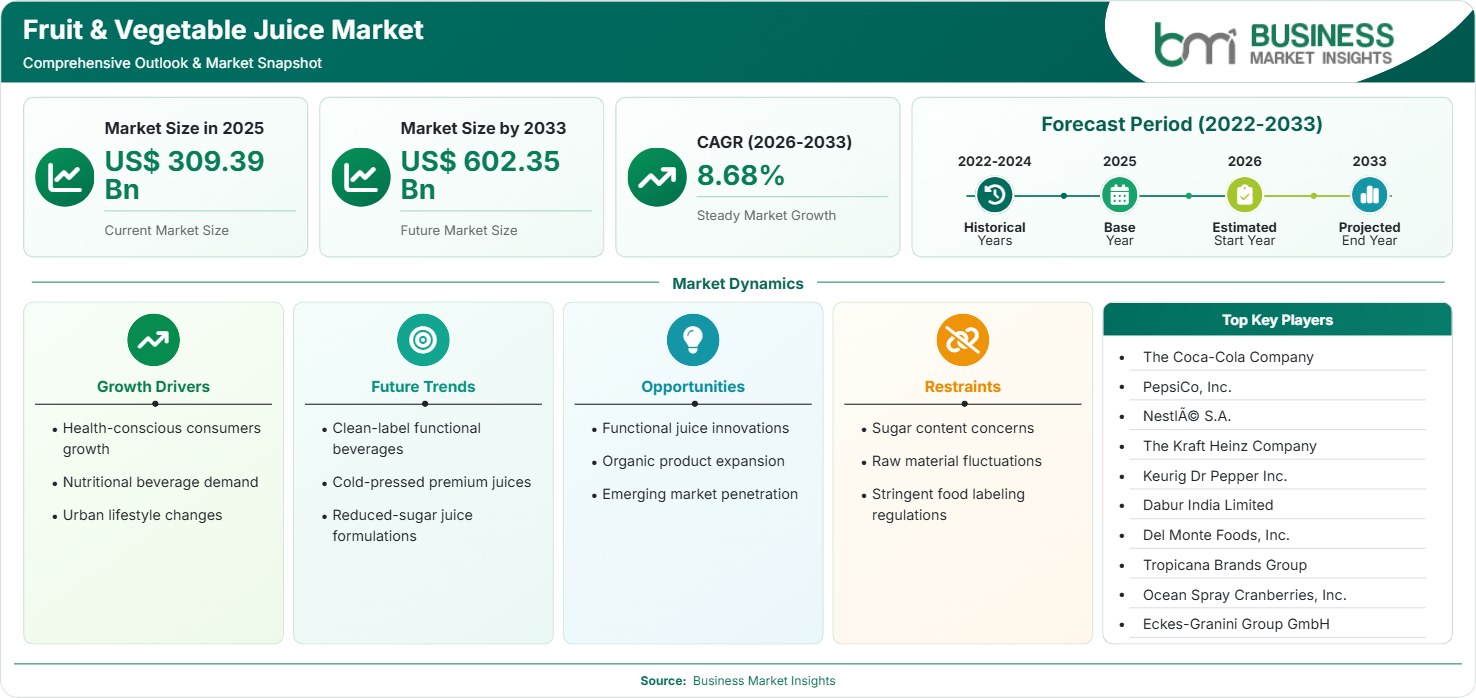
The Fruit & Vegetable Juice Market size was valued at US$ 309.39 billion in 2025 and is projected to reach US$ 602.35 billion by 2033, growing at a CAGR of 8.68% during 2026–2033. Rising health awareness, increasing demand for nutritional beverages, urban consumption patterns, functional ingredient adoption, and expanding premium juice categories are creating growth opportunities across developed and emerging markets.

Report Coverage
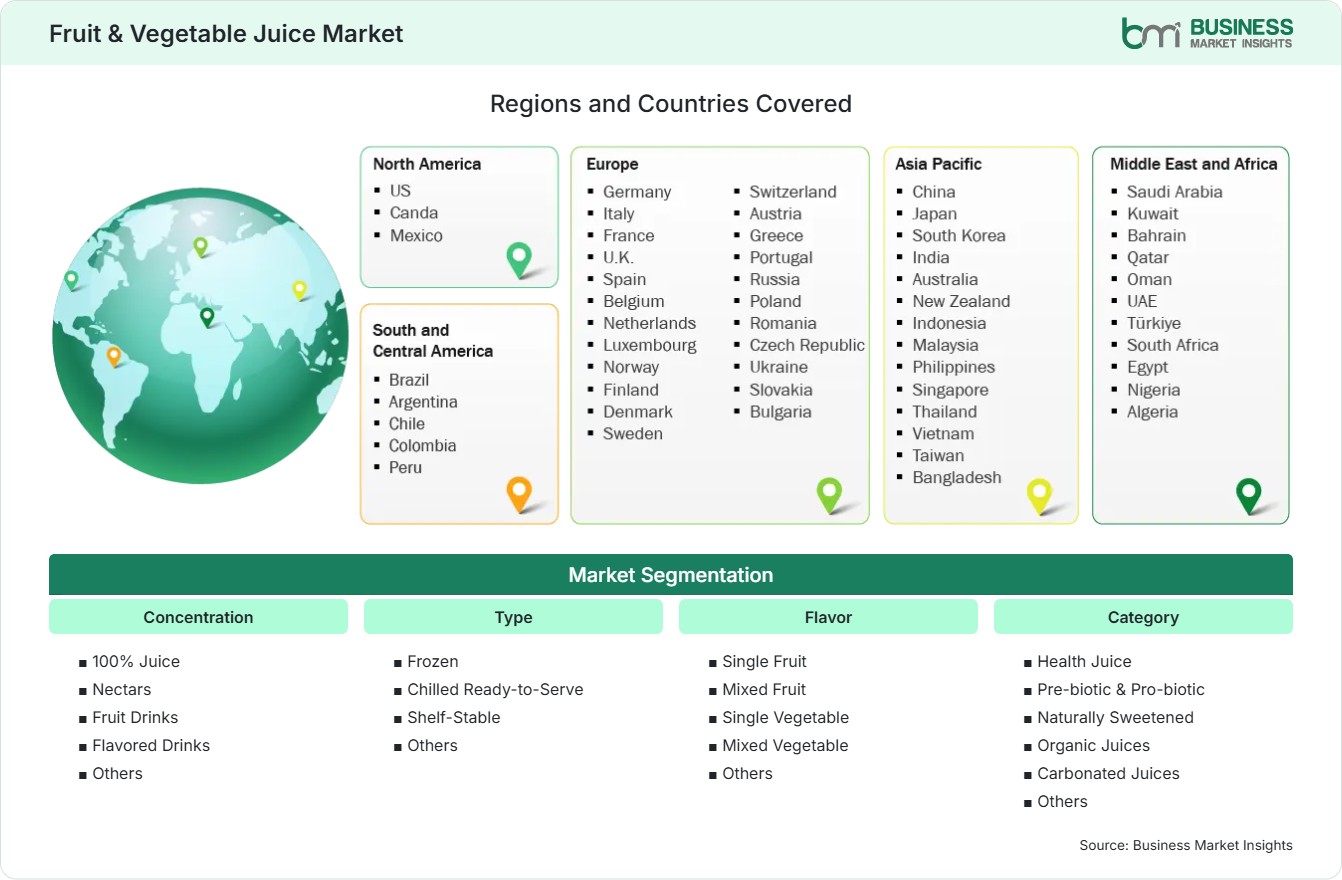
  • Concentration: 100% Juice, Nectars, Fruit Drinks, Flavored Drinks, Others
  • Type: Frozen, Chilled Ready-to-Serve, Shelf-Stable, Others
  • Flavor: Single Fruit, Mixed Fruit, Single Vegetable, Mixed Vegetable, Others
  • Category: Health Juice, Pre-biotic & Pro-biotic, Naturally Sweetened, Organic Juices, Carbonated Juices, Others
US$ 309.39 Bn Market size in 2025
US$ 602.35 Bn Market Size by 2033
8.68% CAGR, 2026 - 2033
2026-2033 Forecast Period

AI Overview

Fruit & Vegetable Juice Market Summary

  • North America Region: North America holds an estimated 32%–36% of the Fruit & Vegetable Juice Market share in 2025 and is projected to expand at a 7.8%–8.5% CAGR during 2026–2033. Strong demand for wellness beverages, premium juices, organic products, and functional nutrition solutions supports regional growth. The United States remains the leading market, growing at a 7.9%–8.6% CAGR, driven by consumer preference for convenient healthy beverages, cold-pressed products, and low-sugar formulations.
  • Fastest Growing Region: Asia Pacific accounts for approximately 27%–31% share in 2025 and is forecast to register a 9.5%–10.5% CAGR through 2033. Rising disposable incomes, expanding urban populations, changing dietary preferences, and increasing awareness of nutritional beverages are accelerating Fruit & Vegetable Juice Market expansion.
  • Leading Segment: 100% Juice represents an estimated 42%–46% share in 2025 and is expected to grow at an 8.2%–8.9% CAGR. Consumer preference for natural ingredients, authentic fruit content, and reduced additive formulations continues supporting segment leadership.
  • High Growth Segment: Pre-biotic & Pro-biotic juice category accounts for approximately 12%–16% market share in 2025 and is projected to expand at a 10.0%–11.0% CAGR. Growing interest in gut health, immunity support, and functional nutrition is accelerating category adoption.
  • Key Market Opportunity: Functional beverages, organic juice expansion, clean-label formulations, and penetration into emerging economies are creating opportunities for manufacturers to develop differentiated products aligned with evolving health and wellness preferences.
  • Major Market Players: The Coca-Cola Company, PepsiCo, Inc., Nestlé S.A., The Kraft Heinz Company, Keurig Dr Pepper Inc., Dabur India Limited, Del Monte Foods, Inc., Tropicana Brands Group, Ocean Spray Cranberries, Inc., Eckes-Granini Group GmbH.
Strategic Insights

Fruit & Vegetable Juice Market: Strategic Insights

Fruit & Vegetable Juice Market Strategic Framework
FREE PDF
Request your free sample
Request free sample
Stakeholder View

Key Takeaways

  • The market value chain is evolving from traditional juice processing toward integrated wellness beverage ecosystems involving fruit growers, ingredient suppliers, processing technology providers, packaging companies, and beverage manufacturers.
  • Functional beverages, organic juices, probiotic formulations, and naturally sweetened products represent high-opportunity categories as consumers increasingly seek products with added health benefits.
  • Innovation is centered on clean-label formulations, advanced preservation technologies, cold processing methods, sustainable packaging, and ingredient combinations designed to improve nutritional value.
  • Asia Pacific provides significant expansion potential due to increasing urban populations, rising disposable incomes, growing organized retail networks, and changing beverage consumption patterns. Markets such as China, India, Indonesia, and Southeast Asian economies offer opportunities for companies developing affordable and region-specific juice products.
  • Investment strategies are increasingly focused on portfolio diversification, acquisitions, strategic partnerships, and expansion of premium beverage categories. Major beverage companies are strengthening their presence in functional nutrition segments and emerging markets to address evolving consumer preferences and competitive pressures.
  • Sustainability is becoming a strategic priority across the juice industry, with companies focusing on responsible sourcing, recyclable packaging, reduced food waste, and efficient production processes. These initiatives are influencing brand positioning and long-term consumer engagement strategies.
Geographic Outlook

Fruit & Vegetable Juice Market Regional Highlights

North America Fruit & Vegetable Juice Market

North America represents one of the largest regional Fruit & Vegetable Juice Markets, accounting for an estimated 32%–36% share in 2025 and expanding at a projected 7.8%–8.5% CAGR during 2026–2033. The region benefits from strong demand for health-oriented beverages, premium juice products, functional formulations, and convenient ready-to-serve options. The United States remains the primary contributor due to consumer preference for organic products, reduced-sugar beverages, and wellness-focused nutrition solutions across retail channels.

  • The United States leads regional demand through strong adoption of functional juices, premium cold-processed beverages, and innovative formulations targeting health-conscious consumers.
  • Canada is expanding through increasing interest in organic beverages, clean-label products, and sustainable packaging solutions across supermarkets and specialty retail channels.
  • Beverage manufacturers are investing in low-sugar and naturally sweetened formulations to address changing consumer preferences and nutritional awareness.
  • Retail and e-commerce expansion is improving accessibility of premium juice categories, including organic, probiotic, and specialty fruit blends.

US Fruit & Vegetable Juice Market

The United States accounts for around 27%-30% of the world’s total revenue in 2025 and is expected to have a compound annual growth rate of 7.9%-8.6% through 2033. Consumers' continued emphasis on wellness, functional nutrition, and convenient beverages will further aid market growth. Manufacturers are adding variety to their product portfolios with offerings such as organic juices, immune-support formulas, vegetable mixes, and low-sugar beverages.

  • Increasing demand for functional beverages is encouraging companies to introduce juices containing probiotics, vitamins, minerals, and botanical ingredients.
  • Consumers are shifting toward clean-label products with transparent sourcing, natural ingredients, and fewer artificial additives.
  • Premium juice brands are leveraging digital commerce channels and direct-to-consumer strategies to expand market reach and improve customer engagement.

Europe Fruit & Vegetable Juice Market

Europe accounts for an estimated 24%–28% share of the Global Fruit & Vegetable Juice Market in 2025 and is projected to grow at a CAGR of 7.5%- 8.3% during 2026-2033. Europe is known for its high demand for organic drinks and sustainable products, as well as for high-quality juice formulations. Germany continues to be one of the dominating markets owing to consumption behavior, while the United Kingdom and France show growth in the premium juices category.

  • Germany maintains regional leadership through strong retail distribution networks, established juice consumption culture, and growing demand for organic beverage options.
  • The United Kingdom demonstrates growth through increasing consumer preference for wellness beverages, reduced-sugar products, and functional nutrition solutions.
  • France continues expanding premium juice adoption through demand for natural ingredients, sustainable packaging, and high-quality beverage experiences.
  • European manufacturers are focusing on recyclable packaging, responsible sourcing, and reduced environmental impact across juice production processes.
  • Regulatory attention toward sugar content and nutritional labeling is influencing product reformulation and innovation strategies among beverage companies.

Asia Pacific Fruit & Vegetable Juice Market

Asia Pacific region accounts for around 27%–31% of the Fruit & Vegetable Juice Market share in 2025 and is anticipated to grow at the highest rate, with a CAGR of 9.5%–10.5% through 2033. Growing disposable income, urbanization, an expanding retail network, and increasing awareness of healthy beverages have led to increased adoption. China is the biggest regional market, while India and Southeast Asia show tremendous growth opportunities owing to changing lifestyles and increased health concerns.

  • China leads regional growth through expanding beverage consumption, rising health awareness, and increasing availability of premium juice products.
  • India is experiencing rapid expansion due to changes in urban lifestyles, improved retail access, and growing consumer interest in functional and natural beverages.
  • Japan continues to adopt premium juice products through demand for quality ingredients, convenience, and wellness-oriented beverage solutions.
  • Southeast Asian markets are benefiting from rising middle-class populations, the expansion of modern retail, and the increasing adoption of packaged nutritional beverages.
  • Regional manufacturers are developing affordable and locally preferred flavors to address diverse consumer preferences across emerging markets.

Rest of World Fruit & Vegetable Juice Market

The Rest of the World contributes approximately 10%–13% of global revenue in 2025 and is projected to grow at a 8.5%–9.3% CAGR through 2033. South and Central America benefit from strong fruit production capabilities, expanding beverage consumption, and increasing demand for processed juice products, particularly in Brazil and Mexico.

The Middle East and Africa Fruit & Vegetable Juice Market is growing due to increased health awareness, urbanization, and growth in beverage packaging. Countries like UAE and Saudi Arabia are focusing on modern retail formats and premium beverages.

  • Brazil continues to be an important market due to its fruit availability, juice manufacturing capacity, and growing consumer demand for beverages.
  • Mexico is growing due to increased consumer demand for nutritional beverages, new retail channels, and premium juice products.
  • The UAE is seeing increased consumer demand for imported and premium juice products due to growth in the hospitality and retail sectors.
  • Saudi Arabia has the potential to grow as lifestyle changes, health initiatives, and the availability of functional beverages increase.
  • Regional firms are targeting sustainability, developing tastes, and enhancing logistics in response to the growing consumer demand.
Global Market Geography
FREE PDF
Request your free sample
Request free sample
Segment Analysis

Fruit & Vegetable Juice Market Segmentation

Concentration

The concentration segment constitutes the base of juice products positioning, where 100% Juice is dominating because consumers prefer ingredients that are natural, real fruits, and unprocessed. This sub-segment held about 100% market share in 2025 and is projected to grow at a CAGR of 8.68%–9.2% between 2026 and 2033. Consumers are increasingly looking for healthier drink options; hence, there is a trend towards developing a wider range of concentrations.

  • 100% Juice (Concentrate and Non-Concentrate): 100% juices are gaining demand due to natural positioning, nutritional value, authentic flavor profiles, and consumer preference for beverages with high fruit content.
  • Nectars (25–99% Juice): Nectars attract consumers seeking balanced taste, affordability, and varied fruit combinations while providing manufacturers opportunities to develop accessible beverage options.
  • Fruit Drinks (Up to 24% Juice): Fruit drinks maintain demand through affordability, convenience, broad flavor availability, and appeal among consumers seeking refreshing beverage choices.
  • Flavored Drinks (Fruit and Vegetable): Flavored drinks are expanding through innovative combinations, vegetable-based blends, and differentiated taste experiences targeting younger and wellness-focused consumers.

Type

The type segment is characterized by changing consumer trends towards ease, freshness, and extended shelf life. It had an approximate market share of 100% in 2025 and is forecasted to expand at a 8.68% - 9.1% CAGR from 2026-2033. Chilled, ready-to-serve, and shelf-stable products are increasingly accepted due to improved distribution channels and greater availability in retail markets.

  • Frozen: Frozen juice products support longer storage periods, seasonal fruit availability, and preservation of flavor characteristics through controlled processing technologies.
  • Chilled Ready-to-Serve: Chilled ready-to-serve juices are expanding through consumer preference for fresh taste, convenience, premium positioning, and immediate consumption formats.
  • Shelf-Stable: Shelf-stable juices remain important due to longer shelf life, efficient distribution capabilities, and accessibility across regions with developing cold-chain infrastructure.

Flavor

The flavors segment represents the emerging trend towards experimentation and the diversification of drinks. The flavors segment held a market share of nearly 100% in 2025 and is anticipated to exhibit a compound annual growth rate of 8.68%-9.3% in the forecast period from 2026-2033. Drink manufacturers are developing new combinations to cater to consumers' desire for something new and different.

  • Single Fruit Flavor: Single fruit flavors remain popular due to recognizable taste profiles, consumer familiarity, and demand for simple ingredient-based beverage choices.
  • Mixed Fruit Flavor: Mixed fruit flavors are gaining traction through diverse taste combinations, nutritional variety, and appeal among consumers seeking enhanced beverage experiences.
  • Single Vegetable Flavor: Single vegetable flavors are developing through rising interest in vegetable nutrition, wellness beverages, and functional health-oriented formulations.
  • Mixed Vegetable Flavor: Mixed vegetable flavors are expanding through innovative recipes combining nutritional benefits with improved taste acceptance among health-focused consumers.

Category

The category segment is characterized by the increasing popularity of juice products with functionality, organic, and health claims. The market share of the category segment was estimated at 100% in 2025 and is projected to grow at a CAGR of 8.68%–9.5% during 2026–2033. Health-conscious consumers are increasingly evaluating beverages in terms of nutritional benefits and wellness positioning, prompting manufacturers to introduce differentiated product categories.

  • Health Juice: The growth of health juice drinks can be attributed to their use in building immunity, their health benefits, and consumer preference for beverages that align with preventive wellness objectives.
  • Pre-biotic & Pro-biotic: Prebiotic and probiotic juices are growing as more people become aware of their health benefits and applications in functional nutrition.
  • Naturally Grown Sweetened (No Artificial Sweetener): The rise of naturally sweetened juices is linked to consumers' preference for healthier alternatives without artificial sweeteners and better labeling.
  • Organic Juices: Organic juices are expanding due to demand for sustainable sourcing, chemical-free production practices, and premium clean-label beverage options.
  • Carbonated Juices: Carbonated juices are developing through innovative beverage formats combining fruit flavors with sparkling experiences and consumer interest in alternative refreshment options.
Market Forces

Fruit & Vegetable Juice Market Dynamics

Key Market Drivers

Increasing Health Awareness and Wellness-Focused Consumption

Consumer awareness of health issues is increasingly influencing beverage purchase decisions, owing to people's growing inclination towards beverages that support a healthy diet and preventive healthcare. Market expansion is being propelled by the growing demand for beverages containing vitamins, minerals, antioxidants, and other health-oriented ingredients. People are moving away from heavily processed beverages toward more nutritious, healthier formulations. The Fruit & Vegetable Juice Market trends include increased investment in organic juices, vegetable-based juice drinks, low-sugar beverages, and immunity-related beverages.

Rising Demand for Nutritional and Functional Beverages

Consumer demand for healthy beverages has spurred innovation in the juice industry in recent years, especially for juices that offer health benefits beyond mere hydration. Companies have developed drinks containing probiotics, prebiotics, botanicals, vitamins, minerals, and other functional ingredients to meet health needs. Consumer knowledge about digestive health, immune function, and healthy nutrition is influencing their decision-making process when choosing beverages for functional purposes. Beverage companies are investing in research and development to improve nutritional profiles while maintaining taste and convenience.

Urban Lifestyle Changes and Convenience Beverage Adoption

Rapid urbanization, together with changes in consumer lifestyle trends, is driving demand for convenient, ready-to-drink beverages. The busy lifestyle, a growing workforce, and increased consumption of packaged foods and drinks have been driving demand for chilled ready-to-drink and shelf-stable juices. The industry players are optimizing packaging technology, distribution channels, and product availability to serve their convenience-seeking urban customers. E-commerce growth and modern retail expansion are further supporting the availability of premium juice products.

Key Market Opportunities

Expansion of Functional Juice Innovations

Functional juice innovations hold great promise as consumers demand more from their beverages and seek products that deliver specific health benefits. The Fruit & Vegetable Juice Market Forecasts indicate significant promise for functional juices that use probiotics, prebiotics, antioxidants, vitamins, and herbs as key ingredients. Companies are researching ways to make such juices taste good while providing the nutritional benefits consumers seek. Growing interest in immunity, digestive health, and energy-supporting beverages is creating opportunities for premium product development.

Growth of Organic and Clean-Label Juice Products

The growth of organic products presents opportunities, as consumers are increasingly looking at ingredient transparency, the sustainability of ingredient sources, and the environmental impacts of production practices. There has been an increasing consumer preference for organic juice products without artificial ingredients. Companies have been enhancing their range of organic products through collaborations with certified agricultural producers and sustainable production processes. Clean-label positioning is becoming an important competitive factor as consumers evaluate product quality based on ingredient simplicity and sourcing practices.

Penetration into Emerging Beverage Markets

Emerging markets offer immense growth opportunities due to rising disposable incomes, urbanization, improved retail infrastructure, and greater health consciousness regarding beverages. Countries in APAC, Latin America, and ME are witnessing an increase in demand for packaged juices, as consumers switch from conventional beverages to healthier ones. Manufacturers can grow their market share by offering local flavors, cost-effective products, and improved logistics.

Market Restraints and Challenges

Consumer Concerns Regarding Sugar Content in Juice Products

Factor: Naturally occurring and added sugars in certain juice products create concerns among consumers and regulatory bodies regarding calorie intake, nutritional balance, and health impacts. Impact: Sugar-related concerns can influence purchasing decisions and encourage demand shifts toward reduced-sugar, naturally sweetened, and vegetable-based alternatives. Manufacturers face pressure to reformulate products, improve nutritional labeling, and communicate ingredient transparency effectively.

Fluctuations in Fruit and Vegetable Raw Material Supply

Factor: Agricultural variability, climate conditions, seasonal availability, and commodity price changes can affect the cost and consistency of fruit and vegetable sourcing. Impact: Raw material fluctuations can increase production costs, affect supply chain stability, and create challenges in maintaining consistent product quality.

Company Analysis

Competitive Landscape

The Fruit & Vegetable Juice Market analysis highlights a competitive environment shaped by beverage innovation, brand strength, distribution capabilities, functional nutrition development, and sustainable sourcing strategies.

Company Name

Overview

Products and Services relevant to this market

The Coca-Cola Company

Global beverage company with extensive juice and wellness beverage portfolio.

Fruit juices, juice blends, premium beverages, and functional nutrition-focused products.

PepsiCo, Inc.

Diversified food and beverage company operating global juice brands.

Juice beverages, fruit-based drinks, nutritional beverages, and ready-to-serve products.

Nestlé S.A.

Global nutrition and beverage company with health-focused product offerings.

Fruit beverages, wellness drinks, nutritional formulations, and consumer health products.

The Kraft Heinz Company

Food and beverage company with established juice and drink brands.

Fruit juices, beverage concentrates, packaged juice products, and consumer beverages.

Keurig Dr Pepper Inc.

Beverage company offering diverse packaged drink solutions.

Juice beverages, flavored drinks, ready-to-consume formats, and beverage innovations.

Dabur India Limited

Indian consumer goods company specializing in natural products.

Fruit juices, herbal beverages, wellness drinks, and natural ingredient formulations.

Del Monte Foods, Inc.

Food company producing packaged fruit and vegetable products.

Fruit juices, vegetable beverages, packaged food products, and juice-based offerings.

Tropicana Brands Group

Beverage company focused on premium fruit juice categories.

Chilled juices, fruit blends, orange juices, and ready-to-serve beverage products.

Ocean Spray Cranberries, Inc.

Agricultural cooperative specializing in cranberry-based beverages.

Cranberry juices, fruit blends, functional beverages, and juice products.

Eckes-Granini Group GmbH

European juice manufacturer with strong fruit beverage expertise.

Fruit juices, premium juice brands, chilled beverages, and natural juice products.

Industry Activity

Recent Developments

July 2026

Rasna Pvt Ltd launched a 1-litre Tetra Pack under the Jumpin brand, expanding its ready-to-drink fruit beverage portfolio. The new family-size pack is fortified with 10 vitamins and minerals and strengthens the company's presence in the ~USD 120 million RTD fruit juice market following its 2025 acquisition of the Jumpin brand from Hershey's India.

May 2026

Al Ain Farms Group and NRTC Group formed a joint venture to launch Al Ain Taaza, an ultra-fresh juice brand targeting one-third of the UAE's AED 500 million fresh juice market within three to five years. The partnership combines AAFG's distribution network of over 23,000 sales points with NRTC's cold chain and processing infrastructure, with more than 15 flavours scheduled for Q3 2026 launch.

April 2026

Prodalim acquired Better Juice, an Israeli food-tech company specializing in patented enzymatic sugar reduction technology that can reduce sugar content in fruit juices by up to 80% while preserving natural characteristics. Prodalim plans to add a production line at its Florida facility, with manufacturing expected to begin in the second half of 2026.

April 2026

Nestlé launched a new line of fruit and vegetable juices under the Orchard brand at its Valsayn manufacturing facility in Trinidad, targeting the growing consumer trend toward healthier, lower-sugar beverage options. The 100% juice products contain no added sugar, with additional red medley variants planned for release within two months.

Trust & Transparency

Research Methodology

The market analysis combines proprietary research with secondary data from government agencies, company disclosures, regulatory filings, industry databases and expert interviews. Market estimates are validated through data triangulation, cross-market benchmarking and analyst review.

View Full Research Methodology

Questions Answered

Frequently Asked Questions

How does the Fruit & Vegetable Juice Market Report evaluate market opportunities?

The market Report evaluates opportunities through analysis of product categories, consumer trends, regional expansion, innovation strategies, competitive positioning, and evolving beverage preferences.

Why are emerging markets important for juice manufacturers?

Emerging markets offer growth opportunities due to urbanization, rising disposable incomes, expanding retail networks, and increasing consumer awareness of packaged nutritional beverages.

How are manufacturers addressing sugar-related concerns?

Companies are developing reduced-sugar formulations, naturally sweetened products, vegetable-based blends, improved labeling, and portion-controlled packaging to address changing consumer expectations.

Which product categories are gaining popularity in the juice industry?

Functional juices, organic products, naturally sweetened beverages, probiotic formulations, and premium cold-processed juices are gaining consumer attention due to increasing wellness priorities.

What factors are increasing demand for the fruit & vegetable juice market?

Rising health awareness, nutritional beverage preferences, urban lifestyles, functional ingredient adoption, and increasing demand for convenient wellness products are driving market expansion.

Access the Full Fruit & Vegetable Juice Market Report

Get segment-level forecasts, regional estimates, competitive benchmarking, company profiles and downloadable Excel datasets.

Access the full Fruit & Vegetable Juice Market Report
350 pages PDF & Excel | 2026-07-30
Similar Research

Related Market Reports