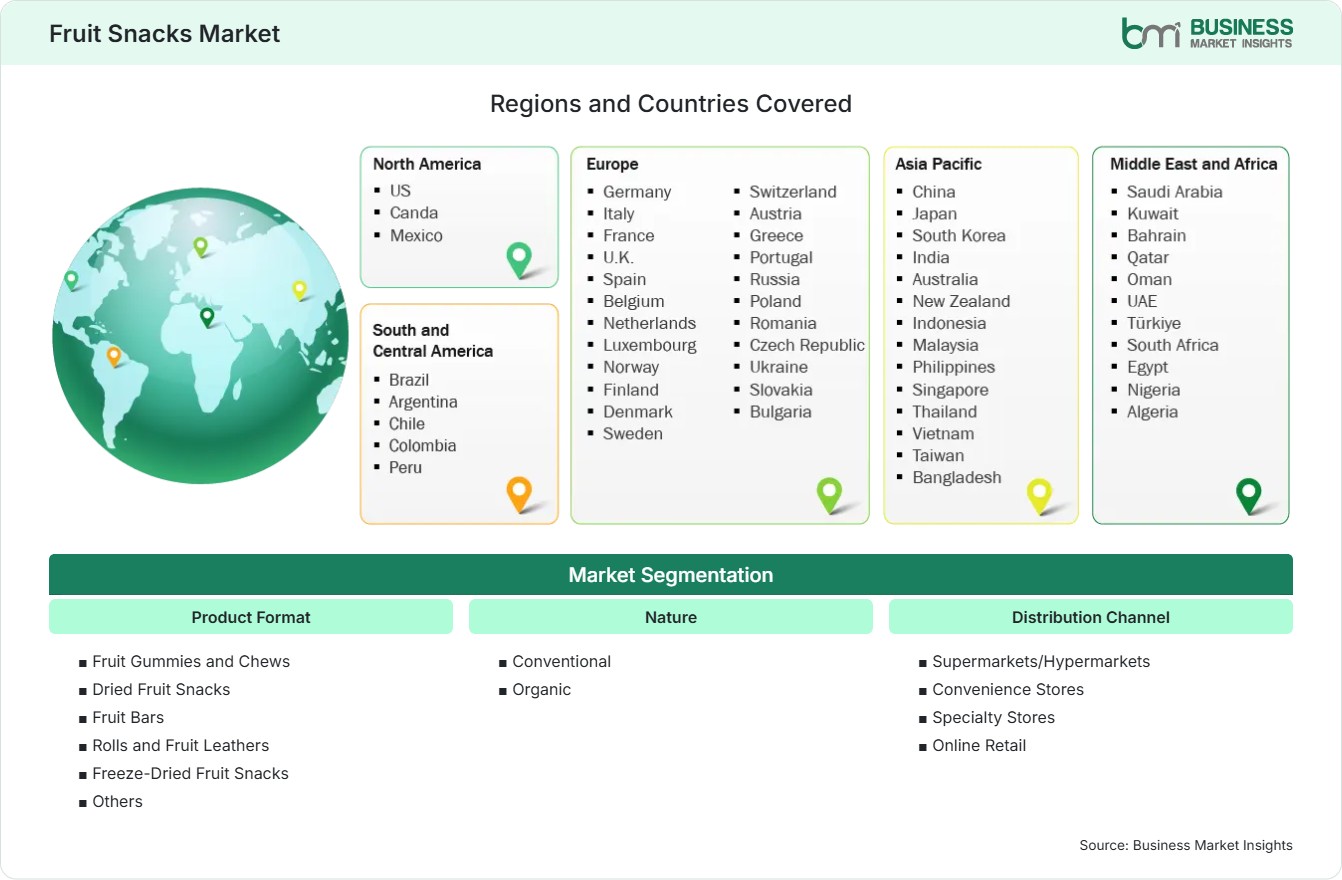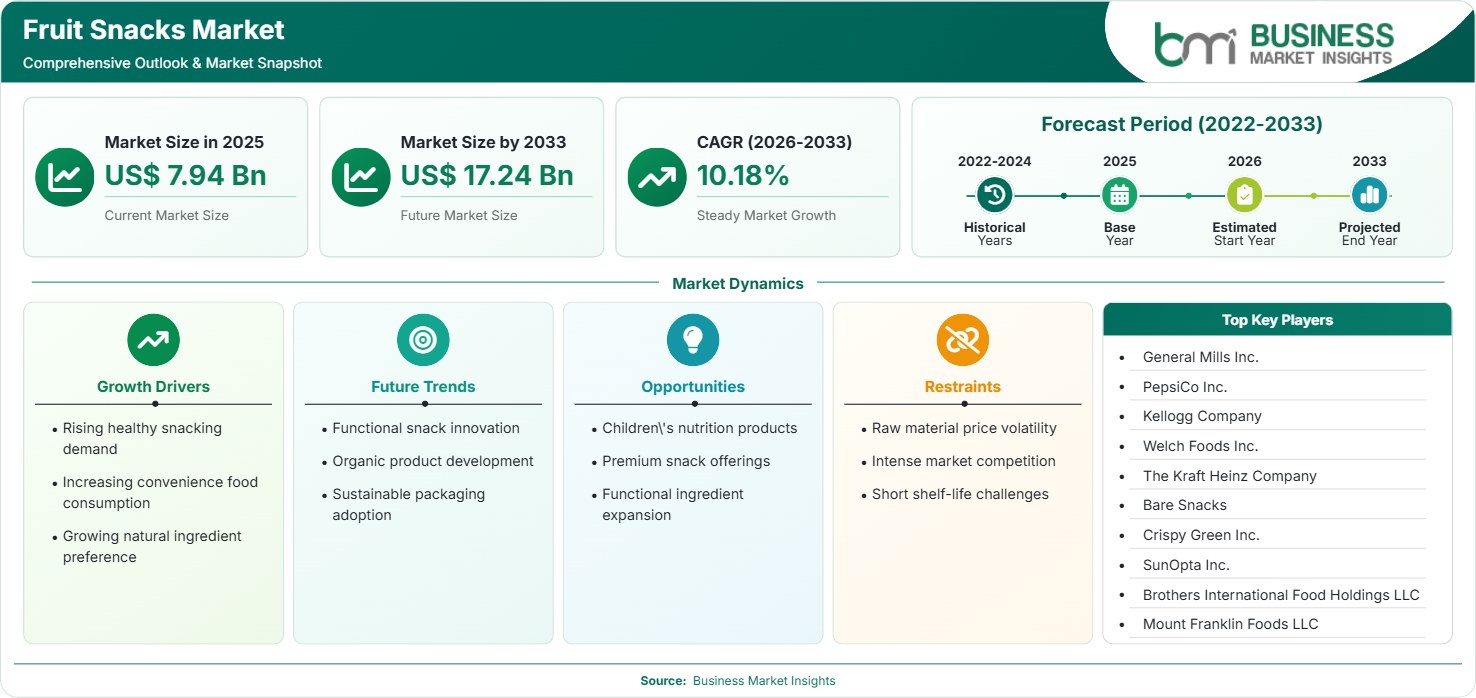
Fruit Snacks Market Regional Highlights
North America Fruit Snacks Market
North America accounted for 36%–39% of global market revenue in 2025 and is projected to register a CAGR of 9.6%–10.2% during 2026–2033. Strong consumer demand for healthy snacks, clean-label products, and convenient nutrition continues supporting regional expansion. The Fruit Snacks Market share remains the largest globally due to mature retail infrastructure, continuous product innovation, and widespread health-conscious consumption.
- Supermarkets continue expanding premium fruit snack offerings featuring organic ingredients and reduced sugar formulations.
- School nutrition programs increasingly encourage healthier packaged snack alternatives.
- E-commerce platforms strengthen premium product accessibility through subscription-based grocery services.
- Manufacturers continue investing in sustainable packaging and naturally sourced ingredients.
- Functional snacks enriched with vitamins and probiotics continue gaining consumer acceptance.
US Fruit Snacks Market
The United States represented approximately 30%–33% of global market revenue in 2025 and is expected to expand at a CAGR of 9.8%–10.4% through 2026–2033. Consumer preference for convenient nutrition, clean-label ingredients, and premium wellness snacks continues supporting long-term market development.
- Premium fruit-based snacks continue replacing conventional confectionery across family households.
- Retailers expand shelf space dedicated to organic and functional snack products.
- Children's nutrition remains an important innovation category for manufacturers.
- Digital grocery channels continue increasing direct-to-consumer product availability.
Europe Fruit Snacks Market
Europe accounted for 27%–30% of global revenue in 2025 and is projected to grow at a CAGR of 9.3%–9.9% during 2026–2033. Consumer preference for natural ingredients, sustainability, and clean-label foods continues strengthening regional demand. Germany leads the regional market, while Poland demonstrates the fastest projected growth.
- Germany remains the largest regional market supported by premium packaged food consumption.
- Poland is projected to register a CAGR of 10.8%–11.4% owing to expanding modern retail and increasing health awareness.
- Sustainable packaging initiatives continue influencing purchasing decisions.
- Organic product launches remain a major competitive strategy.
- Private-label healthy snack offerings continue expanding across supermarkets.
Asia Pacific Fruit Snacks Market
Asia Pacific represented 24%–27% of market revenue in 2025 and is forecast to register the fastest CAGR of 11.8%–12.4% during 2026–2033. The Fruit Snacks Market growth is driven by urban lifestyles, growing middle-class spending, expanding convenience food demand, and organized retail development. China leads regional consumption, while India records the fastest projected growth.
- China remains the largest regional market supported by expanding packaged food consumption.
- India is projected to register a CAGR of 12.7%–13.3% through rising health-conscious consumer spending.
- Online grocery platforms accelerate premium snack availability.
- Functional fruit snacks continue gaining popularity among younger consumers.
- International brands expand manufacturing and distribution across emerging markets.
Rest of World Fruit Snacks Market
The Rest of World accounted for 7%–9% of global market revenue in 2025 and is projected to grow at a CAGR of 10.1%–10.7% during 2026–2033.
South & Central America continue witnessing growing demand for convenient packaged nutrition, while the Middle East & Africa benefit from expanding retail infrastructure and premium food imports. Brazil leads regional consumption, whereas the UAE demonstrates the fastest projected growth.
- Brazil continues expanding packaged fruit snack consumption through organized retail growth.
- UAE is projected to register a CAGR of 11.5%–12.1% supported by premium imported food demand.
- Modern supermarkets strengthen healthy snack product availability.
- Tourism-driven retail channels increase premium snack consumption.
- International food manufacturers continue expanding regional distribution partnerships.