
Frozen Snacks Market Outlook: Size, Share, Trends, Growth Analysis, Competitive Landscape & Forecast, 2026-2033

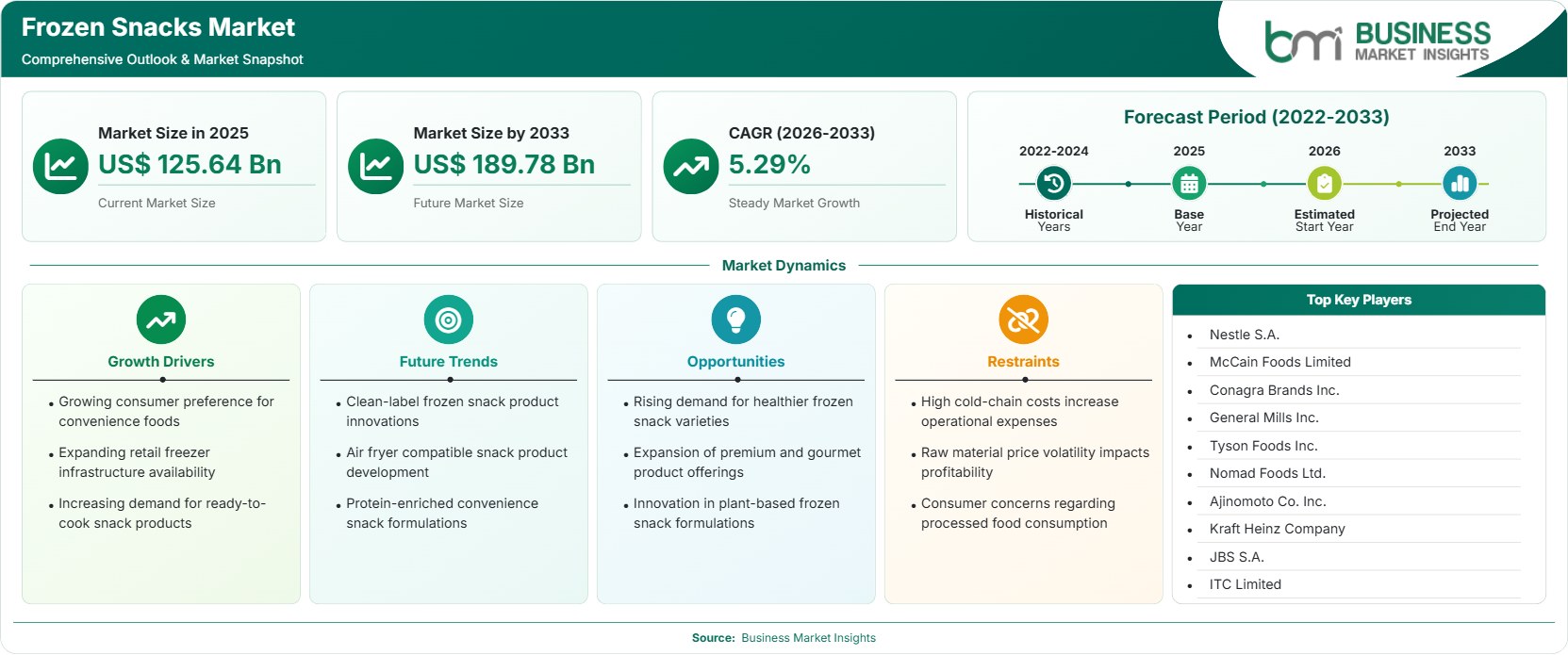
The Frozen Snacks Market size was valued at US$ 125.64 billion in 2025 and is projected to reach US$ 189.78 billion by 2033, growing at a CAGR of 5.29% during 2026–2033. Growing consumer preference for convenience foods, expanding retail freezer infrastructure, and increasing demand for ready-to-cook snack products continue supporting steady market expansion.

Report Coverage
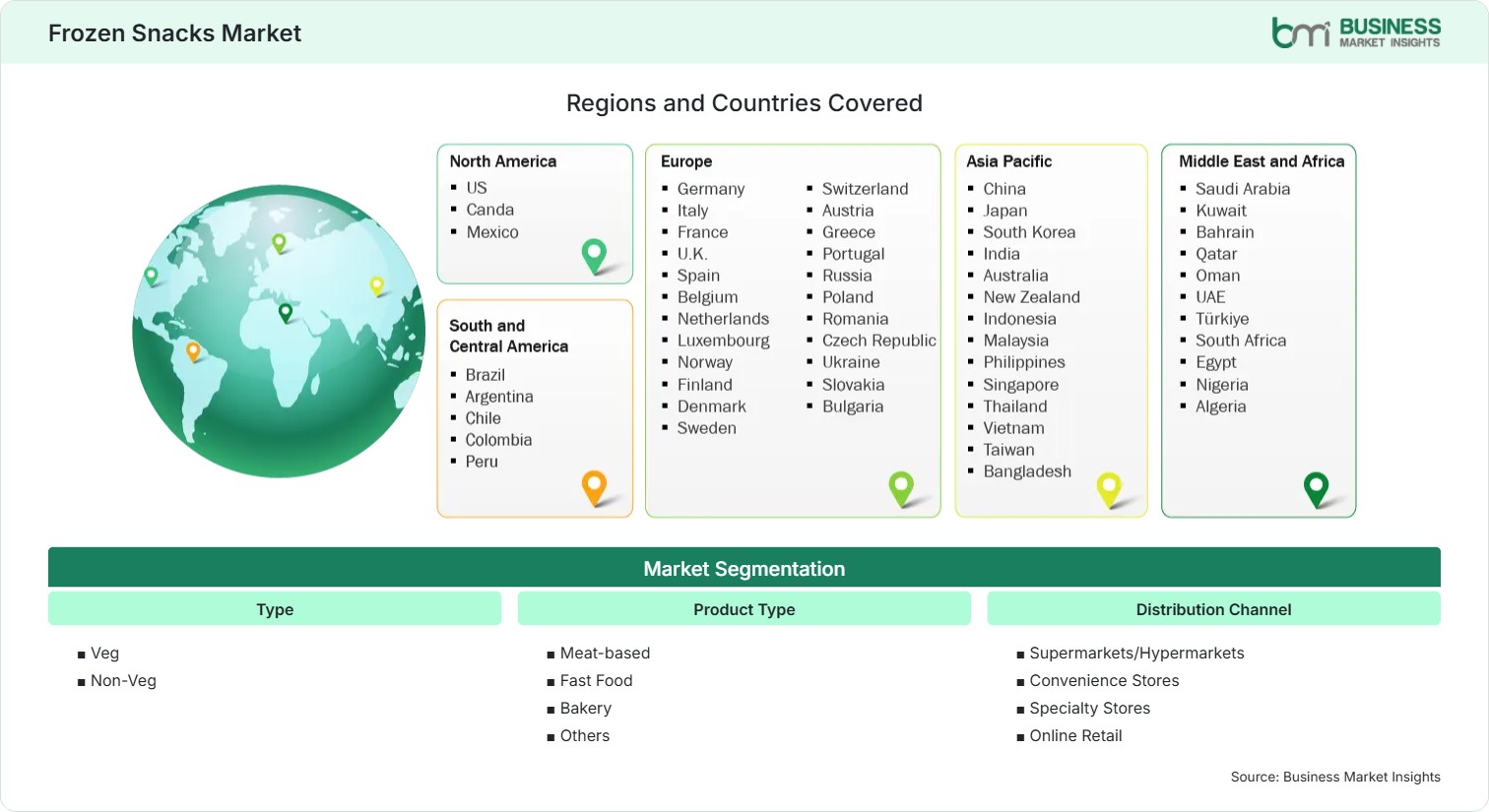
  • Type: Veg, Non-Veg
  • Product Type: Meat-based, Fast Food, Bakery, Others
  • Distribution Channel: Supermarkets/Hypermarkets, Convenience Stores, Specialty Stores, Online Retail
US$ 125.64 Bn Market size in 2025
US$ 189.78 Bn Market Size by 2033
5.29% CAGR, 2026 - 2033
2026-2033 Forecast Period

AI Overview

Frozen Snacks Market Summary

  • North America Region: North America accounts for 34%–37% market share in 2025 and is projected to expand at a CAGR of 4.9%–5.4% during 2026–2033. Strong retail infrastructure, rising demand for convenient meal solutions, and continuous product innovation support regional expansion. The U.S. remains the leading contributor with a CAGR of 5.0%–5.5%, driven by high frozen food consumption and extensive supermarket penetration.
  • Fastest Growing Region: Asia Pacific represents 27%–30% market share in 2025 and is expected to register a CAGR of 5.9%–6.5%, supported by expanding cold-chain infrastructure, rising disposable income, urbanization, and increasing demand for packaged convenience foods.
  • Leading Segment: Veg accounts for 55%–58% market share in 2025 and is anticipated to expand at a CAGR of 5.3%–5.8%, driven by growing vegetarian consumption, affordable product availability, and increasing preference for convenient frozen meals.
  • High Growth Segment: Online Retail captures 16%–19% market share in 2025 and is projected to record a CAGR of 7.2%–7.8%, supported by expanding e-commerce grocery platforms, home delivery services, and improved cold-chain logistics.
  • Key Market Opportunity: Rising consumer interest in healthier ingredients, premium snack varieties, and plant-based formulations is encouraging manufacturers to diversify frozen snack portfolios and strengthen product innovation.
  • Major Market Players: Nestlé S.A., McCain Foods Limited, Conagra Brands, Inc., General Mills, Inc., Tyson Foods, Inc., Nomad Foods Limited, Ajinomoto Co., Inc., The Kraft Heinz Company, JBS S.A., and ITC Limited.
Strategic Insights

Frozen Snacks Market: Strategic Insights

Frozen Snacks Market Strategic Framework
FREE PDF
Request your free sample
Request free sample
Stakeholder View

Key Takeaways

  • Expanding cold-chain logistics and organized retail infrastructure continue strengthening product availability across urban and semi-urban consumer markets.
  • Health-conscious consumers are encouraging manufacturers to introduce baked, reduced-fat, high-protein, and clean-label frozen snack products with improved nutritional value.
  • Digital grocery platforms and direct-to-consumer delivery services are becoming important sales channels, improving product accessibility and supporting premium product penetration.
  • Asia Pacific offers the strongest long-term investment opportunity owing to rapid urbanization, rising disposable income, expanding supermarket networks, and increasing frozen food acceptance.
  • Product innovation through regional flavors, plant-based ingredients, and premium recipes continues strengthening competitive differentiation among established food manufacturers.
Geographic Outlook

Frozen Snacks Market Regional Highlights

North America Frozen Snacks Market

North America accounts for 34%–37% Frozen Snacks Market share in 2025 and is expected to register a CAGR of 4.9%–5.4% during 2026–2033. Strong consumer preference for convenience foods, extensive freezer infrastructure, and widespread supermarket penetration continue supporting regional demand. Manufacturers continue expanding healthier frozen snack portfolios while investing in premium product development and sustainable packaging solutions.

  • Growing demand for ready-to-cook and ready-to-eat snack products supports continuous product innovation across retail channels.
  • Supermarkets and warehouse clubs continue expanding premium frozen snack offerings to meet evolving consumer preferences.
  • Health-focused product launches featuring cleaner ingredients and reduced-fat formulations strengthen market competitiveness.
  • Advanced cold-chain logistics improve nationwide product distribution while maintaining food quality and shelf life.

US Frozen Snacks Market

The United States contributes 80%–83% of North American revenue and is projected to expand at a CAGR of 5.0%–5.5% through 2026–2033. High frozen food consumption, busy consumer lifestyles, and continuous product innovation continue supporting sustained market expansion.

  • Retailers continue increasing freezer capacity to accommodate growing frozen convenience food demand.
  • Online grocery delivery services improve accessibility to premium frozen snack products.
  • Consumer preference for healthier frozen meals encourages continuous product reformulation.
  • Food manufacturers invest in advanced freezing technologies to preserve taste and nutritional quality.

Europe Frozen Snacks Market

Europe represents 28%–31% market share in 2025 and is anticipated to grow at a CAGR of 4.8%–5.3% during the forecast period. Demand remains supported by strong retail infrastructure, rising demand for convenient meal options, and increasing preference for premium frozen food products. The United Kingdom leads regional consumption, while Poland records the fastest growth due to expanding food processing investments and organized retail development.

  • Demand for premium frozen bakery and snack products continues increasing across Western Europe.
  • Sustainable packaging initiatives encourage manufacturers to introduce recyclable packaging materials.
  • Private-label frozen snacks strengthen competition across supermarket chains.
  • Growing plant-based food adoption expands opportunities for innovative frozen snack portfolios.

Asia Pacific Frozen Snacks Market

Asia Pacific holds 27%–30% market share in 2025 and is expected to register the fastest 5.9%–6.5% CAGR during 2026–2033. Rising disposable income, urbanization, changing dietary habits, and expanding supermarket penetration continue driving regional demand. China leads the regional market, while India records the fastest growth supported by increasing cold-chain infrastructure and growing acceptance of packaged convenience foods.

  • Organized retail expansion improves frozen product availability across metropolitan and secondary cities.
  • Rising working populations continue supporting demand for convenient frozen meal solutions.
  • Cold storage investments strengthen food distribution efficiency throughout developing economies.
  • Manufacturers increasingly introduce localized flavors to address diverse regional consumer preferences.

Rest of World Frozen Snacks Market

The Rest of World region accounts for 6%–9% market share in 2025 and is projected to expand at a CAGR of 5.0%–5.6% during 2026–2033. Growth is supported by expanding food retail infrastructure, improving cold-chain logistics, and rising consumer awareness of frozen convenience foods across Latin America, the Middle East, and Africa.

  • Brazil remains the leading Latin American market supported by expanding supermarket chains and food processing industries.
  • Gulf countries continue investing in modern retail and refrigerated food distribution infrastructure.
  • Rising urban populations increase demand for packaged frozen snack products.
  • International food manufacturers continue expanding regional production and distribution partnerships.
Global Market Geography
FREE PDF
Request your free sample
Request free sample
Segment Analysis

Frozen Snacks Market Segmentation

Type

The type segment represents the core of industry demand as consumers increasingly seek frozen snack products that align with changing dietary habits, convenience, and nutritional preferences. It accounted for 55%–58% market share in 2025 and is projected to register a CAGR of 5.3%–5.8% during 2026–2033. Product diversification, healthier formulations, and expanding retail availability continue broadening the Frozen Snacks Market scope across developed and emerging food markets.

  • Veg: Holds the leading position owing to increasing vegetarian consumption, wider product availability, affordability, and growing demand for plant-based convenience foods among health-conscious consumers and younger demographics.
  • Non-veg: Continues witnessing stable demand through meat-based snacks, chicken appetizers, seafood products, and protein-rich frozen offerings that appeal to consumers seeking convenient meal and snack options.

Product Type

The product type segment continues expanding as manufacturers diversify portfolios to address varying taste preferences, consumption occasions, and regional food cultures. It accounted for 38%–41% market share in 2025 and is anticipated to grow at a CAGR of 5.4%–5.9% during 2026–2033. Continuous innovation, premium product launches, and improved freezing technologies are strengthening product quality while supporting long-term category expansion.

  • Meat-based: Maintains strong demand because of growing consumption of frozen chicken snacks, sausages, nuggets, meatballs, and protein-rich convenience products across retail and foodservice channels.
  • Fast Food: Represents one of the fastest-expanding categories, supported by increasing demand for frozen pizzas, fries, burgers, and similar ready-to-cook products offering quick preparation and consistent taste.
  • Bakery: Continues gaining popularity as frozen pastries, puffs, croissants, garlic bread, and filled bakery snacks provide extended shelf life while maintaining product freshness and convenience.
  • Others: Includes regional specialties, potato-based snacks, cheese snacks, seafood appetizers, and innovative fusion products introduced to address evolving consumer preferences across international markets.

Distribution Channel

Distribution channels continue evolving as organized retail, convenience stores, and digital grocery platforms strengthen product accessibility. This segment represented 48%–51% market share in 2025 and is expected to register a CAGR of 5.6%–6.1% through 2026–2033. Current Frozen Snacks Market trends indicate that omnichannel retail strategies, improved cold-chain logistics, and rapid grocery delivery services are reshaping purchasing behavior across both mature and developing markets.

  • Supermarkets/Hypermarkets: Dominate product sales through extensive freezer infrastructure, broad brand availability, promotional pricing strategies, and high consumer footfall supporting consistent frozen food purchases.
  • Convenience Stores: Continue expanding frozen snack offerings to serve consumers seeking quick meal solutions, impulse purchases, and ready-to-cook products within neighborhood retail formats.
  • Specialty Stores: Cater to premium, gourmet, organic, and health-focused frozen snack categories while providing differentiated product selections for niche consumer preferences.
  • Online Retail: Records the fastest growth due to expanding e-commerce grocery platforms, reliable cold-chain delivery services, subscription-based purchasing models, and increasing consumer preference for home delivery convenience.
Market Forces

Frozen Snacks Market Dynamics

Key Market Drivers

Growing consumer preference for convenience foods

Shifts in lifestyle, increasing working hours, and growing urbanization have caused consumers to increase their demand for easy-to-consume foods. Frozen snacks do not need much preparation and offer taste consistency, longer shelf-life, and easy storage, thus becoming very popular among busy working people, students, and smaller families. The producers are constantly coming up with new recipes, better packing, and quality ingredients in order to meet the rising consumer demands. Advancements in freezing technologies will also preserve food properties. These developments continue supporting Frozen Snacks Market growth, as consumers increasingly seek products that combine convenience, quality, and affordability without compromising food safety.

Expanding retail freezer infrastructure availability

The continuous expansion of supermarkets, hypermarkets, convenience stores, and organized retail chains has improved the availability and visibility of frozen snack products worldwide. Retailers have invested in superior refrigeration technologies and increased the size of freezer sections to cope with the growing number of frozen food varieties. Improved logistics in the cold chain process, as well as transport of products at controlled temperatures, improves the quality of products through the whole distribution system. The process of modernizing the retail sector in developing countries has also helped producers access untapped markets.

Increasing demand for ready-to-cook snack products

There is an increasing tendency among consumers for products that are easy to prepare and give restaurant quality taste. The frozen ready-to-cook snacks meet this requirement in that they can be prepared quickly without much knowledge of cooking. Food items like frozen French fries, nuggets, pizza, pastry, and appetizers remain popular among customers due to increased consumption. There is growing innovation by producers in the form of flavors and healthful recipes. These innovations continue shaping Frozen Snacks Market trends, strengthening product differentiation while encouraging repeat purchases and long-term customer loyalty.

Key Market Opportunities

Rising demand for healthier frozen snack varieties

Health-conscious consumers are pushing food companies to develop healthier products with lower salt and fat content and better nutritional value. The demand for whole grains, vegetables, natural ingredients, and protein-based products keeps on rising in both developed countries as well as developing countries. Those companies that will innovate in terms of nutrition and health will gain more differentiation. Frozen Snacks Market Forecasts indicate that premium health-oriented frozen snack categories will remain an important growth avenue over the coming years.

Expansion of premium and gourmet product offerings

Consumers are increasingly willing to spend more on frozen snacks offering authentic flavors, premium ingredients, artisanal recipes, and restaurant-inspired dining experiences. Gourmet foods with various international cuisines, special cheeses, quality meats, and recipe ideas from chefs have been increasing for the consumers' satisfaction. The good packaging, better product presentation, and brand differentiation contribute to make them even more appealing. With growing disposable incomes and increasing sophistication in tastes of food items, premium frozen snacks can be quite profitable for market expansion.

Innovation in plant-based frozen snack formulations

The growing popularity of vegetarian, vegan, and flexitarian diets is encouraging manufacturers to develop innovative plant-based frozen snack products. Companies are introducing meat alternatives made from soy, pea protein, mushrooms, legumes, and other plant-derived ingredients without compromising taste or texture. Retailers are expanding shelf space for plant-based frozen foods as consumer awareness regarding sustainability and health continues increasing. Continued investment in product development, ingredient technology, and flavor enhancement is expected to strengthen growth opportunities within this rapidly evolving category.

Market Restraints and Challenges

High cold-chain costs increase operational expenses

Frozen snack manufacturers depend on uninterrupted refrigerated storage and transportation throughout production, distribution, retailing, and final delivery. Factor: Maintaining temperature-controlled logistics requires substantial investment in cold storage facilities, refrigeration equipment, energy consumption, and specialized transportation infrastructure. Impact: Higher operational costs reduce profit margins, particularly in developing regions where cold-chain infrastructure remains limited. Companies continue investing in energy-efficient refrigeration technologies and optimized logistics networks, yet maintaining product quality while controlling costs remains a significant operational challenge.

Raw material price volatility impacts profitability

Manufacturers continue facing fluctuations in the prices of agricultural commodities, edible oils, meat, dairy ingredients, wheat, potatoes, and packaging materials. Factor: Variable input costs create uncertainty in production planning and increase procurement expenses across the frozen food supply chain. Impact: Profit margins become increasingly difficult to maintain, especially within highly competitive retail markets where frequent price increases may affect consumer purchasing decisions. Businesses are responding through long-term supplier partnerships, strategic sourcing, and operational efficiency programs to reduce the impact of raw material price volatility.

Company Analysis

Competitive Landscape

Competition in the market is characterized by continuous product innovation, premium portfolio expansion, and investments in healthier frozen food offerings. Frozen Snacks Market analysis shows that leading manufacturers are strengthening their competitive positions through product diversification, sustainable packaging, advanced freezing technologies, and wider retail distribution networks. Companies are also expanding plant-based product portfolios and regional manufacturing capabilities to address changing consumer preferences and growing demand for convenient ready-to-cook foods.

Company Name

Overview

Products and Services Relevant to this Market

Nestlé S.A.

Global food and beverage company with an extensive frozen food portfolio serving retail and foodservice customers worldwide.

Frozen meals, frozen snacks, ready-to-cook products, plant-based foods, frozen pizzas, and retail food solutions.

McCain Foods Limited

Leading manufacturer specializing in frozen potato products and convenience foods with operations across numerous international markets.

Frozen French fries, potato snacks, appetizers, frozen vegetables, and foodservice frozen products.

Conagra Brands, Inc.

Major packaged food manufacturer offering a broad range of frozen foods through well-established consumer brands.

Frozen meals, frozen snacks, bakery products, ready-to-cook foods, and convenience food solutions.

General Mills, Inc.

Global food company producing branded frozen and convenience food products for retail and institutional markets.

Frozen breakfast items, frozen bakery products, snack foods, ready-to-cook products, and packaged convenience foods.

Tyson Foods, Inc.

International food producer with a strong presence in frozen protein-based food products.

Frozen chicken products, meat snacks, ready-to-cook meals, appetizers, and value-added protein foods.

Nomad Foods Limited

European frozen food company focused on branded frozen meals, vegetables, seafood, and snack products.

Frozen snacks, frozen fish products, vegetables, prepared meals, and convenience food solutions.

Ajinomoto Co., Inc.

Japanese food manufacturer recognized for frozen foods and value-added convenience meal solutions.

Frozen dumplings, appetizers, ready-to-cook snacks, Asian frozen foods, and processed food products.

The Kraft Heinz Company

Global packaged food manufacturer offering frozen convenience products across multiple international markets.

Frozen snacks, ready-to-eat foods, frozen appetizers, packaged meals, and retail food products.

JBS S.A.

International food processing company supplying frozen meat products and value-added convenience foods.

Frozen meat snacks, prepared foods, protein-based appetizers, ready-to-cook products, and foodservice solutions.

ITC Limited

Diversified Indian conglomerate expanding its presence in packaged frozen foods and convenience food categories.

Frozen snacks, ready-to-cook products, frozen vegetarian foods, packaged convenience foods, and retail food solutions.

Trust & Transparency

Research Methodology

The market analysis combines proprietary research with secondary data from government agencies, company disclosures, regulatory filings, industry databases and expert interviews. Market estimates are validated through data triangulation, cross-market benchmarking and analyst review.

View Full Research Methodology

Questions Answered

Frequently Asked Questions

What does the Frozen Snacks Market Report include?

The Market Report provides comprehensive insights into market dynamics, segmentation, regional outlook, competitive landscape, consumer preferences, technological developments, investment opportunities, and future industry growth prospects.

Which region is expected to witness the fastest market growth?

Asia Pacific is expected to record the fastest growth because of rapid urbanization, expanding retail infrastructure, increasing disposable income, improving cold-chain logistics, and rising consumption of packaged convenience foods.

Why is online retail emerging as the fastest-growing distribution channel?

Online grocery platforms offer greater product variety, doorstep delivery, digital promotions, and improved cold-chain logistics, making frozen snack purchasing more convenient for modern consumers seeking time-saving shopping experiences.

Which type holds the largest share in the market?

Veg products account for the largest market share owing to their broad consumer acceptance, increasing vegetarian populations, affordable pricing, and expanding availability across supermarkets, convenience stores, and online retail platforms.

What factors are driving the Frozen Snacks Market?

The market is driven by growing demand for convenient ready-to-cook foods, expanding cold-chain infrastructure, rising urbanization, increasing participation of working consumers, and continuous innovation in premium and healthier frozen snack products.

Access the Full Frozen Snacks Market Report

Get segment-level forecasts, regional estimates, competitive benchmarking, company profiles and downloadable Excel datasets.

Access the full Frozen Snacks Market Report
350 pages PDF & Excel | 2026-08-18