Frozen Food Market Regional Highlights
North America Frozen Food Market
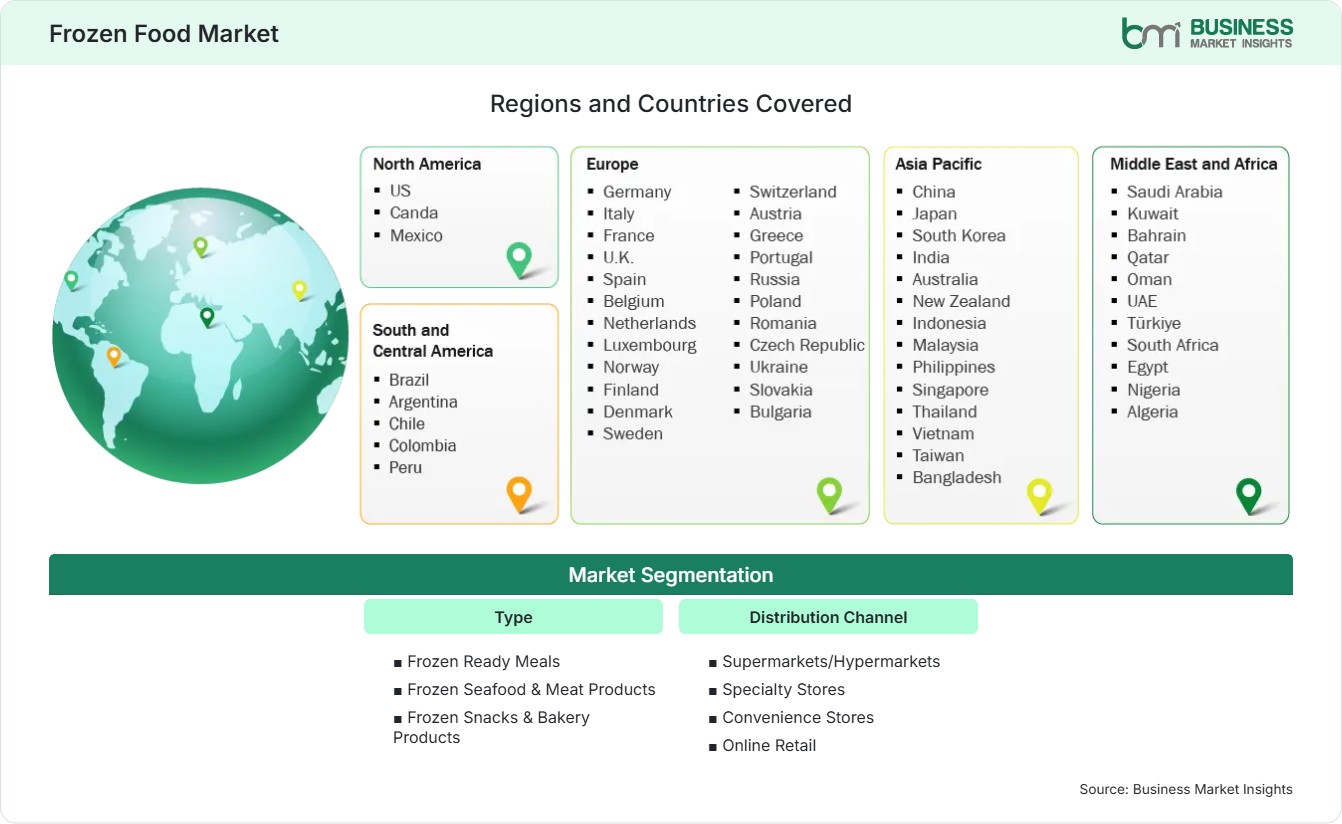
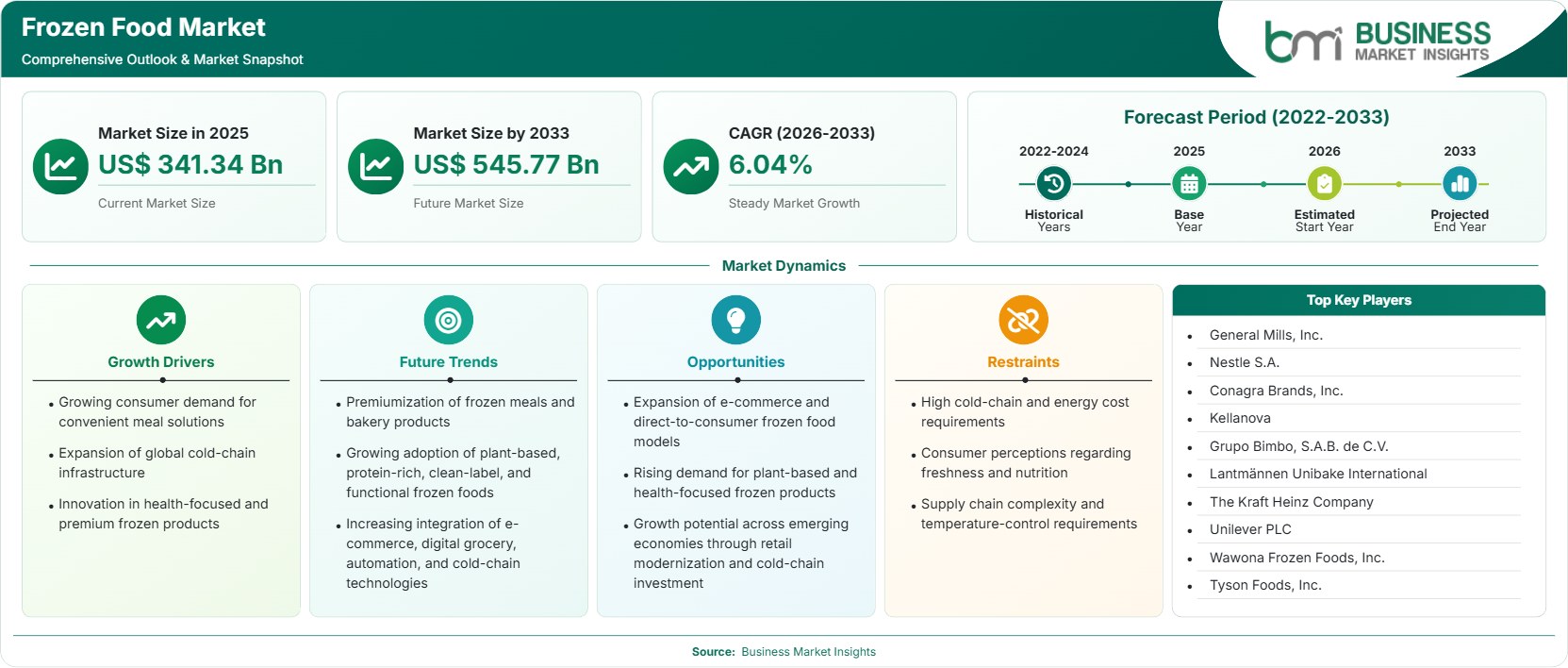
The North America market is expected to account for about 34%–37% of total worldwide revenue by 2025 and to grow at a CAGR of 5.2%–5.8% from 2023 to 2033. The area has advanced cold chain facilities, high freezer penetration, and high consumer acceptance of convenience items. Premiumization initiatives, health-driven product launches, and investments by retail stores in frozen categories are helping improve the category's performance. The Frozen Food Market share is driven by household demand for convenience and affordable meals.
- Retail chains continue expanding premium frozen assortments featuring organic ingredients, ethnic cuisines, and protein-rich offerings, attracting consumers seeking convenience without compromising product quality or nutritional value.
- Advanced refrigerated logistics networks support efficient product movement across the United States and Canada, reducing spoilage risks while improving inventory availability throughout urban and suburban markets.
- Growth in dual-income households and time-constrained lifestyles continues increasing demand for ready-to-cook and ready-to-eat meal formats across multiple demographic groups.
- Private-label frozen products are gaining momentum as retailers leverage competitive pricing strategies and improved product quality to strengthen customer loyalty and category penetration.
- Foodservice operators increasingly rely on frozen ingredients to optimize labor efficiency, maintain consistency, and manage supply chain volatility within restaurants and institutional kitchens.
US Frozen Food Market
The United States accounts for roughly 78%–82% of North American market revenues and is expected to register a CAGR of 5.3%–5.9% up until 2033. A strong consumer inclination towards convenience, the widespread availability of the product in retail outlets, and a diverse product range continue to drive market growth. Premium frozen foods, healthy snacks, and new-age plant-based options have been catching attention lately. Companies are focusing more on digital marketing and automation in product manufacturing and packaging.
- Consumers increasingly favor premium frozen meal kits offering restaurant-inspired flavors, improved nutritional profiles, and convenient preparation options suitable for busy households.
- Large-scale supermarket chains continue introducing exclusive product lines and promotional strategies that enhance category visibility and encourage repeat purchases.
- Growing interest in high-protein and wellness-oriented products is influencing innovation across meal, snack, bakery, and frozen protein categories.
- Technology-enabled inventory management systems help retailers maintain product freshness, reduce waste, and improve replenishment accuracy throughout distribution networks.
Europe Frozen Food Market
Europe contributes around 27% to 30% of global revenue in 2025 and is expected to experience a CAGR of 5.5% to 6.1% through 2033. Increased demand for sustainable food preservation, high-quality frozen bakery products, and easily consumable foods is driving growth in the European market. The UK, Germany, and France dominate the market, whereas Poland and Spain have begun to gain considerable momentum. Focusing on food safety, labeling, and sustainable packaging helps innovations in the production and distribution process.
- Germany leads regional consumption through extensive retail infrastructure and broad consumer acceptance of frozen meal and bakery categories.
- The United Kingdom continues demonstrating strong demand for convenience-oriented products, supported by advanced supermarket networks and evolving dietary preferences.
- Poland is emerging as a high-growth production and consumption hub, benefiting from manufacturing investments and expanding retail penetration.
- Sustainability initiatives encourage manufacturers to adopt recyclable packaging materials and energy-efficient production systems across regional operations.
- Increasing popularity of plant-based frozen foods creates opportunities for differentiated product development targeting health-conscious consumers.
Asia Pacific Frozen Food Market
The Asia Pacific region generates around 25%–28% of global revenue in 2025 and is forecast to register the highest CAGR of 7.2%–7.9% through 2033. Urbanization trends, disposable income levels, and modern retail formats fuel industry growth. China and Japan dominate the markets, whereas India and Southeast Asian countries experience faster demand growth. Regular investments in refrigerated transportation, storage, and e-commerce fulfillment centers are improving regional access and product availability.
- China maintains leadership through expanding middle-class consumption, modern retail growth, and strong investment in temperature-controlled logistics infrastructure.
- Japan benefits from high consumer preference for convenience foods and technologically advanced food processing capabilities supporting product innovation.
- India is emerging as a high-growth market driven by urbanization, organized retail expansion, and improving cold-chain accessibility across major cities.
- Digital commerce platforms increasingly offer frozen food categories, enhancing consumer reach and supporting broader geographic penetration.
- Rising demand for premium international cuisines encourages manufacturers to diversify portfolios and introduce region-specific product offerings.
Rest of World Frozen Food Market
South & Central America are contributing an increasing share to industry demand, owing to growing urban retail and improved refrigerated transportation facilities. While Brazil and Mexico are important sources of income, Chile has shown significant potential for future growth. South & Central America have the advantage of growing consumer demand for easy-to-consume meals, along with supermarket penetration.
The Middle East & Africa together form a smaller but growing market segment, driven by investments in cold chain facilities and a modernized retail sector. The rest of the world accounts for about 8%-11% of the market share in 2025 and is expected to grow at a CAGR of 6.3%-6.9% through 2033.
- Brazil leads regional consumption through strong retail infrastructure, increasing freezer penetration, and growing demand for frozen bakery and ready-meal categories among urban consumers.
- Mexico benefits from expanding supermarket networks, cross-border food trade, and increasing consumer preference for convenient packaged meal solutions.
- Saudi Arabia continues investing in food security initiatives and cold-chain infrastructure, supporting broader availability of temperature-controlled products across retail channels.
- South Africa serves as a major regional hub, supported by organized retail development and increasing demand for affordable convenience-oriented food products.
- Tourism recovery and hospitality sector expansion across Gulf economies contribute to higher procurement of frozen ingredients by foodservice operators and institutional buyers.