Apple Juice Market Regional Highlights
North America Apple Juice Market
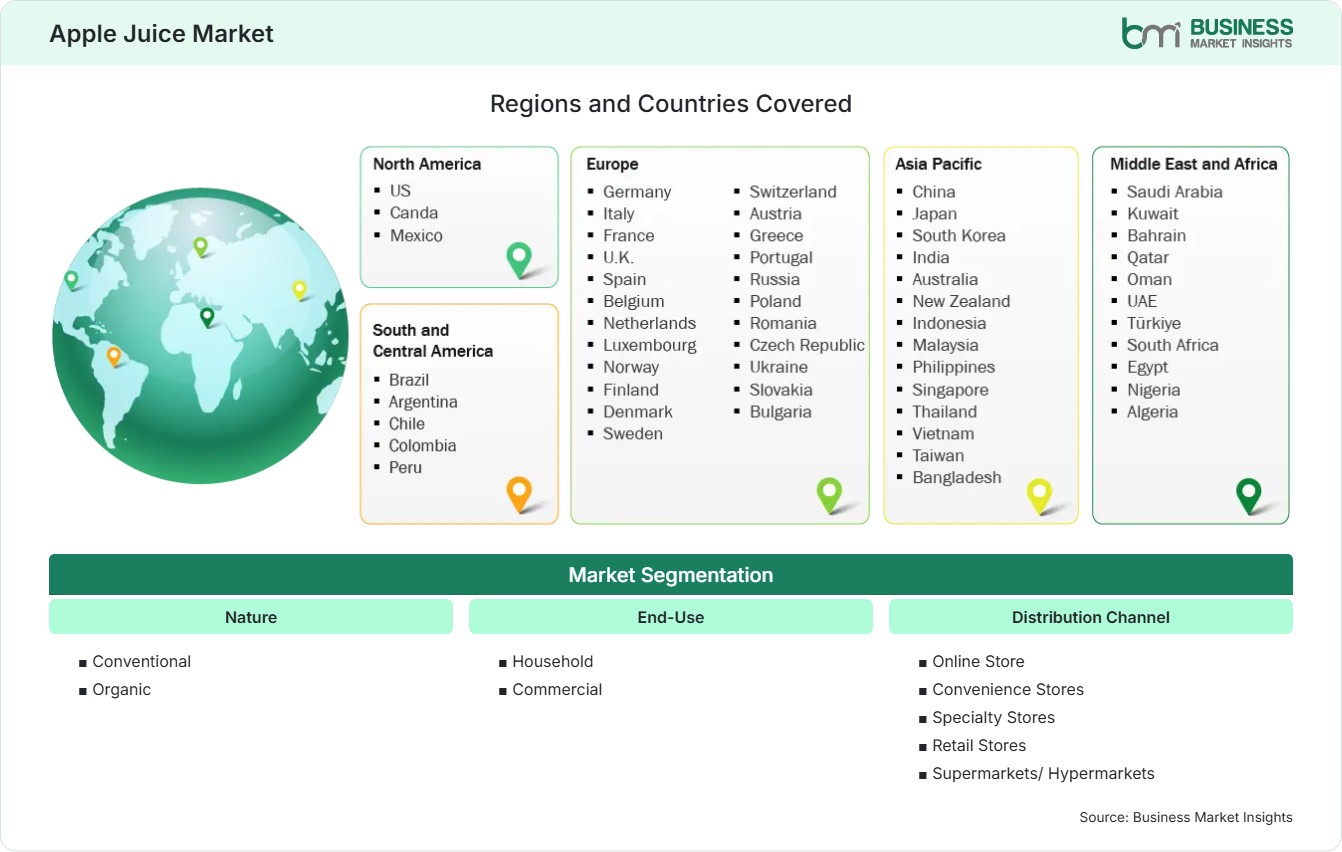
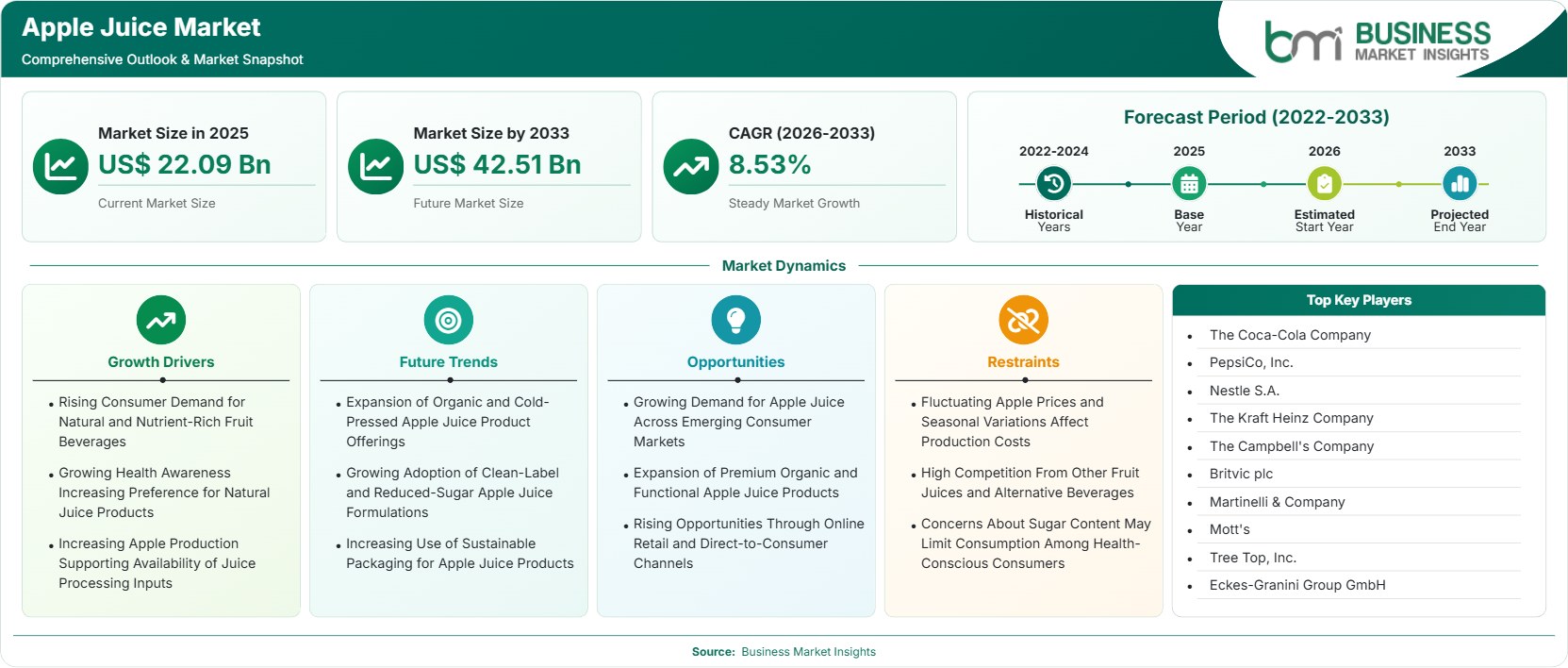
North America apple juice market accounts for an estimated 31%–35% share in 2025 and is projected to grow at a CAGR of 7.2%–8.0% through 2033. The region benefits from mature packaged beverage distribution, established apple processing, and strong household consumption. The US remains the dominant regional market, while Canada contributes through established retail channels and demand for premium and organic beverages. USDA data also indicates apple juice represented 43% of US apple availability in MY 2024/25.
- Established supermarket and convenience networks support widespread availability of shelf-stable, chilled, organic, and premium apple juice products across major North American consumer markets.
- Rising interest in clean-label beverages is encouraging manufacturers to emphasize ingredient transparency, organic certification, reduced-sugar formulations, and recognizable fruit content in premium product portfolios.
- Domestic apple availability supports regional processing, although weather variability and crop conditions can influence raw material prices, concentrate costs, and procurement strategies.
- Direct-to-consumer commerce and online grocery platforms provide smaller brands with opportunities to reach health-conscious consumers without depending exclusively on traditional supermarket distribution.
US Apple Juice Market
The US apple juice market represents an estimated 25%–29% share of global demand in 2025 and is projected to expand at a CAGR of 7.0%–7.8% during 2026–2033. Developed consumption habits, broad distribution network, and processing capacity support the demand. According to the USDA, apple juice constituted 43% of the availability of apples in the US market in MY 2024/25 or 18 pounds per capita on a fresh basis.
- Established household consumption and broad supermarket penetration maintain baseline demand, while premium organic and functional formulations create incremental value opportunities.
- Online grocery adoption enables niche producers to sell multipacks and specialty formulations directly to consumers, improving product discovery and supporting targeted marketing.
- Domestic processors benefit from established apple-growing regions, although weather events, harvest variability, and changing fresh-market demand can influence fruit allocation.
Europe Apple Juice Market
Europe apple juice market holds an estimated 27%–31% share in 2025 and is expected to grow at a CAGR of 7.5%–8.3% through 2033. Germany and the UK remain leading consumption markets, while Poland is strategically important for apple supply and processing. Germany is projected to expand at approximately 7.8%–8.6%, with Poland growing at 8.4%–9.2%. Organic demand and sustainability positioning support premium product development across the region.
- Mature beverage markets increasingly favor organic certification, transparent sourcing, and lower-impact packaging, creating differentiation opportunities for premium apple juice manufacturers.
- Poland remains strategically important within the European apple supply chain, making regional crop conditions and processing economics relevant to concentrate availability and pricing.
- Germany's strong organic food market supports premium apple juice positioning, with consumers increasingly attentive to ingredient quality and certified production methods.
- The UK offers opportunities for premium and convenient formats as established retail chains expand private-label, organic, and functional beverage selections.
Asia Pacific Apple Juice Market
Asia Pacific represents an estimated 24%–28% share in 2025 and is projected to record the fastest regional apple juice market growth at a CAGR of 9.4%–10.3% through 2033. China leads regional consumption and production, while India is a high-growth opportunity with an estimated CAGR of 10.1%–11.0%. Rising urbanization, modern retail expansion, and increasing packaged beverage penetration support long-term category development.
- China's large domestic apple supply provides a substantial raw-material base, while changing consumption patterns support greater differentiation between mainstream and premium juice products.
- India's expanding organized retail and e-commerce infrastructure is improving access to packaged fruit beverages, creating opportunities for affordable and premium product tiers.
- Southeast Asian markets offer growth potential as urban consumers increasingly adopt convenient packaged beverages, although local taste preferences require tailored sweetness and flavor profiles.
- Rising disposable incomes and greater exposure to international beverage brands are supporting experimentation with premium, organic, and functional fruit-based formulations.
Rest of World Apple Juice Market
South and Central America apple juice market account for an estimated 7%–10% share in 2025, while the Middle East and Africa contribute approximately 6%–9%. Combined Rest of World demand is projected to grow at a CAGR of 8.0%–9.0% through 2033, supported by urbanization and expanding retail infrastructure.
Brazil and Mexico remain important Latin American opportunities, while the UAE and Saudi Arabia provide attractive Middle Eastern markets. Brazil is projected to grow at approximately 8.5%–9.4%, while the UAE is expected to expand at 9.0%–10.0%.
- Expanding modern grocery formats across Latin America are improving packaged beverage availability, supporting premium and convenient apple juice formats in major urban centers.
- Mexico provides opportunities for imported and locally distributed fruit beverages, with convenience retail and supermarket expansion supporting broader product visibility.
- Gulf markets offer premiumization potential due to strong modern retail infrastructure, high imported food penetration, and consumer interest in international beverage brands.
- African urban centers provide longer-term opportunities as cold-chain infrastructure, organized retail, and packaged beverage distribution networks gradually improve.